
Why Combe Lavaux-Jean Roland National Nature Reserve stands out
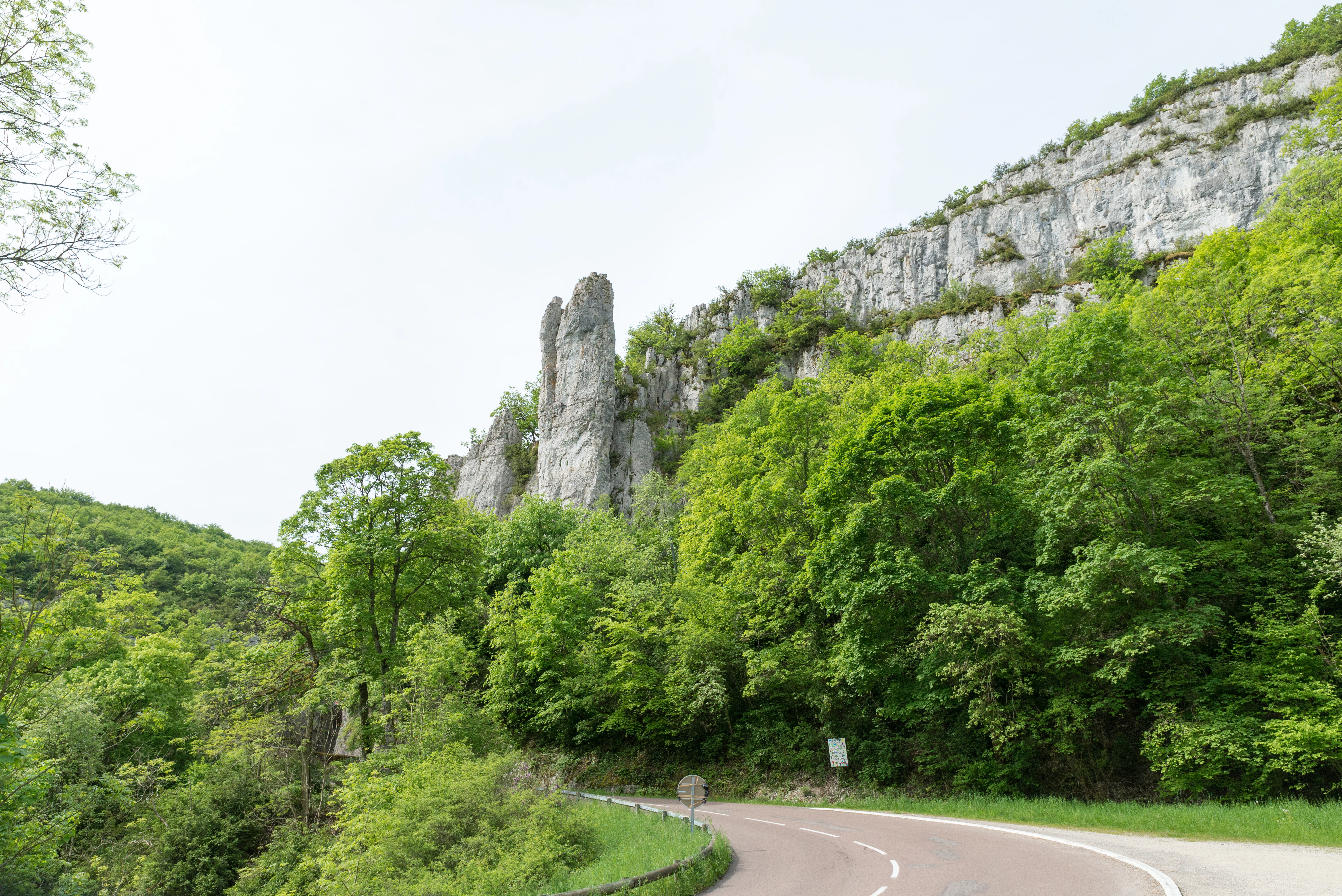
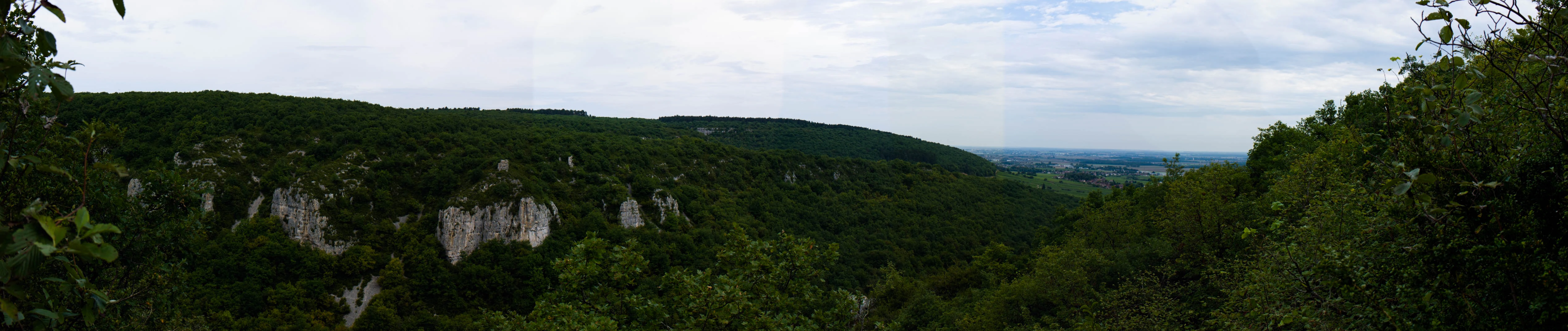
The reserve is best known for its deep, east-west oriented dry limestone combes and the dramatic cliff architecture of the Combe Lavaux. Tall limestone walls reaching more than thirty meters in height frame the upper edge of the cirque, with isolated monolithic rock pillars detaching along the skyline. Below the cliffs, scree slopes and boxwood thickets give way to dry grasslands, while the cool upper plateau holds a small surviving wetland and beech forest. This sharp geological setting is also what gives the reserve its botanical and ornithological importance. The cliff faces provide nesting conditions for species such as the Peregrine Falcon and the Short-toed Snake Eagle, while the warm south-facing slopes allow Mediterranean plants to thrive far north of their usual range. The presence of the endemic Biscutella divionensis, found only in this part of Burgundy, anchors the site's reputation as a refuge for relict cliff vegetation.
Combe Lavaux-Jean Roland National Nature Reserve history and protected-area timeline
The site has been recognized as a classified landscape site since 1936, reflecting long-standing awareness of the quality of the combes along this part of the Côte dijonnais. Decades later, the area gained formal nature protection when it was designated as a National Nature Reserve on 10 December 2004.
It was the first national nature reserve created in the Côte-d'Or department. The reserve is named in honor of a Dijon-born naturalist who, between 1992 and 2004, served as director of the naturalist association that would later become Réserves Naturelles de France, the national federation overseeing France's nature reserve network.
Since its designation, the reserve has been co-managed by the Communauté de communes de Gevrey-Chambertin and the Office national des forêts Bourgogne Est, combining local territorial authority with national forest expertise. The site also falls within the broader European Natura 2000 network through the Arrière côte de Dijon et de Beaune site, which holds Special Protection Area status for birds.
Combe Lavaux-Jean Roland National Nature Reserve landscape and geographic character
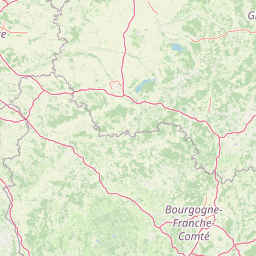
The landscape of the reserve is shaped by a series of deep, dry combes that cut eastward through the limestone plateau and open westward onto the Saône plain. The signature landform is the Combe Lavaux itself: an abrupt rocky cirque whose walls rise more than thirty meters above a forested and scree-covered base. At the top of the cirque, gigantic monolithic blocks have detached from the cliff edge and now stand as isolated silhouettes along the skyline.
Surrounding the main cirque, the reserve also includes additional combes such as the Combe Saint Martin, the Combe Chaudron, the Combe du Moine, and the Combe de Brochon, as well as upland features like the Bois des Grandes Moissonières and the Plain des Essoyottes. Where the limestone bedrock forms unbroken surfaces on the plateau, a small marsh has developed on the otherwise dry table land, providing a striking contrast in such an arid environment.
The vertical structure of the landscape is as important as the horizontal layout. Steep rocky walls, slope deposits at their base, mid-slope forest, and flat dry grasslands at the rim each support very different conditions, and the resulting layered terrain is fundamental to the visual character of the reserve.
Combe Lavaux-Jean Roland National Nature Reserve ecosystems, habitats, and plant life
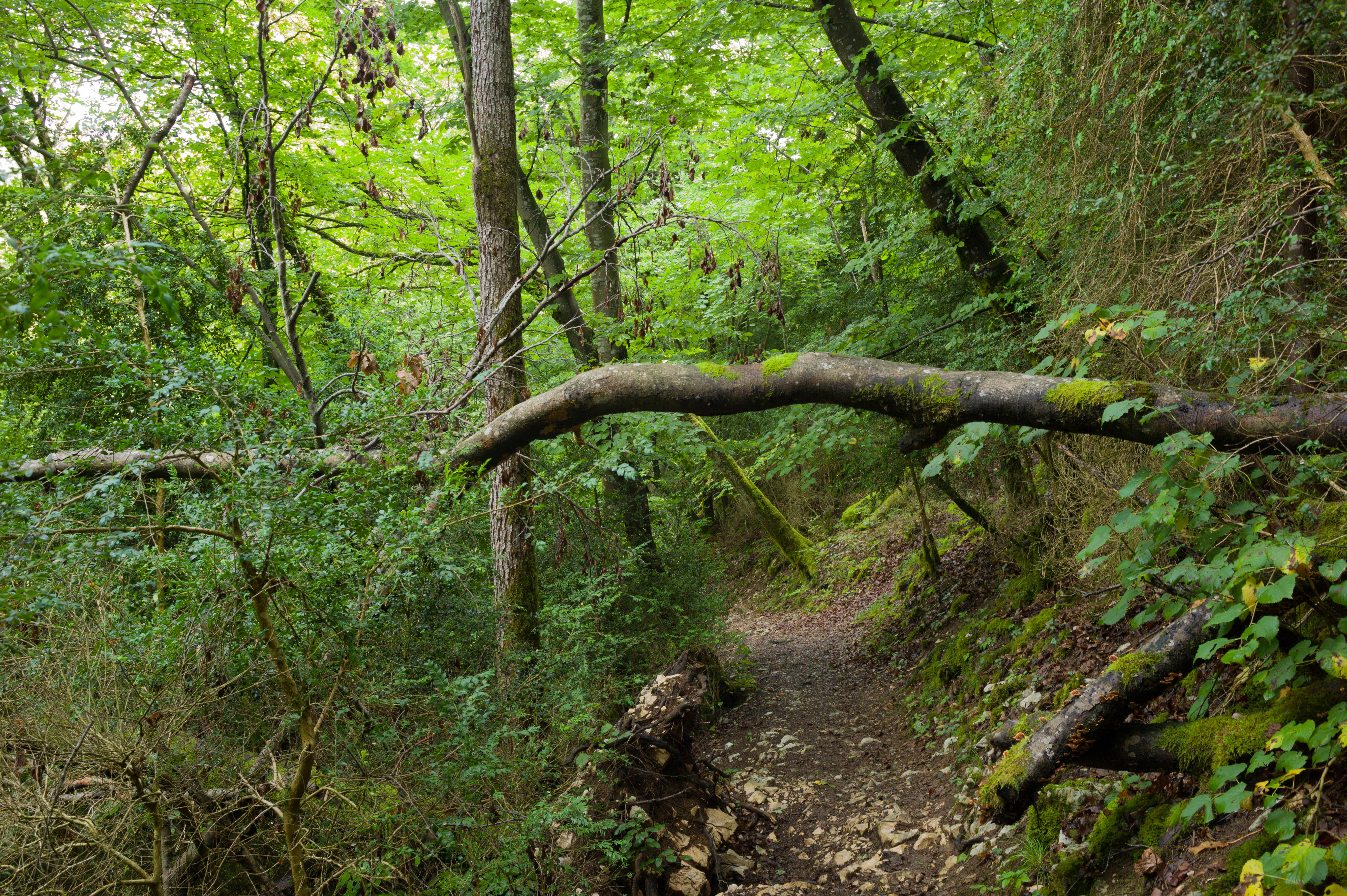
The ecological character of the reserve is defined by the strong contrast between its south-facing and north-facing slopes. On the sunny adrets, the combination of heat, light, and limestone substrate sustains plant communities with southern European affinities. These include boxwood, oval-leaved serviceberry, alpine buckthorn, bladder senna, and Guelder-rose-leaved maple, all of which find unusually favorable conditions here, well north of their main ranges.
The shaded and moister ubacs are dominated by beech forest adapted to limited light, with species such as the seven-leaflet cardamine completing the woodland flora. At the top of the plateau, dry grasslands of varying soil depth carry feather grass and a remarkable range of steppe and sub-Mediterranean species. The compact cushions of mountain kidney-vetch on the rocky corniches conceal the only Burgundian station of Austrian scorzonera, and the small upland marsh hosts intermediate hair grass, tuberous valerian, dock-leaved sorrel, chives, and spiked speedwell.
A particular botanical highlight is the presence on the cliffs of Biscutella divionensis, a species endemic to this part of the world and a key reason for the reserve's scientific importance.
Combe Lavaux-Jean Roland National Nature Reserve wildlife and species highlights
Wildlife in the reserve is closely tied to the cliff and slope habitats. The Combe Lavaux is a well-known nesting site for the Peregrine Falcon, which finds favorable breeding and hunting conditions along the limestone walls. The Short-toed Snake Eagle also nests here, taking advantage of the open terrain around the combes for hunting.
The rocky slopes and warm, dry grasslands also support reptile populations typical of limestone country in eastern France, including Aesculapian snake and green-and-yellow whip snake. The combination of cliff, dry grassland, woodland, and a small upland marsh produces a varied prey base, which in turn sustains the raptors and other predators associated with the site.
Combe Lavaux-Jean Roland National Nature Reserve conservation status and protection priorities
The reserve carries both national and European conservation weight. Nationally, it is designated as a National Nature Reserve, the strongest protection status of its kind in France, and it is also a classified site under French heritage and landscape law, a status it has held since 1936. It is catalogued within the regional ZNIEFF type I inventory of the Côte dijonnais.
At the European level, the reserve sits within the Natura 2000 site of the Arrière côte de Dijon et de Beaune, which also benefits from Special Protection Area status under the Birds Directive. This means the protection framework extends beyond purely national measures and connects the reserve to broader European biodiversity conservation priorities, especially for cliff-nesting birds.
Combe Lavaux-Jean Roland National Nature Reserve cultural meaning and human context
The reserve lies in a region whose identity is profoundly shaped by wine, with the communes of Gevrey-Chambertin and Brochon forming part of the historic heart of Burgundy viticulture. The Côte dijonnais escarpment on which the reserve sits has shaped centuries of land use, separating vineyards on lower slopes from forest and rocky countryside above.
Naming the reserve after a Dijon-born naturalist who led France's national federation of nature reserves reflects a strong local tradition of natural history scholarship. The reserve is also widely used as a recreational landscape, with forests paths, viewpoints, and climbing routes making it an everyday part of life for residents of the Dijon urban area.
Top sights and standout views in Combe Lavaux-Jean Roland National Nature Reserve
Among the strongest points of the reserve are the dramatic cliff architecture of the Combe Lavaux, with monolithic rock towers above a deep limestone cirque, and the rare ecological contact between Mediterranean and temperate species along opposing slopes. Other standout features include the cliffs as nesting habitat for Peregrine Falcon and Short-toed Snake Eagle, the global endemism of Biscutella divionensis on the cliff face, and the small upland marsh that survives in this otherwise dry limestone setting.
Best time to visit Combe Lavaux-Jean Roland National Nature Reserve
The reserve is in a temperate continental climate, and seasonal changes strongly affect how the landscape reads on the ground. Spring is a rewarding period, as the contrast between cool beech slopes and warmer south-facing cliffs is most visible in fresh vegetation, while bird activity around the cliffs peaks with the nesting season. Summer brings dry, vivid conditions across the grasslands and cliffs, making it a favorable period for viewing the typical Mediterranean-influenced flora on the adrets. Autumn offers softer light, quieter trails, and clear views from belvédères on the plateau edge. Winter remains a viable season for walkers, with bare foliage opening up views of the rock architecture and cliff faces.