
When to visit Serengeti National Park: A Guide to Timing Your Safari
Determine the ideal period for your safari based on rainfall, migration patterns, and wildlife viewing priorities.
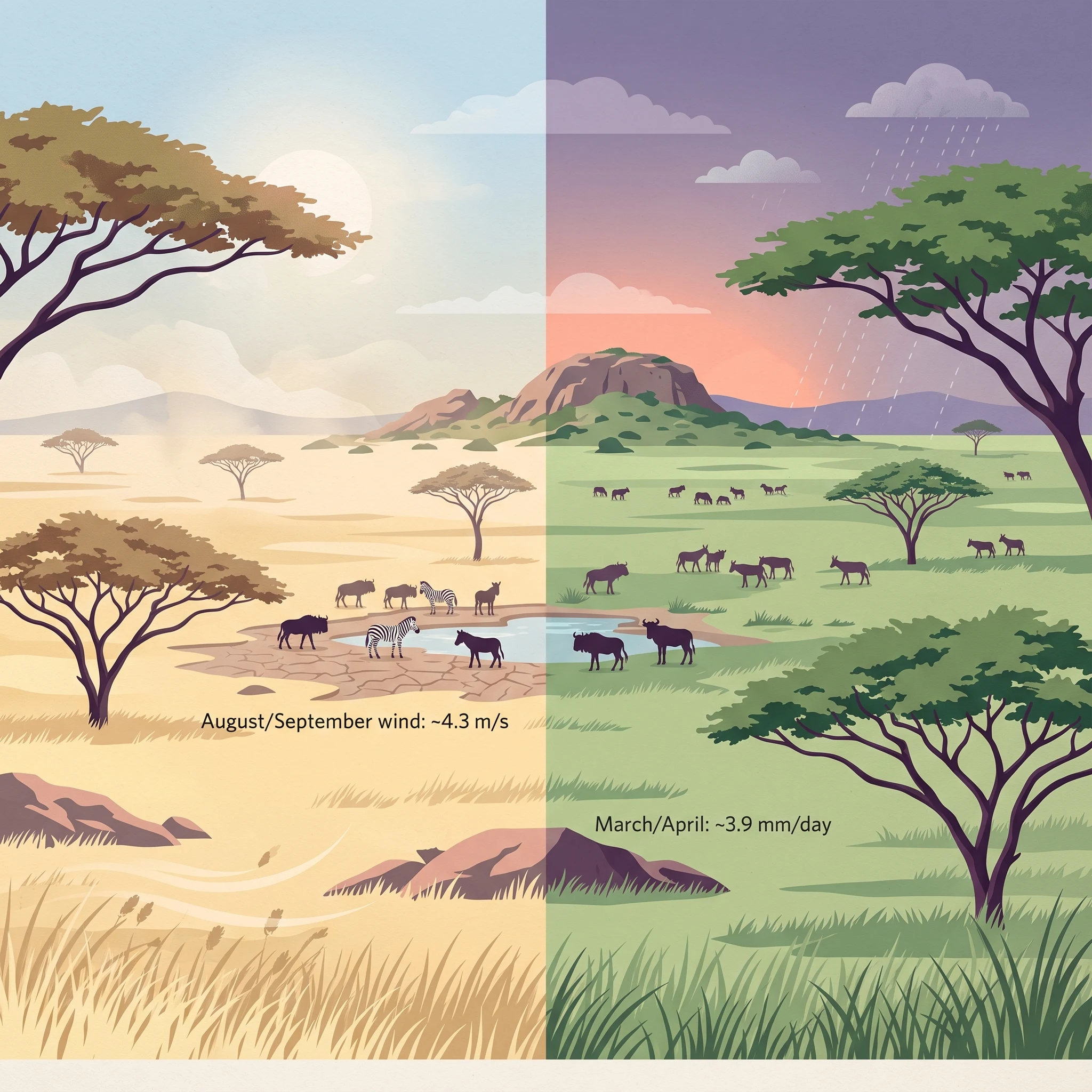
Planning a trip to the Serengeti requires understanding the interplay between the annual Great Migration and the region's distinct wet and dry periods. This guide interprets climate normals and historical wildlife movement patterns to help you determine which season aligns with your preferences for landscape, animal sightings, and accessibility. By analyzing monthly variations in temperature, rainfall, and vegetation, you can better navigate the differences between the arid, wildlife-concentrated dry season and the lush, migratory-focused wet season. Because the Serengeti ecosystem is vast and experiences significant seasonal transitions, no single month provides a perfect experience for every type of traveler. This guide provides context on when specific regional highlights, such as river crossings or calving events, are most likely to occur. Readers should use this information to narrow down their travel windows while remembering that environmental conditions change annually. Always verify current park access, permit requirements, and specific wildlife movements with official authorities or your safari operator before finalizing your travel dates.