

Why Sierra de Álvarez stands out
Sierra de Álvarez is best known for its extensive oak forest and grassland mosaic set within the Sierra Madre Oriental, supporting a high diversity of plant and animal species within a relatively compact protected footprint. The reserve is recognized for harboring more than 900 documented species of flora and fauna, including a notable proportion that are at risk or considered endemic to the region. It is also distinguished by its binational relevance: oak woodlands of the Sierra Madre Oriental in the San Luis Potosí area serve as winter habitat for migratory bird species that breed farther north, while the reserve's mix of forested slopes and open pastures supplies habitat for mid-sized and small mammals characteristic of central Mexico. Together, these qualities make Sierra de Álvarez a meaningful reference site for oak woodland and grassland conservation in the Sierra Madre Oriental.
Sierra de Álvarez history and protected-area timeline
Sierra de Álvarez was officially established as a federally protected natural area on April 7, 1981, when Mexico's Comisión Nacional de Áreas Naturales Protegidas (CONANP) declared it an Área de Protección de Flora y Fauna. The designation placed the area within Mexico's federal system of protected natural areas, giving it formal recognition for its biodiversity, ecological value, and role in safeguarding representative ecosystems of the Sierra Madre Oriental.
The 1981 decree anchored the reserve within the broader conservation priorities of the time, when Mexico was actively expanding its network of protected areas to cover representative ecosystems across the country's major physiographic regions. In the case of Sierra de Álvarez, that meant protecting the oak forest and grassland systems that are characteristic of the San Luis Potosí stretch of the Sierra Madre Oriental.
Reports indicate that the reserve's protected status was at one point close to being revoked in 2019, raising concern about the future of its formal safeguards. That step did not move forward, and the area has retained its designation as a federal protected area under CONANP management, underscoring the continuing institutional commitment to its conservation.
Today, Sierra de Álvarez occupies a stable place within Mexico's national system of natural protected areas, managed as a Flora and Fauna Protection Area. Its long history since 1981 reinforces the importance of oak woodland and grassland conservation in the Sierra Madre Oriental and demonstrates the persistent value placed on this landscape within Mexican environmental policy.
Sierra de Álvarez landscape and geographic character
Sierra de Álvarez occupies a stretch of the Sierra Madre Oriental in central-eastern Mexico, a major mountain system that runs through several states, including San Luis Potosí, where the reserve is located. The protected area lies within the municipalities of Armadillo de los Infante, San Nicolás Tolentino, and Villa de Zaragoza, about 45 kilometers east of the city of San Luis Potosí, giving the reserve a position deep enough into the range to capture both forested and open terrain.
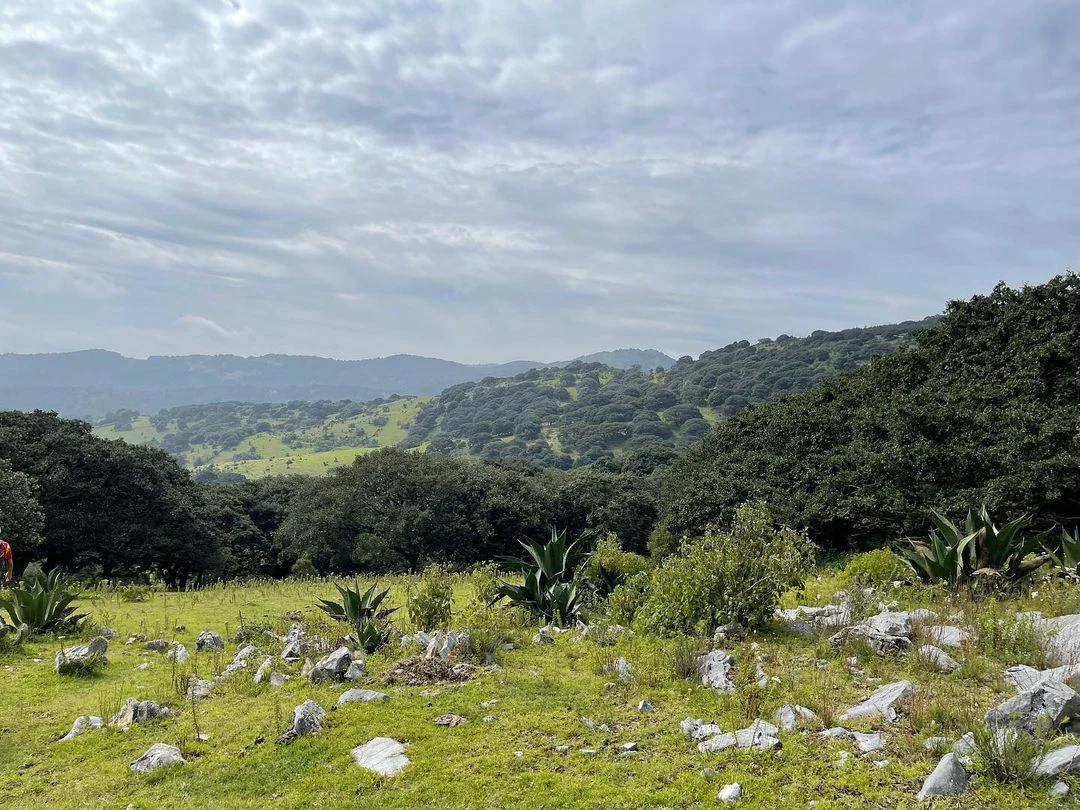
The terrain is shaped by the broader geology of the Sierra Madre Oriental, with slopes, ridges, valleys, and intervening lowlands producing a varied topographic backdrop. Within the reserve, this pattern translates into a clear zonation between oak-covered hillsides and broader open grasslands in flatter or more exposed areas. The combination of elevation changes and the alternation of forest and pasture creates a mosaic that is central to the visual and ecological identity of the area.
The reserve's ov of approximately 16,900 hectares means that the protected landscape extends well beyond single ridge lines, encompassing entire watersheds and transition zones between different vegetation types. Local vantage points reveal continuous forested slopes punctuated by grassy clearings, while nearby vantage points offer more expansive vistas across the dissected terrain of the Sierra Madre Oriental.
This landscape is also transitional in ecological terms, sitting whereelements of montane oak forest give way to drier, more open formations typical of central Mexico's interior highlands. The result is a physical setting that supports both forest-dwelling and grassland-adapted species and rewards visitors with a mix of densely wooded sections and open panoramic stretches, characteristic of the protected oak and grassland systems of the region.
Sierra de Álvarez ecosystems, habitats, and plant life
Sierra de Álvarez protects an ecologically significant mosaic of two principal habitat types: oak woodland and natural grasslands. The oak forests (bosque de encino) are dominated by various Quercus species, including white oak relatives, which form the canopy and structural backbone of the forested portions of the reserve. In contrast, the grassland areas (pastizales) are open vegetation communities where herbaceous plants, grasses, and scattered shrubs define a different ecological regime, often shaped by fire regime, grazing pressure, and climate conditions.
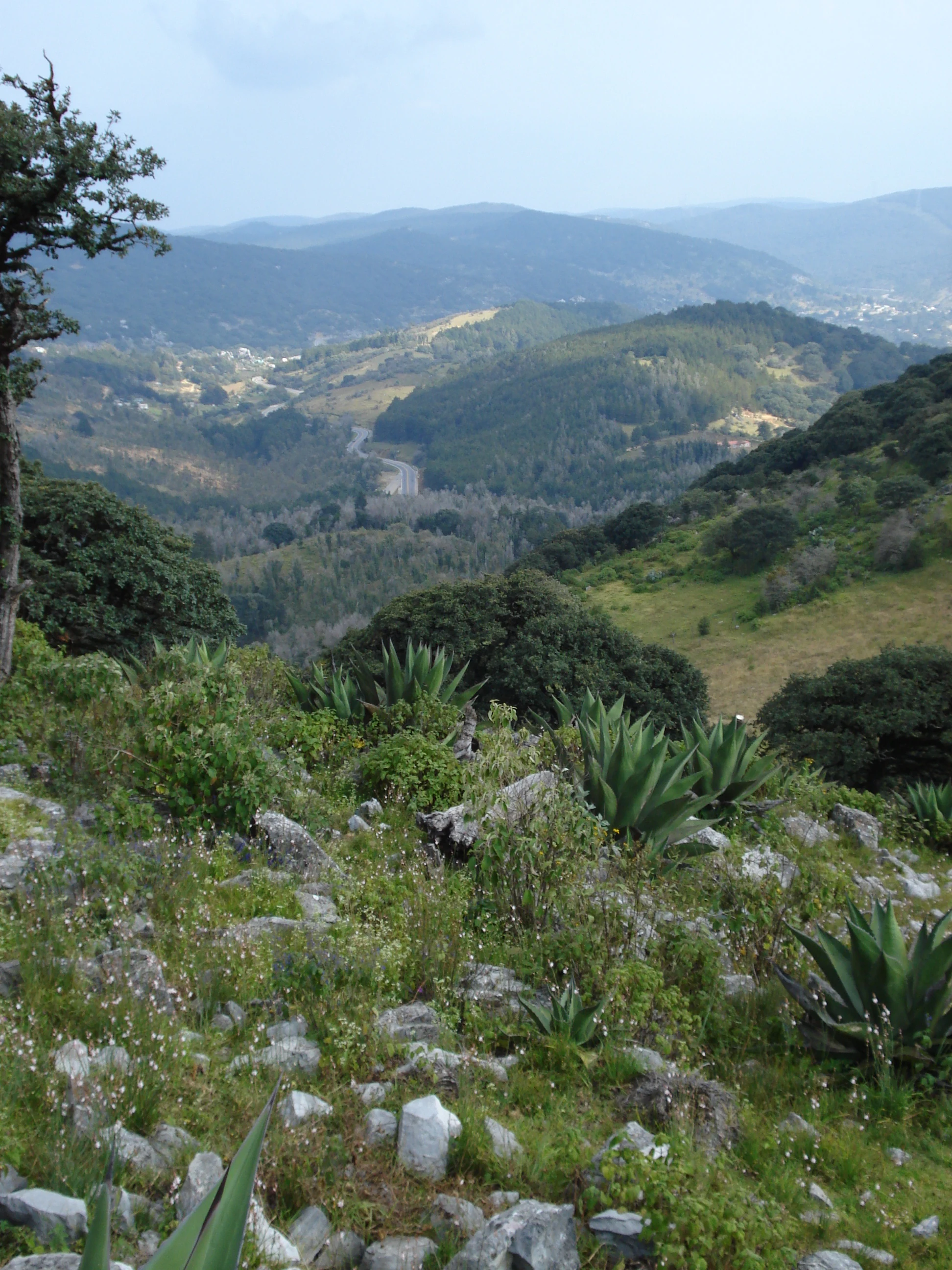
These two systems do not exist in isolation. Where they meet, they produce forest-grassland ecotones that are unusually rich in species, because plants and animals from both communities can be found using overlapping areas of the reserve. The transition zones, along with mid-elevation slopes, support high plant diversity, including species such as agave (maguey), ayocote (a wild bean relative), manzanillo, and palo loco, alongside the more dominant oaks and associated white oak relatives and cedar species.
Overall, more than 900 species of plants and animals have been documented across the reserve's oak and grassland systems, highlighting the unusually concentrated biodiversity of a mid-sized protected area. Of these, a substantial share are reported as being in some category of conservation risk, while a smaller number are introduced or exotic species that require active management attention.
The reserve functions as a critical repository for oak forest heritage in the Sierra Madre Oriental. Because oak woodlands across Mexico face pressure from land-use change, fire regime shifts, and climate stress, protected stands like those in Sierra de Álvarez play an outsized role in maintaining genetic diversity and ecological function for Quercus species and the understory communities that depend on them.
Sierra de Álvarez wildlife and species highlights
Sierra de Álvarez supports a diverse mammalian fauna typical of oak woodland and grassland transition zones in central-eastern Mexico. Among the notable mammals of the reserve are the gray fox (zorra gris), collared peccary (pecarí de collar), white-tailed deer (venado de cola blanca), bobcat (lince americano), and coyote. These species collectively occupy a range of ecological niches, from open pasture and grassland areas that favor grazing herbivores to denser forested patches that support cover-dependent predators and omnivores.
Smaller reptiles such as spiny lizards (Sceloporus species) are also part of the reserve's herpetological community, occupying rocky outcrops, woodland edges, and sun-exposed clearings. Their presence contributes to the broader food web and serves as an indicator of habitat quality in the oak and grassland mosaic.
The bird community of Sierra de Álvarez is one of its most distinctive ecological features. The reserve provides habitat for resident oak woodland species and is part of the broader migratory pathway that connects North American breeding grounds to wintering areas further south. Notable bird species reported in the reserve include the black-headed grosbeak (picogordo tigrillo), the acorn woodpecker (carpintero bellotero), which is tightly associated with oak mast, and the painted redstart (pavito alas blancas), a striking warbler typical of montane oak and pine-oak habitats in Mexico.
The combination of resident and migratory species, plus the predators and prey they support, gives the reserve a complete functioning ecosystem. Source materials emphasize that the wildlife of Sierra de Álvarez plays an essential role in maintaining the ecological balance of the protected area; their feeding behaviors, predator-prey dynamics, and seed dispersal all contribute to processes that help regulate pest populations and natural disturbances.
Sierra de Álvarez conservation status and protection priorities
Sierra de Álvarez holds a central place in the conservation of oak forests and montane grasslands in the Sierra Madre Oriental, one of Mexico's longest and most ecologically important mountain ranges. Its designation as an Área de Protección de Flora y Fauna reflects the federal government's recognition that this particular mix of oak woodland and open pasture is a priority for biodiversity protection in central-eastern Mexico.
The reserve safeguards habitats that support an unusually high number of species for its size. More than 900 species of plants and animals have been documented, with dozens listed in some category of conservation risk. Protecting this diversity is a key reason the area was formally protected in 1981 and has been retained within the federal system of natural protected areas, even when questions about its status briefly emerged in 2019.
Conservation management in Sierra de Álvarez also responds to ecological pressures identified in the biodiversity profile, including the presence of 21 exotic species. These introduced taxa represent an ongoing management challenge, since they can compete with native flora and fauna, alter habitat structure, or shift ecological balances within oak and grassland systems. The fact that the reserve explicitly tracks exotic species suggests an active approach to monitoring and managing biological invasions.
Beyond species-level conservation, the reserve plays a role in landscape-scale protection of the Sierra Madre Oriental. By maintaining forest cover, native grassland, and the ecological transitions between them, Sierra de Álvarez helps sustain the environmental services these systems provide, from watershed regulation to soil stabilization and carbon storage. Its presence in the protected-area network means that even as the surrounding region faces land-use pressures, the reserve continues to serve as a stable ecological reference point for the mountains of San Luis Potosí.
Top sights and standout views in Sierra de Álvarez
Sierra de Álvarez stands out for the combination of oak woodland and grassland ecosystems in a relatively compact area within the Sierra Madre Oriental, a major mountain range of central-eastern Mexico. Its terrace of more than 900 documented plant and animal species places it among the more biologically dense protected areas of the region, with a meaningful share of species in some conservation risk category.
The reserve is distinguished by its federal conservation designation as an Área de Protección de Flora y Fauna, with management overseen by CONANP, the national authority on protected natural areas in Mexico. Its utility as a stronghold for oak forests, the presence of notable mammals such as white-tailed deer and bobcat, and its importance for migratory and resident birds collectively underscore why Sierra de Álvarez remains an enduring reference point for conservation in the San Luis Potosí portion of the Sierra Madre Oriental.
Best time to visit Sierra de Álvarez
Because Sierra de Álvarez is a federal Flora and Fauna Protection Area focused on biodiversity rather than mass tourism, visit timing is best approached in terms of ecological seasonality rather than operational schedules. The oak forests of the Sierra Madre Oriental tend to be most comfortable to experience during the cooler dry season months, when vegetation is less lush but wildlife viewing along forest edges and grasslands is often easier, and trail conditions are typically firmer.
The wetter months in central Mexico can bring dense vegetation, more dramatic scenery, and active growth in both forest and grassland systems, but they also make some areas more difficult to access. Cooler visits outside the rainy season often offer clearer views across the dissected terrain of the Sierra Madre Oriental and better opportunities to observe species concentrated around remaining water sources or acorn-bearing oaks. Migratory and resident birds tend to be most visible when oak trees are actively fruiting or when wintering migrants are present.