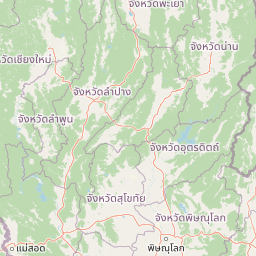
Why Ton Sak Yai National Park stands out
Ton Sak Yai is best known for housing the monumental Ton Sak Yai teak tree, a 47-meter-tall ancient giant estimated to be around 1,500 years old with a circumference of 10 meters. This specimen is one of the oldest and largest teak trees in Thailand and served as the namesake for the park's 2012 renaming. The park also protects a series of dramatic waterfalls, including the multi-tiered Namtok Phu Miang with 11 tiers reaching heights of 30 to 45 meters.
Ton Sak Yai National Park history and protected-area timeline
The protection journey of this area began in December 1990 when a survey was conducted in the Khlong Tron National Forest Reserve covering Mueang Uttaradit and Nam Pat districts. Initial proposals to establish a national park emerged in November 1994, incorporating multiple forest areas including Nam Pat Forest, Pak Huay Chalong Forest, Huay Sisead Forest, Khlong Tron Fang Khwa Forest, and Khlong Tron Fang Say Forest. On December 4, 2003, the area was officially declared Thailand's 103rd national park under the name Khlong Tron National Park, managed by Protected Areas Regional Office 11 based in Phitsanulok. On July 12, 2012, the park was renamed Ton Sak Yai National Park to honor the iconic ancient teak tree that has become its defining symbol.
Ton Sak Yai National Park landscape and geographic character
The park's landscape is defined by its mountainous character, with a series of peaks creating a distinctive highland environment in northern Thailand. The terrain ranges from steep ridgelines to sheltered valleys, with elevation differences creating varied microclimates and habitat conditions. The highest point, Khao Phu Miang, reaches 1,500 meters and serves as a watershed divide feeding numerous streams throughout the park. Water features are prominent, with several major waterfalls including the impressive Namtok Phu Miang, a multi-tiered cascade dropping 30 to 45 meters across 11 tiers, and other falls at Huay Khom, Huay Niam, Huay Sai, and Khlong Tron. The landscape also includes Tham Chan, a cave system extending 200 meters in depth.
Ton Sak Yai National Park ecosystems, habitats, and plant life
The ecological richness of Ton Sak Yai is reflected in its diverse forest types, which include hill evergreen forest dominating higher elevations, coniferous formations, tropical evergreen forest in wetter areas, dry evergreen forest on lower slopes, mixed deciduous forest in transitional zones, and dry dipterocarp forest in drier aspects. This forest diversity supports a wide range of plant species, with numerous dipterocarp species such as Anisoptera costata, Dipterocarpus alatus, D. obtusifolius, and D. tuberculatus, along with valuable timber species including teak (Tectona grandis), Pterocarpus macrocarpus, and Shorea species. The park also protects rare trees like Hopea ferrea, Irvingia malayana, and Magnolia species.
Ton Sak Yai National Park wildlife and species highlights
The mammal fauna of Ton Sak Yai includes several significant species, notably the clouded leopard, Asiatic black bear, and mainland serow, all of which are protected species in Thailand. Other mammals present include the Asian palm civet, barking deer, Bengal slow loris, black giant squirrel, lesser Malay chevrotain, Malayan porcupine, wild boar, and Burmese hare. The bird population is particularly noteworthy, with approximately 60 species recorded including around 40 passerine species from 22 families and 20 non-passerine species. Notable bird species include the silver pheasant, Indochinese roller, Asian barred owlet, common hill myna, and various babblers and flycatchers.
Ton Sak Yai National Park conservation status and protection priorities
Ton Sak Yai National Park forms part of a larger contiguous protected area network in northern Thailand, connecting with wildlife sanctuaries to the north and east. This connectivity is important for maintaining ecological corridors for large mammals and facilitating species movement across the landscape. The protection of the ancient teak tree and its surrounding forest represents both historical conservation significance and ongoing habitat preservation. The park's management under the Department of National Parks, Wildlife and Plant Conservation ensures standardized protection protocols and resource allocation for long-term conservation.
Ton Sak Yai National Park cultural meaning and human context
The park area has historical significance through its association with local communities in Uttaradit Province, a region with longstanding relationships to the forest environment. The ancient teak tree, Ton Sak Yai, has likely been a local landmark for centuries, and its preservation reflects both natural heritage and cultural memory. The renaming from Khlong Tron to Ton Sak Yai in 2012 formalized recognition of this natural monument's importance to local identity and national natural heritage.
Top sights and standout views in Ton Sak Yai National Park
Ton Sak Yai National Park offers visitors the opportunity to experience one of Thailand's most impressive ancient trees, explore multiple waterfalls ranging from dramatic multi-tiered cascades to smaller hidden falls, and traverse diverse forest environments across mountain terrain. The park's relatively low visitor numbers, with approximately 4,000 visitors in 2019, suggest an opportunity for nature experiences away from more heavily touristed protected areas. The combination of ancient forest, significant wildlife, and scenic waterfalls creates a distinctive protected area experience in northern Thailand.
Best time to visit Ton Sak Yai National Park
The optimal visiting period spans from November to February when cool, dry winter conditions prevail and temperatures are most comfortable for outdoor exploration. The monsoon season from May to September brings heavier rainfall, which can affect trail conditions and visibility but also ensures lush forest vegetation and full waterfall flows. The hot pre-monsoon period from March to April offers warm conditions but may feature reduced water levels at waterfalls.