Why W National Park stands out
W National Park is best known for protecting some of West Africa's last remaining populations of large mammals, particularly the African bush elephant and West African lion. The park serves as a crucial stronghold for the endangered Northwest African cheetah, with an estimated 25 individuals resident across the W-Arly-Pendjari complex. Its distinctive W-shaped river meander gives the park its name and creates a unique landscape of islands, channels, and floodplains. The area supports over 350 bird species and represents one of the most important BirdLife International Important Bird Areas in the region.
W National Park history and protected-area timeline
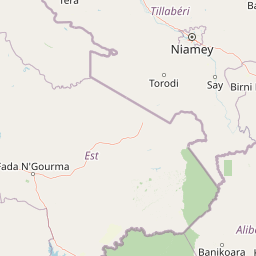
W National Park was officially created by decree on August 4, 1954, establishing the core protected area within Niger. The creation of this park reflected growing post-colonial awareness of the need to preserve West Africa's remaining wild spaces. In 1996, the park achieved international recognition when it was inscribed as a UNESCO World Heritage Site, acknowledging its outstanding universal value as a natural ecosystem. The park operates within a framework of regional cooperation, with the three national governments working together through the W Transborder Park arrangement. From 2008, an EU-funded project called ECOPAS (Protected Ecosystems in Sudano-Sahelian Africa) supported implementation of regional management coordination. The governance structure evolved significantly in 2020 when African Parks assumed full management of the Beninese portion of the park, which spans over 8,000 square kilometers and is contiguous with Pendjari National Park, also managed by African Parks. The park has faced serious security challenges in recent years, with tragic incidents including land mine attacks in 2022 that killed eight people, a gun attack in July 2024 that claimed the lives of five park rangers and seven soldiers, and a deadly attack in April 2025 that killed 54 soldiers and was claimed by Jama'at Nasr al-Islam wal-Muslimin.
W National Park landscape and geographic character
The physical landscape of W National Park is defined by the Niger River's characteristic W-shaped meander, a dramatic bend that creates a series of islands, channels, and floodplains within the protected area. The river's course has carved a complex地形 of oxbow lakes, marshes, and wetlands, particularly where the Mékrou River joins the Niger, forming an extensive delta system. The park's terrain is largely flat savanna, punctuated occasionally by rocky hills that provide scenic contrast and microhabitats for specialized species. The wetlands created by the river system were historically malarial zones, which contributed to the area's sparse human population and, paradoxically, its preservation as a natural habitat. The floodplains support distinct vegetation communities adapted to seasonal inundation, while the surrounding woodlands and grasslands create a mosaic of habitats that supports the park's diverse wildlife. The landscape changes dramatically with the seasons, from lush green during the rainy months to golden savanna as the dry season progresses, offering visitors and researchers varying perspectives on this ecological treasure.
W National Park ecosystems, habitats, and plant life
W National Park supports a rich array of ecological communities that reflect its position at the intersection of Sudanian and Sahelian biomes. The park's 454 recorded plant species include two orchid species endemic to Niger, representing the southern limit of certain floristic distributions. The tiger bush plateaus found in the Niger portion represent the southern edge of this distinctive vegetation type in the country. The riparian forests along the Niger River provide critical habitat for arboreal species and serve as green corridors connecting the floodplain to upland areas. The Mékrou River delta creates extensive wetlands that support aquatic plants, fish, and waterfowl, forming an ecological system that pulses with the seasonal flood cycle. The savanna woodlands shelter diverse mammal populations and provide foraging grounds for the park's famous elephant herds. This ecological diversity has earned the park recognition as a Ramsar Wetland of International Importance, with multiple designations reflecting the different wetland components within the protected area.
W National Park wildlife and species highlights
The wildlife of W National Park represents one of West Africa's most significant assemblages of large mammals. The park provides crucial habitat for some of the region's last wild African elephants, whose populations have dramatically declined across the continent. The predator community includes the West African lion, African leopard, cheetah, and caracal, with the park serving as a stronghold for the endangered Northwest African cheetah. The herbivore community features African buffalo, roan antelope, kob antelope, hippopotamus, and warthog, while smaller mammals include aardvark, baboon, serval, and oribi. Notably absent from the park is the West African giraffe, which today survives only in small pockets along the Niger River in Niger. The birdlife is exceptional, with over 350 species identified, many of which are migratory species passing through the park on trans-African flyways. The park has been identified as an Important Bird Area by BirdLife International, recognizing its significance for both resident and migratory birds. Historically, the park supported packs of the endangered West African wild dog, though this canid may now be locally extinct.
W National Park conservation status and protection priorities
W National Park holds exceptional conservation significance as the core of the W-Arly-Pendjari Complex, the largest and most intact ecological system remaining in West Africa. Its UNESCO World Heritage status acknowledges both the park's natural value and the importance of transboundary cooperation in its management. The Ramsar designations covering various wetland components reflect international recognition of the park's importance as a wetland ecosystem. The park's management has evolved to incorporate professional conservation practices, with African Parks bringing significant capacity to the Beninese section. The cheetah population, estimated at 25 individuals across the complex, represents a critically important remnant of this subspecies in Northwest Africa. Conservation challenges include managing human-wildlife conflict, addressing poaching pressure, and navigating the security concerns that have affected the park in recent years. The transboundary nature of the park requires coordination across three national governments, a model that has attracted international support and funding.
W National Park cultural meaning and human context
While W National Park is primarily valued for its natural heritage, the area holds archaeological significance that speaks to its historical role as a landscape of human habitation. Important archaeological sites, mostly tombs, have been discovered within the park boundaries, indicating that the region supported significant human populations in earlier centuries. The park's name derives from the French practice of describing the W-shaped river meander as "double v," a linguistic heritage reflecting the colonial period when the park was established. The three nations sharing this protected area each bring their own administrative traditions and cultural perspectives to its management. The region's history as a malarial wetland zone contributed to its sparse population in recent decades, creating conditions that allowed wildlife populations to persist despite surrounding agricultural development. Indigenous communities in the surrounding areas maintain connections to the landscape that predate formal protection.
Top sights and standout views in W National Park
The defining highlight of W National Park is its remarkable W-shaped river meander, a geological feature that gives the park its name and creates a visually striking landscape visible from the air. The park's transboundary character makes it unique among African protected areas, representing collaborative conservation across three nations. The elephant populations represent some of the last remaining wild herds in West Africa, offering rare opportunities for wildlife observation. The cheetah population, though small, represents a critically important conservation asset for this endangered subspecies. The bird migrations through the park create extraordinary wildlife viewing opportunities, with hundreds of species passing through seasonally. The wetland system created by the Mékrou River delta provides ecological diversity that complements the savanna habitats.
Best time to visit W National Park
The optimal time to visit W National Park is during the dry season from November to April, when wildlife congregates around remaining water sources and visibility is excellent. The landscape at this time transforms from green to golden, creating beautiful photographic conditions. December through March offers the best game viewing as animals concentrate along the river and in remaining waterholes. The wet season from May to October brings lush vegetation that can make wildlife spotting more challenging but offers rewarding birdwatching as migratory species arrive. Visitors should be aware that park access may be influenced by security conditions, and current operational details should be confirmed with park authorities before planning travel.