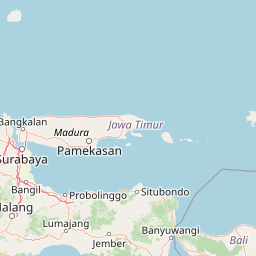
Why West Bali National Park stands out
West Bali National Park is best known as the final refuge of the critically endangered Bali myna, one of the world's rarest birds with fewer than 100 individuals believed to remain in the wild. The park's dramatic landscape combines coastal savanna with mountainous volcanic terrain, featuring several extinct Pleistocene-era volcanoes including Mount Klatakan as the highest peak at approximately 698 meters. The marine component of the park contains over 110 coral species across 18 families, making it significant for marine biodiversity. The park also encompasses sacred cultural sites such as the Dang Kahyangan Prapat Agung temple, which features a multi-colored spring pond of religious significance mentioned in ancient Balinese texts.
West Bali National Park history and protected-area timeline
West Bali National Park traces its institutional origins to 1941 when it was first established as a protected area covering approximately 740 square kilometers with the explicit aim of protecting the Bali tiger, which had been driven to extinction by persistent hunting pressure. The last confirmed sighting of a Bali tiger in the region occurred in the 1930s, making the park's establishment tragically late for the species it was meant to protect. In 1985, the park's boundaries were significantly reduced to approximately 190 square kilometers, with the excluded areas redesignated as protected reserves. On September 15, 1995, the Indonesian Ministry of Forestry formally designated the area as West Bali National Park through ministry decree, consolidating the former protection status into the national park classification. More recently, discussions have focused on converting all or part of the park into a UNESCO biosphere reserve under the Man and the Biosphere Programme, which would allow traditional community relationships with the land to continue while maintaining conservation protection. A 1994 regulation authorized nature tourism operations within designated utilization zones of national parks, enabling private tourism enterprises to operate while requiring involvement of local communities.
West Bali National Park landscape and geographic character
The physical landscape of West Bali National Park encompasses remarkable topographic and ecological diversity within a relatively compact area. The park's terrain includes coastal plains, savanna-covered hills, and several volcanic peaks representing remnants of Pleistocene-era volcanoes. The highest point within the park is Mount Klatakan at 698 meters, followed by Mount Prapat Agung at 375 meters, with Mount Sangiang reaching approximately 1,002 meters according to Indonesian sources. A distinctive peninsula of about 65 square kilometers extends to the northwest, separated from Bali's mainland by the coastal road. The marine environment includes approximately 1,000 meters of beach along the northern coast, reef systems, and several small islands including Menjangan Island, known for its diving and snorkeling opportunities. The coastline features varied formations from sandy beaches to rocky shores, while the marine component supports extensive coral reef development in the surrounding waters.
West Bali National Park ecosystems, habitats, and plant life
The ecological character of West Bali National Park is defined by an exceptional diversity of habitats within a relatively small area. The park contains seven primary habitat types: savanna, mangroves, montane forests, mixed monsoon forests, coastal forest, seagrass meadows, and coral reef systems. The savanna areas are dominated by grassland with scattered trees, while the forest ecosystems range from lowland monsoon forests through transitional zones to montane vegetation at higher elevations. The mangrove forests occur along sheltered coastal areas and estuary zones, providing critical nursery habitat for marine species. The marine component represents approximately 18% of the total park area and includes significant coral reef development with over 110 coral species from 18 families documented, including 22 species of mushroom corals and 27 species of Acropora corals. The park's location at the western tip of Bali positions it as an important ecological corridor and transitional zone between Java Sea and Indian Ocean marine environments.
West Bali National Park wildlife and species highlights
West Bali National Park supports approximately 160 animal species across diverse taxonomic groups, representing one of the most significant wildlife assemblages remaining on Bali. The park serves as the last stronghold for the critically endangered Bali myna, a bird species so rare that fewer than 100 individuals are believed to survive in the wild, making it one of the world's most threatened avian species. Bird species include the crested serpent-eagle, milky stork, savanna nightjar, various swallow species, crested treeswift, dollarbird, black-naped oriole, Java sparrow, lesser adjutant, and numerous others. Mammal populations include banteng (wild cattle), rusa deer, Indian muntjac, Javan lutung (long-nosed langur), wild boar, large flying fox, leopard cat, and East Javan langur. The marine environment supports reptile species including hawksbill turtles and water monitors, alongside the extensive coral and fish communities. The park also contains populations of green junglefowl, the wild ancestor of domestic chickens, representing significant genetic heritage.
West Bali National Park conservation status and protection priorities
West Bali National Park represents one of Indonesia's most significant protected areas and serves critical conservation functions at both national and global levels. The park's global significance is most clearly demonstrated by its role as the last habitat for the critically endangered Bali myna, for which captive breeding and release programs have been conducted since 2011, with birds released from Surabaya Zoo and Taman Safari Indonesia. The park's diverse ecosystems, spanning terrestrial, coastal, and marine environments, provide habitat for numerous protected species and represent significant biodiversity that would be difficult to replace if degraded. The Indonesian government has been exploring designation of the park as a UNESCO biosphere reserve, which would balance conservation objectives with sustainable community use and recognize the traditional relationship between local populations and the landscape. The park's marine environments, with their extensive coral reef systems, represent important marine protected area values and contribute to broader coastal and marine conservation strategies for Bali.
West Bali National Park cultural meaning and human context
West Bali National Park contains significant cultural and religious heritage embedded within its natural landscapes, particularly evidenced by several temple sites scattered throughout the park. The most notable is the Dang Kahyangan Prapat Agung temple, located approximately 2 kilometers north of Prapat Agung beach, which features a unique sacred pond less than 50 square meters in area known to display five distinct colors: red, black, yellow, white, clear, and blue. This multi-colored spring is mentioned in the Dwijendra Tatwa, a lontar (palm-leaf manuscript) chronicling the spiritual journey of the revered figure Dang Hyang Nirartha through Bali, Lombok, and Sumbawa. The temple had been lost to memory due to its isolated location within the forest and was only rediscovered in 1990 through research based on the ancient texts. The Banyuwedang hot spring near Pejarakan village holds traditional significance as a bathing place for Balinese royalty, with waters believed to possess healing properties. These cultural elements demonstrate the long-standing relationship between Balinese communities and this landscape, predating formal protection designations.
Top sights and standout views in West Bali National Park
West Bali National Park offers several standout features that distinguish it from other Indonesian protected areas. The park provides Bali's best wildlife viewing opportunities, particularly for observing the critically endangered Bali myna in its natural habitat. The Menjangan Island area offers excellent snorkeling and diving experiences among healthy coral reef systems with over 110 coral species. The savanna landscapes in the park's interior provide a distinctive visual character quite different from typical tropical rainforest parks in the region. The sacred sites, particularly the multi-colored pond at Prapat Agung temple, offer unique cultural connections that few other parks can match. The Banyuwedang hot spring provides a rare opportunity to experience natural thermal waters in a scenic coastal setting. The park's compact size and accessibility from popular tourist areas like Lovina Beach make it feasible for day visits while still offering authentic wilderness experiences.
Best time to visit West Bali National Park
The optimal time to visit West Bali National Park generally corresponds to the dry season from April through October, when weather conditions are most favorable for outdoor exploration and wildlife viewing. The wet season from November through March brings higher rainfall and some trail conditions may be more challenging, though the park remains accessible. The park experiences a tropical climate with temperatures ranging from 15 to 30 degrees Celsius and average annual rainfall around 1,480 millimeters. Bird watching may be particularly productive during certain seasons when migratory species are present. For those interested in marine activities such as snorkeling and diving around Menjangan Island, the calmer sea conditions during the dry season typically provide better visibility and safer conditions. The hot spring at Banyuwedang can be enjoyed year-round, though the thermal waters may feel particularly refreshing during warmer periods.