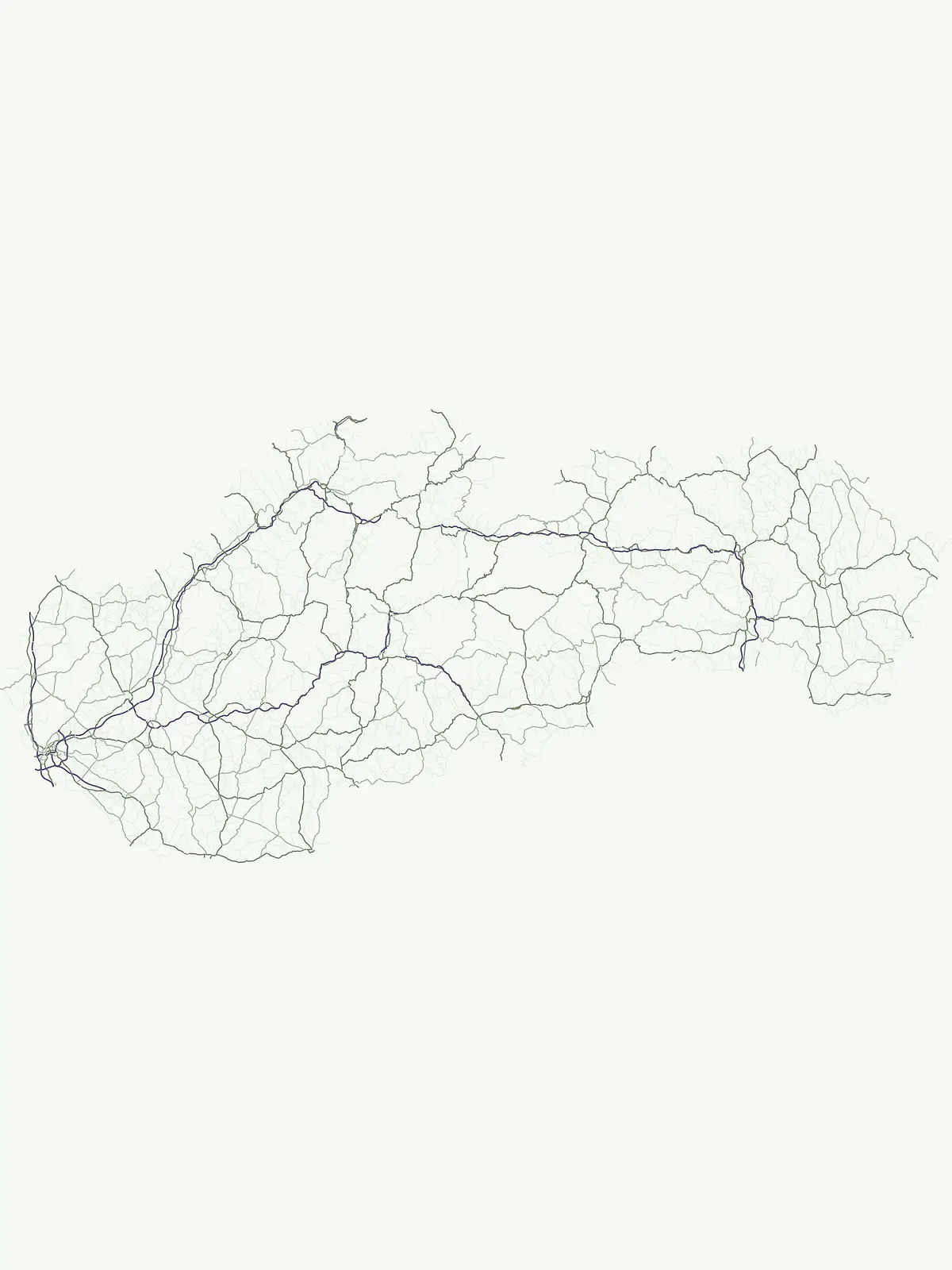
Discover the mapped boundaries and ecological significance of National Parks across Slovakia's landscapes.
In Slovakia, Category II National Parks represent significant natural or near-natural protected areas. These landscapes are managed to safeguard core ecological processes, characteristic species, and vital ecosystems, while also facilitating compatible education, recreation, and visitor engagement. This route details the specific parks within Slovakia that align with the IUCN's National Park definition, offering a geographic overview of their distribution and protected status.

Explore Slovakia's diverse National Park geography, highlighting key protected landscapes and mountain regions.


Explore mapped terrain and regional geographic context.
The Low Tatras National Park represents Slovakia's largest protected area, encompassing the entirety of the Low Tatras mountain range. Its landscape is defined by dramatic altitudinal diversity, from alpine summits like Ďumbier to extensive forest zones and significant karst formations with notable cave systems. This page provides detailed geographic context and map-based discovery for the park's protected boundaries and its ecological significance within the Carpathian region.

Explore the boundaries and terrain of this national park.
Investigate Slovak Paradise National Park, a designated national park situated within Slovakia's Košice Region. This detailed entry provides essential context for understanding its protected landscape features, mapped geographic distribution, and role within regional atlas exploration. Discover its unique terrain and boundaries to build a comprehensive view of Slovak conservation areas.

Explore mapped boundaries, regional geography, and protected karst terrain.
Pieniny National Park offers a focused exploration of dramatic limestone gorges and unique Carpathian mountain geography within Slovakia's Prešov Region. This national park is celebrated for the spectacular Dunajec River Gorge, a feature that defines its protected landscape and provides a profound example of natural terrain shaping. Understanding Pieniny National Park involves appreciating its specific mapped boundaries and its role as a significant protected area within the broader atlas of European natural wonders and conservation territories.
Explore the park's mapped boundaries and regional natural terrain.
Veľká Fatra National Park stands as a distinct protected area, offering critical insights into Slovakia's regional geography and landscape character. This entry provides an atlas-driven perspective on its mapped boundaries and its significance as a national park. Delve into the structured geographic details and protected land context that define Veľká Fatra National Park for comprehensive discovery.

Explore the mapped terrain and regional geography.
Malá Fatra National Park serves as a cornerstone for understanding Slovakia's protected landscapes. This dedicated park page provides crucial geographic context, detailing its national park designation and the extent of its protected area boundaries. Users can leverage MoriAtlas to visualize the park's location within the broader regional geography, facilitating a structured approach to discovering its natural landscape and terrain through map-based exploration.
Explore protected terrain and mapped underground wonders in Košice Region.
Slovak Karst National Park offers an unparalleled glimpse into a dynamic karst environment. As a designated national park and UNESCO Biosphere Reserve, it preserves a significant concentration of caves, dramatic limestone formations, and rugged canyons within its territory in southeastern Slovakia. This atlas-focused presentation highlights the park's distinctive geology, mapped landscape features, and its importance as a protected natural area within the broader geography of the Košice Region. Understand the park's surface topography and its world-renowned subterranean realms.
Mapped terrain and unique mountain meadows in Slovakia's Eastern Carpathians.
Delve into Poloniny National Park, a protected national park located in the Prešov Region of Slovakia. This entry focuses on the park's distinct protected landscape identity, featuring its extensive primeval beech forests that form part of a UNESCO World Heritage site, and its characteristic polonina meadows. Understand its geographic positioning within the Bukovské vrchy mountains and its role as a transboundary protected area, offering a unique lens for atlas-based discovery of Carpathian natural heritage.

Explore mapped boundaries, caves, and endemic flora in Banská Bystrica Region.
Muránska planina National Park represents a significant protected landscape in central Slovakia's Banská Bystrica Region, defined by its extensive karst topography. This national park encompasses a limestone and dolomite plateau rich with geological wonders, including over 150 caves, sinkholes, and karst springs. The unique contrast between the flat plateau surface and the sharp, rocky ravines showcases a dramatic natural terrain. Explore the park's mapped boundaries and its remarkable biodiversity, highlighted by 35 endemic species and rare Tertiary relict flora like Daphne arbuscula, making it a key destination for atlas-based geographic discovery.
Browse Slovakia's Nine National Parks, Tracing Ecological Processes Across Carpathian Mountain Systems
Matching parks
9
These parks and protected areas currently define how National Park appears across Slovakia.
Category focus
A large natural or near-natural protected area managed to safeguard ecological processes, characteristic species, and ecosystems while also supporting education, recreation, and compatible visitor use.
Representative parks
Ecosystem protection
Definition
A National Park is a large natural or near-natural protected area established to protect large-scale ecological processes, along with the complement of species and ecosystems characteristic of the area, while also providing a foundation for environmentally and culturally compatible spiritual, scientific, educational, recreational, and visitor opportunities. The category is used for places where conservation remains primary, but where public engagement is an accepted and often important secondary function. The defining balance is not unrestricted access, but carefully managed access compatible with ecosystem protection.
Key characteristics
Category II areas are typically large enough to sustain important ecological functions and to protect more than a single feature or species. They often contain broad habitat mosaics, major watersheds, mountain systems, forests, savannas, coastal landscapes, wetlands, marine systems, or other extensive environments where ecological processes operate across scale. Unlike stricter categories, National Parks usually include a visitor dimension, which may involve trails, viewpoints, interpretation, education, and controlled recreation. However, the category is not meant for heavily urbanized tourism landscapes or places managed mainly as leisure destinations. Its defining character lies in ecosystem-scale conservation, representative natural values, and public use that is shaped around ecological limits rather than the other way around.
Management focus
Management in National Parks generally combines ecosystem protection, visitor planning, interpretation, and long-term stewardship. Managers may use zoning, visitor infrastructure, transport controls, habitat restoration, species protection measures, fire or water management, invasive species control, and education programmes to reconcile conservation with public access. Active management may be required where landscapes have been altered or where visitor pressure is high, but the overriding test is whether actions support the park's ecological purpose. Well-managed Category II areas often balance access and restraint, allowing people to learn from and enjoy the protected area while keeping large-scale ecological processes, characteristic species, and natural systems at the center of decision-making.
Protection purpose
The purpose of Category II is to conserve large natural or near-natural areas in a way that secures ecosystem processes and biodiversity over the long term, while also providing people with opportunities for learning, inspiration, recreation, and connection to nature that remain compatible with conservation.
Management objective
Typical objectives include protecting functioning ecosystems at scale, conserving native species and ecological processes, maintaining scenic and natural values, supporting research and environmental education, providing well-managed visitor access and recreation, restoring degraded areas where necessary, and preventing incompatible development or extractive uses that would undermine the park's long-term ecological integrity.

Category history
The National Park idea has deep roots in nineteenth- and twentieth-century conservation, when governments began setting aside large landscapes for protection from settlement, resource extraction, and landscape transformation. Over time, the concept evolved from scenic reservation toward broader ecosystem conservation. Within the IUCN management category system, Category II became the principal international framework for protected areas that are large, ecosystem-focused, and publicly legible as major conservation landscapes. Although national park names and legal traditions differ widely from country to country, the category helps distinguish those areas managed primarily for ecosystem protection and compatible visitation from both stricter reserves and more human-shaped protected landscapes.
Global examples
Representative examples often include world-famous large protected areas such as Yellowstone National Park in the United States, Serengeti National Park in Tanzania, Torres del Paine National Park in Chile, and many other nationally designated parks whose management priority is ecosystem protection combined with compatible public use. Not every site named 'national park' is automatically IUCN Category II, but the category is widely associated with large, iconic protected areas where conservation and carefully managed visitation are both central.
Compare the diverse protected area classifications, examining their distinct conservation mandates and national scope.
IUCN category v
A protected area where the long-term interaction of people and nature has created a distinct landscape or seascape with significant ecological, cultural, and scenic value.
Example parks
Subotička Peščara
Understanding Slovakia's National Park Geography and Protected Area Distribution
Delve deeper into the specific Category II National Parks found across Slovakia. Understand the unique management intent, geographic distribution, and atlas context of these protected areas. This route provides detailed insights for a structured exploration of Slovakia's designated National Parks, complementing broader conservation mapping.