
Mori Atlas logo
Nature reserveAffelderchen und Rettichbruch von Klein-Welzheim

Understanding the hydrologically dynamic wetlands and rare botanical mosaic of this German protected area

Affelderchen und Rettichbruch von Klein-Welzheim: A Protected Wetland Nature Reserve in Hesse

(Naturschutzgebiet Affelderchen und Rettichbruch von Klein-Welzheim)

Affelderchen und Rettichbruch von Klein-Welzheim serves as a critical protected landscape within the Seligenstädter Senke of Hesse. This nature reserve preserves a complex mosaic of marshy woodland, species-rich meadows, and open water features that provide essential habitats for specialized flora and breeding birds. Recent hydrological changes from beaver activity have further transformed the lowland terrain into an increasingly water-rich refuge for regional biodiversity.

wetland nature reservewet meadowsmarshlandorchidsbirdwatchingbreeding birds
An illustration of a calm body of water surrounded by grassy banks, lush bushes, trees, and distant hills under a soft sky.

Affelderchen und Rettichbruch von Klein-Welzheim

Nature reserve

Park overview

Structured park overview, official facts, and landscape profile for Affelderchen and Rettichbruch von Klein-Welzheim

Affelderchen and Rettichbruch von Klein-Welzheim park facts, protected area profile, and essential visitor context

Review the core facts for Affelderchen and Rettichbruch von Klein-Welzheim, including designation, size, terrain, visitor scale, habitats, and operating context in one park-focused overview.

About Affelderchen and Rettichbruch von Klein-Welzheim

Affelderchen und Rettichbruch von Klein-Welzheim is one of the many small but ecologically valuable nature reserves in the Untermain lowlands of Hesse. Located in the town of Seligenstadt, close to the border between Hesse and Bavaria, the reserve lies in a shallow landscape depression shaped by the regional hydrology and bordered by the L 2310 state road to the south. Its position in the Seligenstädter Senke gives it a distinctive wetland character unusual for the otherwise open agricultural surroundings of the Main valley.

The roughly 51 hectares of the reserve are predominantly forested, but the most ecologically important zones are the species-rich wet meadows and marshy clearings. These habitats are carefully managed through an adapted mowing regime timed to the optimal season, a practice that has measurably improved the populations of characteristic plant species over the years. The reserve is rich in regionally uncommon flora, including several orchid species in the genera Dactylorhiza and Epipactis, the conspicuous bogbean (Menyanthes trifoliata), the yellow and Siberian irises (Iris pseudacorus and Iris sibirica), and the marsh fern (Thelypteris palustris).

Birdlife is another defining feature of the site. The Affelderchen area supports breeding red-backed shrikes and reed warblers, while the Rettichbruch is a regular breeding ground for golden orioles and occasionally hosts woodcocks. Because the reserve is also embedded in a landscape with intensive roads nearby, the natural area can sometimes be observed from the roadside, but it remains ecologically functional and is managed as an IUCN Category IV habitat and species management area, the German equivalent of which is the formal Naturschutzgebiet status. Since 2015, raccoons have spread into the wet habitat, and since the winter of 2021 to 2022 beavers have significantly reshaped the water balance of the area, attracting further wildlife such as coypus and waterbirds.

Quick facts and research context for Affelderchen and Rettichbruch von Klein-Welzheim

Affelderchen und Rettichbruch von Klein-Welzheim is a designated nature reserve in the Offenbach district of Hesse, Germany, situated within the municipal area of Seligenstadt. Established in 1983 through a protective ordinance, it covers approximately 51 hectares of wetland forest and meadows in the Seligenstädter Senke natural area.

Its designation key is 1438007, and it is registered with the World Database on Protected Areas under ID 81250. The reserve is classified as an IUCN Category IV habitat and species management area and is administered by the lower nature conservation authority of the Offenbach district.

Protection and recognition

Review documented terrestrial protection scope and official records for this reserve

Affelderchen und Rettichbruch von Klein-Welzheim Protection Status and Boundaries

Affelderchen und Rettichbruch von Klein-Welzheim maintains a documented terrestrial protection scope within global conservation databases. Verified records outline administrative boundaries and official status without relying on external recognition sources.

Protection details

Protection scope
Terrestrial
WDPA ID
81250
Park context

Deeper park guide and search-rich context for Affelderchen and Rettichbruch von Klein-Welzheim

Affelderchen and Rettichbruch von Klein-Welzheim history, landscape, wildlife, and travel context

Explore Affelderchen and Rettichbruch von Klein-Welzheim through its history, landscape character, ecosystems, wildlife, conservation priorities, cultural context, and seasonal travel timing in a structured park guide built for atlas discovery and search intent.

Why Affelderchen and Rettichbruch von Klein-Welzheim stands out

The reserve is best known for its wet meadows and marshy woodland rich in rare plants, including several orchid species (Dactylorhiza and Epipactis), bogbean, marsh fern, and yellow and Siberian irises. It is also recognized as a breeding and feeding habitat for threatened bird species such as red-backed shrike, marsh warbler, and golden oriole, with cuckoo present as a brood parasite. In recent years the area has also gained attention for its dynamic hydrology, after beavers dammed the Affelderchen brook in the winter of 2021 to 2022, raising water levels by more than a meter and transforming the formerly damp depression into an open lake visited by ducks, coots, storks, and herons.
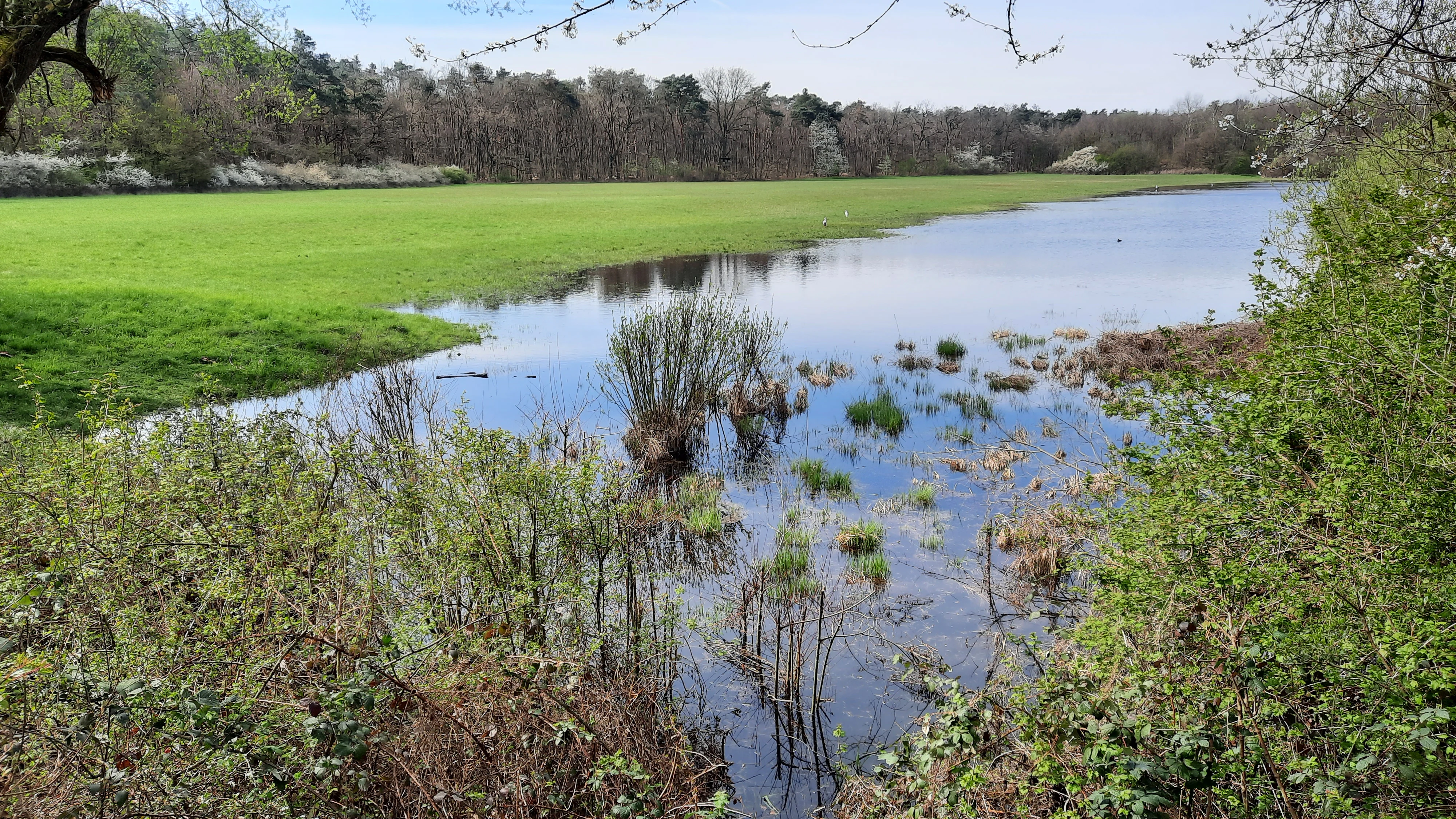
A peaceful wetland scene featuring a pond reflecting the blue sky, surrounded by vibrant green grasses and dense forest foliage, with a meadow stretching into the background.
A flooded meadow in the Affelderchen und Rettichbruch protected area, formed by beaver activity.

Affelderchen and Rettichbruch von Klein-Welzheim history and protected-area timeline

The nature reserve was formally established under a protection ordinance dated 25 February 1983, which set out the purpose of preserving and developing the area as a refuge for endangered plant species and as a breeding and feeding habitat for endangered bird species in the Untermain lowlands. The ordinance explicitly recognized the area as a landscape-defining and landscape-structuring element of the regional environment.

Prior to designation, the area had already attracted scientific interest. In 1982, G. Große-Brauckmann of the Geobotany group at the Technical University of Darmstadt produced an unpublished expert report on the Rettichbruch and Affelderchen, providing one of the earliest detailed ecological assessments of the site.

Since designation, the reserve has been managed by the lower nature conservation authority of the Offenbach district. Meadow management through adapted mowing has been refined over time, while more recent ecological developments, such as the arrival of raccoons from 2015 onward and the dramatic hydrological changes caused by beavers from the winter of 2021 to 2022, have added new dimensions to the site's ecological story.

Affelderchen and Rettichbruch von Klein-Welzheim landscape and geographic character

The reserve sits in the Seligenstädter Senke, a shallow natural landscape depression in the Untermain lowlands, between the Seligenstadt district of Klein-Welzheim to the north and the L 2310 state road to the south. The terrain is gently low-lying, shaped less by dramatic relief than by subtle changes in elevation that determine where water collects and where wetland vegetation can thrive.

The predominant land cover is wet woodland, but interspersed within it are species-rich wet meadows, marshy clearings, and increasingly open water. The Affelderchen brook flows through the reserve, and the construction of a beaver dam in the winter of 2021 to 2022 transformed a formerly damp depression into a newly formed lake whose surface has since become a notable landscape feature, now frequented by waterfowl.

Overall, the landscape impression is of a quiet, water-rich refuge embedded in the agricultural matrix of the Main plain, with forest cover, open meadows, and dynamic wet patches combining to create a mosaic that is unusual in the regional context.
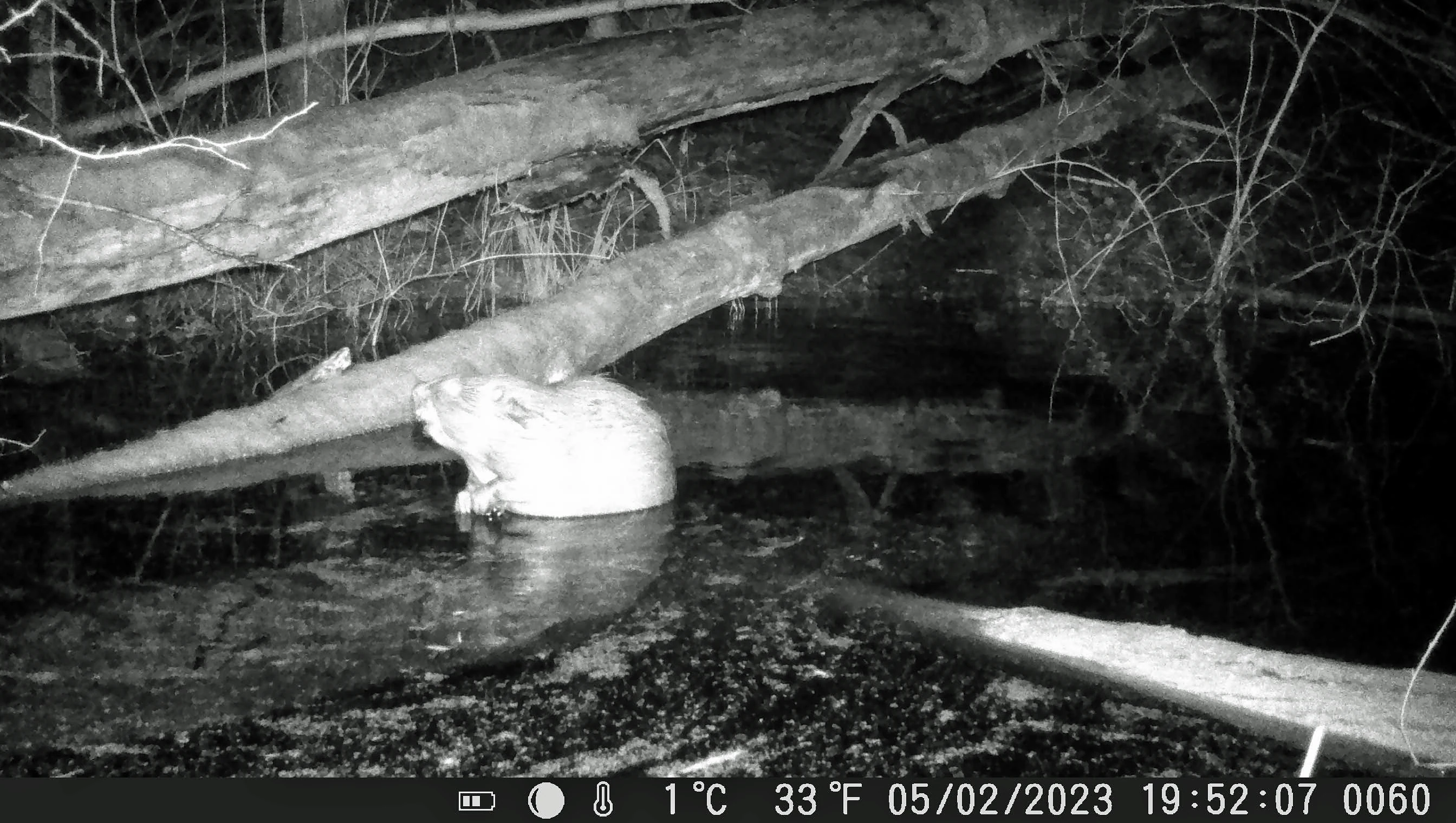
A grainy, black-and-white night vision trail camera photo of a beaver sitting in water next to fallen tree trunks in a dark, wooded wetland environment.
A trail camera capture of a beaver in the Affelderchen und Rettichbruch nature reserve.

Affelderchen and Rettichbruch von Klein-Welzheim ecosystems, habitats, and plant life

The nature reserve protects a careful mosaic of wetland forest, wet meadows, marshy clearings, and open water. This combination creates transitional habitats where moisture-loving plant communities meet drier woodland edges, supporting a high density of regionally uncommon species in a relatively small area.

Key ecological features include the wet meadows with their diverse flora, the marshy zones that support bogbean, marsh fern, and irises, and the shaded forest areas that provide structure and shelter. The management approach uses timed mowing to maintain meadow biodiversity while leaving the wetland forest largely undisturbed, which appears to have improved the populations of characteristic plants over recent years.

The ecological significance of the site is reinforced by its hydrology. The Affelderchen brook and its drainage patterns determine the distribution of habitats, and the recent beaver activity has further diversified the wet environments by creating standing water. This dynamic has turned the reserve into a kind of natural laboratory for wetland succession in the Untermain lowlands.
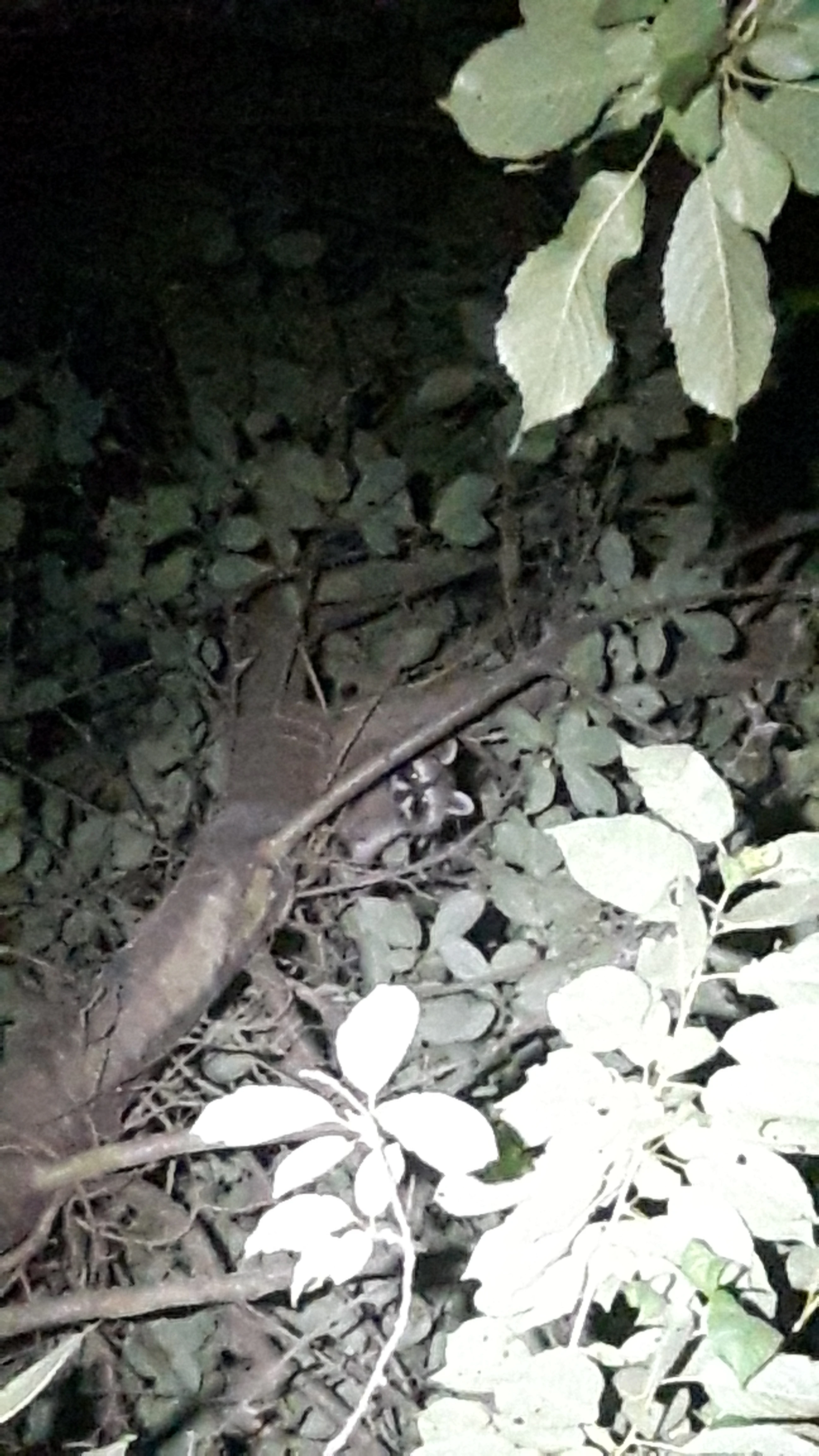
A raccoon with its characteristic dark eye mask is partially visible among tree branches and foliage at night.
A raccoon spotted within the dense vegetation of the Affelderchen und Rettichbruch nature reserve.

Affelderchen and Rettichbruch von Klein-Welzheim wildlife and species highlights

The reserve is notable for its breeding bird community, which includes red-backed shrike (Neuntöter) and reed warbler (Teichrohrsänger) in the Affelderchen area, and golden oriole (Pirol) regularly breeding in the Rettichbruch. The cuckoo is present as a brood parasite, and the Rettichbruch occasionally hosts woodcocks (Waldschnepfen).

After beavers dammed the Affelderchen brook in the winter of 2021 to 2022, water levels rose by more than a meter, transforming the formerly damp depression into a small lake. This new open water has attracted additional birdlife, including ducks, coots, storks, and herons, and provides a richer feeding habitat.

Mammals have also become a recognizable part of the reserve's wildlife profile. Raccoons (Waschbären) have been expanding in the wet habitat and its surroundings since at least 2015, a presence reflected in increasing wildlife collisions along the L 2310. From the winter of 2021 to 2022, beavers settled in the Rettichbruch and reshaped the local hydrology, and coypus (Nutrias) have followed into the newly altered wet habitat.

Affelderchen and Rettichbruch von Klein-Welzheim conservation status and protection priorities

The conservation purpose of the reserve, as defined by the 1983 ordinance, is to preserve and develop the area as a refuge for plant species that are endangered both in Hesse and across Germany, and as a breeding and feeding habitat for several similarly endangered bird species. Beyond species protection, the designation also recognizes the reserve as a landscape-defining and landscape-structuring element within the Untermain lowlands.

Management has emphasized habitat-appropriate interventions rather than strict preservation. Adapted mowing practices, carefully timed to the seasonal needs of meadow species, have helped stabilize and improve the populations of characteristic plants in recent years. The site is classified as an IUCN Category IV habitat and species management area, indicating an emphasis on active conservation management alongside habitat protection.

The reserve's conservation relevance extends to its role as a refugium for species at the edge of their regional range or under particular pressure, particularly orchids, irises, and several breeding bird species dependent on wet meadows and marshy woodland. Its location in an intensively used lowland landscape makes such a protected refuge disproportionately important for the regional ecological network.

Affelderchen and Rettichbruch von Klein-Welzheim cultural meaning and human context

The reserve is embedded in the cultural landscape of Seligenstadt, a historic town on the Main river known for its long-standing human settlement patterns. Although the protected area itself is a relatively modern conservation designation, the surrounding region has a long tradition of small-scale agricultural use, including hay-making in low-lying wet meadows, which indirectly shaped the open meadow character of the site.

The presence of old ecological assessment work, such as the 1982 expert report by the Geobotany group at the Technical University of Darmstadt, also reflects the broader German tradition of close academic engagement with local nature reserves. Today's management approach, particularly the carefully timed mowing, reflects a continued local understanding of the practical rhythms of meadow conservation.

Top sights and standout views in Affelderchen and Rettichbruch von Klein-Welzheim

A compact wetland reserve with high plant diversity, including several orchid species, bogbean, marsh fern, and both yellow and Siberian irises; a regionally important breeding site for red-backed shrike, reed warbler, and golden oriole; a dynamically changing hydrological system shaped by beaver activity since 2021; and a quiet example of intensive nature conservation integrated into the agricultural lowland landscape near Seligenstadt.

Best time to visit Affelderchen and Rettichbruch von Klein-Welzheim

Late spring and early summer are likely the most rewarding seasons to experience the reserve, when the wet meadows are at their floristic peak and orchid species, irises, and bogbean are most visible. This is also the period when breeding bird activity is at its highest, offering the best chance to observe characteristic species such as red-backed shrike, reed warbler, and golden oriole. Autumn and winter can be quieter, but they are when beaver activity and the resulting changes to the water landscape are most apparent. Visitors should keep in mind that this is a protected nature reserve and that observation from paths or, where permitted, from the adjacent L 2310, is typically the appropriate way to experience the site.
Monthly climate preview

Long-term representative temperature ranges and monthly precipitation distributions for Hesse

Affelderchen und Rettichbruch von Klein-Welzheim Climate Normals and Annual Weather Patterns

Historical NASA climate measurements for Affelderchen und Rettichbruch von Klein-Welzheim record sustained annual temperature variations alongside steady monthly precipitation totals. Reviewing the comprehensive twelve-month profile provides detailed analytical insight into the long-term regional weather rhythm.
Annual mean10 °C
0 °C21 °C
Jan
Feb
Mar
Apr10°
May14°
Jun18°
Jul21°
Aug20°
Sep15°
Oct10°
Nov
Dec
Warmest month
July

20.6 °C

Coolest month
January

0.2 °C

Wettest month
July

2.2 mm/day

Driest month
April

1.4 mm/day

Park location guide

Geography guide, regional context, and park location map for Affelderchen and Rettichbruch von Klein-Welzheim

Affelderchen and Rettichbruch von Klein-Welzheim park geography, regions, and map view in Germany

Understand where Affelderchen and Rettichbruch von Klein-Welzheim sits in Germany through a broader geographic reading of the surrounding landscape, nearby location context, and its mapped position within the national park landscape.

How Affelderchen and Rettichbruch von Klein-Welzheim fits into Germany

Germany is a federal republic in Western and Central Europe with a population of over 83 million across sixteen constituent states. It is Europe's largest economy by nominal GDP and a major global exporter and importer. The capital is Berlin, and the country borders Denmark, Poland, Czech Republic, Austria, Switzerland, France, Luxembourg, Belgium, and the Netherlands.

Wider geography shaping Affelderchen and Rettichbruch von Klein-Welzheim in Germany

Germany is located in Western and Central Europe, spanning 357,022 km². It borders Denmark to the north, Poland and the Czech Republic to the east, Austria and Switzerland to the south, and France, Luxembourg, Belgium, and the Netherlands to the west. The country has coastlines on the Baltic Sea and North Sea to the north, with the Alps located in the southern region.

Map view of Affelderchen and Rettichbruch von Klein-Welzheim

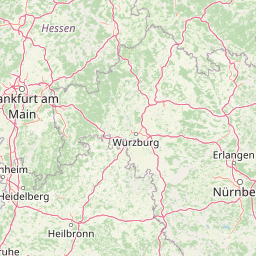
Use this park location map to pinpoint Affelderchen and Rettichbruch von Klein-Welzheim in Germany, understand its exact geographic position, and read its mapped placement within the surrounding landscape more clearly.

Pigeon | © OpenStreetMap contributors

Location context for Affelderchen and Rettichbruch von Klein-Welzheim

Hesse

Visualizing the wetland habitats, wet meadows, and dynamic lowland terrain of Hesse

Affelderchen und Rettichbruch von Klein-Welzheim Photos, Scenery, and Protected Landscape Views

Visual documentation reveals the intricate mosaic of wet woodland, marshy clearings, and open water features across the reserve. Examining these protected habitats clarifies how subtle elevation changes and beaver activity shape the surrounding Untermain lowland environment.

A peaceful wetland scene featuring a pond reflecting the blue sky, surrounded by vibrant green grasses and dense forest foliage, with a meadow stretching into the background.

A green triangular nature reserve sign with a black bird icon stands on a wooden post in a grassy field in Germany.

A grainy, black-and-white night vision trail camera photo of a beaver sitting in water next to fallen tree trunks in a dark, wooded wetland environment.

A raccoon with its characteristic dark eye mask is partially visible among tree branches and foliage at night.

Park atlas

Compare surrounding lowland reserves and connected wetland habitats across the region

Parks Near Affelderchen und Rettichbruch von Klein-Welzheim and Regional Protected Areas

Browsing other protected areas near Affelderchen und Rettichbruch von Klein-Welzheim reveals broader ecological patterns across the surrounding Untermain lowland landscape. Comparing nearby wetland reserves and lowland habitats provides valuable geographic context for understanding regional conservation networks.
Nature reserveLandkreis Offenbach
About 2.1 km away#1 closest

Southwest

Langhorst von Hainburg und Seligenstadt: Geography of a Main Valley Nature Reserve

Protected floodplain forest and wet meadows in Landkreis Offenbach

Langhorst von Hainburg und Seligenstadt is a key nature reserve in Landkreis Offenbach, Germany. This protected area showcases a preserved floodplain mosaic, featuring structurally diverse broadleaf forest, open wet meadows, and historical stream relics of the Main river system, serving as an essential ecological refuge within a densely populated region.

Area
0.823 km²
Established
1996
IUCN
IV
Relief
Lowland
A soft watercolor painting of a wetland area with grasses, water, and a tree line in the background.
Nature reserveHessen
About 2.7 km away#2 closest

Southeast

Bong’sche Kiesgrube und Mainufer bei Mainflingen: Protected Wetland and River Geography

Explore the lake and riparian terrain within the Hessen river system.

Formed from former gravel extraction sites and floodplain stretches, Bong’sche Kiesgrube und Mainufer bei Mainflingen provides a vital ecological link along the Main river. The reserve preserves a distinct mosaic of open water, reeds, and willow-dominated woodland, serving as a critical habitat for diverse waterbirds in central Germany.

Area
94.52 km²
Established
1977
IUCN
IV
A pale, horizontal watercolor painting showing a grassy floodplain, scattered deciduous trees, a gentle path or stream winding through the center, and a soft, pastel-toned sky.
Nature reserveHessen
About 3.8 km away#3 closest

Northwest

Pechgraben bei Klein-Krotzenburg Nature Reserve in the Hessen Protected Landscape Network

A preserved mosaic of ancient floodplain terrain and wetland habitats.

Located in the Offenbach district, this nature reserve protects a rare post-glacial flood channel of the Main river. The site exhibits a diverse landform mosaic, ranging from near-natural broadleaf forests to expansive sedge marshes. It functions as a critical protected geography for regional species, maintaining its ecological character against the surrounding agricultural and residential development of the Lower Main valley.

Area
0.341 km²
Established
1998
IUCN
IV
Relief
Lowland
Nature reserveLandkreis Offenbach
About 4.2 km away#4 closest

West

Kortenbach bei Froschhausen Nature Reserve: Geographic Mapping and Protected Forest Overview

Hardwood floodplain woodland in Landkreis Offenbach

Kortenbach bei Froschhausen protects a compact, groundwater-influenced forest ecosystem within the Offenbach district. This nature reserve acts as a critical refuge for mature broadleaf trees, including the rare European white elm. Our atlas entry focuses on the site's stream-fed terrain and its role as a preserved forest fragment amidst surrounding agricultural and transport infrastructure.

Area
0.405 km²
Established
1998
IUCN
IV
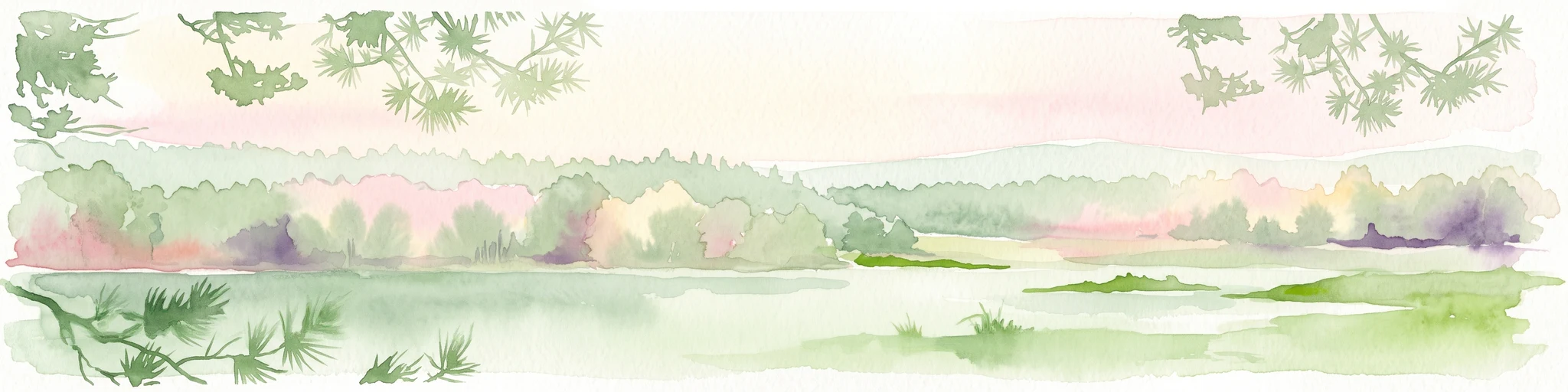
A horizontal watercolor painting showing a calm lake with marshy shores, distant tree lines, and pine branches framing the top and bottom corners, rendered in soft pastel greens and pinks.
Nature reserveHessen
About 4.2 km away#5 closest

Southeast

Ehemalige Tongrube von Mainhausen: Protected Nature Reserve and Wetland Habitat in Hessen

A vital sanctuary for waterbirds in the lower Main river valley

Explore the Ehemalige Tongrube von Mainhausen, an essential protected area in Hessen, Germany. Formed from a former clay pit, this site preserves a 15 hectare lake and diverse floodplain vegetation, functioning as a vital breeding and resting ground for numerous waterfowl species within the heavily modified lower Main valley.

Area
0.156 km²
Established
2005
IUCN
IV
Relief
Lowland
Nature reserveLandkreis Offenbach
About 5.8 km away#6 closest

Southwest

Rotsohl und Thomassee von Dudenhofen Nature Reserve in Landkreis Offenbach, Germany

Protected pine forest, wetland habitat, and pond mosaic

Spanning 52 hectares in the Rhine-Main lowlands, this nature reserve is defined by its compact interplay of dry pine forest and diverse wet open habitats. Known for the Postteiche and Weißensee ponds, it serves as a significant site for both breeding and migratory bird populations in a densely settled metropolitan region.

Area
0.519 km²
Established
1999
IUCN
IV
Nature reserveHessen
About 5.9 km away#7 closest

Southwest

Mooskiefernwald von Dudenhofen: Mapped Nature Reserve and Protected Pine Woodland in Hessen

Regional landscape context and protected area boundaries

Study the geographic composition of Mooskiefernwald von Dudenhofen, a specialized nature reserve in Hessen. This 36-hectare site features a rare moss-pine woodland environment and sandy soil habitats, offering a distinct contrast to the industrial and suburban landscape of the Rodgau area.

Area
0.361 km²
Established
1999
IUCN
IV
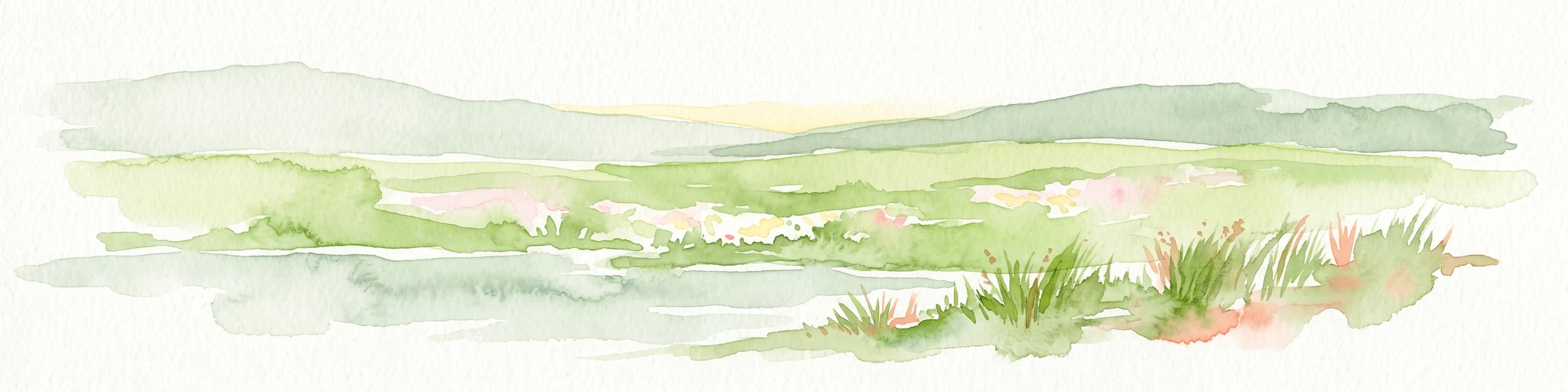
A wide watercolor illustration depicting a green wetland landscape with reed beds, grasses, and distant hills under a pale sky.
Nature reserveHessen
About 9.4 km away#8 closest

Northwest

Gräbenwäldchesfeld von Hausen: Nature Reserve and Protected Wetland Landscape Geography

Mapping rare meadow ecosystems in the Hessen region

Gräbenwäldchesfeld von Hausen functions as a critical protected nature reserve, safeguarding species-rich wet meadows and moisture-dependent flora in the town of Obertshausen. This atlas entry details the site's role within the Landkreis Offenbach, focusing on the preservation of reed beds and marsh landscapes amidst a predominantly urbanized terrain.

Area
0.054 km²
Established
1990
IUCN
IV
Relief
Lowland

Common questions about visiting, size, designation, and location context for Affelderchen and Rettichbruch von Klein-Welzheim

Affelderchen and Rettichbruch von Klein-Welzheim FAQs for park facts, access, geography, and protected area context

Find quick answers about Affelderchen and Rettichbruch von Klein-Welzheim, including protected-area facts, park geography, trail and visitor context, and how the park fits into its surrounding country and regional landscape.
MoriAtlas Explorer

Continue Your Protected Areas Search Across the Global Atlas

Deepen your exploration by continuing the structured search for national parks and protected areas worldwide. Utilize the comprehensive filtering capabilities to compare different conservation landscapes and refine your understanding of global park geography. Discover more about the distribution and characteristics of protected natural areas.

Global natural geography