
Trip Planning
When to Visit Alta Murgia National Park: The Best Time for Your Trip
For most visitors to Parco Nazionale dell'Alta Murgia, the most rewarding time to explore is during the shoulder seasons of spring and autumn. The park is characterized by an open, limestone-heavy landscape that lacks the dense forest cover found in mountainous regions, making it particularly susceptible to the intensity of the southern Italian sun. Because the plateau elevation is modest, the primary factor shaping a visit here is the contrast between the blistering, exposed heat of midsummer and the stark, cool serenity of the winter months.
Balancing Temperature and Terrain
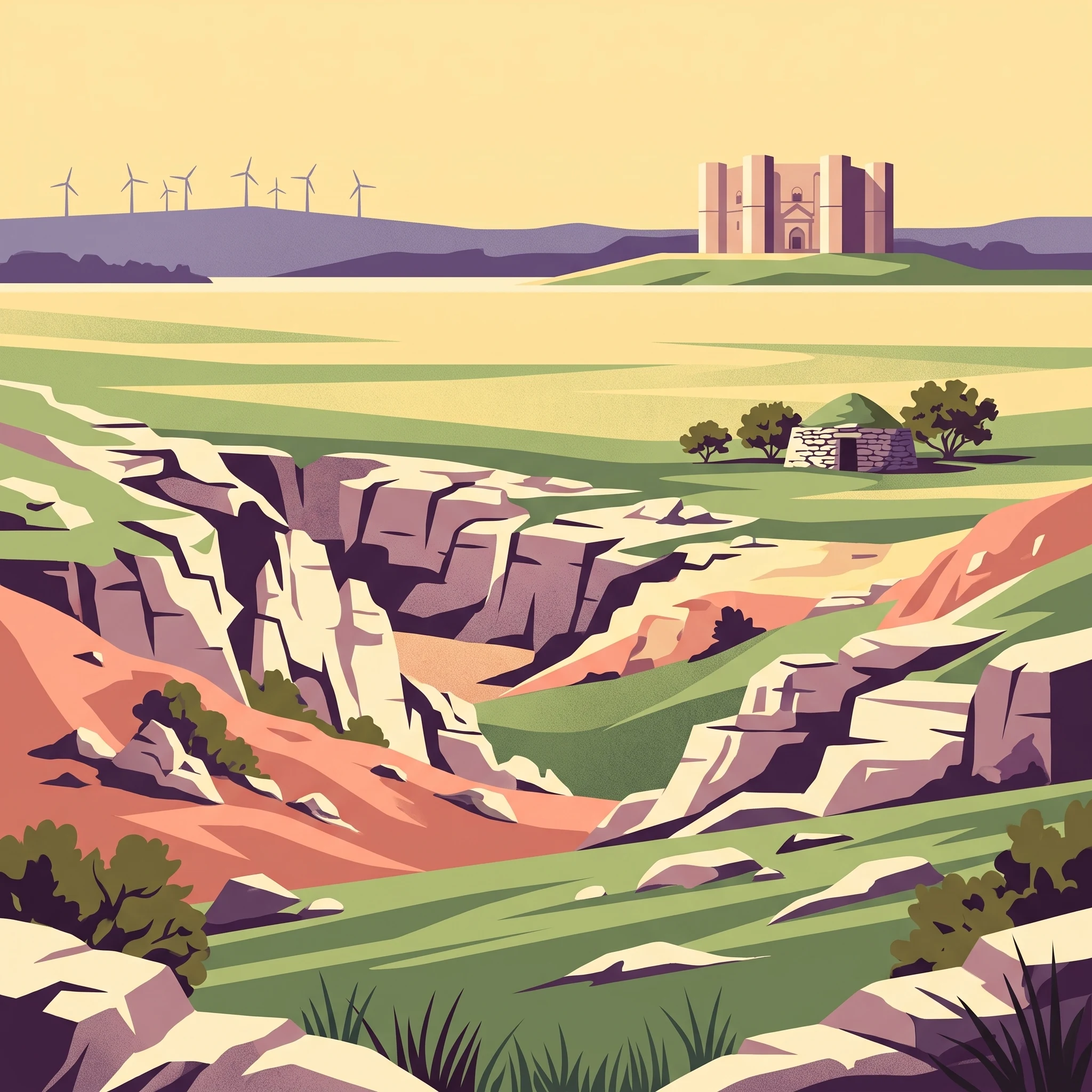
Selecting the best time to visit Alta Murgia National Park involves navigating a clear trade-off between thermal comfort and seasonal landscape visibility. During the peak of summer, particularly in July and August, afternoon temperatures can frequently climb toward 40 degrees Celsius. Because much of the park's allure lies in its open grass steppe, dry stone walls, and exposed archaeological sites like Castel del Monte, the lack of natural shade means outdoor activity during these months requires significant heat management and careful timing. Conversely, the transition months of April, May, and October provide a moderate temperature range that allows for extended periods of walking across the karst terrain without the endurance challenges posed by summer heat.
The Impact of the Plateau Environment
It is important to consider that the Murgia plateau is an inherently exposed environment. Even during cooler periods, wind patterns can influence how the temperature feels on the skin. Visitors should be aware that the plateau acts as a distinct climatic island within Puglia, often exhibiting more significant daily temperature swings than the nearby coastal areas. The scarcity of high-altitude cover means that sunlight is intense throughout much of the year, and the steppe habitat, while visually striking, provides little shelter from the elements. Those planning a trip should weigh their desire for long, clear days against the physical reality of navigating an ancient, rocky landscape that retains heat in the summer and can feel quite brisk during the shorter days of late autumn and winter.
Identifying Your Planning Priorities
Whether you prioritize the photographic opportunities of the spring bloom across the steppe or the crisp, clear air of an autumn day, the timing of your visit should align with your specific activities. While there is no single best time to visit the entire park, the calendar creates two distinct experiences. The spring and autumn windows are ideal for hikers and heritage enthusiasts seeking to explore the network of dry-stone walls and historic sites, while winter offers a quiet, stark perspective of the plateau for those prepared for lower temperatures and shorter daylight hours. Regardless of when you choose to go, the park remains a dynamic, living landscape that requires visitors to remain flexible to the current conditions and the specific demands of a semi-arid, karst environment.
Seasonal Outlook
Best Months for Visiting Alta Murgia National Park
Selecting the right time for your visit requires balancing the Apulian heat against your specific goals, such as exploring the karst landscape or birdwatching. The climate data indicates clear windows for comfortable outdoor activity versus periods where the steppe heat becomes the dominant factor in trip planning.
The Spring Window: April and May
For most visitors, the transition from late spring offers the best balance of manageable temperatures and extended daylight hours. Daytime highs in April average around 25 degrees Celsius, while May sees these figures climb toward 31 degrees. This period avoids the extreme heat of midsummer while capturing the landscape in its most vibrant state. It is an ideal window for hikers and those interested in visiting the archaeological sites scattered across the limestone plateau. The humidity remains moderate, typically ranging between 65 and 73 percent, which keeps the physical demands of traversing the open steppe, such as around the Pulo di Altamura, within a reasonable range for most active travelers.
The Autumn Clarity: October
As the intense summer energy dissipates, October emerges as a secondary, highly favorable window for park exploration. Temperatures shift downward to a comfortable mean of 16.6 degrees Celsius, with peak daily temperatures rarely exceeding 29 degrees. This is often the preferred time for visitors looking for cooler conditions for long-distance trail walking or site visits like Castel del Monte. The autumn period provides a crispness that contrasts with the heat-laden air of August. While rainfall increases slightly in October, the shift provides a refreshing change for the karst terrain, and visitors benefit from shorter, more manageable walks without the persistent solar exposure found in earlier months.
Navigating Summer Intensity: June through August
Travelers should be aware that summer on the Murgia plateau presents significant physiological challenges. From June through August, average daily maximums consistently reach between 36 and 39 degrees Celsius. Humidity drops to its lowest levels, often falling below 50 percent, which creates a dry, searing environment across the open limestone tableland. If you choose to visit during this time, planning activities for the early morning is essential. The lack of shade across the grass steppe makes mid-day exploration difficult and potentially hazardous. While these months offer the longest daylight periods of the year, nearing 15 hours in June, the trade-off is the necessity of strict heat management and limited duration for outdoor excursions.
Winter and the Shoulder Transitions
The winter months from December to February bring the lowest temperatures, often dipping near the freezing point during the night, with means hovering around 7 degrees Celsius. While the park remains accessible, the high humidity and wind-exposed nature of the plateau can make these months feel significantly colder than the raw thermometer reading suggests. November and December are statistically the wettest months, which can turn the karst trails muddy or difficult to navigate. This period is best suited for those specifically interested in cultural site visits, such as the indoor-heavy historical sites, rather than extensive exploration of the rugged karst terrain.
Annual Climate Overview
Monthly Weather and Climate Trends in Alta Murgia National Park
Interpreting the Plateau Climate
The climate of Alta Murgia is defined by its position on a karst limestone plateau, a geography that amplifies seasonal extremes and creates a distinct meteorological profile compared to the nearby Adriatic coast. Long-term climate normals, based on data collected at approximately 289 meters of elevation between 1991 and 2020, illustrate a landscape characterized by sharp temperature fluctuations and significant shifts in atmospheric humidity. It is important to note that these values represent long-term regional averages and do not function as daily weather forecasts or account for microclimatic variations across the sprawling 677 square kilometer park. Visitors should treat these trends as a baseline for preparation rather than a guarantee of conditions on any specific trail or site.
Thermal Intensity and Seasonal Shifts
The most prominent feature of the annual cycle is the dramatic escalation in temperature between the cooling influence of late winter and the intense heat of mid-summer. While winter nights frequently dip near or below the freezing point, often bringing frost to the exposed limestone terrain, the daytime maximums rise rapidly once spring transitions toward early summer. By June, average daily maximums reach roughly 36.8 degrees Celsius, climbing toward their peak in July and August with daytime highs frequently exceeding 39 degrees Celsius. This thermal intensity is a defining factor for the park, as the lack of deep shade across much of the grassland steppe means hikers are fully exposed to solar radiation during these months.
Rainfall, Humidity, and Atmospheric Patterns
Unlike many Mediterranean environments that experience predictable, heavy winter monsoons, the Murgia plateau exhibits a more modulated precipitation pattern. Rainfall is distributed across the year but remains consistently low, typically averaging between 0.88 mm/day and 2.31 mm/day. The wettest phase occurs during the late autumn and early winter, specifically November and December, when relative humidity levels also reach their annual peak, often exceeding 83 percent. This contrast is critical for visitors, as the higher humidity during these cooler months can make the air feel perceptibly damp, intensifying the chill on the windswept karst plateau. Conversely, the summer months are defined by notably drier air, with relative humidity levels dropping below 50 percent in July, which accelerates evaporation and contributes to the arid appearance of the steppe.
The Influence of Daylight and Wind
Daylight hours follow a clear seasonal arc, peaking in June with nearly 15 hours of sunlight, which facilitates long days of exploration but also exacerbates the risk of heat exposure during peak summer. As the year progresses, daylight contracts significantly to just over 9 hours in December. These shorter days, combined with the plateau’s topography, influence the timing of visibility and safety for outdoor activities. Wind remains a constant factor across the open landscape throughout the year. With average speeds consistently hovering between 3.5 and 4.4 meters per second, the wind acts as a cooling agent during the sweltering heat of August but significantly increases the chill factor during the winter months when temperatures are already near freezing.
Seasonal dynamics
Understanding seasonal climate phases and transitions in Alta Murgia National Park
The Rhythm of the Limestone Plateau
Rather than adhering to a strict four-season calendar, the weather patterns of Alta Murgia are best understood as a cycle of thermal extremes and transition phases defined by the plateau's exposed limestone geography. The absence of significant canopy cover across the steppe landscape means that solar exposure and wind behavior dictate the environmental conditions more than traditional seasonal markers. The year moves between distinct periods of thermal intensity, wind-influenced cooling, and brief, temperate transitions that define the utility of the landscape for visitors.
The Spring and Autumn Temperate Windows
The most stable visiting conditions occur during the transition windows of April to May and October. These months serve as the ecological bridge between the extreme heat of the summer and the damp, chill cycles of winter. In April and May, the plateau undergoes a rapid greening, providing a rare visual contrast to the otherwise arid aesthetic of the steppe. This is when temperature means rise into the comfortable 13 to 18 degree Celsius range, offering the most balanced climate for covering the open terrain of the park. October functions as the autumn mirror to this period, where the intensity of the summer sun recedes, leaving a cooling, crisp atmosphere that retains sufficient warmth during the daylight hours for extended exploration.
Peak Thermal Intensity of Summer
From June through August, the Murgia plateau enters its most demanding phase. The climate normal data reflects a significant shift toward sustained heat, with monthly maximums frequently exceeding 35 degrees Celsius and occasionally approaching 40 degrees. During this period, the landscape becomes notably arid, and the combination of high UV exposure and limited natural shade requires careful planning for any outdoor activity. Humidity levels drop to their lowest annual points, often falling below 50 percent in July, which creates a dry heat that can feel deceptive. Visitors during these months should anticipate that the environment dictates a much slower pace of movement, particularly during the middle of the day.
The Winter Cool and Humid Cycle
Beginning in November and extending through February, the park experiences its most challenging weather conditions regarding thermal comfort and humidity. Mean temperatures drop toward the 6 to 7 degree Celsius mark, with average lows hovering around freezing. Unlike the dry air of summer, this period is characterized by higher relative humidity, frequently exceeding 80 percent, which can make the air feel colder than the thermometer indicates. The wind, which remains a constant feature of the Murgia throughout the year, becomes a significant factor during these months. While it is rarely a period of heavy precipitation, the combination of wind chill and moisture makes the exposed karst landscape feel quite raw. This period is less about the open steppe experience and more about the cultural and archaeological sites that offer shelter, such as the indoor galleries of the area's medieval structures.
Seasonal Experiences
What Visiting Alta Murgia National Park Is Like Throughout the Year
Navigating the Karst Terrain and Steppe Ecosystems
Alta Murgia’s distinctive karst landscape, defined by dry valleys and porous limestone, dictates how visitors interact with the park throughout the year. During the cooler transition months of April, May, and October, the soil remains stable and the ambient temperature supports extended trekking across the exposed plateau. These periods provide the most favorable conditions for exploring sites like the Rocca del Garagnone, where the terrain is rocky and lacks shade. In contrast, the peak summer months from June through August bring mean maximum temperatures often exceeding 36 degrees Celsius. During this time, the limestone reflects significant heat, making long-distance hiking across the open steppe physically demanding and potentially hazardous without careful timing and preparation.
Historical and Cultural Site Exploration
The park’s rich cultural heritage, anchored by the UNESCO-listed Castel del Monte, offers a versatile visiting experience that is less dependent on climate than outdoor trekking. While the castle remains a popular destination year-round, its elevation on an isolated hill makes it highly exposed to winds, particularly during the winter months of December and January. Visitors seeking to combine historical tours with light walking will find that the shoulder months offer a balance between comfortable indoor exploration and the ability to walk the surrounding paths without the interference of seasonal weather extremes. It is important to note that access to specific archaeological points of interest, such as the Dinosaur Valley near Altamura, may be subject to local municipal organization and guided tour schedules that do not always align with peak tourist seasons.
Wildlife Observation and Birdwatching
The grass steppe habitat of Alta Murgia is a critical breeding ground for the lesser kestrel. For enthusiasts focusing on birdwatching, the timing of a visit is linked to the species' biological cycle. Spring is the primary window when these falcons are active in their breeding colonies. As the landscape transitions from the temperate humidity of spring to the arid, high-heat conditions of mid-summer, bird activity patterns shift. While the open steppe is accessible year-round, birdwatching success relies on the early to mid-morning hours during the spring and early autumn, as the mid-day heat of the summer months creates thermal updrafts and inactivity that can obscure bird observation. Visitors should also be aware that the park’s ecological status requires adherence to designated trails, ensuring that exploration remains respectful of the sensitive karst environment and its avian inhabitants regardless of the chosen month.
Visitor Priorities
Timing Your Visit to Alta Murgia National Park by Activity and Preference
Selecting a Window for Hiking and Steppe Exploration
For those prioritizing extensive trekking across the Murgia plateau, the choice of season is governed by the need to balance daylight against the intense solar exposure characteristic of this limestone landscape. April and May offer the most reliable conditions for long days on the trails. During these months, daytime maximums remain significantly lower than the midsummer peaks, allowing for extended morning or late afternoon walks without the risk of heat-related exhaustion. The trade-off for this comfort is a slightly higher humidity level compared to the arid peak of summer, though this is rarely high enough to interfere with physical activity. Hikers visiting in these months also benefit from the blooming of native wildflowers, including various species of orchids and wild tulips, which are absent in the sun-baked, dormant months.
Prioritizing Mild Weather for Cultural Site Visits
Visitors whose primary goal is to explore the park's historic architecture, such as Castel del Monte or the traditional jazzi, often find October to be the most rewarding month. While the heat of July and August can turn outdoor cultural sites into challenging environments, October provides a moderate climate with mean temperatures dropping back into the comfortable mid-teens. The daylight hours are shorter than in the spring, which necessitates a more structured itinerary for those looking to see multiple sites in one day. However, the tradeoff is the disappearance of the summer wind-driven heat. The cooler, clearer air of autumn is particularly well-suited for wandering the grounds of medieval fortifications or examining the stone carvings in historic sinkholes like Pulo di Altamura without the haze that can accompany higher humidity.
Timing for Wildlife Observations
Birdwatching, particularly for the lesser kestrel, is a primary interest for many visitors to the steppe. The breeding season for these raptors coincides with the spring months, making April and May the most productive periods for observers. During this time, the steppe is at its most verdant, providing a stark visual contrast to the rocky, arid terrain that defines the area for much of the rest of the year. Visitors choosing this window for wildlife should be prepared for potential spring wind patterns, which are moderate but persistent across the exposed plateau. While summer offers clear skies and consistent weather, the bird activity is less pronounced as the young fledge and the landscape enters its dry summer cycle, meaning the window for dynamic wildlife interaction is concentrated in the earlier half of the year.
Balancing Daylight and Heat Extremes
If your schedule forces a visit during the warmer months, prioritize the early morning hours to mitigate the risk of high temperatures. July and August feature the most significant heat, with average maximums often reaching or exceeding 39 degrees Celsius. While these months provide the maximum amount of daylight, allowing for very long days, the midday heat renders the open, exposed steppe physically demanding. The primary compromise for choosing these months is a limitation of activity to the very start or end of the day, as the intensity of the sun on the treeless plateau effectively prevents comfortable exploration during the peak afternoon hours.
Visitor Access and Logistics
Seasonal Access and Operational Considerations for Alta Murgia National Park
Navigating the expansive terrain of Alta Murgia requires a clear understanding of what aspects of park access are permanent features of the landscape and which are subject to seasonal or administrative change. Because the park spans over 677 square kilometers across multiple municipalities in the Apulian region, there is no single entrance gate or unified toll system. Instead, the park functions as an open territory where road access and site accessibility are managed by local, provincial, and national authorities. Travelers planning their visit should prioritize checking current access protocols for specific monuments or archaeological sites, as these may shift based on maintenance schedules, restoration efforts, or updated protective regulations.
Access and Transportation Realities
Accessing the park typically requires a private vehicle, as public transport options to remote sections of the Murgia plateau are limited and do not cater to casual hiking or site-seeing routes. While major regional towns like Altamura and Gravina in Puglia serve as primary gateways with better connectivity, reaching the more isolated karst formations and traditional stone pastoral structures, known as jazzi, necessitates personal transportation. Travelers should verify the status of provincial roads and rural access paths with official park authorities, especially when planning travel during transitional seasons like late autumn or winter, when minor routes may be impacted by localized weather events or agricultural maintenance activities.
Verifying Site-Specific Operations
For high-profile cultural sites like the UNESCO-listed Castel del Monte, operational status, entry fees, and opening hours are managed by specific heritage institutions. These details are not evergreen and can change significantly depending on the time of year or special event schedules. Before finalizing travel dates, visitors must consult the official portals for the park and its key cultural institutions to confirm that planned sites are open to the public. Relying on outdated guidebook information or informal travel blogs can lead to disappointment, as site access is frequently adjusted to accommodate structural preservation work.
Navigating Seasonal Constraints
While the park remains open throughout the year, the physical ease of movement through the karst landscape is dictated by the seasons. During the summer months, the lack of shade across the exposed steppe and the high daytime temperatures necessitate early-morning excursions. Conversely, during the winter months, visitors should be aware that while the park does not close, the daylight hours are significantly shorter, and lower temperatures may affect the feasibility of longer hiking routes. Visitors should verify any specific trail closures or restricted zones through the official park administration website before arrival to ensure compliance with current environmental protections and safety guidelines.
Safety and Preparation
Seasonal Weather Safety and Preparation for Alta Murgia
Adapting to the Murgia Plateau Environment
Preparation for exploring this vast limestone plateau requires acknowledging that the landscape offers minimal natural shelter. The Murgia is characterized by an open, exposed steppe terrain where weather conditions are felt intensely. When planning your visit, recognize that long-term climate normals suggest a sharp divide between the high-heat, arid conditions of the summer months and the cooler, damp transitions experienced in late autumn and winter. Because the park lacks dense forest cover across much of its interior, visitors are fully exposed to solar radiation during the day and rapid temperature drops once the sun sets. Always monitor official, localized weather reports immediately before departure, as the steppe environment can experience wind shifts that alter the perceived temperature significantly regardless of the season.
Seasonal Dressing and Layering Strategies
Because the park spans a significant karst tableland, the most effective preparation involves a flexible layering system. During the spring months, such as April and May, mornings can be quite brisk, while midday temperatures climb rapidly. Wearing multiple layers allows you to adjust to these fluctuations without needing specialized gear. In the autumn, particularly October, humidity levels begin to rise, and dampness can make the air feel colder than the thermometer indicates. Sturdy, closed-toe footwear is essential throughout the year, given the rocky, uneven karst terrain and the prevalence of dry stone paths. Avoid light or open footwear, as the limestone surface can be abrasive and unpredictable, especially near sinkholes or rocky ravines.
Managing Exposure and Daylight Shifts
Daylight duration varies significantly across the year, and this has practical implications for your planning. In winter, the sun sets early, and visibility across the open plateau diminishes quickly. During the summer months, the daylight window is much longer, but the period between 12:00 and 16:00 often brings the most intense heat. If you are visiting during the high-heat season, plan your outdoor activities for the early morning to minimize exposure to the strongest sun. The absence of shade is a constant factor on the plateau, so proactive planning regarding your duration in the field is more important than specific specialized equipment. Always inform others of your planned route or stay within designated trail networks, as the park's scale and uniform topography can make orientation challenging for the inexperienced. Prioritize checking official park alerts regarding any temporary route closures or fire safety restrictions, which may be implemented during periods of extreme heat or high wind.
Final Planning
How to Choose the Right Time to Visit Alta Murgia National Park
Deciding when to visit Alta Murgia National Park requires aligning your personal stamina for heat and terrain with the specific character of the Apulian landscape. Because the park features an exposed karst steppe, the most effective planning strategy involves prioritizing comfortable thermal windows. If your primary goal is active exploration, such as hiking across the limestone ravines or birdwatching for the lesser kestrel, targeting the shoulder months of April and May or October provides the most reliable weather. These periods balance mild average temperatures with manageable daylight, avoiding the significant thermal risks associated with the high-heat summer months.
For travellers focused on cultural sites like the UNESCO-listed Castel del Monte or the archaeological context of the region, the choice becomes a matter of comfort rather than just activity. Visiting during the shoulder seasons allows for a more relaxed pace when navigating these historic locations, as the lower temperatures make walking between sites or standing in open, unshaded areas much more sustainable. Conversely, those visiting in late autumn or winter may find a quieter, cooler environment that suits a more reflective, pace-oriented cultural tour, though one must be prepared for the damp and wind that characterize this period.
Ultimately, the right time for your trip is not dictated by a single ideal window but by your ability to manage the physical demands of the terrain. The intense summer heat, which can see maximums regularly exceeding 39 degrees Celsius, fundamentally changes the viability of any outdoor pursuit. If you choose to travel during high-heat months, you must consciously shift your itinerary toward early morning or late evening hours to avoid the peak sun. If you prefer the comfort of moderate, steady weather, the mid-spring or mid-autumn weeks remain your most stable choices.
Remember that climate normals represent long-term regional patterns rather than daily reality. The Murgia plateau is subject to localized weather fluctuations, and you must verify current operational status, weather alerts, and site-specific access rules shortly before your departure. By matching your desired intensity of activity to the documented seasonal trends, you can ensure your visit to this unique limestone environment is both safe and rewarding.