Why Anshi National Park stands out
Anshi National Park is best known for its significant population of black panthers, a melanistic variant of leopards that are relatively rare across India but thrive in this dense forest habitat. The park is also notable for being part of one of the largest continuous protected forest landscapes in the Western Ghats, forming a near-uninterrupted ecological corridor spanning over 2,200 square kilometers across Karnataka, Goa, and Maharashtra. The presence of Bengal tigers, Indian elephants, and the diverse birdlife including several hornbill species further distinguishes this reserve within India's protected area network.
Anshi National Park history and protected-area timeline
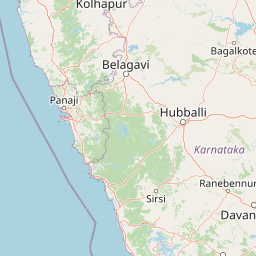
Anshi National Park traces its origins to the declaration of the Dandeli Wildlife Sanctuary on May 10, 1956, which provided initial protection to the region's forest resources. The state government subsequently proposed carving out a section of the sanctuary to establish a dedicated national park, a plan that materialized on September 2, 1987, when Anshi National Park was officially created with an initial area of approximately 250 square kilometers. The final notification issued in 2002 expanded the park by an additional 90 square kilometers. In January 2007, Anshi National Park together with the Dandeli Wildlife Sanctuary received Project Tiger status and was declared the Anshi Dandeli Tiger Reserve, creating a unified management framework for the combined 1,300-square-kilometer landscape. The reserve was renamed Kali Tiger Reserve in December 2015, adopting the name of the river that flows through its heart. This renaming was partly influenced by the release of a film called Kali that highlighted the river's ecological importance.
Anshi National Park landscape and geographic character
The terrain of Anshi National Park is characterized by the undulating hills and valleys typical of the Western Ghats, with elevation ranging from 27 meters in the river valleys to 1,059 meters at higher points. The landscape features dense forest cover with semi-evergreen and evergreen vegetation dominating the slopes and valleys. The laterite soil composition across much of the reserve has low water retention capacity, meaning that despite the high annual rainfall, water holes often dry out early in the summer season. The Kali River and its tributaries carve through the forest, creating riparian corridors that support distinct ecological communities. The landscape includes rocky outcrops, steep cliffs, and seasonal streams that contribute to the visual and ecological diversity of the reserve.
Anshi National Park ecosystems, habitats, and plant life
The ecological character of Anshi National Park is defined by two critically endangered ecoregions: North Western Ghats montane rain forests and North Western Ghats moist deciduous forests. These forests support exceptional biodiversity, with the canopy reaching heights that create a layered environment supporting diverse flora and fauna. The park's vegetation includes species such as bintangur, Malabar tamarind, hopea ponga, blackboard tree, and various bamboo species. The forest structure varies from dense evergreen formations in the valleys to semi-deciduous associations on the ridges. This habitat heterogeneity supports the diverse wildlife assemblages found within the reserve.
Anshi National Park wildlife and species highlights
Anshi National Park provides habitat for several flagship species including Bengal tigers, black panthers, and Indian elephants. The black panther, a melanistic variant of the leopard, is particularly notable and draws attention due to its relative rarity. Large mammals found in the park include Indian bison (gaur), sloth bear, wild boar, and various deer species such as sambar, spotted deer (chital), barking deer, and mouse deer. Primates include bonnet macaques and northern plains grey langurs, while smaller mammals include jungle cats, leopard cats, Indian grey mongoose, flying squirrels, porcupines, and the endangered Malabar civet. The park supports nearly 200 bird species, with hornbills being particularly prominent: the great hornbill, Malabar pied hornbill, Malabar grey hornbill, and Indian grey hornbill all inhabit the forest canopies. Reptiles include king cobras, spectacled cobras, pythons, and various viper species.
Anshi National Park conservation status and protection priorities
Anshi National Park contributes significantly to conservation within the Western Ghats biodiversity hotspot, protecting endangered forest ecoregions and providing crucial habitat for large carnivores and megafauna. The integration of the park with Dandeli Wildlife Sanctuary created a larger, more ecologically viable conservation unit capable of supporting viable populations of apex predators like tigers. The forest ecosystems here play important roles in watershed protection, carbon sequestration, and maintenance of biodiversity corridors connecting isolated protected areas. The designation as a Project Tiger reserve brought additional funding and management attention to the area. Both the montane rain forests and moist deciduous forests are classified as endangered by WWF, highlighting the conservation urgency of protecting these remaining forest patches.
Anshi National Park cultural meaning and human context
The region surrounding Anshi National Park is inhabited by communities whose relationship with the land predates formal protection. The area is part of Uttara Kannada district, where the local population primarily speaks Kannada. Traditional agricultural practices, collection of forest products, and small-scale livelihoods have historically shaped human-forest interactions in the region. The naming of the reserve after the Kali River reflects the river's significance to local communities, as it serves as a vital water source for irrigation and domestic use across Uttara Kannada district.
Top sights and standout views in Anshi National Park
The most distinctive features of Anshi National Park include its population of black panthers, its position within one of the largest contiguous protected forest landscapes in the Western Ghats, and its diverse birdlife featuring multiple hornbill species. The park's location in the North Western Ghats provides access to endangered forest ecosystems that support tigers, elephants, and numerous endemic species. The landscape offers opportunities for wildlife viewing, birdwatching, and nature trails through diverse habitats.
Best time to visit Anshi National Park
The optimal visiting period for Anshi National Park spans from October to May, with the park operational from 6:00 AM to 6:00 PM. The monsoon season from June to September brings heavy rainfall to the Western Ghats, which while creating lush scenery, can restrict movement and wildlife viewing. The winter and summer months offer better opportunities for sighting animals as they frequent water holes. The climate remains quite humid throughout the year, and visitors should be prepared for variable conditions.