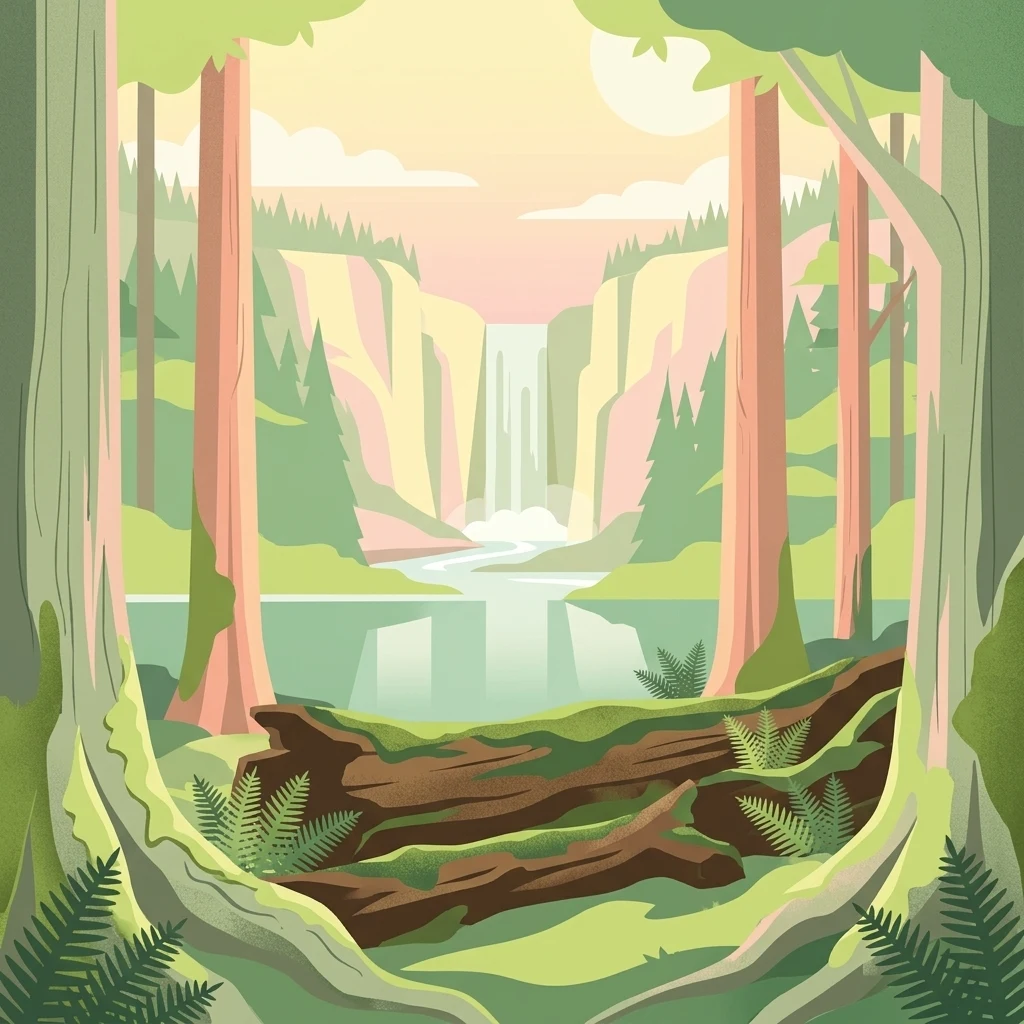
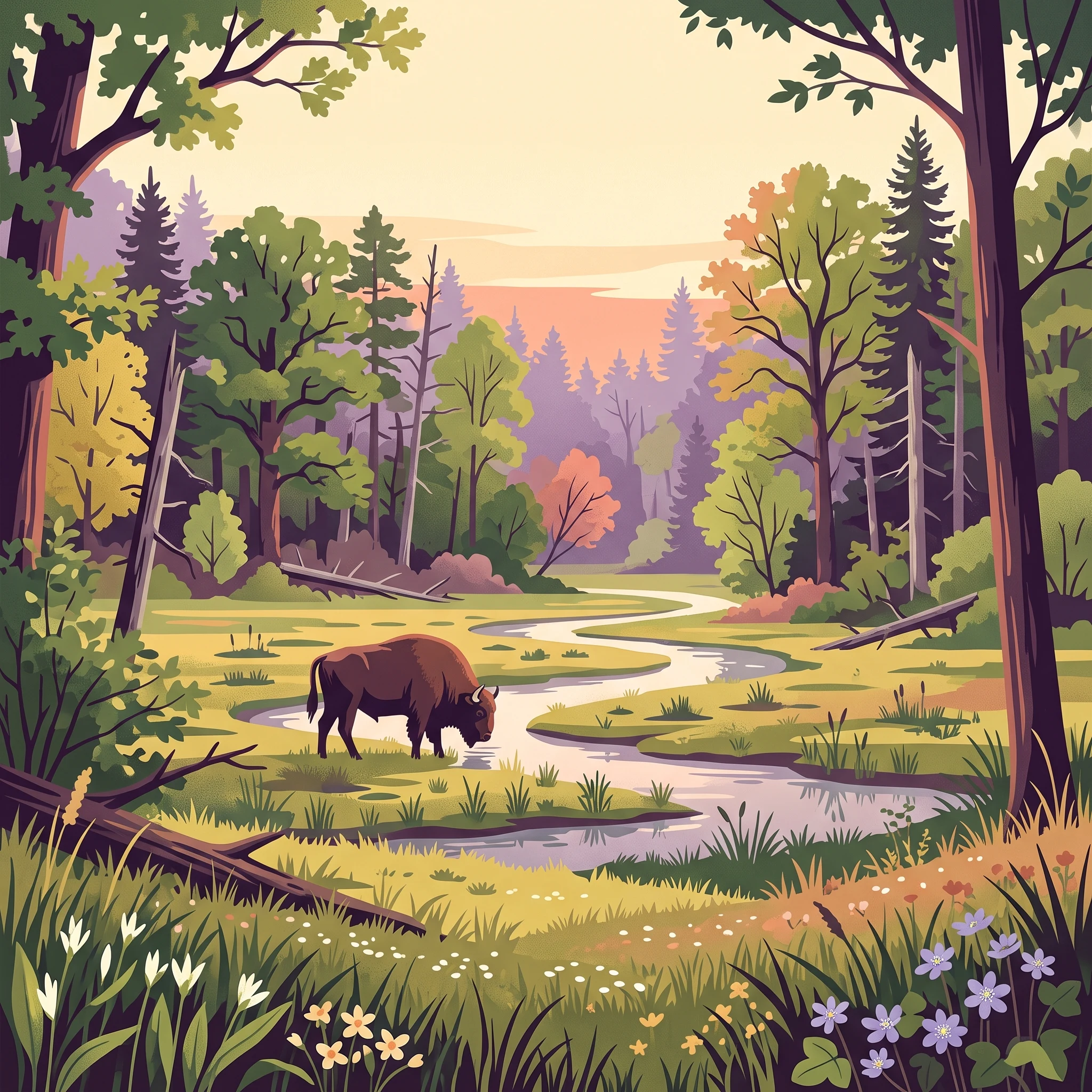
Europe's last fragment of primeval lowland forest, protecting the free-roaming bison of Białowieża.
Białowieża National Park
Białowieża National Park sits on the western edge of the great European lowland forest belt, in a region where Poland meets Belarus and where the cultural geography of Central Europe runs out into the marshy valleys of the Narewka and Hwoźna rivers. Although the protected area itself is modest in size, it represents the single best surviving example of an old-growth, multi-species deciduous and mixed forest that once stretched across much of the North European Plain.
The park's identity is built on the idea of strict protection. Inside the core Strict Protection Area, no forestry or active habitat management is carried out, and the forest is allowed to follow its own ecological rhythms of growth, dieback, and renewal. This produces a landscape of monumental old trees, dense regeneration beneath them, wind-throw gaps, and an unusually large share of decaying and dead trees. Roughly a quarter of the standing timber mass in the strict core consists of deadwood, which is itself a habitat for a vast community of fungi, bacteria, and invertebrates, many of which are now confined in Europe to this kind of old forest.
Beyond its forest character, Białowieża is also the world's foremost site for the conservation of the European bison. After the species had effectively vanished from the wild in the early twentieth century, a captive herd assembled at Białowieża became the foundation of every surviving bison population. The park today maintains both a captive reserve herd and a free-ranging population that roams over a much larger area of the Polish Białowieża Forest. This dual function, as both a refuge of natural forest processes and a center for the recovery of a flagship megaherbivore, gives the park a unique place in European nature conservation.
Its significance is recognized internationally. The Polish park's strict core was inscribed on the UNESCO World Heritage list in 1979, and the listing was extended in 1992 to include the adjoining Belarussian reserve, creating one of only a handful of transboundary World Heritage properties anywhere in the world and one of a small number in Europe. Białowieża has thus become both a working protected area and a global reference point for debates about how to manage, or how not to manage, primeval forests.