Why Białowieża National Park stands out
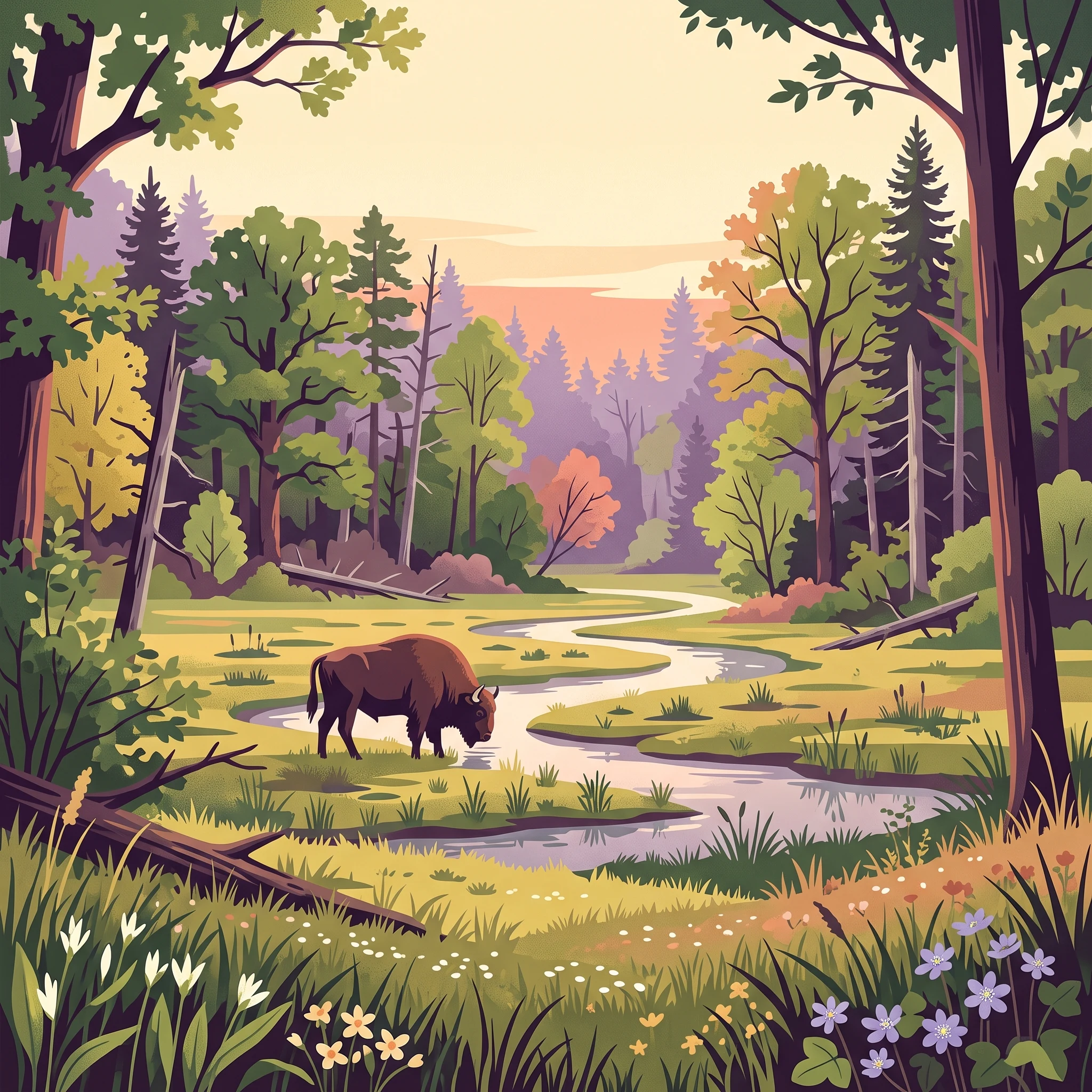
Białowieża is best known for being the last substantial refuge of primeval, lowland forest in temperate Europe, with old-growth oaks, hornbeams, spruces, ashes, and alders standing alongside fallen trunks and natural regeneration that has not been disrupted by commercial forestry. The Strict Protection Area in particular shows what a truly natural temperate forest looks like, with tall emergent spruces, a multi-layered canopy, abundant deadwood, and a wide variety of habitats. The park is equally famous as the place where the European bison was rescued from extinction. After the last wild Białowieża bison was killed in 1919, captive animals brought from European zoos were bred here and gradually returned to the wild starting in 1952, and the area now hosts the largest free-ranging population of this species in the world. Białowieża's bison herd has become the ancestor stock for virtually every free-living bison population that exists today.
Białowieża National Park history and protected-area timeline
Białowieża Forest has a long history of human presence. The oldest archaeological traces in the forest go back to the Neolithic, roughly 4,500 years ago, and consist of flint tools, stone axes, and fragments of pottery. Two Neolithic settlements were excavated near the villages of Rudnia and between Krynica and Kupicze, while later Iron Age cultures, from the first century BC through the fifth century AD, left evidence of mixed settlements associated with different archaeological cultures. In the forest, ancient slag and iron-working remains show that early inhabitants processed bog iron and burned charcoal, but their impact on the woodland was limited, and a later break in settlement allowed the forest to regenerate.
The idea of formally protecting part of the forest emerged slowly. In 1916, the Danzig-based botanist Hugo Conwentz, one of the founders of the nature conservation movement in this region, proposed a national park for the Białowieża area, but the proposal initially gained little traction. The idea resurfaced in 1919, during a census of the remaining Białowieża bison, when Polish botanist Władysław Szafer, Professor Eugeniusz Kiernik, and the forester Jan Kloska again argued for protection. In December 1921, the Ministry of Agriculture and State Estates formally separated the Rezerwat forest district from the rest of the Białowieża Forest, and in April 1924 this area was upgraded to a forest district bearing the same name. In 1923, Józef Paczoski took over leadership of the Rezerwat and began systematic research, followed in 1928 by Jan Jerzy Karpiński, and from January 1929 the area was placed under strict protection.
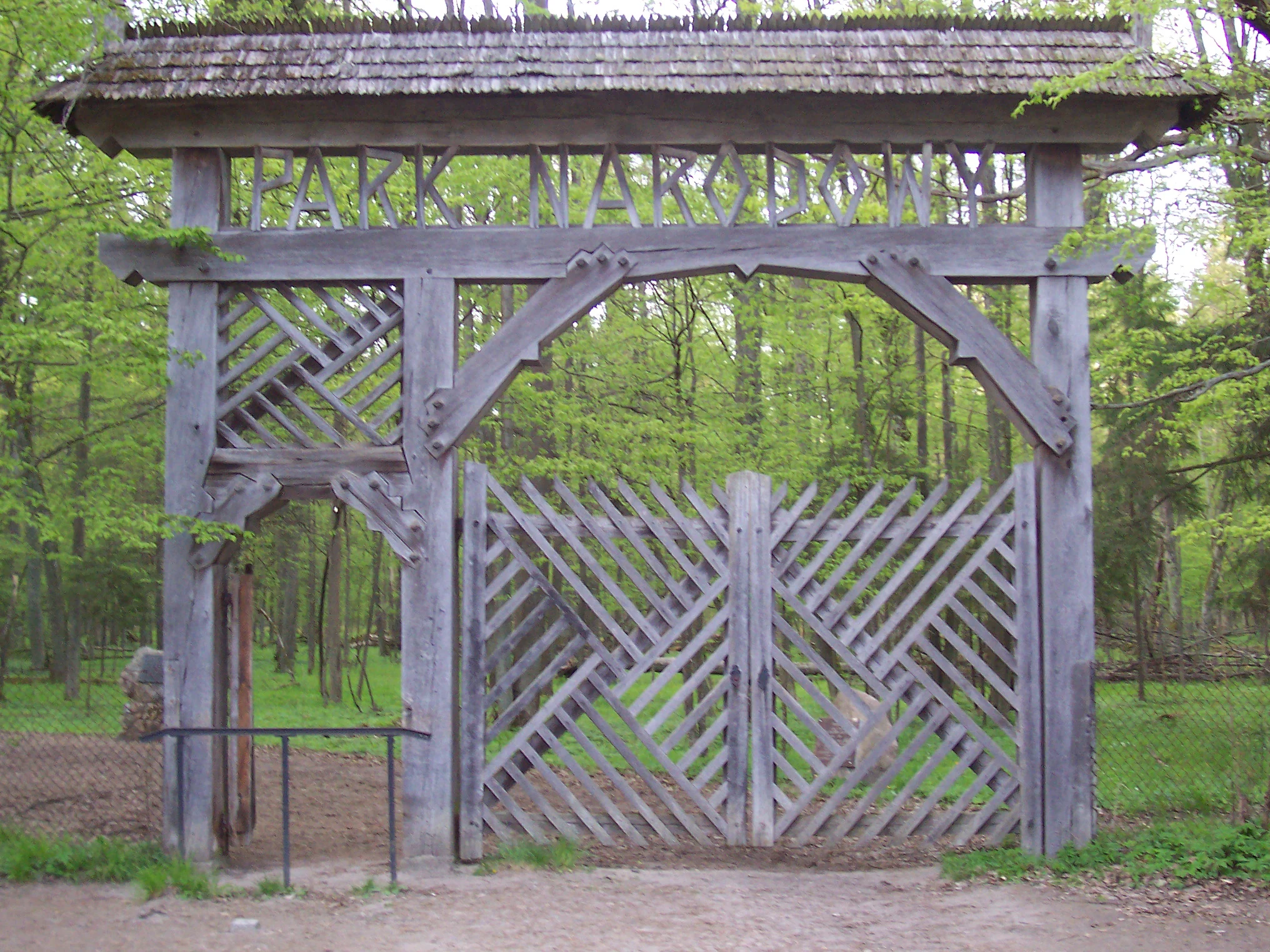
On 11 August 1932, by order of the Minister of Agriculture and Agrarian Reform, the Rezerwat forest district was converted into the first Park Narodowy w Białowieży, covering 4,693.24 hectares. The early park was administered by the State Forests Directorate in Białowieża, with research oversight from the State Forests Experimental Institute in Warsaw. After the Second World War, the park was re-established by decree of the Council of Ministers on 21 November 1947 under the name Białowieski Park Narodowy, with rivers Narewka and Hwoźna forming its western and northern boundaries and the state border with the Soviet Union running along its eastern edge.
In the post-war period the park was gradually expanded. On 26 October 1996 the park's area was increased to about 10,502 hectares by absorbing parts of two neighbouring forest districts, an enlargement that also abolished two earlier reserves in the forest, Wilczy Szlak and Głuszec, and brought their territory under national park status. A buffer zone of about 3,224 hectares was created around the park, and since 19 April 2011 this buffer has also been a hunting-free zone, with a prohibition on hunting and on the construction of hunting infrastructure. The 1979 UNESCO inscription and its 1992 extension across the border formally recognized both the Polish park's strict core and its Belarussian counterpart as a single transboundary property of outstanding universal value.
Białowieża National Park landscape and geographic character
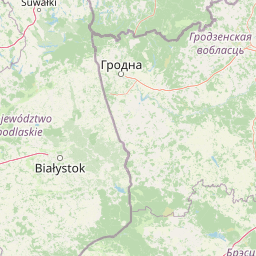
Białowieża National Park lies near the watershed divide between the Vistula and the Neman, on the Równina Bielska mesoregion of the East European Plain. The terrain is generally flat to gently undulating, but the protected area is far from monotonous, because subtle differences in soil moisture and river flooding produce a striking diversity of forest types across short distances.
The heart of the park lies in the fork of the Hwoźna and Narewka rivers, the area where the strict Protection Reserve is concentrated. The park contains no lakes, but several small rivers and streams cross its territory, including the Orłówka, which has its source inside the park, and tributaries of the Narewka such as the Łutownia, Przedzielna, and Braszcza. Wet meadows and riverine grasslands along the Narewka and Hwoźna were added to the park after the war and are part of its protected area. The park's climate is moderate, with a mean annual temperature of around 6.8 degrees Celsius and a mean annual precipitation of roughly 633 mm, most of which falls during the growing season; recorded extremes range from about minus 38.7 degrees to roughly plus 34.5 degrees Celsius.
Białowieża National Park ecosystems, habitats, and plant life
The Białowieża area holds the best preserved segment of natural lowland forest on the entire East European Plain. Deciduous forests make up more than two-thirds of the park, with hornbeam-lime-oak grąd forests dominating the richest soils and creating the classic mixed deciduous canopy that defines much of the forest.
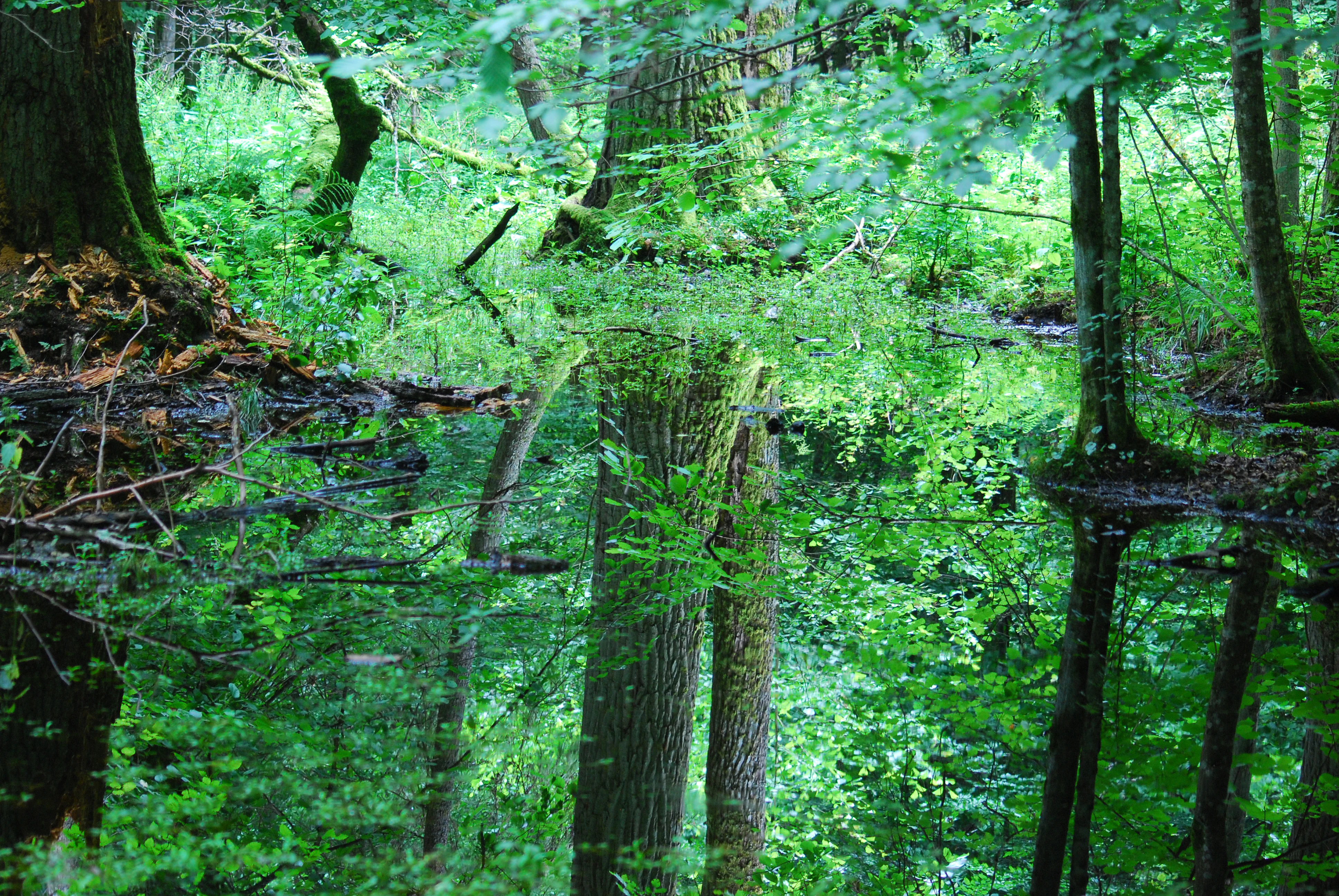
In places where the ground is flooded for several months each year, the canopy shifts to alder and ash swamp forests, while drier sites support coniferous and mixed pine and spruce forests. Across the protected area, about twenty distinct forest community types can be found, reflecting a remarkable ecological variety compressed into a relatively small territory. The park harbours more than a thousand plant species, including 728 vascular plant species and 277 lichen species, as well as notable rare species such as the globe-flower, Siberian iris, mountain arnica, and marsh violet.
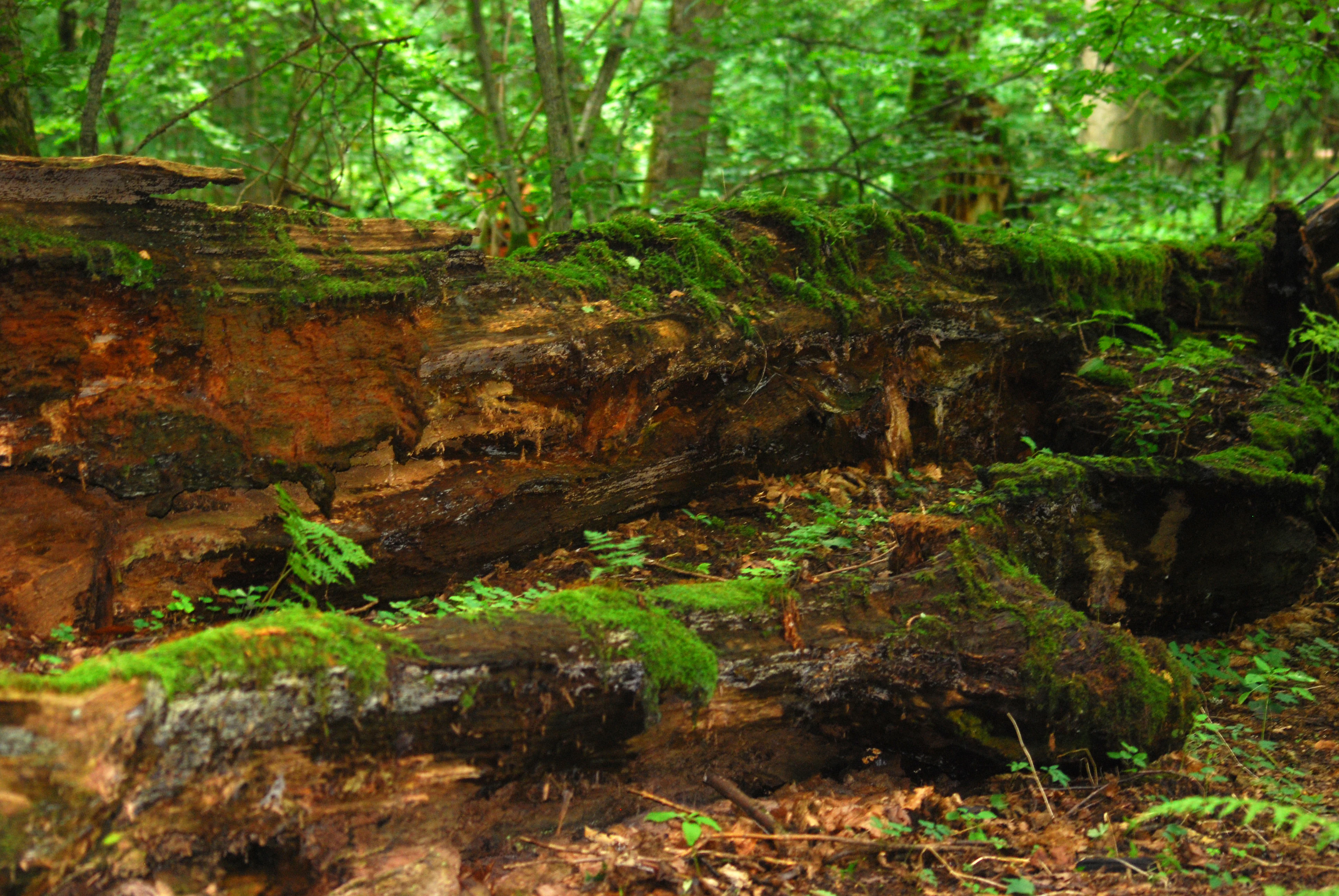
A defining feature of the park's ecology is the abundance of deadwood. In the Strict Protection Area, fallen and standing dead trunks make up roughly a quarter of the total tree mass, returning nutrients to the soil and supporting an exceptionally rich community of saproxylic fungi, bacteria, and invertebrates, many of which are now confined in Europe to forests of this kind. This high share of decomposing wood, combined with the layered structure of old trees and natural regeneration, is what gives the forest its most visible primeval character.
Białowieża National Park wildlife and species highlights
The Białowieża forest is one of Europe's richest wildlife areas at the level of species density and ecological quality, even though the absolute abundance of many species is low. More than 12,000 animal species have been recorded in the forest, a figure that is thought to represent only about half of the actual fauna, with the rest still to be scientifically described. Invertebrates dominate this count, with around 8,000 insect species, while vertebrates include roughly 58 mammal species, 120 bird species, 32 fish species, 7 reptile species, and 11 amphibian species.
The park's most famous resident is the European bison, which was saved from extinction through captive breeding at Białowieża. After the last wild bison in the forest was killed in 1919 and the Caucasian population also disappeared, animals from European zoos were brought together at Białowieża, initially kept in enclosures, and from 1952 gradually released back into the surrounding forest. Today the Polish side of the Białowieża Forest holds around 500 free-ranging bison, with roughly 950 across the entire forest, all descended from this Białowieża breeding stock that forms the genetic backbone of every free-living European bison population worldwide.
Beyond bison, the forest supports a community typical of natural European broadleaf woodland, including red deer, roe deer, wild boar, and wolves, along with a wide range of forest-nesting bird species. The park's emphasis is less on sheer abundance than on the presence of species that are typical of natural forests and sensitive to human disturbance, a profile that has made the area a benchmark for assessing the wildlife value of temperate woodlands across the continent.
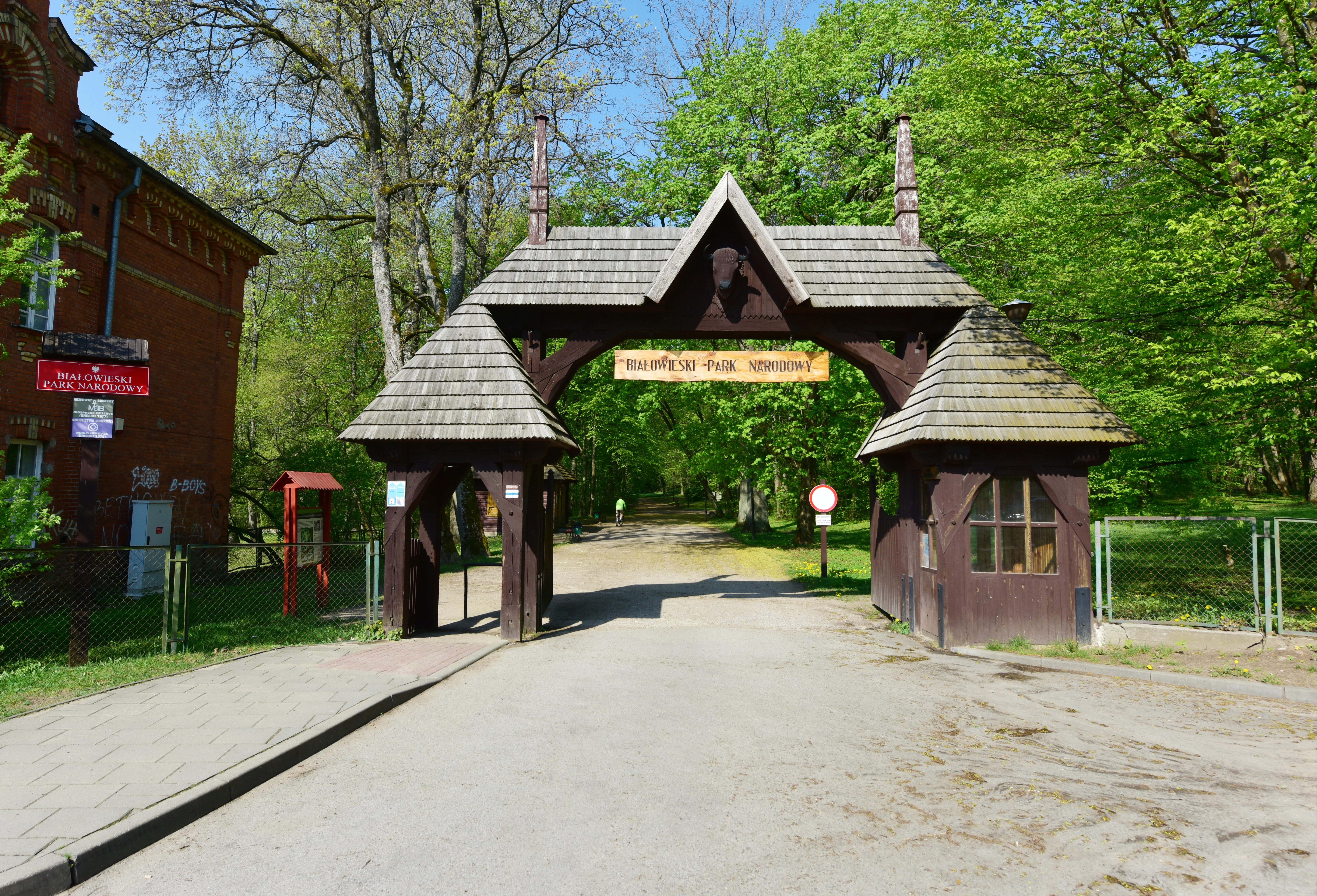
Białowieża National Park conservation status and protection priorities
Białowieża's conservation significance begins with its strict-protection core. Inside the Strict Protection Area, no forestry or active management is allowed, and the forest is allowed to follow its own ecological processes. This makes Białowieża one of the very few European forests where natural dynamics of growth, competition, dieback, and regeneration can still be observed at a landscape scale, without being overridden by logging or artificial reforestation.
The huge share of deadwood, roughly a quarter of the tree mass in the strict core, is a key conservation feature in itself, because it provides essential habitat for countless saproxylic species, many of which are red-listed or effectively restricted to this type of forest in Europe. The protection of this process-based, old-growth forest character is one of the park's core conservation goals.
Internationally, the park's conservation standing is anchored by its UNESCO World Heritage status. The Polish park was inscribed under cultural and natural criteria in 1979, and the listing was extended in 1992 to include the adjacent Belarussian reserve, creating a transboundary property that is one of only seven similar cases anywhere in the world and one of three in Europe. The park is also part of the European bison recovery effort and continues to function as the central breeding and reference population for the species. Proposals have at various times been made to expand the Polish national park to cover the entire Polish part of the Białowieża Forest, which would bring its protected status up to the same level as the Belarussian side across the border.
Białowieża National Park cultural meaning and human context
Białowieža itself carries a layered cultural history. Long before becoming a national park, the surrounding forest was a royal hunting ground and imperial reserve, first under Polish kings and then under the Russian tsars, which is why the bison population survived here into the early twentieth century. Several of the largest old oak trees, including the famous Dąb Jagiełły, are deeply embedded in local memory and named after historical figures.
Archaeological evidence in the forest, from Neolithic flint tools to Iron Age settlement remains and burial sites, shows that people have lived in and around this woodland for thousands of years. Their impact on the forest was generally limited, and after breaks in settlement, the woodland repeatedly regenerated into what we now recognise as the natural Białowieża forest. This long history of human presence alongside an intact forest landscape, and the layering of royal hunting traditions, peasant forestry, scientific research, and modern conservation all in the same place, is part of what gives Białowieża its cultural depth and explains the unusually strong place it holds in Polish identity and in the international history of nature conservation.
Top sights and standout views in Białowieża National Park
Białowieża's core highlights are its primeval forest character and its role in saving the European bison. The Strict Protection Area is the central feature of any visit, with guide-only access along marked trails through the old growth forest, including a route that passes the Dąb Jagiełły, a giant old oak, and continues to traditional pine trees once used by forest beekeepers.
Beyond the strict core, the park also offers the Bison Show Reserve, the park museum, and an observation tower in the Narewka valley for watching free-ranging wildlife. Together, the combination of old-growth deciduous and mixed forest with abundant deadwood, layered canopy structure, free-roaming bison, and international World Heritage recognition makes Białowieża one of the most distinctive protected natural areas anywhere on the European lowlands.
Best time to visit Białowieża National Park
Białowieża has a temperate continental climate with cold winters and warm summers, and most of its precipitation falls during the vegetation season. Late spring and early summer offer the richest display of wildflowers and fresh foliage, while autumn brings brilliant leaf colour in the broadleaf stands and increased activity of deer and other ungulates. Winter, with snow on the ground, gives a particular chance to see animal tracks in the strictly protected forest and can be the best season for spotting bison feeding in open meadows. Because guided access is required in much of the strict reserve, visiting when conditions allow full use of the marked trails and bison observation facilities is more important than picking one specific month, but the late spring bloom, autumn colour, and crisp, snowy winter each give the park a markedly different character.