
Why Belavezhskaya Pushcha National Park stands out
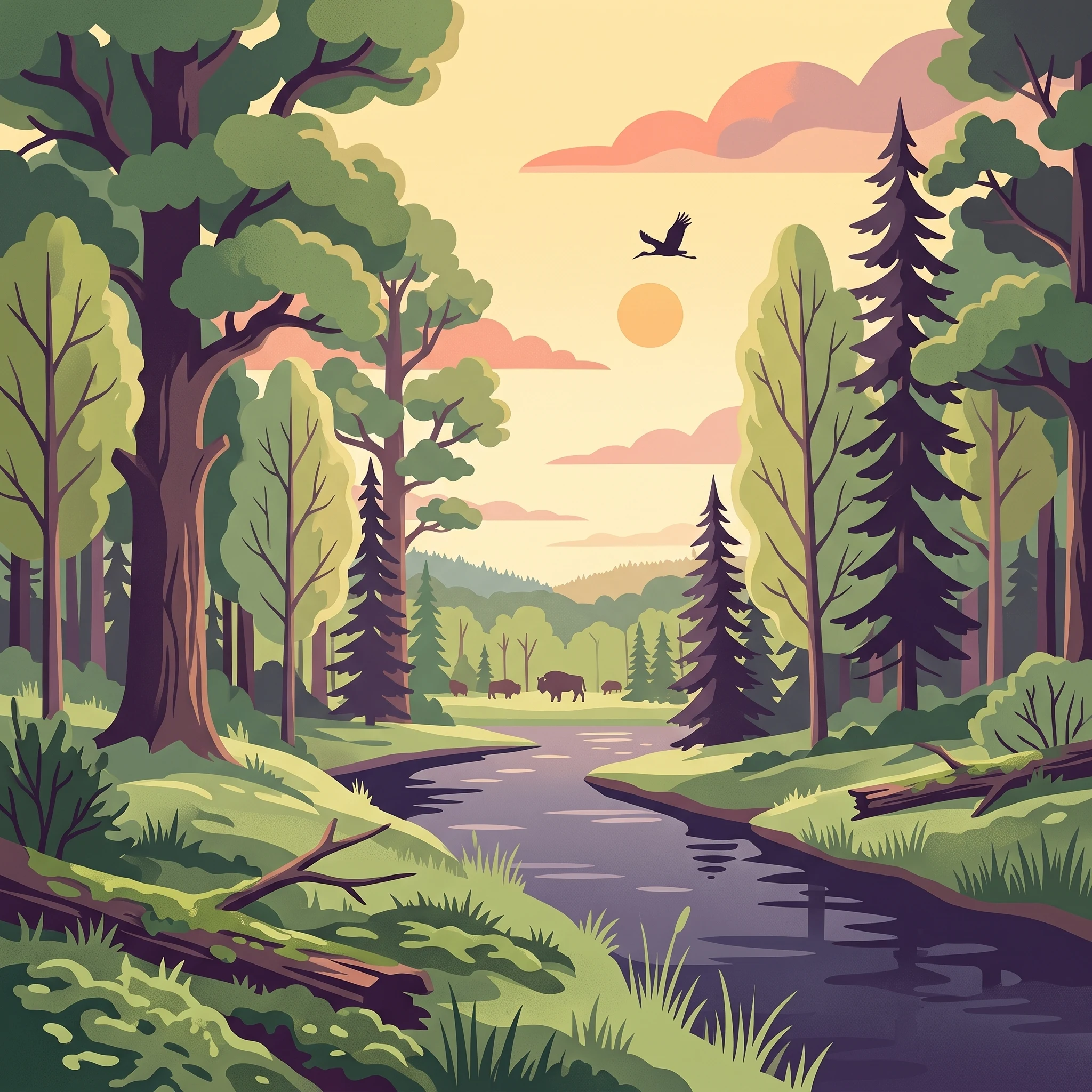
Belavezhskaya Pushcha is best known as the Belarusian portion of Europe's last primeval forest and as the primary sanctuary for the European bison (wisent), the continent's heaviest land animal. The forest represents an extraordinarily rare ecological time capsule, preserving the woodland ecosystem that once covered the entire European Plain before widespread deforestation. Visitors come to witness the dense old-growth forest with its towering oaks, hornbeam, and pine stands that have never been logged or significantly altered by human activity. The park's significance extends to its bird populations, with the forest serving as a crucial habitat for black and white storks, Eurasian eagle-owls, and both lesser and greater spotted eagles, earning it Important Bird Area designation by BirdLife International.
Belavezhskaya Pushcha National Park history and protected-area timeline
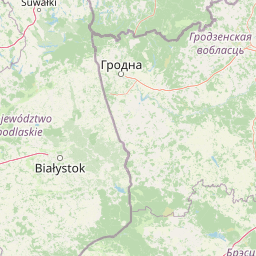
The protected status of Belavezhskaya Pushcha traces back to medieval times when the forest served as the royal hunting grounds of Polish kings beginning in the 15th century and later Russian tsars from the 18th century through the early 20th century. This royal protection effectively preserved the forest from commercial exploitation for centuries, creating the conditions for its survival into the modern era. In 1932, during the Second Polish Republic, most of the Białowieża Forest was declared a national park, establishing formal protection that would persist through subsequent political changes. Following World War II, the forest was divided between Poland and the Byelorussian Soviet Socialist Republic according to the Polish-Soviet border agreement of August 1945, creating the current transboundary situation. The Belarusian section received a new status in 1957 as the State Reserve-Hunting Farm, serving as an exclusive recreation area for top Soviet leadership and their foreign guests. In 1991, the forest acquired its current status as a state national park, opening to broader public access while maintaining strict conservation protection. The year 2009 marked the 600th anniversary of the forest's reserve status, a testament to its enduring significance across centuries of changing political regimes and borders.
Belavezhskaya Pushcha National Park landscape and geographic character
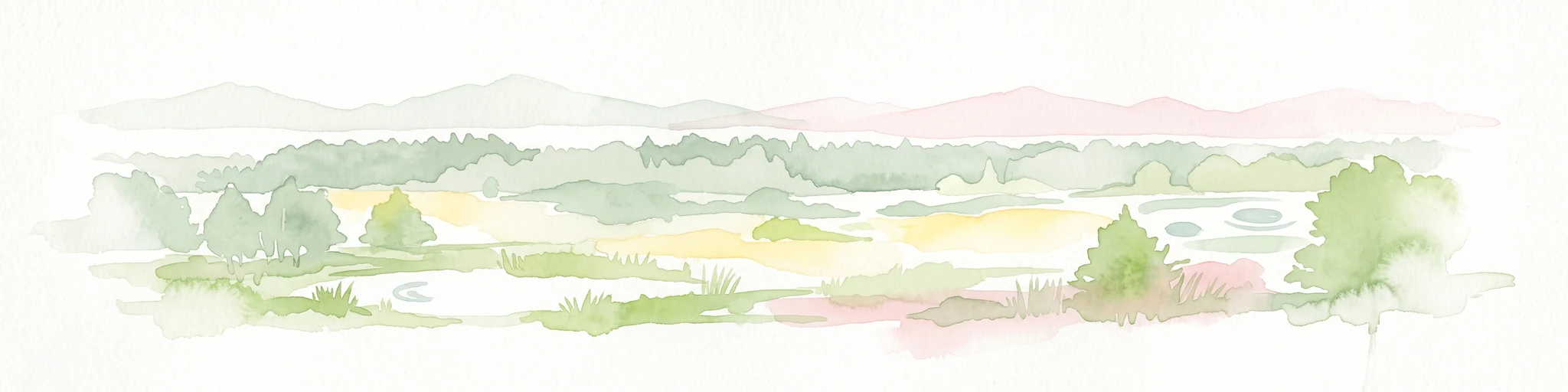
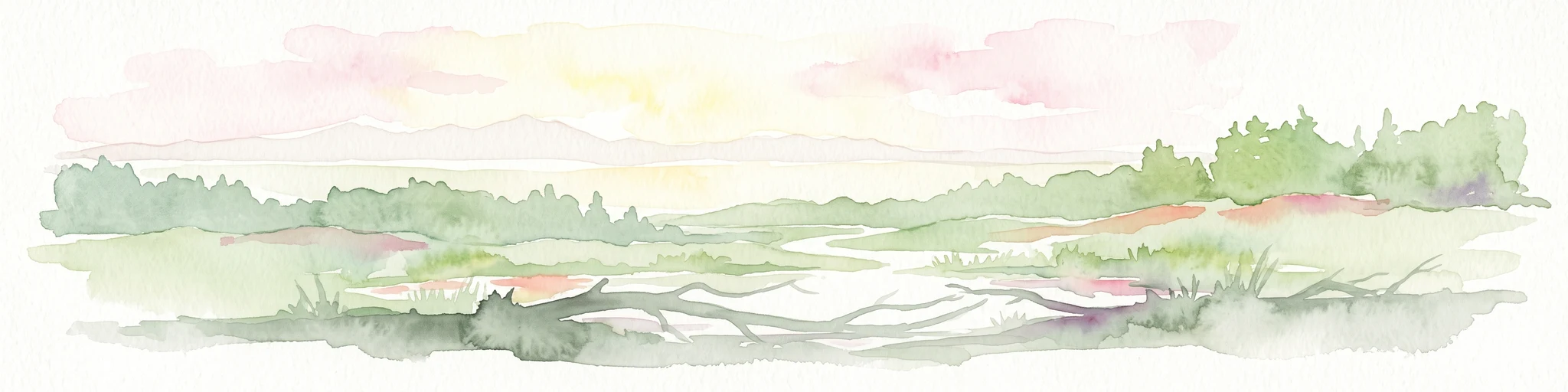
The landscape of Belavezhskaya Pushcha is characterized by a gently undulating plain with elevations ranging from approximately 144 meters in river valleys to 243 meters at the highest point near the village of Porazava. The terrain consists of flat areas interspersed with isolated ridges and depressions, creating a subtle but varied topography across the forest. The park sits within the basin of the Western Bug river system, with most streams flowing in an eastward to westward direction, draining into the Baltic Sea. The forest contains extensive wetland areas, most notably the Dzikie Boge (Wild Bog), one of Europe's largest lowland peat bogs of mesotrophic type, located near the northeastern edge of the forest. Unlike many forest regions, Belavezhskaya Pushcha contains virtually no natural lakes, though more than ten artificial reservoirs have been created, primarily in the southern portion of the park. The largest of these artificial water bodies include the Ledskoye and Khmyolevskoye reservoirs, created by flooding former peat bog areas.
Belavezhskaya Pushcha National Park ecosystems, habitats, and plant life
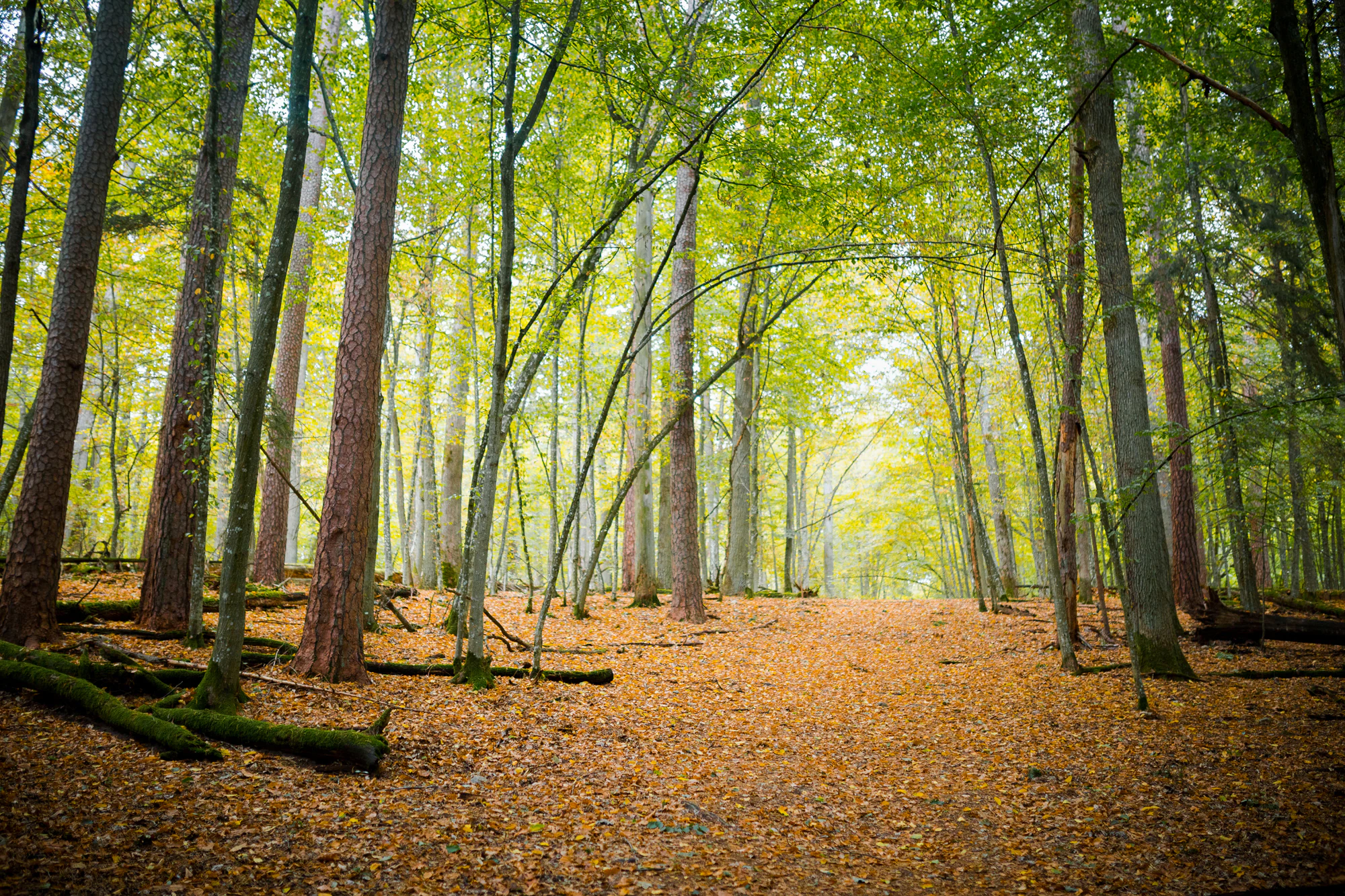
The ecological character of Belavezhskaya Pushcha reflects its position as a remnant of the primeval forests that once dominated the European Plain. The forest supports a diverse mix of tree species including oak, hornbeam, pine, spruce, birch, and alder, with some oak trees estimated to be over 500 years old. The forest structure differs dramatically from managed woodlands, featuring a complex three-layer canopy, abundant deadwood in various stages of decomposition, and natural gaps created by fallen trees. The park is divided into transition, buffer, and core zones within the broader 216,200-hectare Biosphere Reserve, with the core areas receiving the highest level of protection to preserve unmodified natural processes. The wetland components of the forest, including the extensive peat bogs and riparian areas along the rivers, support specialized plant communities distinct from the dominant woodland areas. Climate conditions in the region show moderate continental characteristics with average annual temperatures ranging from 5.1 to 8.5 degrees Celsius and annual precipitation of approximately 653 millimeters, with two-thirds falling during the warm season.
Belavezhskaya Pushcha National Park wildlife and species highlights
Belavezhskaya Pushcha harbors one of Europe's most significant wildlife populations, most famously serving as the primary stronghold for the European bison, the continent's heaviest land mammal. Reintroduction programs from Belavezhskaya Pushcha have repopulated other European countries with this iconic species, making the park central to the species' recovery from near extinction. The bird fauna of the forest is equally remarkable, with the park designated as an Important Bird Area by BirdLife International due to its significant populations of black storks, white storks, Eurasian eagle-owls, European honey-buzzards, lesser spotted eagles, and greater spotted eagles. The forest provides habitat for numerous other mammal species including red deer, roe deer, wild boar, lynx, wolf, and beaver, maintaining a full complement of European forest wildlife. The complex forest structure with its old trees, deadwood, and diverse habitats supports an extraordinary diversity of invertebrates, fungi, and smaller organisms that form the foundation of the ecosystem's functioning.
Belavezhskaya Pushcha National Park conservation status and protection priorities
Belavezhskaya Pushcha holds exceptional conservation significance as the last substantial fragment of the primeval forest that once stretched across the European Plain. Its inscription as a UNESCO World Heritage Site in 1992 (with extension in 2014) recognizes the forest as a natural site of outstanding universal value, while its designation as a Biosphere Reserve in 1993 acknowledges its role in balancing conservation with sustainable use. The park represents a critical refuge for species that have been eliminated from most of their historical range across Europe, particularly the European bison whose survival depends on protected populations like this forest. Conservation efforts focus on maintaining natural forest dynamics without active management, allowing processes like tree death, regeneration, and predator-prey relationships to proceed naturally. The transboundary nature of the forest creates both challenges and opportunities for conservation, requiring international cooperation to protect the ecosystem as a whole while acknowledging the different management approaches on the Polish and Belarusian sides.
Belavezhskaya Pushcha National Park cultural meaning and human context
The forest has a rich cultural heritage spanning centuries of human interaction, serving as the exclusive hunting grounds of Polish monarchs from the 15th century onward and later Russian imperial rulers through the early 20th century. This royal protection, while primarily intended to preserve game animals for aristocratic hunting, had the unintended but crucial effect of protecting the forest ecosystem from the deforestation that transformed much of Europe. The forest appears in numerous historical documents and cultural references from the medieval period onward, establishing its status as a landmark natural feature of Eastern Europe. Local communities in the surrounding region have traditional connections to the forest, though the protected status has limited human settlement within the park boundaries. The administrative center at Kamieniuki represents a purpose-built settlement designed to support park operations and visitor services while minimizing impact on the forest environment.
Top sights and standout views in Belavezhskaya Pushcha National Park
The extraordinary antiquity of the forest ecosystem, with trees and ecological processes that have continued uninterrupted for millennia, makes Belavezhskaya Pushcha a unique natural monument in Europe. The European bison population represents both a conservation success story and the park's most iconic wildlife attraction, offering visitors the chance to observe these massive animals in their natural forest habitat. The transboundary hiking and cycling routes between Belarus and Poland, accessible visa-free since 2015, provide a rare opportunity to experience international wilderness travel within a UNESCO World Heritage site. The park's Eco Education Center and Museum of Nature at Kamieniuki offer valuable interpretive context for understanding the forest's ecological significance and the conservation challenges facing this remarkable ecosystem.
Best time to visit Belavezhskaya Pushcha National Park
The forest can be visited throughout the year, with each season offering a distinct perspective on this ancient woodland. Spring brings the awakening of the forest with migratory birds returning, flowering plants, and the distinctive green of new leaves contrasting with the dark evergreen species. Summer offers the fullest leaf canopy and best conditions for wildlife viewing, though this is also the most popular season for visitors. Autumn transforms the forest with spectacular color changes as deciduous trees lose their leaves, and the mushroom season attracts both visitors and forest dwellers. Winter reveals the forest's structure more clearly without foliage and offers the best chances to observe European bison and other wildlife as they become more visible in the relatively open winter landscape. The cold months also bring fewer visitors to the park, providing a more solitary wilderness experience.