
Mori Atlas logo
National parkBelavezhskaya Pushcha National Park

Discover the mapped boundaries and ancient landscape of Europe's last remaining primeval woodland.

Belavezhskaya Pushcha National Park: Belarus's Primeval Forest and European Bison Sanctuary

(National Park Belavezhskaya Pushcha)

Belavezhskaya Pushcha National Park represents a remarkable fragment of the vast primeval forests that once spanned the European Plain. This protected landscape, straddling the Belarusian and Polish border, preserves an ancient woodland ecosystem with minimal human interference. As a UNESCO World Heritage site and primary sanctuary for the iconic European bison, the park offers unparalleled opportunities for exploring its unique geography and ecological significance through detailed mapping and atlas context.

primeval forestEuropean bisonUNESCO World Heritage Sitetransboundary parkold-growth forestEastern Europe
Stylized illustration showing a forested valley with mountains, a waterfall, and a river under a sunlit sky

Belavezhskaya Pushcha National Park

National park

Park overview

Structured park overview, official facts, and landscape profile for Belavezhskaya Pushcha National Park

Belavezhskaya Pushcha National Park park facts, protected area profile, and essential visitor context

Review the core facts for Belavezhskaya Pushcha National Park, including designation, size, terrain, visitor scale, habitats, and operating context in one park-focused overview.

About Belavezhskaya Pushcha National Park

Belavezhskaya Pushcha National Park represents one of Europe's most significant natural treasures,保护着跨越国界的原始森林遗迹. The Belarusian portion of the Białowieża Forest encompasses approximately 150,000 hectares of woodland that has never been subjected to large-scale commercial forestry or agricultural conversion. This extraordinary preservation makes the forest a living laboratory where scientists can study natural forest dynamics, including tree mortality, regeneration, and the complex interactions between species that have shaped European woodlands for thousands of years. The forest's ecological importance is amplified by its position at the boundary between western and eastern European biogeographic regions, creating a unique mix of species from different origins. The park's management focuses on maintaining the forest's natural processes while providing controlled visitor access to understand and appreciate this irreplaceable ecosystem. The nearby village of Kamieniuki serves as the park's administrative center and hosts the Eco Education Center and Museum of Nature, offering visitors context for understanding the forest's ecological and cultural significance.

Quick facts and research context for Belavezhskaya Pushcha National Park

Belavezhskaya Pushcha National Park covers approximately 1,500 square kilometers of the Białowieża Forest in southwestern Belarus, making it one of the largest and most ecologically significant protected areas in Europe. The forest sits on gently undulating terrain with elevations ranging from 144 to 243 meters above sea level, characterized by a mix of flat plains, isolated hills, and extensive wetland areas. The park's location 70 kilometers north of Brest places it within the broader Pripyat marshes region, with several rivers including the Pravaya Lesnaya, Narau, and Narauka flowing through the park's territory. As part of the transboundary Białowieża Forest, the park shares its border with Poland's Białowieża National Park, and visitors can cross between the two countries at designated points within the forest. The park also holds the distinction of being a UNESCO Biosphere Reserve since 1993, recognizing its importance for both conservation and sustainable management.

Protection and recognition

Analysing terrestrial designation scope and transboundary coordination for the forest reserve

Belavezhskaya Pushcha National Park Protected Area Profile and Transboundary Status

Belavezhskaya Pushcha National Park represents a critical terrestrial conservation zone that spans international borders to safeguard contiguous forest ecosystems. Reviewing the documented protection framework and transboundary status provides key geographic context for understanding regional conservation management across borders.

Protection details

Protection scope
Terrestrial
Transboundary protection
Yes
Park context

Deeper park guide and search-rich context for Belavezhskaya Pushcha National Park

Belavezhskaya Pushcha National Park history, landscape, wildlife, and travel context

Explore Belavezhskaya Pushcha National Park through its history, landscape character, ecosystems, wildlife, conservation priorities, cultural context, and seasonal travel timing in a structured park guide built for atlas discovery and search intent.

Why Belavezhskaya Pushcha National Park stands out

Belavezhskaya Pushcha is best known as the Belarusian portion of Europe's last primeval forest and as the primary sanctuary for the European bison (wisent), the continent's heaviest land animal. The forest represents an extraordinarily rare ecological time capsule, preserving the woodland ecosystem that once covered the entire European Plain before widespread deforestation. Visitors come to witness the dense old-growth forest with its towering oaks, hornbeam, and pine stands that have never been logged or significantly altered by human activity. The park's significance extends to its bird populations, with the forest serving as a crucial habitat for black and white storks, Eurasian eagle-owls, and both lesser and greater spotted eagles, earning it Important Bird Area designation by BirdLife International.
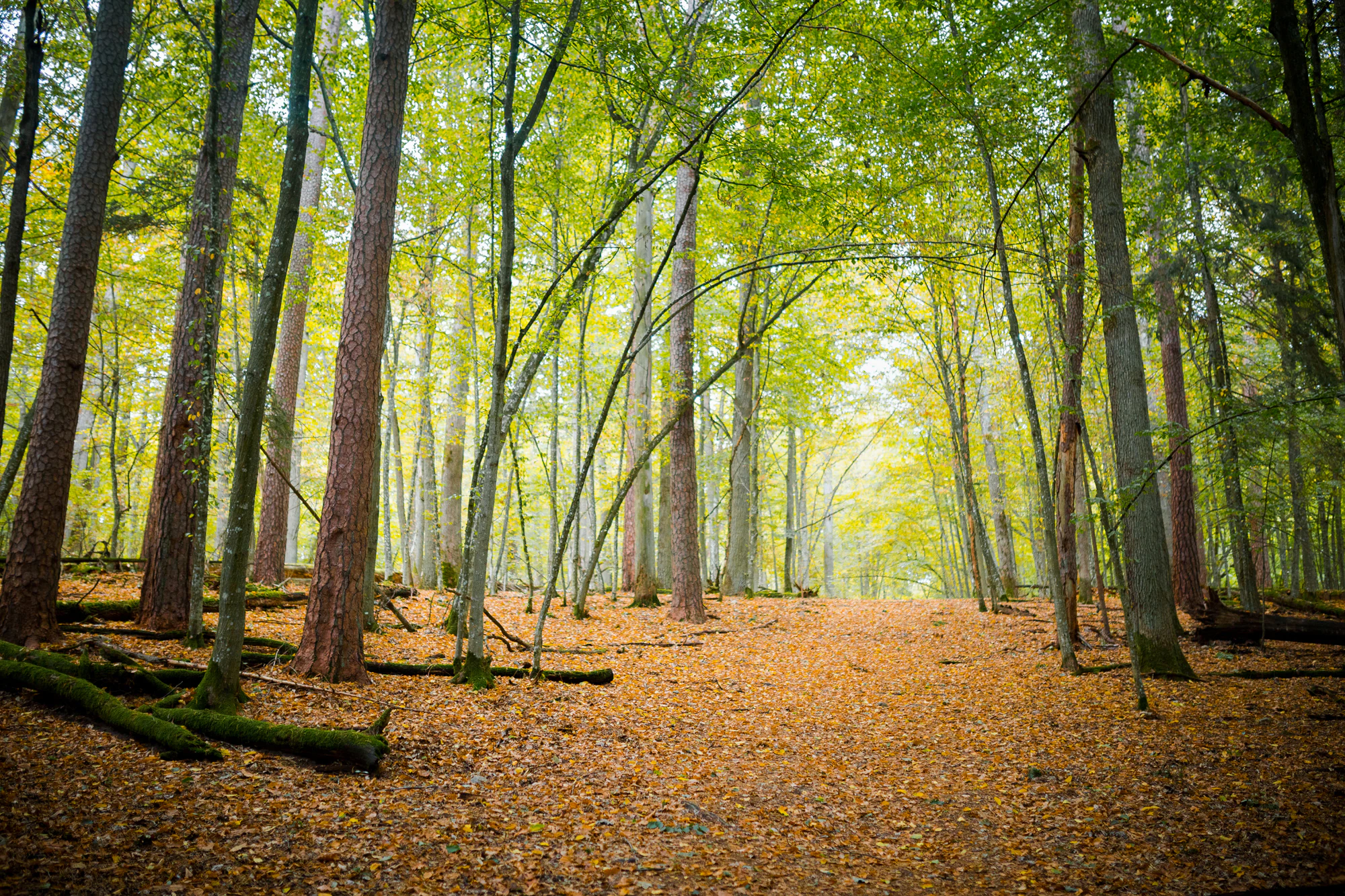
A forest path covered in fallen leaves with tall trees and dappled sunlight filtering through the canopy.
A forest path winding through the primeval woodland of Belavezhskaya Pushcha National Park.

Belavezhskaya Pushcha National Park history and protected-area timeline

The protected status of Belavezhskaya Pushcha traces back to medieval times when the forest served as the royal hunting grounds of Polish kings beginning in the 15th century and later Russian tsars from the 18th century through the early 20th century. This royal protection effectively preserved the forest from commercial exploitation for centuries, creating the conditions for its survival into the modern era. In 1932, during the Second Polish Republic, most of the Białowieża Forest was declared a national park, establishing formal protection that would persist through subsequent political changes. Following World War II, the forest was divided between Poland and the Byelorussian Soviet Socialist Republic according to the Polish-Soviet border agreement of August 1945, creating the current transboundary situation. The Belarusian section received a new status in 1957 as the State Reserve-Hunting Farm, serving as an exclusive recreation area for top Soviet leadership and their foreign guests. In 1991, the forest acquired its current status as a state national park, opening to broader public access while maintaining strict conservation protection. The year 2009 marked the 600th anniversary of the forest's reserve status, a testament to its enduring significance across centuries of changing political regimes and borders.

Belavezhskaya Pushcha National Park landscape and geographic character

The landscape of Belavezhskaya Pushcha is characterized by a gently undulating plain with elevations ranging from approximately 144 meters in river valleys to 243 meters at the highest point near the village of Porazava. The terrain consists of flat areas interspersed with isolated ridges and depressions, creating a subtle but varied topography across the forest. The park sits within the basin of the Western Bug river system, with most streams flowing in an eastward to westward direction, draining into the Baltic Sea. The forest contains extensive wetland areas, most notably the Dzikie Boge (Wild Bog), one of Europe's largest lowland peat bogs of mesotrophic type, located near the northeastern edge of the forest. Unlike many forest regions, Belavezhskaya Pushcha contains virtually no natural lakes, though more than ten artificial reservoirs have been created, primarily in the southern portion of the park. The largest of these artificial water bodies include the Ledskoye and Khmyolevskoye reservoirs, created by flooding former peat bog areas.

Belavezhskaya Pushcha National Park ecosystems, habitats, and plant life

The ecological character of Belavezhskaya Pushcha reflects its position as a remnant of the primeval forests that once dominated the European Plain. The forest supports a diverse mix of tree species including oak, hornbeam, pine, spruce, birch, and alder, with some oak trees estimated to be over 500 years old. The forest structure differs dramatically from managed woodlands, featuring a complex three-layer canopy, abundant deadwood in various stages of decomposition, and natural gaps created by fallen trees. The park is divided into transition, buffer, and core zones within the broader 216,200-hectare Biosphere Reserve, with the core areas receiving the highest level of protection to preserve unmodified natural processes. The wetland components of the forest, including the extensive peat bogs and riparian areas along the rivers, support specialized plant communities distinct from the dominant woodland areas. Climate conditions in the region show moderate continental characteristics with average annual temperatures ranging from 5.1 to 8.5 degrees Celsius and annual precipitation of approximately 653 millimeters, with two-thirds falling during the warm season.

Belavezhskaya Pushcha National Park wildlife and species highlights

Belavezhskaya Pushcha harbors one of Europe's most significant wildlife populations, most famously serving as the primary stronghold for the European bison, the continent's heaviest land mammal. Reintroduction programs from Belavezhskaya Pushcha have repopulated other European countries with this iconic species, making the park central to the species' recovery from near extinction. The bird fauna of the forest is equally remarkable, with the park designated as an Important Bird Area by BirdLife International due to its significant populations of black storks, white storks, Eurasian eagle-owls, European honey-buzzards, lesser spotted eagles, and greater spotted eagles. The forest provides habitat for numerous other mammal species including red deer, roe deer, wild boar, lynx, wolf, and beaver, maintaining a full complement of European forest wildlife. The complex forest structure with its old trees, deadwood, and diverse habitats supports an extraordinary diversity of invertebrates, fungi, and smaller organisms that form the foundation of the ecosystem's functioning.

Belavezhskaya Pushcha National Park conservation status and protection priorities

Belavezhskaya Pushcha holds exceptional conservation significance as the last substantial fragment of the primeval forest that once stretched across the European Plain. Its inscription as a UNESCO World Heritage Site in 1992 (with extension in 2014) recognizes the forest as a natural site of outstanding universal value, while its designation as a Biosphere Reserve in 1993 acknowledges its role in balancing conservation with sustainable use. The park represents a critical refuge for species that have been eliminated from most of their historical range across Europe, particularly the European bison whose survival depends on protected populations like this forest. Conservation efforts focus on maintaining natural forest dynamics without active management, allowing processes like tree death, regeneration, and predator-prey relationships to proceed naturally. The transboundary nature of the forest creates both challenges and opportunities for conservation, requiring international cooperation to protect the ecosystem as a whole while acknowledging the different management approaches on the Polish and Belarusian sides.

Belavezhskaya Pushcha National Park cultural meaning and human context

The forest has a rich cultural heritage spanning centuries of human interaction, serving as the exclusive hunting grounds of Polish monarchs from the 15th century onward and later Russian imperial rulers through the early 20th century. This royal protection, while primarily intended to preserve game animals for aristocratic hunting, had the unintended but crucial effect of protecting the forest ecosystem from the deforestation that transformed much of Europe. The forest appears in numerous historical documents and cultural references from the medieval period onward, establishing its status as a landmark natural feature of Eastern Europe. Local communities in the surrounding region have traditional connections to the forest, though the protected status has limited human settlement within the park boundaries. The administrative center at Kamieniuki represents a purpose-built settlement designed to support park operations and visitor services while minimizing impact on the forest environment.

Top sights and standout views in Belavezhskaya Pushcha National Park

The extraordinary antiquity of the forest ecosystem, with trees and ecological processes that have continued uninterrupted for millennia, makes Belavezhskaya Pushcha a unique natural monument in Europe. The European bison population represents both a conservation success story and the park's most iconic wildlife attraction, offering visitors the chance to observe these massive animals in their natural forest habitat. The transboundary hiking and cycling routes between Belarus and Poland, accessible visa-free since 2015, provide a rare opportunity to experience international wilderness travel within a UNESCO World Heritage site. The park's Eco Education Center and Museum of Nature at Kamieniuki offer valuable interpretive context for understanding the forest's ecological significance and the conservation challenges facing this remarkable ecosystem.

Best time to visit Belavezhskaya Pushcha National Park

The forest can be visited throughout the year, with each season offering a distinct perspective on this ancient woodland. Spring brings the awakening of the forest with migratory birds returning, flowering plants, and the distinctive green of new leaves contrasting with the dark evergreen species. Summer offers the fullest leaf canopy and best conditions for wildlife viewing, though this is also the most popular season for visitors. Autumn transforms the forest with spectacular color changes as deciduous trees lose their leaves, and the mushroom season attracts both visitors and forest dwellers. Winter reveals the forest's structure more clearly without foliage and offers the best chances to observe European bison and other wildlife as they become more visible in the relatively open winter landscape. The cold months also bring fewer visitors to the park, providing a more solitary wilderness experience.
Park guides

Targeted answers for exploring the ancient primeval woodlands and bison sanctuary

Belavezhskaya Pushcha National Park Focused Guides and Planning Resources

Focused reference guides help visitors navigate seasonal patterns and plan effective journeys through the protected forest. Published resources examine timing considerations for observing wildlife across the ancient woodland landscape.
Monthly climate preview

Analyzing thirty-year temperature averages and daily precipitation trends across the protected forest coordinates

Belavezhskaya Pushcha National Park Climate Normals and Monthly Weather Patterns

Long-term meteorological data at the representative elevation of 157.6 meters indicates a distinct seasonal range with sub-freezing average temperatures in winter and moderate mid-year warmth peaking above twenty degrees Celsius. Accessing the complete climatology profile reveals month-by-month temperature minimums, maximums, and daily precipitation averages to support precise regional comparisons.
Annual mean8 °C
-5 °C20 °C
Jan-5°
Feb-4°
Mar
Apr
May14°
Jun18°
Jul20°
Aug20°
Sep14°
Oct
Nov
Dec-3°
Warmest month
July

20.1 °C

Coolest month
January

-5 °C

Wettest month
July

2.6 mm/day

Driest month
January

1.3 mm/day

Park location guide

Geography guide, regional context, and park location map for Belavezhskaya Pushcha National Park

Belavezhskaya Pushcha National Park park geography, regions, and map view in Belarus

Understand where Belavezhskaya Pushcha National Park sits in Belarus through a broader geographic reading of the surrounding landscape, nearby location context, and its mapped position within the national park landscape.

How Belavezhskaya Pushcha National Park fits into Belarus

Belarus is a landlocked Eastern European country spanning 207,600 km² with a population of about 9.1 million. Formerly part of the Soviet Union, it declared independence in 1991 and is now a unitary semi-presidential republic. The nation shares borders with Russia, Ukraine, Poland, Lithuania, and Latvia, and is administratively divided into six regions.

Wider geography shaping Belavezhskaya Pushcha National Park in Belarus

Belarus is a landlocked country in Eastern Europe, bordered by Russia to the east and northeast, Ukraine to the south, Poland to the west, and Lithuania and Latvia to the northwest. The terrain consists largely of flatland and rolling hills with many rivers, lakes, and forests. The country spans 207,600 km² and is administratively divided into six regions.

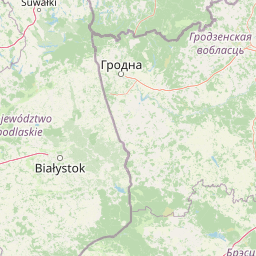
Map view of Belavezhskaya Pushcha National Park

Use this park location map to pinpoint Belavezhskaya Pushcha National Park in Belarus, understand its exact geographic position, and read its mapped placement within the surrounding landscape more clearly.

Pigeon | © OpenStreetMap contributors

Location context for Belavezhskaya Pushcha National Park

Brest RegionGrodno Region
Natural feature types

Browse the Natural Landscape Features of Belavezhskaya Pushcha National Park

Examine the specific landforms, water networks, and ancient forest fragments that make up the unique topography of Belavezhskaya Pushcha National Park. MoriAtlas provides this structured overview to help you navigate the complex natural character of one of Europe's most significant primeval woodlands.

A Visual Journey Through Europe's Last Ancient Woodlands, Documenting Unique Habitats and Protected-Area Terrain

Explore Belavezhskaya Pushcha National Park: Primeval Forest Landscapes and European Bison Scenery

Browse compelling imagery showcasing the distinct primeval forest landscapes and the iconic European bison within Belavezhskaya Pushcha National Park, revealing its ancient woodland character. These visual resources offer deep insight into the park's varied terrain, wetland ecosystems, and the overall protected-area environment, essential for a comprehensive geographic understanding.

A forest path covered in fallen leaves with tall trees and dappled sunlight filtering through the canopy.

Tall coniferous trees in a forest with green undergrowth and a fallen tree trunk

Park atlas

Map the surrounding protected landscapes, tracing how primeval forest ecosystems connect with diverse conservation zones across Eastern Europe.

Explore Nearby National Parks and Protected Areas Beyond Belavezhskaya Pushcha National Park

Browse national parks and protected areas geographically relevant to Belavezhskaya Pushcha National Park, including significant transboundary forests and vital wetland ecosystems. Compare adjacent protected landscapes, understand their regional spread, and trace conservation efforts across this unique European primeval forest zone.
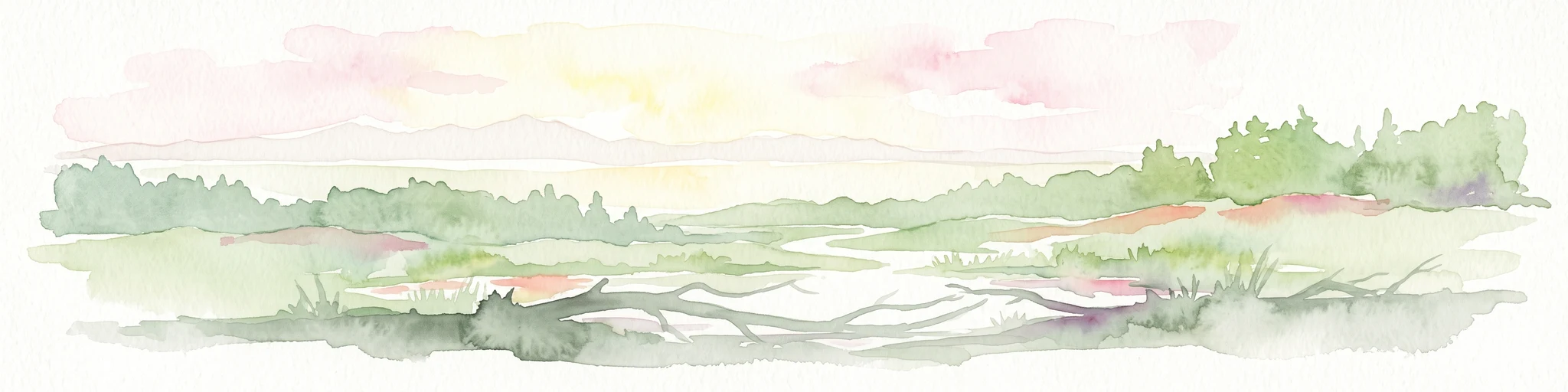
Watercolor illustration of a river flowing through grassy terrain with rolling hills in the background
National parkPodlaskie Voivodeship
Park boundaries overlap#1 closest

North

Białowieża National Park: Primeval Forest and European Bison Protected Landscape

Northeastern Poland's ancient woodland and river valley geography

Encompassing the heart of the Białowieża Forest, this national park protects an unparalleled temperate old-growth ecosystem. The landscape contains a complex mix of upland forests, swampy alder groves, and meandering river corridors, providing a crucial habitat for the world's largest free-ranging population of European bison.

Area
105.17 km²
Established
1932
IUCN
II
Visitors
140K annual
A pale, soft-focus watercolor painting of a calm wetland or pond with low, rolling hills in the distance, surrounded by soft green marsh grasses and light vegetation.
National parkPodlaskie Voivodeship
Park boundaries overlap#2 closest

North

Białowieski Park Narodowy: Primeval Forest Geography and Protected Area Overview

Northeastern Poland lowland forest and bison habitat

Białowieski Park Narodowy stands as a landmark of European conservation, protecting a vast stretch of old-growth lowland forest that escaped historical clearing. This map-oriented overview details the forest's layered structure, its network of streams, and its significance as a sanctuary for the European bison within the Podlaskie Voivodeship.

Area
105.17 km²
Established
1932
A soft, light-toned watercolor painting of a lowland forest landscape with trees, meadows, and distant hills.
Protected areaPoland
Park boundaries overlap#3 closest

Northwest

Puszcza Białowieska Protected Area: Primeval Forest Geography and Mapped Boundaries

Ancient lowland forest landscapes of the Polish-Belarusian border

Examine the geographic composition of Puszcza Białowieska, an extensive primeval lowland forest characterized by multi-aged tree stands and abundant deadwood ecosystems. The area serves as a primary site for ecological research into natural forest regeneration and megafauna protection, specifically for the European bison and diverse predator populations living within its protected landscape boundaries.

Area
1,500 km²
Established
1932
Relief
Lowland
Climate
Temperate
Nature reservePodlaskie Voivodeship
About 18 km away#4 closest

North

Rezerwat przyrody Jezioro Wiejki: Wetland Geography and Protected Landscape in Eastern Poland

Glacial lake basin and peatland ecology in Podlaskie Voivodeship

This nature reserve protects a rare mesotrophic lake and peatland complex, serving as a testament to the glacial history of the Białystok Highlands. The site is noted for its concentric wetland vegetation bands, including floating bog communities and populations of endangered low birch, which offer a clear window into the ecological dynamics of northeastern Polish water systems.

Area
0.225 km²
Established
2005
Relief
Lowland
Climate
Temperate
Nature reservePodlaskie Voivodeship
About 19 km away#5 closest

Northwest

Dolina Waliczówki Nature Reserve: Protected Forest and Stream Valley Geography

Key protected area within the Białowieża Forest of Poland

Spanning over 44 hectares, Dolina Waliczówki Nature Reserve serves as a concentrated site for the preservation of natural forest communities and springhead flora in the Podlaskie Voivodeship. The protected terrain, defined by the small Waliczówka stream, illustrates the ecological detail of the broader Białowieża Forest lowland woodland.

Area
0.448 km²
Established
1995
Relief
Lowland
Scope
Terrestrial
Nature reserveMasovian Voivodeship
About 40 km away#6 closest

Southwest

Rezerwat przyrody Mierzwice: Protected Nature Reserve and Botanical Landscape Atlas

Geographic context for the Bug River valley corridor

Rezerwat przyrody Mierzwice provides a concentrated look at xerothermic vegetation and mixed deciduous forests in eastern Poland. As part of the Ostoja Nadbużańska habitat network, this nature reserve is essential for mapping rare flora, including protected orchids and lily species, within a complex riverine landscape.

Area
0.13 km²
Established
2010
Relief
Lowland
Scope
Terrestrial
Nature reservePodlaskie Voivodeship
About 44 km away#7 closest

North

Bahno w Borkach Nature Reserve: Mapping the Boreal Peatland Landscapes of Podlaskie

A study of protected mire habitats and forest mosaics

Bahno w Borkach Nature Reserve protects a vital boreal-influenced peatland habitat within the larger Knyszyn Forest complex. The mapped landscape includes a complex mosaic of low-mire communities and forest patches that serve as an important reference site for ecological studies of the eastern Polish lowlands.

Area
2.899 km²
Established
1990
Relief
Lowland
Climate
Boreal
A soft watercolor painting showing a panoramic view of a lush, green landscape with a winding stream, distant hills, and trees against a pale, warm sky.
Nature reservePodlaskie Voivodeship
About 49 km away#8 closest

North

Rezerwat przyrody Międzyrzecze: Exploring Protected Woodland Geography in Poland

A detailed geographic look at forest protection in the Knyszyn Forest landscape.

Deepen your understanding of Rezerwat przyrody Międzyrzecze through a focused study of its protected terrain. This site covers the essential geography of the nature reserve, detailing how glacial landforms and internal springs create unique woodland conditions within the Podlaskie Voivodeship. Access mapped data to see how this protected fragment integrates into the broader Knyszyn Forest ecological network.

Area
2.508 km²
Established
1990
Relief
Upland
Scope
Terrestrial

Common questions about visiting, size, designation, and location context for Belavezhskaya Pushcha National Park

Belavezhskaya Pushcha National Park FAQs for park facts, access, geography, and protected area context

Find quick answers about Belavezhskaya Pushcha National Park, including protected-area facts, park geography, trail and visitor context, and how the park fits into its surrounding country and regional landscape.
MoriAtlas Explorer

Continue Your Protected Areas Search Across the Global Atlas

Deepen your exploration by continuing the structured search for national parks and protected areas worldwide. Utilize the comprehensive filtering capabilities to compare different conservation landscapes and refine your understanding of global park geography. Discover more about the distribution and characteristics of protected natural areas.

Global natural geography