

Mori Atlas logo
Park guides

Review thematic resources for visiting Europe's premier temperate primeval forest landscape

Published Exploration and Planning Guides for Białowieża National Park in Poland

Explore the structured collection of specialized guides for Białowieża National Park, designed to assist with seasonal planning and understanding this significant temperate primeval woodland. These resources offer focused insights into navigating the park's ancient forest habitats and identifying optimal timing for observing European bison in their natural stronghold.

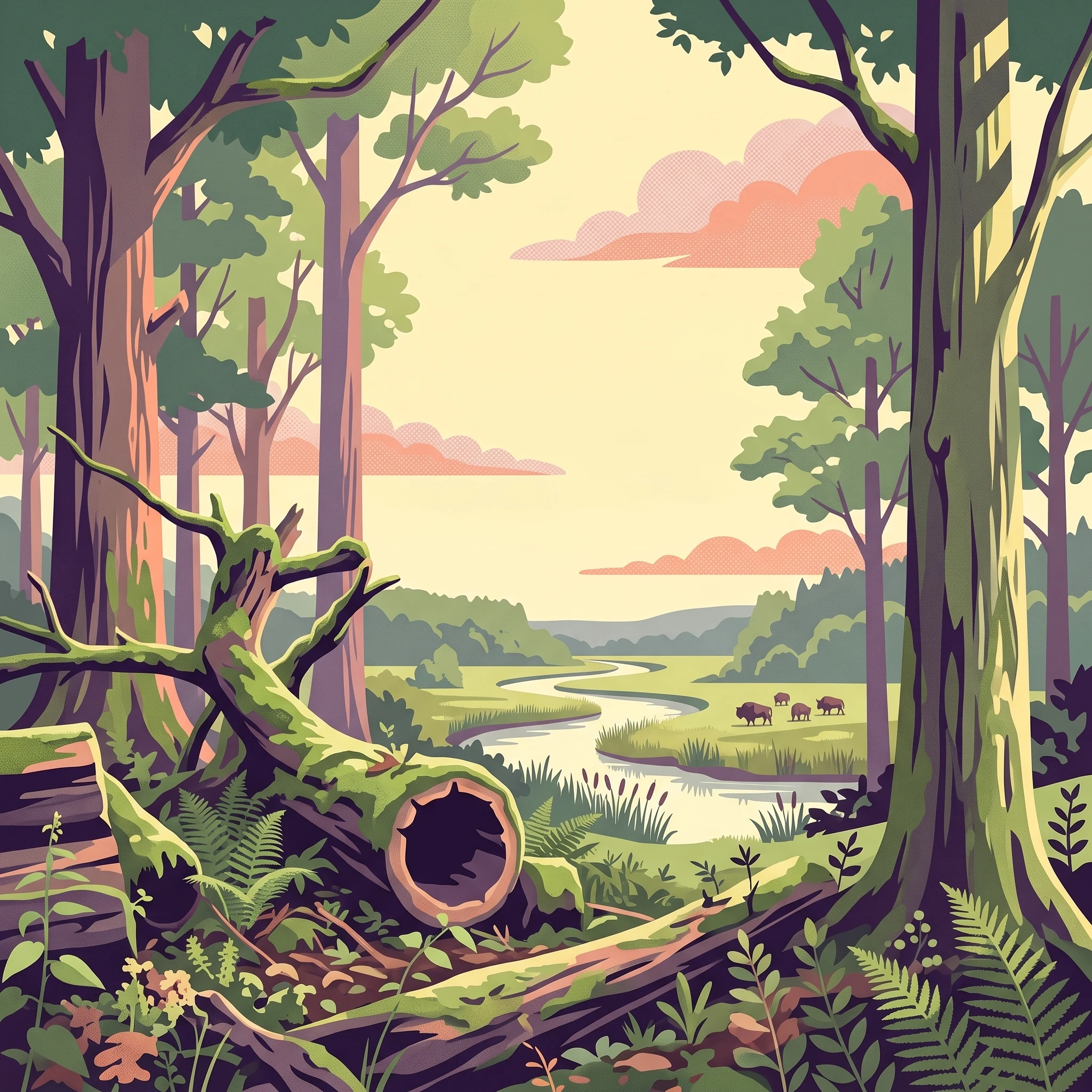
Stylized illustration of a forested landscape with a waterfall, fallen tree, ferns, and mountains under a sunset sky

Europe's last primaeval forest and sanctuary of the European bison

Białowieża National Park

Białowieża National Park stands as Poland's premier natural heritage site and a cornerstone of European conservation. The park was formally established on August 11, 1932, evolving from an earlier Forest Reserve inspectorate created in 1921, making it the second national park in Poland after Pieniński National Park and among the earliest in Europe. Following the post-World War II division of the forest between Poland and the Belarusian SSR, the People's Republic of Poland reopened the park in 1947 in its current configuration. The park's headquarters sit in the village of Białowieża, housed within the Museum of Nature and Forest, a complex built on the site of a former royal palace destroyed during World War II. The park consists of three administrative units: the Protective Orłówka Precinct covering over 5,000 hectares with both strict and active protection zones; the Conservation District Hwoźna spanning approximately 5,170 hectares; and the Bison Breeding Centre with its network of breeding reserves including the Public Access Reserve. The strict-protection area, accessible only to scientists and tourists in guided groups limited to 20 people, represents the heart of the forest's old-growth character. This core zone has persisted without significant human intervention for nearly eight centuries, preserving the natural processes of forest dynamics that have defined European woodlands since the last ice age. Białowieża's international significance was formally recognized when it became Poland's first natural World Heritage Site in 1979 (extended in 1992 to include the Belarusian portion and again in 2014). The park forms the central zone of the Białowieża Forest Biosphere Reserve and represents one of only seven transboundary World Heritage Sites globally. The forest's ecological value extends beyond its boundaries—a recent study estimated the park generates approximately 72 million złoty annually in tourist revenues, demonstrating its economic as well as conservation importance.

Location
Poland
Park type
National park
Established
1932
Area
105.2 km²
Explore Białowieża National Park Geography
1 guide

Compare specialized published themes to answer specific forest and wildlife questions.

Published Guides and Visitor Planning Resources for Białowieża National Park

Each published guide provides focused editorial coverage addressing distinct aspects of Białowieża National Park, ranging from optimal seasonal timing to wildlife viewing. Selecting a specific resource helps readers match individual planning goals with reliable field insights.
When to Visit Białowieża National Park: Seasonal Timing and Climate Guide
Visitor Planning

When to Visit Białowieża National Park: Seasonal Timing and Climate Guide

Determine the best time to explore the primeval forest and observe European bison based on seasonal weather patterns and park accessibility.

Planning a trip to Białowieża National Park requires understanding the seasonal rhythm of Europe's last remaining temperate primeval forest. This guide synthesizes multi-decade climate normals with the specific ecological cycles of the forest, providing a decision-making framework for travelers. It addresses the significant variations in temperature, daylight, and humidity that define the experience of walking through old-growth oak and hornbeam stands, as well as the practical considerations for wildlife observation during different times of the year. By moving beyond simple weather averages, the content assists in aligning travel dates with specific interests, such as hiking the strict-protection areas or participating in guided educational programs. Because Białowieża National Park operates as a protected ecological laboratory, access to certain zones is regulated and subject to local management rules that can change. The information provided here serves as a reference for long-term climate patterns and seasonal characteristics, rather than current operational status or daily forecasts. Readers should verify trail availability, guide requirements, and park regulations through official Polish authority channels before finalizing their itinerary, as these factors remain essential for ensuring both compliance and safety when visiting this significant UNESCO transboundary site.

When to Visit
MoriAtlas Explorer

Continue Exploring the Protected Landscapes of Białowieża National Park

Delve into the mapped terrain and ecological structure of Białowieża National Park to understand its role in European wilderness conservation. MoriAtlas provides a comprehensive view of this ancient woodland, including its river systems and habitat zones, to assist in the analysis of its unique primeval geography.