
Why Białowieża National Park stands out
Białowieża National Park is exceptionally known for two interconnected distinctions: protecting Europe's last substantial primeval forest and maintaining the world's largest population of European bison. The forest's old-growth character is unparalleled on the European continent, nowhere else can visitors experience such a complete, unmodified temperate woodland with trees exceeding 50 meters in height, multi-layered canopy structures, and natural processes operating without significant human interference. The European bison program represents one of conservation's great success stories; the species was functionally extinct in the wild by 1919, with the last Białowieża individual killed that year, yet through intensive breeding and reintroduction efforts centered on the park's Bison Breeding Centre, the species has been restored to approximately 950 individuals across the forest (about 510 in the Polish sector). The park also supports a remarkable predator community including Eurasian wolves and lynx, and serves as an Important Bird Area supporting over 120 bird species.
Białowieża National Park history and protected-area timeline
The formal protection of Białowieża's forest began in 1921 when the Forest Reserve inspectorate was established by Poland's Ministry of Agriculture and State Assets. This initial protection effort, driven by Polish naturalists and foresters including Professor Władysław Szafer, sought to preserve what remained of the ancient royal hunting grounds that had been exploited during the partitions of Poland. On August 11, 1932, the inspectorate was transformed into Białowieża National Park by the Second Polish Republic, becoming the country's second national park and one of the earliest in Europe. The park originally covered 4,693 hectares.
Following World War II, the forest was divided between Poland and the Belarusian SSR according to the Polish-Soviet border agreement of August 1945. The People's Republic of Poland reopened the national park in 1947, expanding its territory by incorporating meadows along the Narewka and Hwoźna rivers. In 1996, the park's area was significantly expanded to 10,502 hectares through the incorporation of portions of two neighboring forest districts, adding the former Wilczy Szlak and Głuszec reserves. A buffer zone (otulina) of 3,224 hectares was established around the park, and in 2011 this buffer zone was designated as a protected area for game animals, prohibiting hunting and the construction of hunting installations.
The park has faced contemporary challenges including the European migrant crisis, in which groups of migrants have entered the forest from the Belarus border. In 2025, a trial occurred involving five activists including a park worker on charges related to assisting migrants, a situation that has brought international attention to the park beyond its ecological significance. The park's history also includes the rebuilding of the museum complex in the 1960s and the development of the Bison Breeding Centre, which has been central to the species recovery program.
Białowieża National Park landscape and geographic character
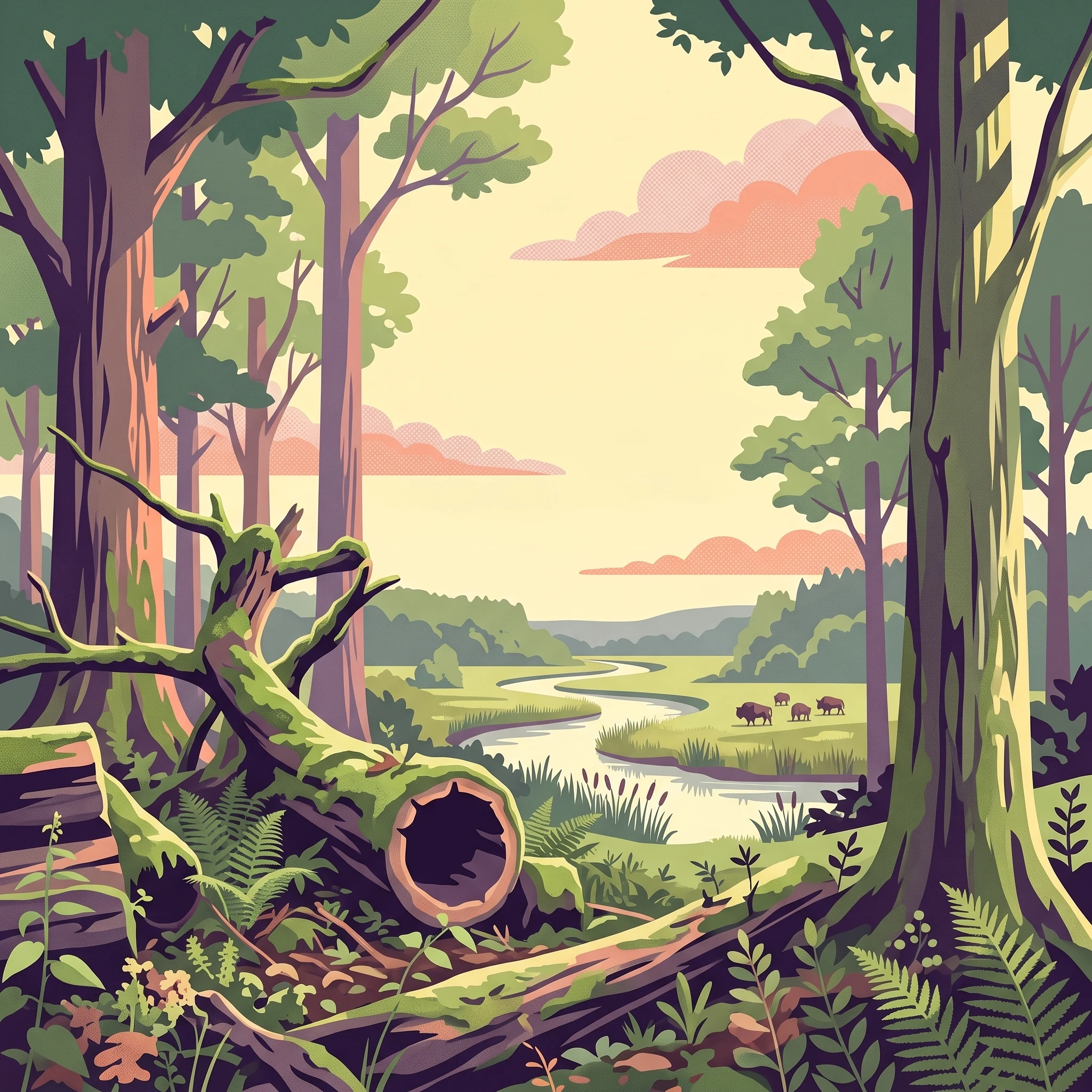
The physical landscape of Białowieża National Park reflects the flat to gently undulating terrain of the East European Plain, with the most valuable areas situated in the fork formed by the Hwoźna and Narewka rivers. The park sits at the watershed between the Vistula and Neman rivers, though no major lakes or significant rivers flow entirely through the protected area. The Orłówka river originates within the park, while smaller tributaries including Łutownia, Przedzielna, and Braszcza flow through the forest as they descend to join the Narewka.
The terrain is characterized by its low relief, with elevations varying only slightly across the park's extent. The soils are predominantly fertile, supporting the rich deciduous forests that define the landscape. A distinctive feature is the extensive wetland complex, particularly in the river valleys where swampy alder forests and periodic flooding create diverse habitat conditions. The forest canopy reaches impressive heights, with individual spruces exceeding 50 meters towering above the broader oak-hornbeam stands, creating a multi-layered structure typical of old-growth forests.
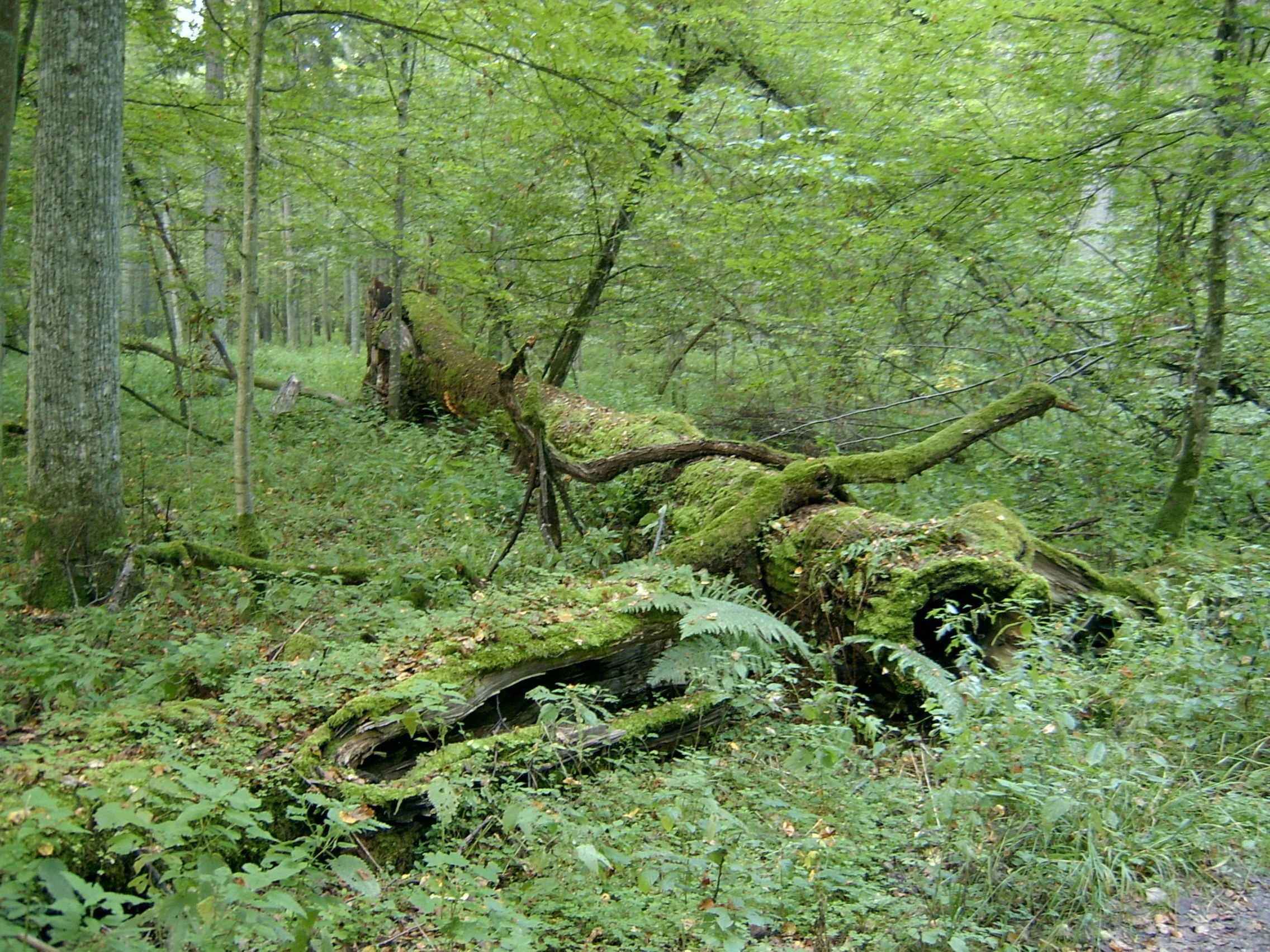
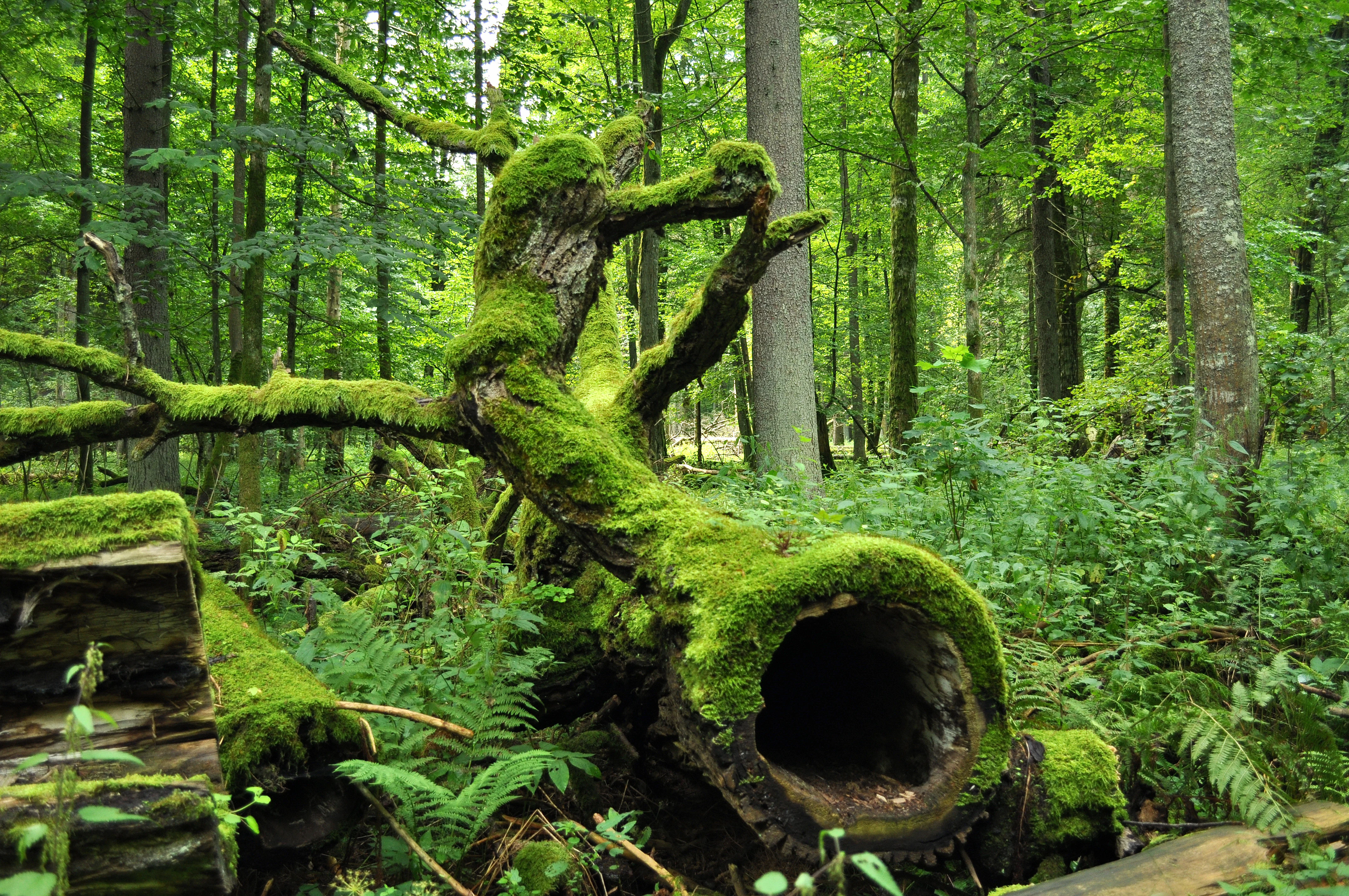
The landscape changes character from the drier upland oak-hornbeam forests to the wetter spruce-dominated areas in the valley bottoms and the periodically flooded riparian zones. Dead wood in various stages of decomposition is ubiquitous throughout, a hallmark of the forest's natural character and critical for the biodiversity it supports. The relatively unmodified hydrology, with natural wetland areas and stream corridors intact, contributes significantly to the park's ecological integrity.
Białowieża National Park ecosystems, habitats, and plant life
Białowieża National Park protects one of Europe's most ecologically significant forests, supporting a remarkable diversity of habitats and species within its boundaries. The forest composition is dominated by deciduous species, with more than two-thirds of the park's area covered by broadleaf woodlands. The most extensive forest type is the oak-hornbeam forest (grąd), growing on the most fertile soils and representing the climax vegetation for much of the park's terrain. In areas subject to periodic flooding, black alder and ash form wet valley forests, while drier sites support pine, spruce, and mixed coniferous woodlands.
The park contains approximately 20 distinct forest communities, reflecting the subtle variations in soil, moisture, and topography across its extent. The flora is exceptionally diverse, with over 1,000 plant species documented, including 728 vascular plant species and 277 lichen species. Notable rare plants include the European globeflower, Siberian iris, mountain arnica, and marsh violet. The old-growth character is particularly evident in the extensive dead wood—a quarter of the tree biomass in the strict-protection zone exists as standing or fallen dead wood, supporting vast communities of saproxylic organisms including fungi, bacteria, and invertebrates.
The climate is relatively cool with a mean annual temperature of 6.8°C and average precipitation of 633mm, most falling during the growing season. Winter temperatures can drop to -38.7°C while summer maxima reach 34.5°C, creating a continental climate that supports species adapted to harsh seasonal variation. This climate, combined with the forest's continuity, has allowed the survival of species assemblages that have been lost from most of the rest of Europe.
Białowieża National Park wildlife and species highlights
Białowieża Forest supports an extraordinary concentration of wildlife for a temperate European forest, with over 12,000 species documented—representing perhaps half the actual biodiversity present, as the fauna remains incompletely studied. Invertebrates dominate, particularly insects with approximately 8,000 species recorded, while the vertebrate fauna includes 58 mammal species, 120 bird species, 32 fish species, 7 reptile species, and 11 amphibian species.
The European bison stands as the park's flagship species and the symbol of its conservation success. Reduced to a single remaining individual in the Polish part of the forest in 1919 (which was then killed that same year), the species was saved through a breeding program that brought together individuals from zoos across Europe. The first wild release occurred in 1952, and today the Polish section of the forest supports approximately 510 free-ranging bison, while the total population across the entire forest (including the Belarusian side) reaches about 950 individuals—all descended from the Białowieża breeding program.
The predator community is well-represented with packs of Eurasian wolves and populations of Eurasian lynx resident throughout the forest. These predators help maintain ecological balance, preying on the abundant wild boar and supporting the natural dynamics of the ecosystem. European moose inhabit the wetland areas, while the diverse bird community includes species characteristic of old-growth forests such as the three-toed woodpecker, white-backed woodpecker, and various owl species. The forest's dead wood also supports specialized invertebrates that are now rare or absent elsewhere in Europe.
Białowieża National Park conservation status and protection priorities
Białowieża National Park represents one of Europe's most important conservation achievements and serves as a model for forest protection on the continent. As the only natural property from Poland on the UNESCO World Heritage List, the park was inscribed in 1979 for meeting criteria (ix) and (x) related to ecological processes and biodiversity conservation—the forest exemplifies outstanding examples of ongoing ecological and biological processes, and contains the most important and significant natural habitats for in-situ conservation of biological diversity.
The park forms the core of the Białowieża Forest Biosphere Reserve and is surrounded by a buffer zone of 3,224 hectares designated in 1996. The strict-protection zone, accessible only with authorization and guides, preserves the forest's natural dynamics without active management, allowing natural processes of regeneration, decomposition, and species interactions to continue essentially unchanged. This approach distinguishes Białowieża from most European forests, which have been heavily modified by centuries of human use.
The European bison recovery program represents a landmark conservation achievement. From a handful of individuals in zoological collections, the global population has grown to approximately 4,500 animals, all descended from Białowieża stock. The park's Bison Breeding Centre continues to manage the Polish population and supports restocking efforts throughout Europe. However, the park faces ongoing challenges including boundary disputes, logging pressures in surrounding areas, and questions about whether the current park boundaries adequately protect the full ecological requirements of species like the bison and wolf.
Białowieża National Park cultural meaning and human context
The Białowieża Forest has been shaped by human presence for millennia, with the earliest evidence of human occupation dating to the Neolithic period around 4500 years ago. Archaeological evidence reveals successive cultural layers—from Linear Pottery culture settlements through Przeworsk and Wielbarik cultures—to medieval and early modern periods. The forest served as a royal hunting ground for Polish rulers and later the Russian tsars, maintaining a special status that limited exploitation and contributed to its preservation.
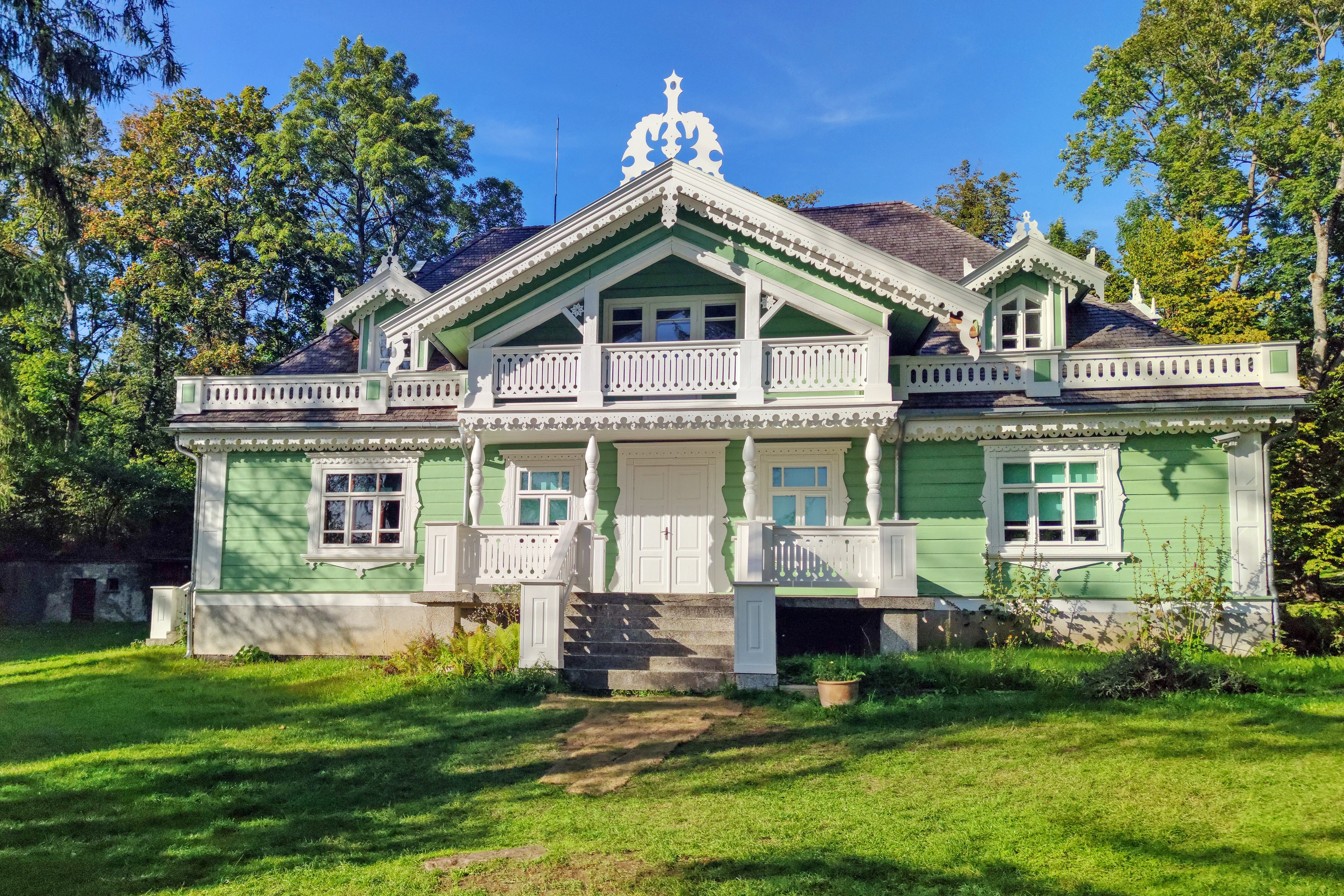
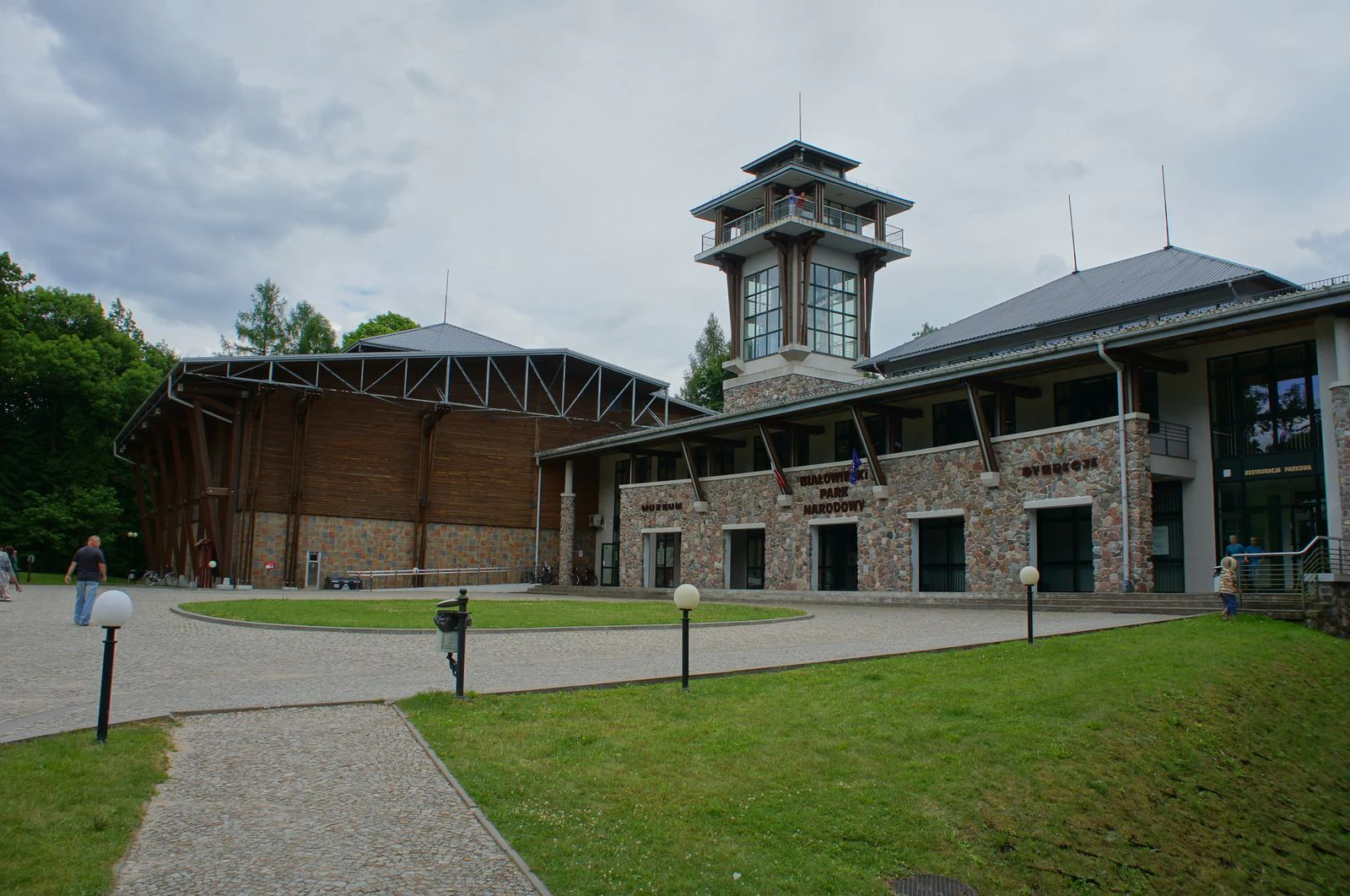
The village of Białowieża within the park preserves architectural heritage from the 19th century, including a manor house from 1845 that now serves as the Centre for Nature Education. The former royal palace, rebuilt and expanded during the Russian partition period as a residence for visiting tsars, was destroyed by Soviet forces in 1944. The Museum of Nature and Forest now occupies this site, providing visitor education while commemorating the forest's royal and cultural history.
The forest's name derives from the Polish words for "white" (biała) and "willow" (wierzba), though the meaning has evolved to simply denote the forest and settlement. The park headquarters maintains cultural connections through the preservation of historic structures and through educational programs that convey the long relationship between humans and this landscape. The border crossing within the forest for hikers and cyclists represents a unique international access point reflecting the shared heritage of the forest on both sides of the Poland-Belarus boundary.
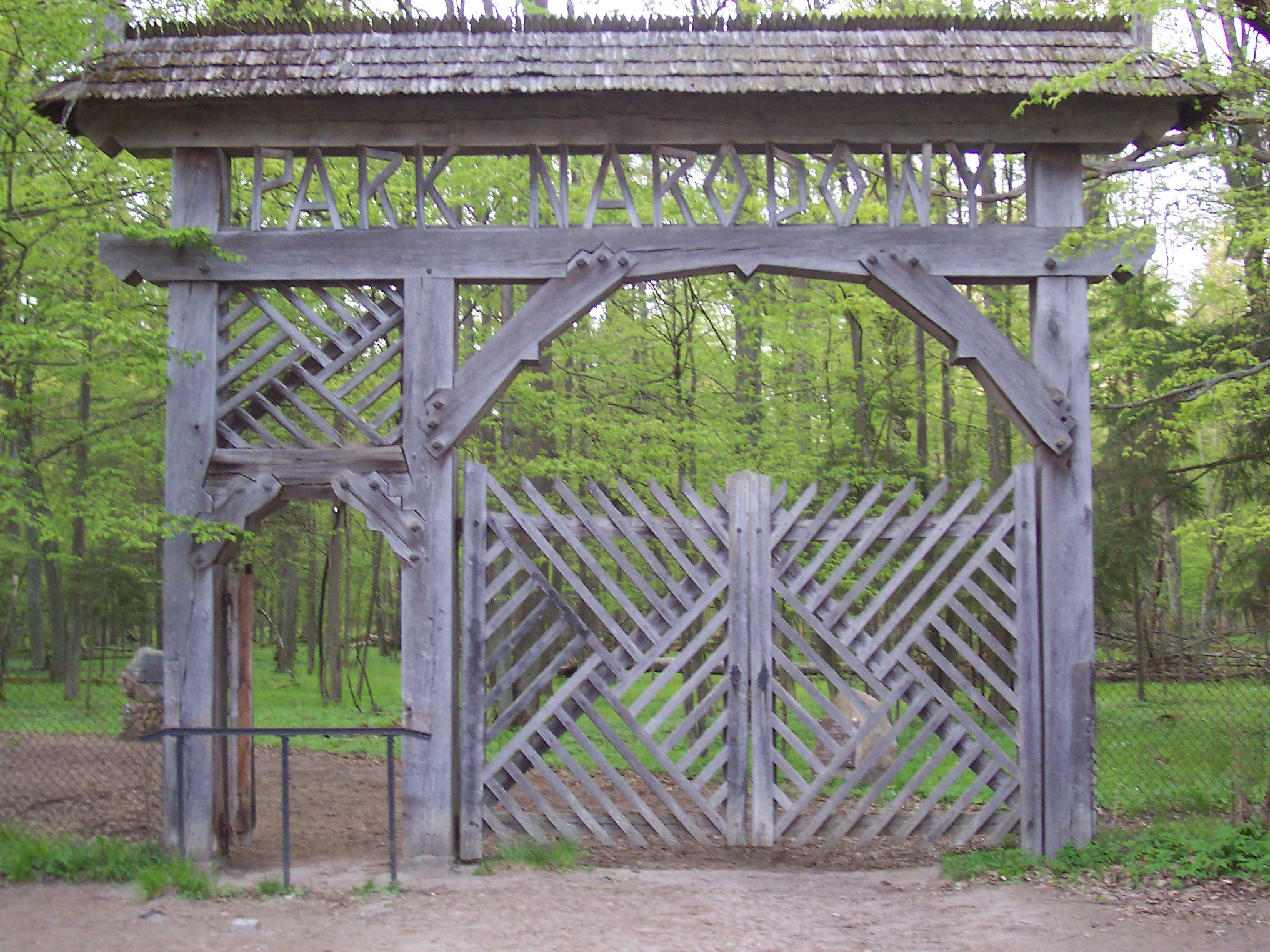
Top sights and standout views in Białowieża National Park
Białowieża National Park offers several exceptional experiences that distinguish it from other European protected areas. The strict-protection area provides visitors the opportunity to walk through an authentic primeval forest—something nearly impossible to experience anywhere else on the continent—with massive oaks, spruces, and hornbeams in various stages of life and decay, all functioning according to natural dynamics unaltered by management. The Bison Breeding Centre and Public Access Reserve allow close observation of European bison in near-wild conditions, with the population often visible from viewing platforms in the Narewka river valley. The Museum of Nature and Forest provides comprehensive educational exhibits on all aspects of the forest's ecology, with multimedia presentations and audio recordings of virtually every species present. The network of guided hiking trails through the southern reserve area, requiring authorized guides, leads to notable trees including Dąb Jagiełły (Jagiellon Oak) and the ancient beekeeping pines. The park's transboundary location offers the unique possibility, with proper documentation, to cross into Belarus and continue exploring the forest that continues on the other side as Belovezhskaya Pushcha National Park.
Best time to visit Białowieża National Park
The optimal times to experience Białowieża National Park depend on what visitors hope to observe, though the forest offers rewarding experiences across multiple seasons. Late spring (May to early June) brings the forest into full leaf, with bird activity at its peak and mammal movement through the landscape as species emerge from winter. The dense canopy has not yet fully closed, allowing good visibility for wildlife observation. This period corresponds with the bison calving season, offering opportunities to see young calves with the herds.
Autumn (September through October) transforms the forest with spectacular color changes as the deciduous trees turn gold, orange, and red, creating a visually stunning landscape that draws many visitors. This season also sees increased animal activity as species prepare for winter, with deer and bison more visible as they move through the forest. Winter, while cold, offers excellent wildlife viewing opportunities as animals concentrate in valley areas and become more visible against the snow-covered ground, though access may be more limited and temperatures can be severe. Summer can be pleasant but the full leaf cover makes wildlife more difficult to spot, and this is also the peak visitation period.