
Mori Atlas logo
Park guides

Seasonal context for limestone coves beside the Mediterranean

Calanques National Park visit-planning guide for its Bouches-du-Rhône setting

Explore Calanques National Park's guides for white limestone cliffs, narrow coves, islands, caves, and Mediterranean water. The timing guide focuses on May, June, and September for comfortable hiking and climbing, contrasting those months with peak-summer heat and increased trail restrictions linked to fire risk.

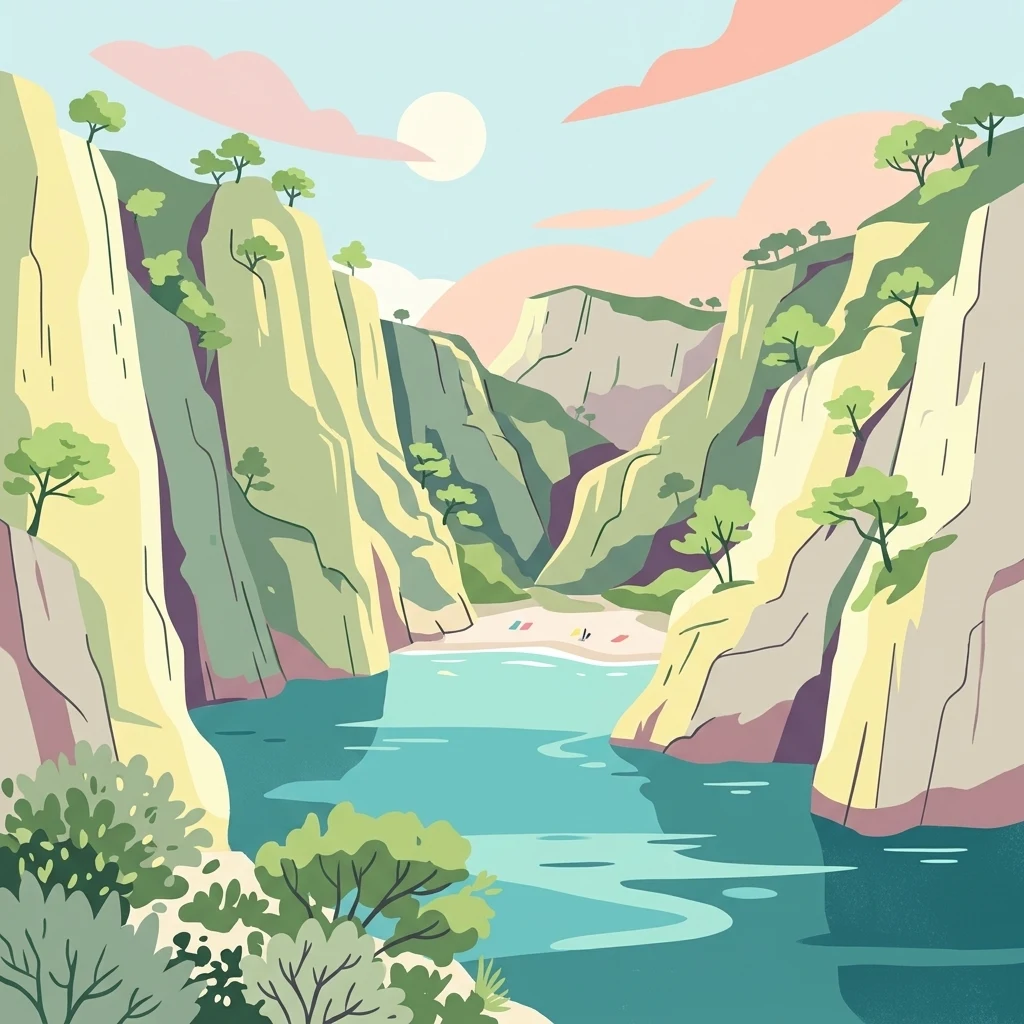
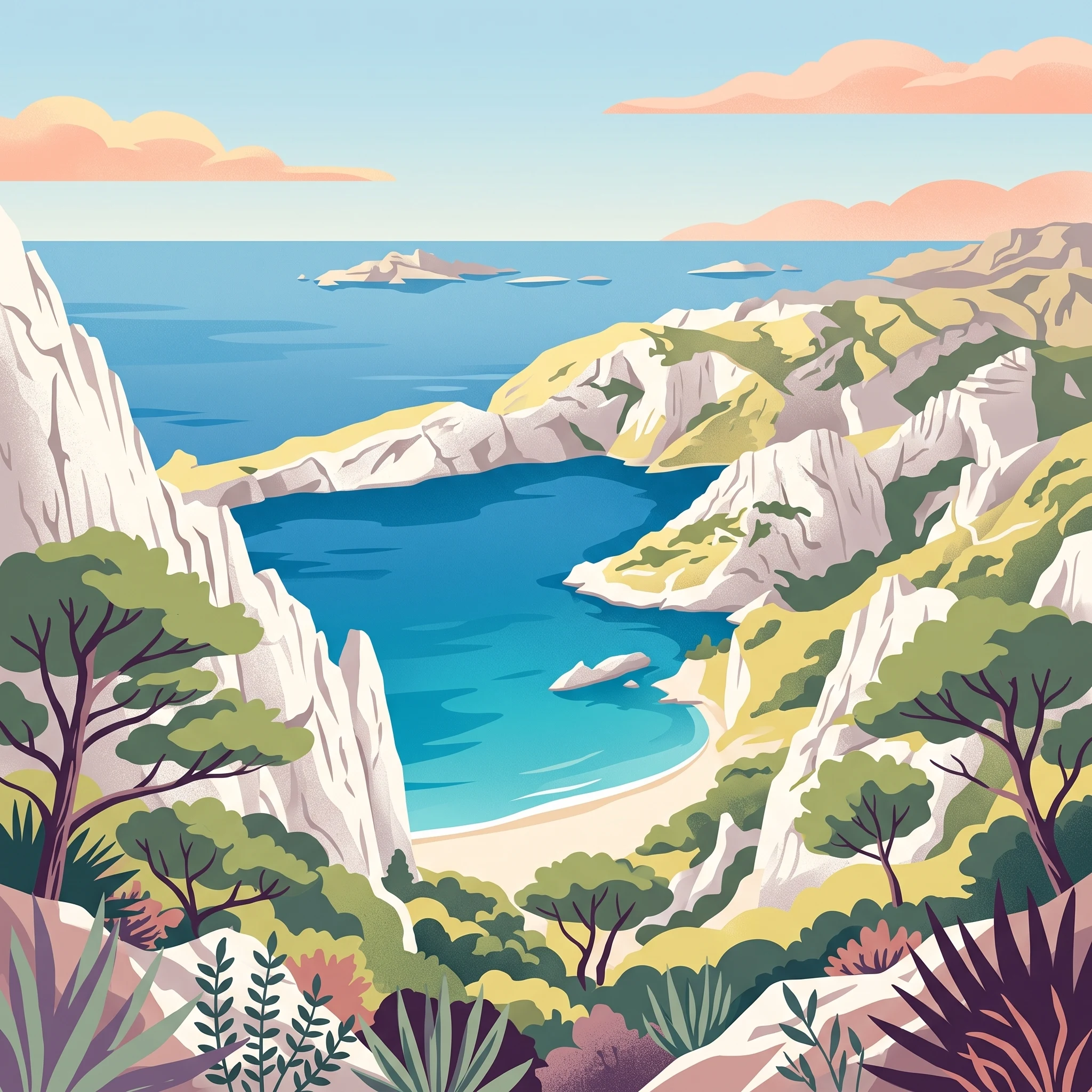
Illustration of limestone cliffs, turquoise water, and a small beach within a coastal calanque

Mediterranean limestone cliffs, coves, and marine ecosystems near Marseille

Calanques National Park

Calanques National Park occupies a remarkable position as France's first peri-urban national park, where wilderness preservation coexists directly alongside one of the country's largest metropolitan areas. The park protects a distinctive Mediterranean landscape of limestone cliffs, hidden coves, islands, and marine environments that have drawn human habitation and exploration for hundreds of thousands of years. The geological foundation consists primarily of sedimentary limestone formations from the Mesozoic era, dating roughly 250 to 65 million years ago, with the distinctive white Urgonian limestone characteristic of the region forming the dramatic cliffs and walls that define the calanques. The landscape is karstic, with numerous caves, sinkholes, and underground water sources carved into the soluble rock over geological time. The park encompasses several islands, including the archipelago of Frioul, the archipelago of Riou, and Île Verte, each supporting distinctive ecological communities. The marine component extends to 43,500 hectares of Mediterranean waters, including underwater canyons connecting the continental shelf to deeper waters. The tension between conservation and intense human use defines the park's character, as approximately 1.5 to 2 million visitors annually seek access to a landscape that has been shaped by millennia of human activity while remaining ecologically significant. The park's creation represented the culmination of over a century of advocacy, beginning with the 1923 formation of the Comité de défense des Calanques to prevent industrial development at En-Vau, through decades of negotiation with diverse user groups including fishers, hunters, climbers, and property owners.

Location
France
Park type
National park
Established
2012
Area
520 km²
Calanques National Park Protected Area
1 guide

Compare specialized visit planning themes and seasonal considerations.

Published Guides and Reference Collection for Calanques National Park

Browse the complete collection of published guides covering essential visit planning topics for Calanques National Park. Compare specific thematic resources to evaluate seasonal weather patterns and shoulder month conditions.
MoriAtlas Explorer

Continue Exploring Calanques National Park's Geography and Map Context

Delve deeper into the protected landscape of Calanques National Park. Examine its specific geographic features, mapped boundaries, and its place within the regional context of Bouches-du-Rhône. This atlas exploration aims to provide a structured understanding of this significant national park and its unique Mediterranean environment, facilitating broader discovery of protected areas.