Why Calanques National Park stands out
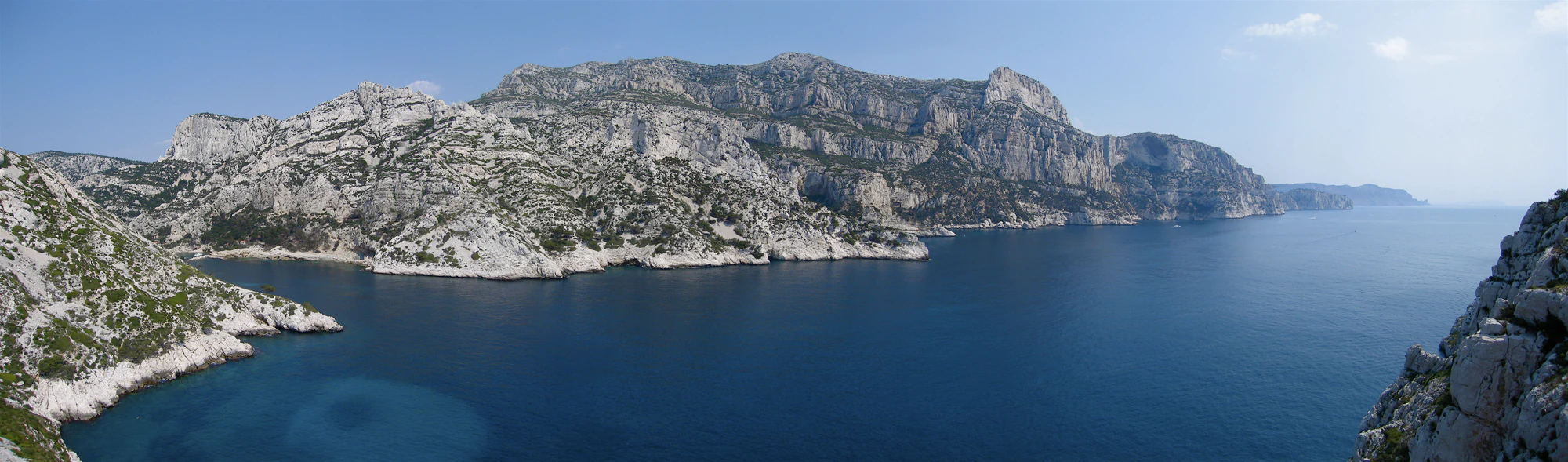
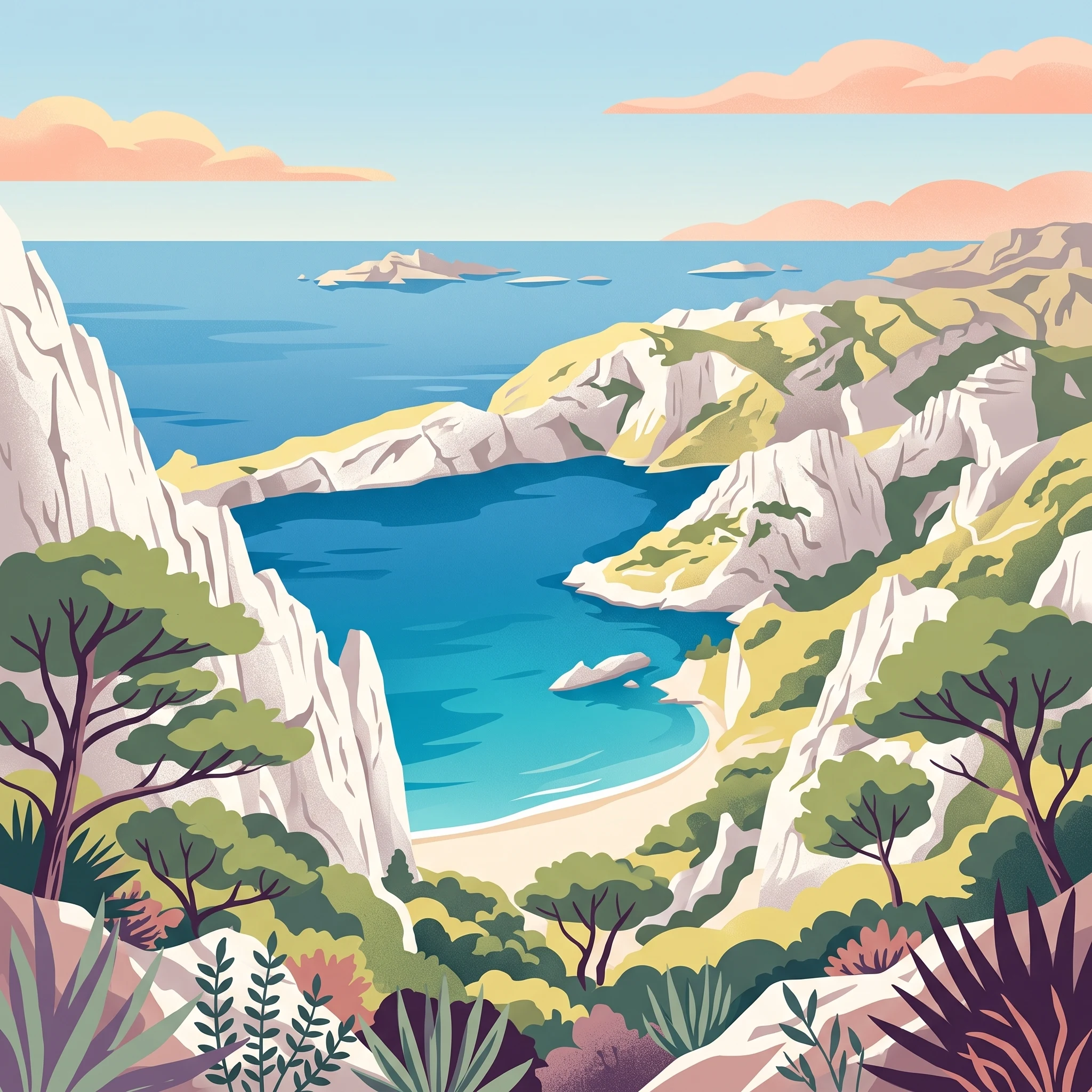
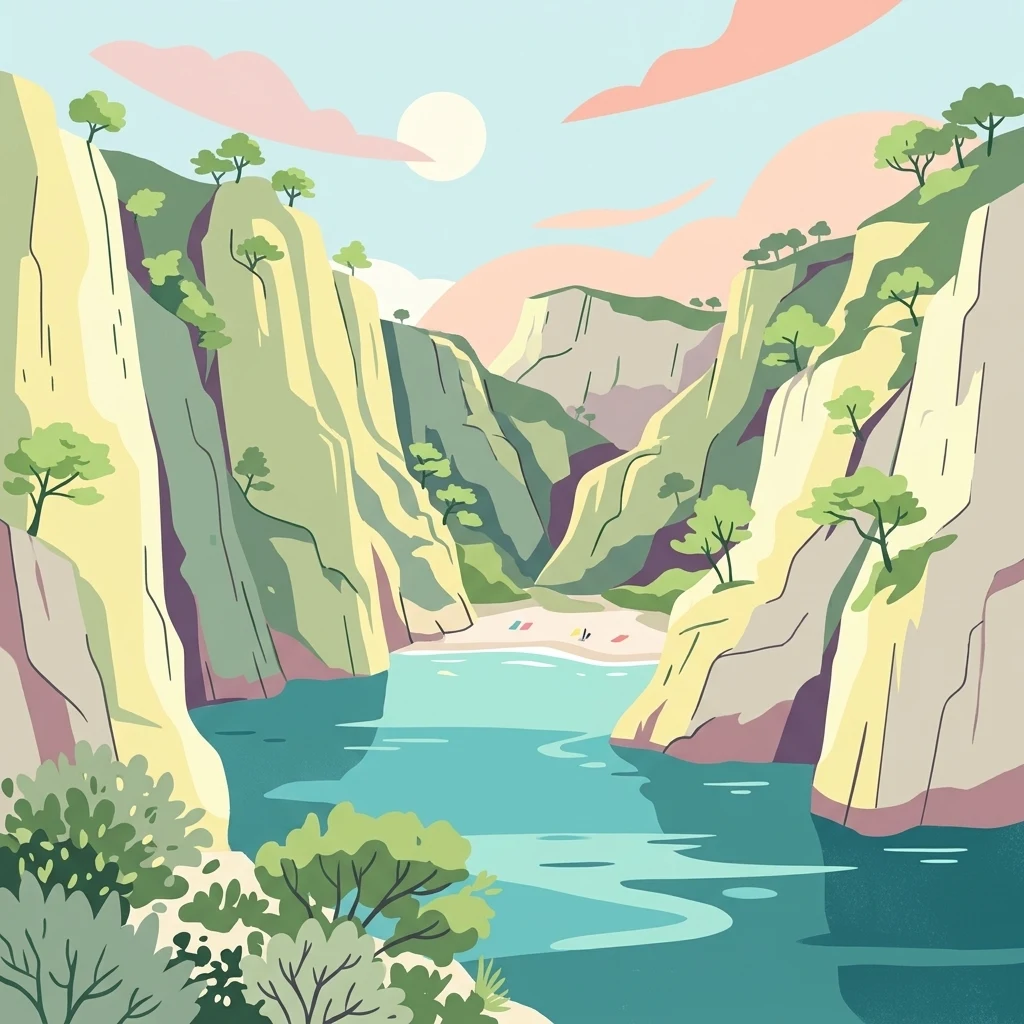
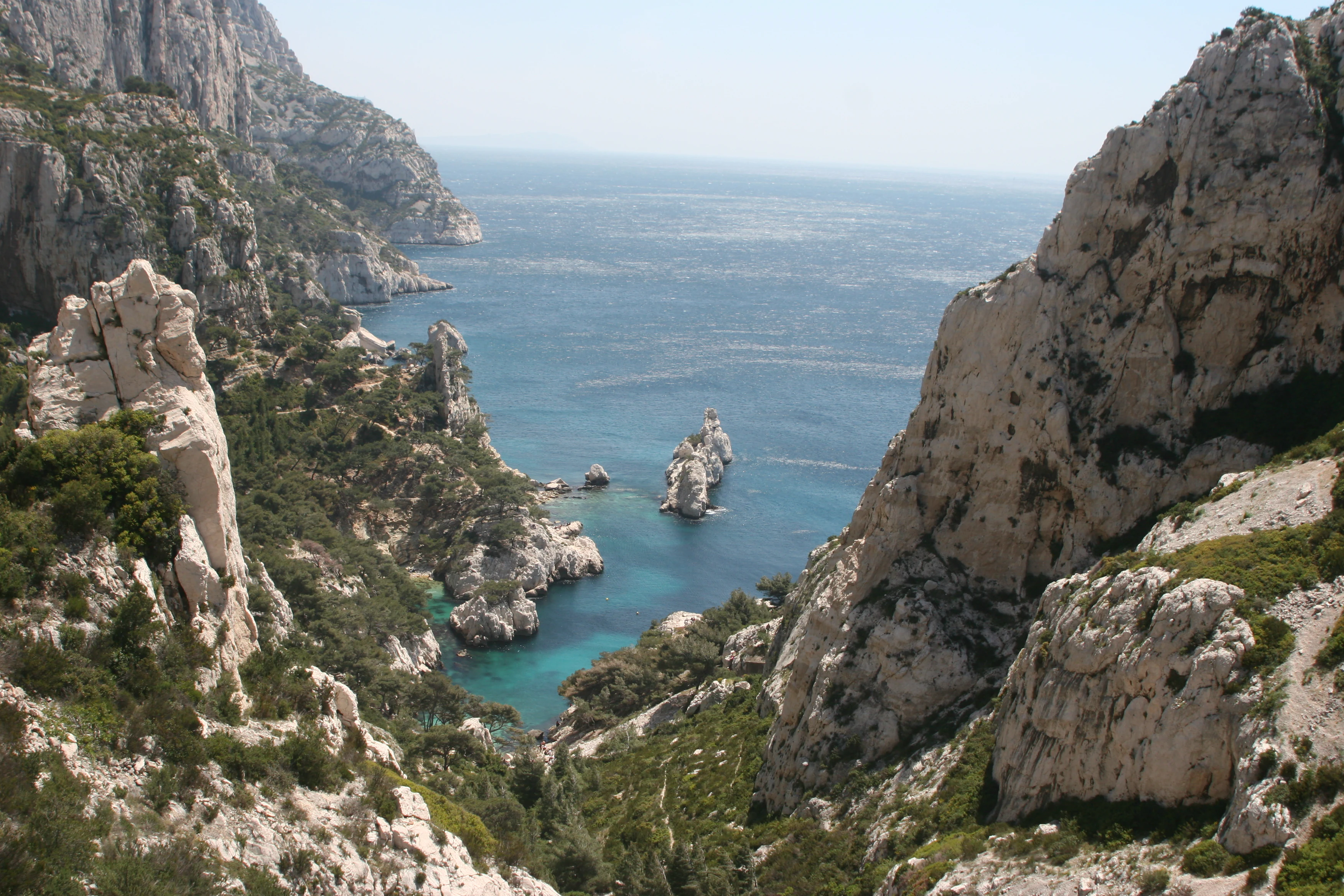
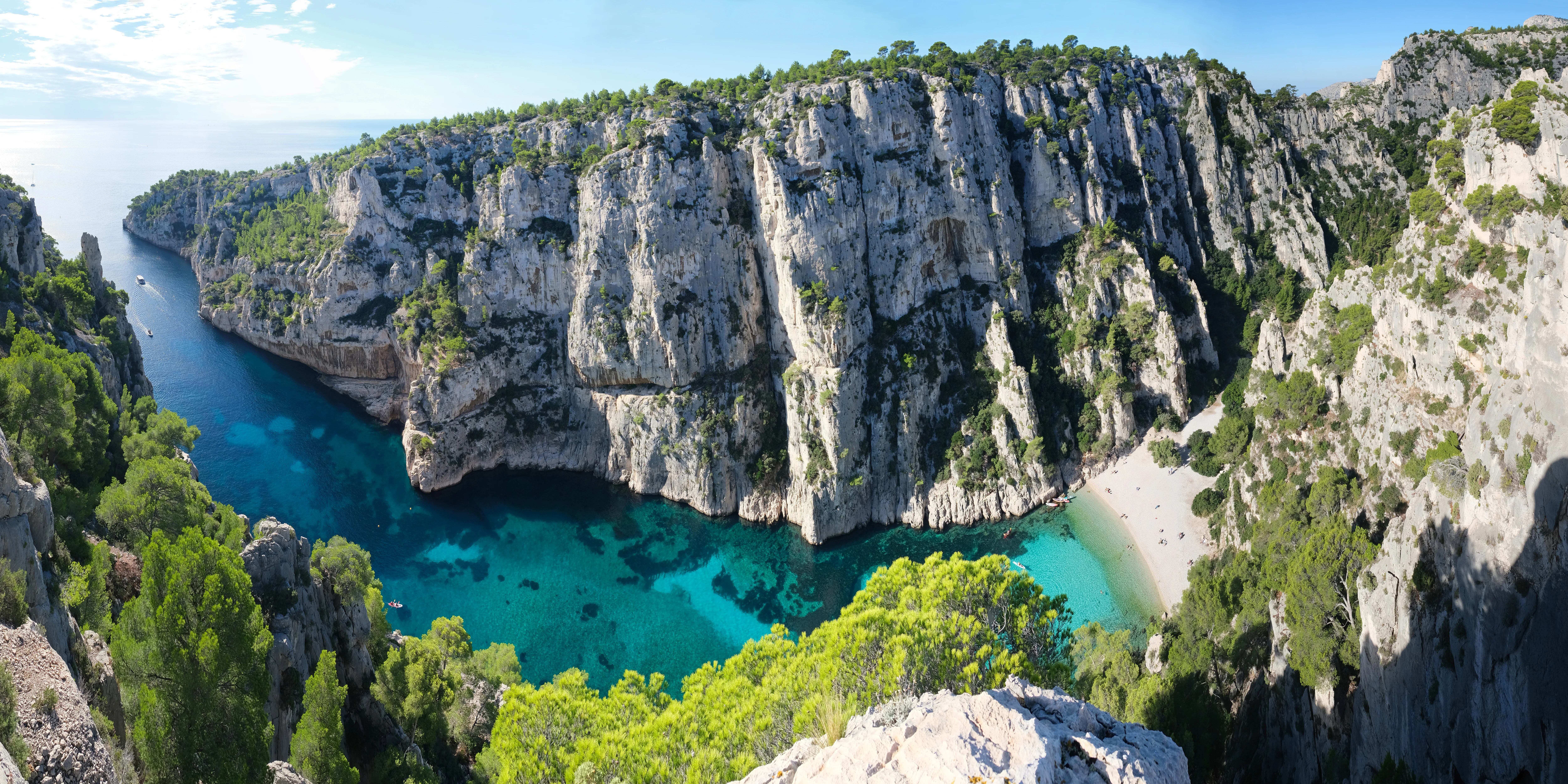
Calanques National Park is renowned for its exceptional limestone calanques, narrow, steep-walled inlets carved by fluvial erosion and sea-level changes into the Mesozoic rock of the Massif des Calanques. The park protects some of the Mediterranean coast's most spectacular scenery, including the iconic calanques of Sormiou, Morgiou, Port-Miou, Sugiton, and En-Vau, where massive white limestone cliffs plunge directly into azure waters. The marine component is equally significant, with extensive posidonia oceanica seagrass meadows, coralligenous communities, and underwater canyons. The prehistoric Cosquer Cave, accessible only by diving through its submerged entrance, contains one of the oldest known marine-themed cave art assemblages in Europe, with paintings and hand stencils dating to approximately 27,000 years BP. The park is also celebrated as one of Europe's premier climbing destinations, with over 3,400 documented climbing routes on its limestone walls.
Calanques National Park history and protected-area timeline
The protection of the Calanques area has roots extending to the early twentieth century, when local residents first organized to prevent industrial development that would have degraded the unique coastal landscape. In 1923, the Comité de défense des Calanques was established specifically to oppose plans for industrial extraction at the calanque d'En-Vau, marking the beginning of organized conservation advocacy for the region. This early movement reflected growing recognition of the Calanques' exceptional scenic and natural value, even as the area remained largely undeveloped due to its rugged terrain. The modern campaign for national park status began in earnest in the late twentieth century, with the groupement d'intérêt public (GIP) des Calanques founded in 1999 to coordinate preparations for creating a national park. The GIP spent over a decade engaged in extensive consultation, organizing 250 information meetings and 700 hours of discussions with stakeholders to address the diverse concerns of fishers, hunters, cabin owners, sailors, climbers, and other user groups who feared their activities would be restricted by new protections. After three draft versions were developed and refined through consultation, the third version was approved in 2011. On April 18, 2012, Prime Minister François Fillon signed the decree establishing Calanques National Park, making it France's newest mainland national park and the country's first peri-urban park combining both terrestrial and marine protection. The park's creation represented a compromise that excluded certain areas initially proposed, including the southern harbor of Marseille and the Frioul archipelago, to accommodate nautical and fishing interests.
Calanques National Park landscape and geographic character
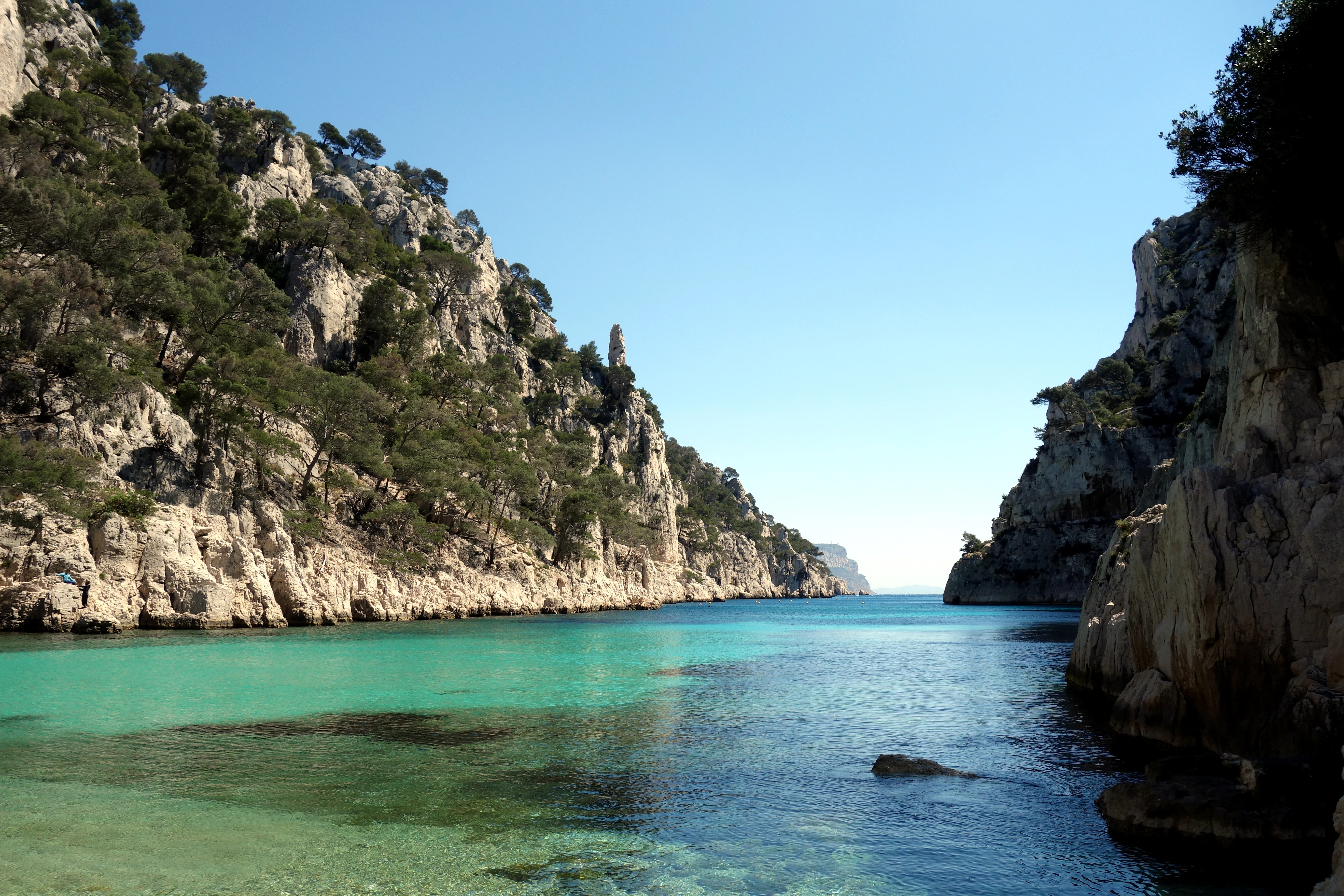
The landscape of Calanques National Park is defined by its dramatic limestone formations carved by millions of years of geological and marine erosion along the Mediterranean coast. The Massif des Calanques consists primarily of Jurassic and Cretaceous limestone that formed in warm, shallow tropical seas and later emerged through tectonic activity associated with the uplift of the Alps approximately 1.5 million years ago. The distinctive white Urgonian limestone, characterized by fossil rudist bivalves, creates the brilliant white cliffs and vertical walls that are emblematic of the region. The coastline is deeply indented with calanques—steep-sided inlets where stream-cut valleys have been drowned by rising sea levels, creating narrow, often nearly enclosed bodies of water flanked by cliffs that can rise hundreds of meters directly from the sea. The calanques of Sormiou, Morgiou, Port-Miou, Sugiton, and En-Vau represent the most famous examples of this landform. The park's highest point, Mont Carpiagne, rises to 645 meters within the Massif de Saint-Cyr, offering panoramic views over the coastal landscape and Mediterranean. The island landscapes include the archipelago of Frioul near Marseille, the more distant archipelago of Riou, and Île Verte, each with distinctive coastal formations. The underwater landscape is equally dramatic, with submarine canyons connecting the continental shelf to depths in the Fosse de Cassidaigne, and extensive rocky reefs supporting marine biodiversity.
Calanques National Park ecosystems, habitats, and plant life
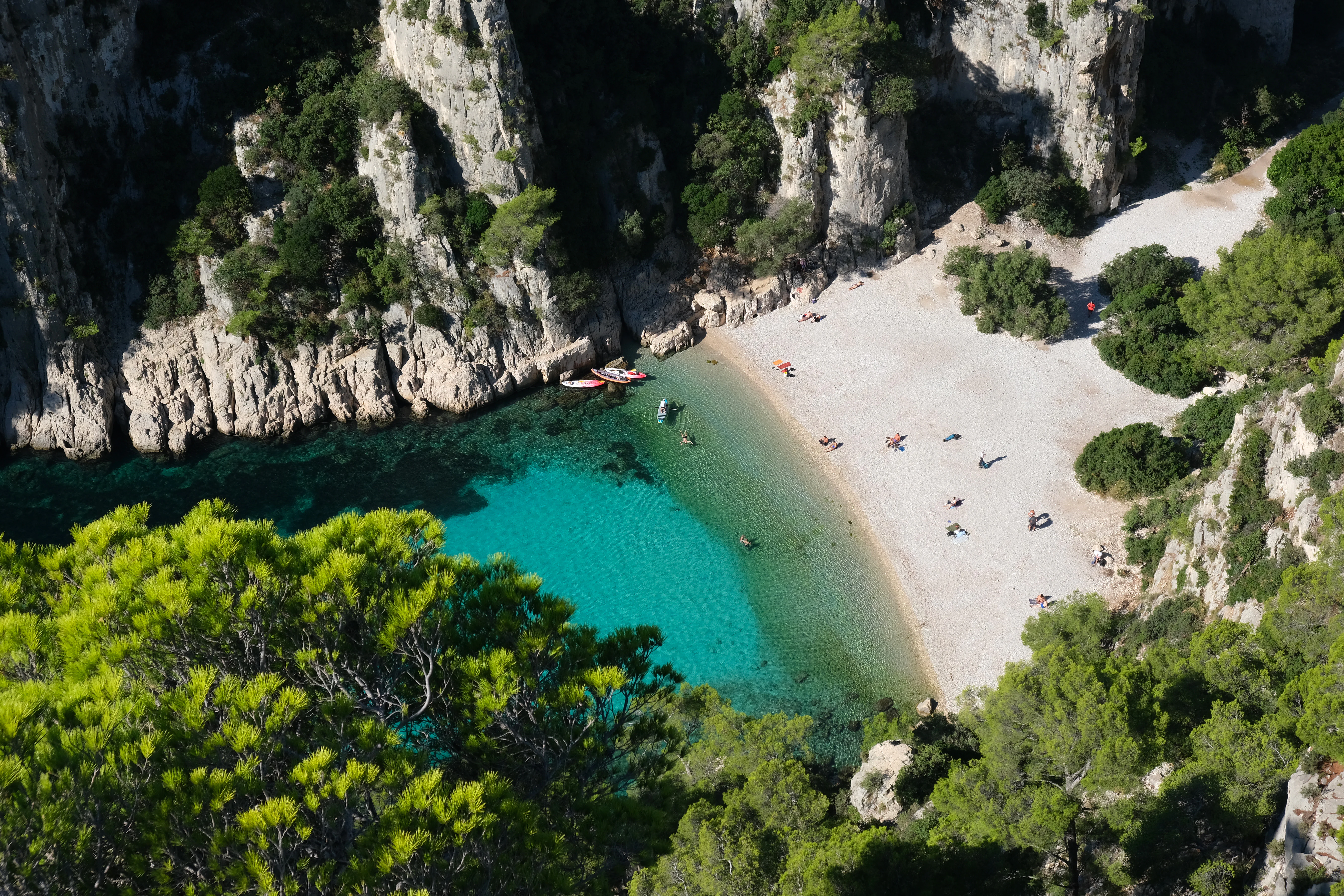
The terrestrial and marine environments of Calanques National Park support remarkable biodiversity despite the park's intensive human use and Mediterranean climate. The terrestrial component encompasses approximately 26 distinct natural habitats, plus 40 mixed habitat types, supporting around 900 plant species and 83 protected species. The Mediterranean vegetation includes characteristic maquis shrubland, Aleppo pine forests in some areas, and garigue-type shrub communities on the drier slopes. The karstic geology creates unique habitat conditions, with caves and cavities providing shelter for specialized species. The marine environment is particularly significant, with posidonia oceanica seagrass meadows forming extensive underwater meadows that provide critical habitat and oxygen production for marine ecosystems. The coralligenous community develops on vertical walls and rocky substrates, creating complex three-dimensional structures that support exceptional biodiversity. Nearly 60 species of plants and animals in the marine environment receive conservation attention or protection, including red coral, posidonia, the green alga Caulerpa prolifera, the date mussel Lithophaga lithophaga, and the giant triton Charonia lampas. Several fish species face conservation concerns, including the brown grouper, corb, common dentex, and spotted seahorse.
Calanques National Park wildlife and species highlights
The wildlife of Calanques National Park encompasses diverse terrestrial and marine species adapted to the Mediterranean coastal environment. Among the notable avian species, Bonelli's eagle nests in the park's cliffs, while Cory's shearwater and Mediterranean shearwater breed on the islands and frequent coastal waters. The twelve reptile species and four amphibian species present reflect the Mediterranean climate and varied terrestrial habitats. The park's karstic cave systems provide critical roosting habitat for rhinolophid bats, which shelter in the underground cavities throughout the massif. The marine environment supports a rich community of invertebrates and fish. The posidonia meadows and coralligenous reefs provide essential habitat for numerous species, including the protected brown grouper, red coral, and various crustaceans such as the small European locust lobster, large locust lobster, European spiny lobster, and European lobster. Marine megafauna includes occasional sea turtles and dolphins, though the last monk seal in the Calanques was killed around 1945. The prehistoric Cosquer Cave paintings depict terrestrial animals including horses, Alpine ibex, chamois, bison, aurochs, deer, and antelopes, as well as marine species such as penguin and seal, providing evidence of the rich faunal communities present during the Last Glacial period when sea levels were much lower.
Calanques National Park conservation status and protection priorities
Calanques National Park represents significant conservation value in a heavily populated region of France, protecting both terrestrial and marine ecosystems that face multiple pressures. The park forms part of the European Natura 2000 network, with approximately 7,812 hectares designated under this conservation framework. The dual terrestrial-marine protection enables integrated management of a coastline where land and sea are ecologically interconnected through processes of sedimentation, nutrient exchange, and species migration. Several species of conservation concern receive targeted protection, including the Bonelli's eagle, the diadema sea urchin, the brown grouper, and the molosse de Cestoni bat. However, the park faces significant environmental challenges. Industrial pollution from the former Pechiney aluminum plant at Gardanne has resulted in the disposal of red mud into the Fosse de Cassidaigne marine canyon since 1966, with over 20 million tonnes deposited over five decades, introducing heavy metals and other contaminants into the marine environment. Fire risk remains high in the Mediterranean climate, with the park experiencing numerous wildfires over recent decades. The intense visitation pressure—approximately 1.5 to 2 million annual visitors—creates challenges for habitat preservation, particularly in the most popular calanques where visitor quotas have been implemented for sites like Sugiton and Pierres-Tombées during peak season.
Calanques National Park cultural meaning and human context
Human presence in the Calanques region extends continuously from the Lower Paleolithic period approximately 1.5 million years ago through to the present, creating a landscape where prehistoric, ancient, medieval, and modern cultural layers interweave with the natural environment. The Cosquer Cave, located beneath the Pointe de Morgiou with its entrance 37 meters below the current sea level, contains some of the oldest known cave art in Europe, with negative hand stencils dated to 27,000 years BP and paintings and engravings from approximately 18,000 years BP depicting both terrestrial mammals and marine species. Archaeological evidence from the Grotte des Trémies reveals Neanderthal occupation dating to approximately 300,000 years BP. During the antiquity period, the region was inhabited by the Ligures SEGOBRIGES tribe before Greek colonization by the Phocaeans established the port of Marseille around 600 BCE, with the calanques serving as navigation routes and sources of building stone. Medieval and early modern periods saw agricultural and pastoral use of the land, with sheep grazing on the islands contributing to deforestation. The historical pattern of human use has left traces throughout the landscape, from prehistoric cave sites to ancient quarries, medieval agricultural terraces, and defensive watchtowers built in the 1300s to guard against piracy. The cultural landscape also includes the traditional fishing villages within the calanques, where small cabins and harbors reflect centuries of maritime livelihood.
Top sights and standout views in Calanques National Park
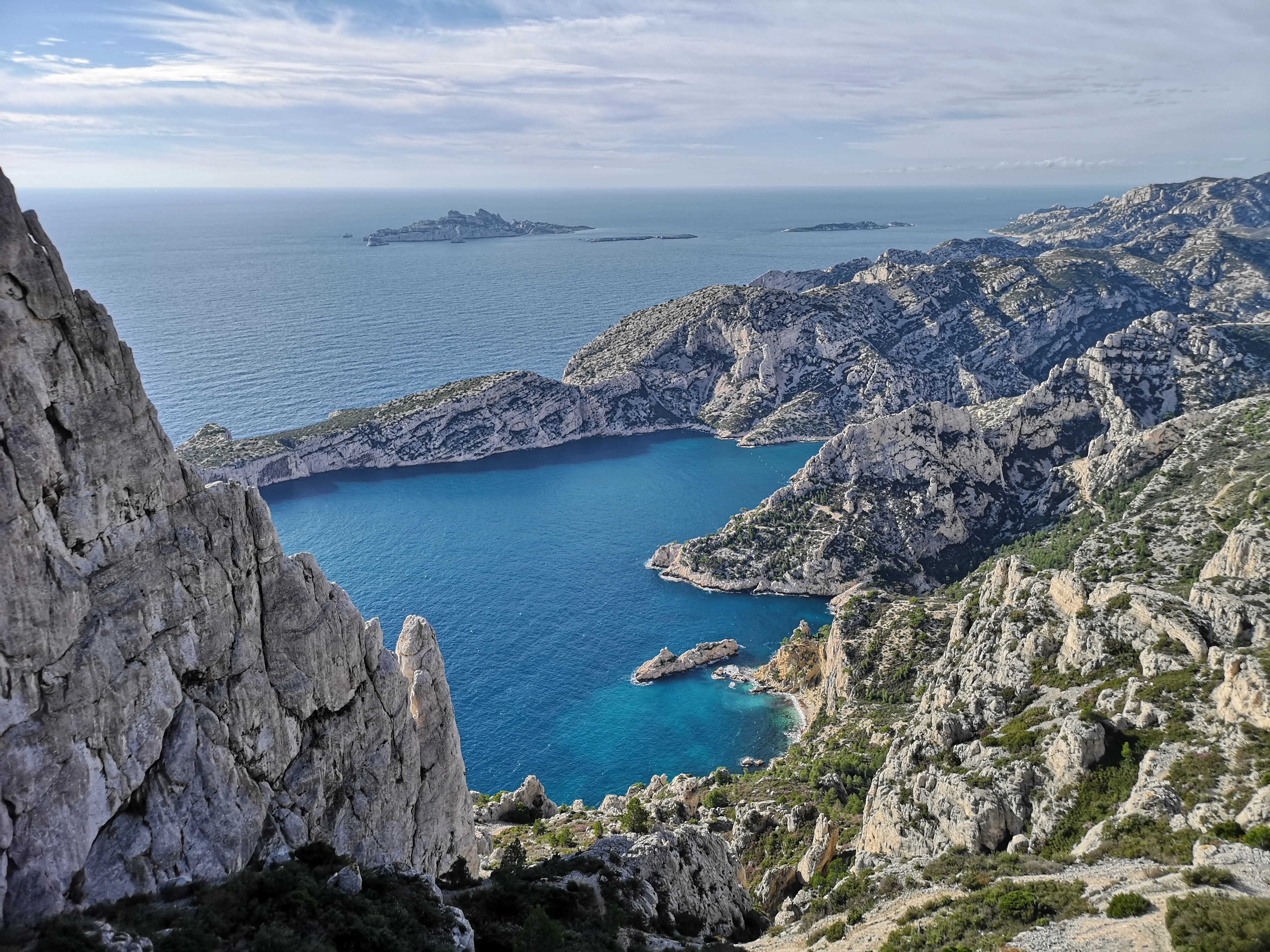
The most distinctive features of Calanques National Park include its iconic calanques—deep, narrow limestone coves with dramatic white cliffs descending into vivid blue Mediterranean waters—and its unique status as Europe's first peri-urban national park combining terrestrial and marine protection. The park offers exceptional recreational opportunities, with over 3,400 climbing routes on its limestone cliffs making it one of France and Europe's premier climbing destinations, and an extensive network of hiking trails including the GR 51-98 crossing the massif. The prehistoric Cosquer Cave represents exceptional cultural heritage, with its submerged entrance accessible only by diving and cave paintings depicting marine species that would have been visible when the cave entrance sat well above sea level during the Last Glacial period. The marine environment features extensive posidonia meadows and coralligenous reefs supporting high biodiversity, while the islands of Riou and the Frioul archipelago provide important bird habitat and aesthetic contrast to the dramatic coastal cliffs.