
Mori Atlas logo
National parkGran Paradiso National Park

Explore the geographic contours and protected boundaries of this significant national park in Italy.

Gran Paradiso National Park: Mapped Protected Landscape and Italian Geography

(Parco nazionale del Gran Paradiso)

Gran Paradiso National Park stands as a significant national park entity within Italy, providing a dedicated focus for atlas-based geographic discovery. This page serves as your entry point to understanding its protected landscape, mapped boundaries, and the regional geography it inhabits. Delve into the structured data and visual context that define Gran Paradiso National Park, allowing for detailed exploration of its conservation area and its place within the Italian geographical atlas.

Alpine national parkProtected areaMountain landscapeWildlife conservationHistoric royal hunting reserveTransboundary protected area
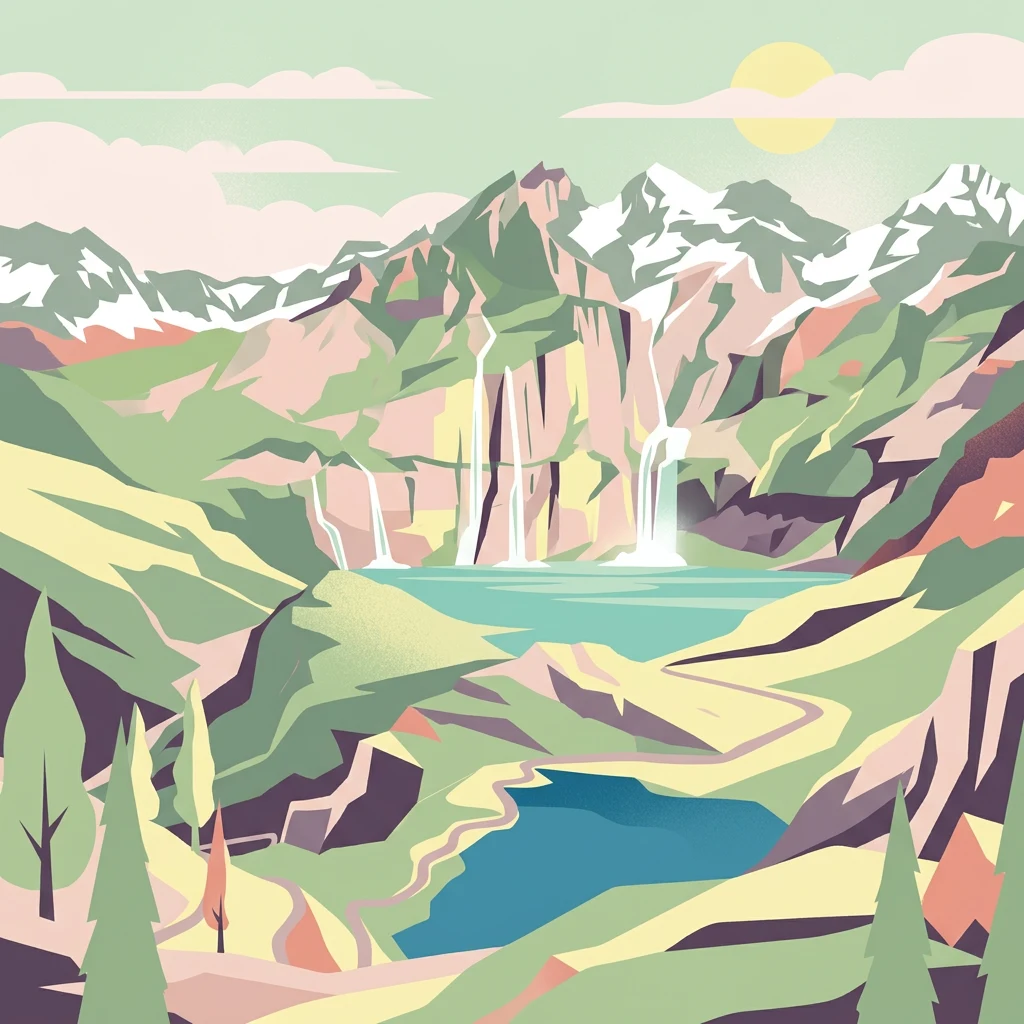
Stylized illustration of mountain landscape with waterfalls, lakes, and pine trees under a sunlit sky

Gran Paradiso National Park

National park

Park overview

Structured park overview, official facts, and landscape profile for Gran Paradiso National Park

Gran Paradiso National Park park facts, protected area profile, and essential visitor context
Review the core facts for Gran Paradiso National Park, including designation, size, terrain, visitor scale, habitats, and operating context in one park-focused overview.

About Gran Paradiso National Park

Gran Paradiso National Park occupies a remarkable position in the Graian Alps of northwest Italy, spanning the boundary between the Aosta Valley and Piedmont regions. The park's landscape is dominated by theGran Paradiso massif, whose highest peak reaches 4,061 metres and stands as the only mountain entirely within Italian territory that exceeds 4,000 metres. From this summit, Mont Blanc and the Matterhorn are visible on clear days, underscoring the park's strategic position in the alpine arc. The terrain was shaped by glacial processes during the Quaternary period, leaving behind the characteristic U-shaped valleys, moraines, and glacial lakes that define the park's scenery today. Five principal valleys radiate from the central massif: Val di Rhêmes to the west, Val di Cogne to the north, Valsavarenche, Valle dell'Orco to the south, and Val Soana to the east. The park's western boundary adjoins France's Vanoise National Park, creating a transboundary protected area that enables the seasonal migration of Alpine ibex between the two countries. The elevation gradient from 800 to 4,061 metres supports a succession of habitats, from forested valley floors through alpine meadows to rocky terrain and glaciers above the tree line. Approximately 10% of the park's surface is forested, while 16.5% supports agriculture and pasture, 24% remains uncultivated, 40% is classified as sterile terrain, and 9.5% is occupied by glaciers. The park is administered by the Ente Parco Nazionale Gran Paradiso, headquartered in Turin, and serves as a model for alpine conservation in Europe.

Quick facts and research context for Gran Paradiso National Park

Gran Paradiso National Park occupies 703 square kilometres in the Graian Alps, straddling the Aosta Valley and Piedmont regions of northwest Italy. Established in 1922 as Italy's first national park, it was created to protect the Alpine ibex from extinction. The park contains 59 glaciers, five principal valleys including Val di Cogne, Valsavarenche, Valle dell'Orco, Val di Rhêmes, and Val Soana, and features terrain sculpted by glacial activity. The iconic Gran Paradiso mountain reaches 4,061 metres, making it the only peak entirely within Italy exceeding 4,000 metres. About 10% of the park is forested, with coniferous and deciduous woodlands providing habitat for diverse wildlife including ibex, chamois, wolves, and golden eagles.

Park context

Deeper park guide and search-rich context for Gran Paradiso National Park

Gran Paradiso National Park history, landscape, wildlife, and travel context
Explore Gran Paradiso National Park through its history, landscape character, ecosystems, wildlife, conservation priorities, cultural context, and seasonal travel timing in a structured park guide built for atlas discovery and search intent.

Why Gran Paradiso National Park stands out

Gran Paradiso is best known as the stronghold of the Alpine ibex, one of Europe's most iconic mountain ungulates. The park was specifically created to save this species from extinction when only about 60 individuals remained in the Gran Paradiso and Vanoise area. Today the ibex population has recovered to approximately 2,700 individuals. The park is also renowned for its dramatic alpine scenery, with glacial valleys, high mountain plateaus like the Plateau de Nivolet, and the presence of rare species including the reintroduced gipeto (bearded vulture) and lynx. The network of historic royal hunting trails, built during Victor Emmanuel II's reign in the 19th century and still totalling 724 kilometres, provides visitors with access to some of the most spectacular alpine terrain in the Alps.
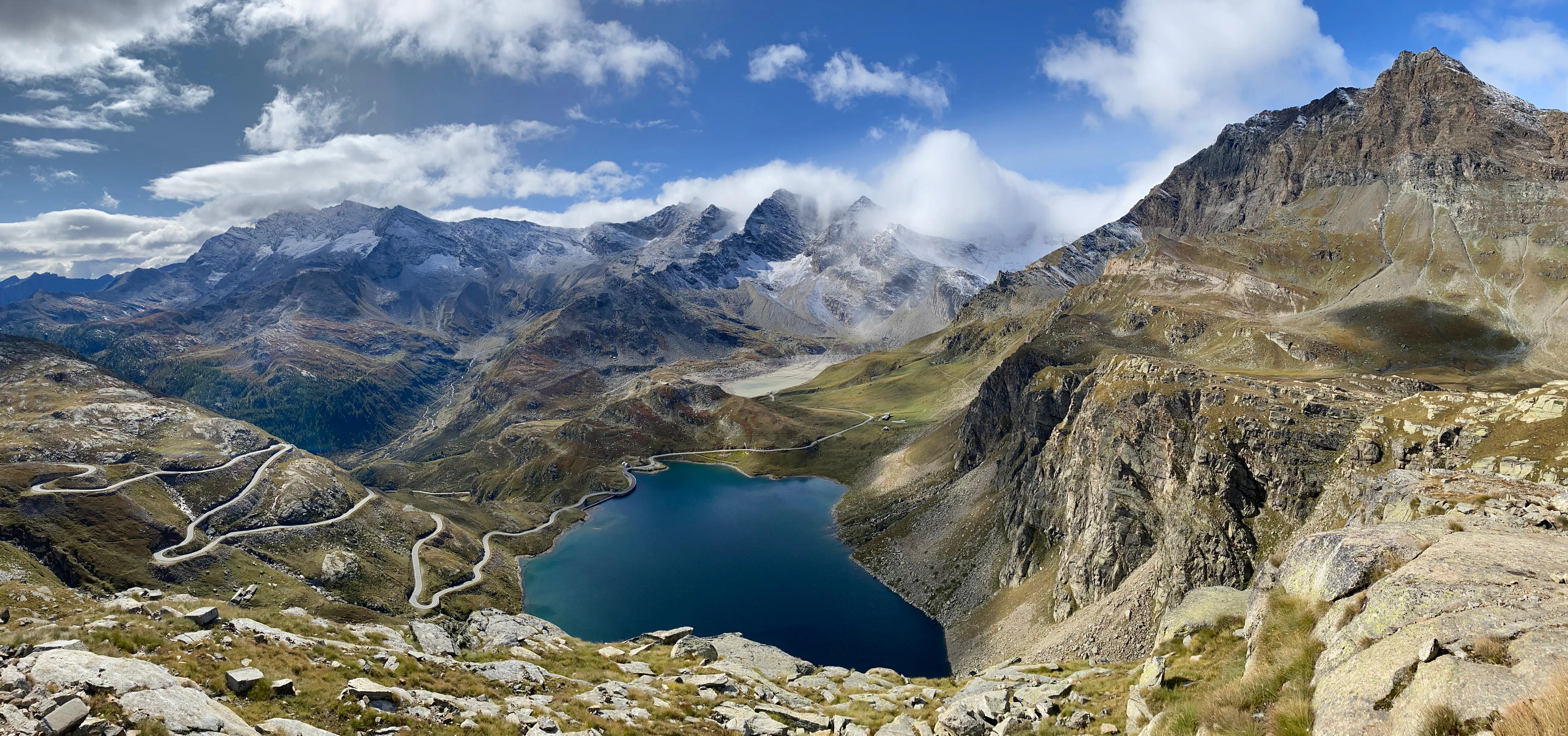
Panoramic landscape view from Colle del Nivolet showing Lago Serrù and Lago dell'Agnel surrounded by mountain peaks under a partly cloudy sky
Panoramic view of Lago Serrù and Lago dell'Agnel from Colle del Nivolet

Gran Paradiso National Park history and protected-area timeline

The protection of Gran Paradiso began with King Victor Emmanuel II, who established the Royal Hunting Reserve of Gran Paradiso in 1856. At that time, the Alpine ibex had been hunted to near extinction across the Alps, with only approximately 60 individuals surviving in this remote area. The king created a protective guard for the ibex and commissioned an extensive network of trails and mule tracks, totalling 724 kilometres, many of which remain in use today. The reserve was hunting grounds for the House of Savoy for decades, with Victor Emmanuel II and his successors hosting elaborate hunting parties in August each year. In 1920, King Victor Emmanuel III, grandson of Victor Emmanuel II, donated the original 21 square kilometres of royal land to the state. The park was officially established on December 3, 1922, making it Italy's first national park. At its founding, approximately 3,000 ibex inhabited the park, a number that grew to 4,000 by 1933. However, the following decade saw deterioration in protection during the Fascist period, and by 1945, only 419 ibex remained due to poaching and wartime pressures. Conservation efforts were re-established after the war, and the ibex population recovered to 4,000 by 2005. The park is managed by the Ente Parco Nazionale Gran Paradiso, established by decree in 1947, and has since gained recognition as a Natura 2000 site, an Important Bird Area, and a recipient of the European Diploma of Protected Areas in 2006, renewed in 2012. In 2014, Gran Paradiso became the only Italian park to join the world Green List of protected areas.

Gran Paradiso National Park landscape and geographic character

Gran Paradiso National Park showcases the dramatic landforms created by alpine glaciation. The terrain rises from valley floors at around 800 metres to the summit of Gran Paradiso at 4,061 metres, with an average altitude of 2,000 metres. The five main valleys were carved by ancient glaciers, leaving behind U-shaped profiles, moraines, and the characteristic basins that now contain the park's famous lakes. The Plateau de Nivolet, accessible via the Colle del Nivolet, offers one of the park's most spectacular panoramic views, with the Nivolet lakes reflecting the surrounding peaks. The park contains 59 glaciers, more extensive on the Aosta Valley side, formed during the Little Ice Age of the 17th century. Notable peaks include the Gran Paradiso itself, the Herbétet at 3,778 metres, the Grivola at 3,969 metres, the Ciarforon at 3,642 metres, and the Tresenta at 3,609 metres. The landscape transitions from forested valley floors through larch and spruce forests to alpine meadows above the tree line, then to rocky terrain and permanent snow and ice at the highest elevations. The valley floors are forested with coniferous and deciduous species, while alpine meadows bloom with wildflowers in late spring and summer.
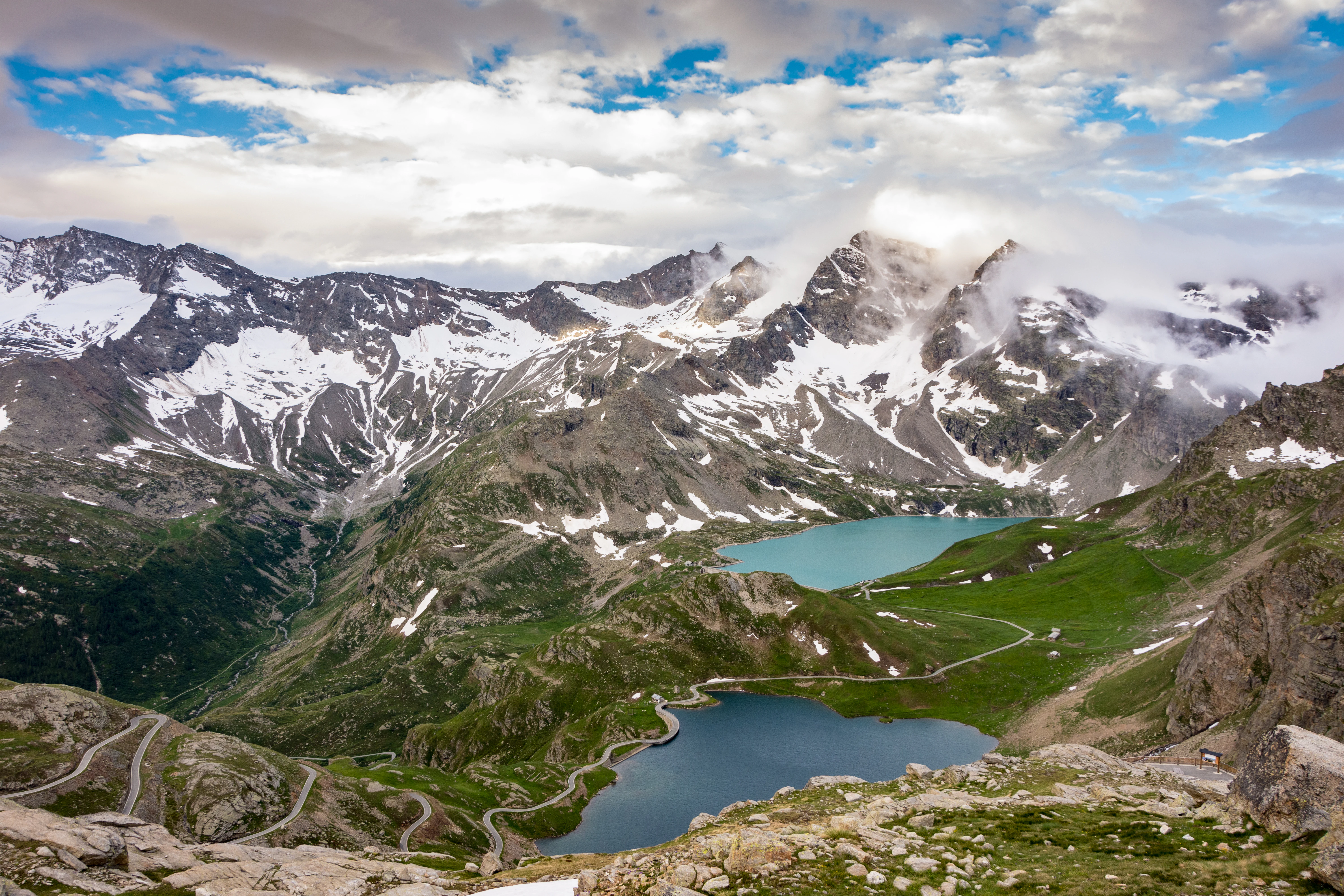
Panoramic view of snow-capped mountains, blue alpine lakes, and winding trails in a mountainous national park.
Dawn light illuminating the mountain valleys and alpine lakes of Valle Orco in Gran Paradiso National Park.

Gran Paradiso National Park ecosystems, habitats, and plant life

The park's ecological diversity stems from its dramatic altitudinal range and variety of habitats. Below approximately 1,200 metres on the Piedmont side, European beech forests dominate, creating dense foliage that admits little light and produces a thick layer of decomposing leaves on the forest floor. Larch is the most common tree on valley floors, mixed with spruces, Swiss stone pines, and occasionally silver fir. At higher elevations up to 2,300 metres, larch and Swiss stone pine forests transition to sub-alpine zones. Above the tree line, alpine meadows support a rich display of wildflowers including wild pansies, gentians, martagon lilies, and alpenroses. Rocky habitats above the timberline host specialized alpine plants adapted through dwarfism, hairiness, bright coloured flowers, and highly developed root systems. The Paradisia Alpine Botanical Garden near Cogne showcases approximately 1,500 plant species found within the park. The conifer woodlands, covering about 6% of the park, include Scots pine groves, Norway spruce forests, and larch with Swiss stone pine at the highest levels. Wetlands and peat bogs in valley areas support distinct plant communities including cotton grass whose white fluff preannounces the end of summer.
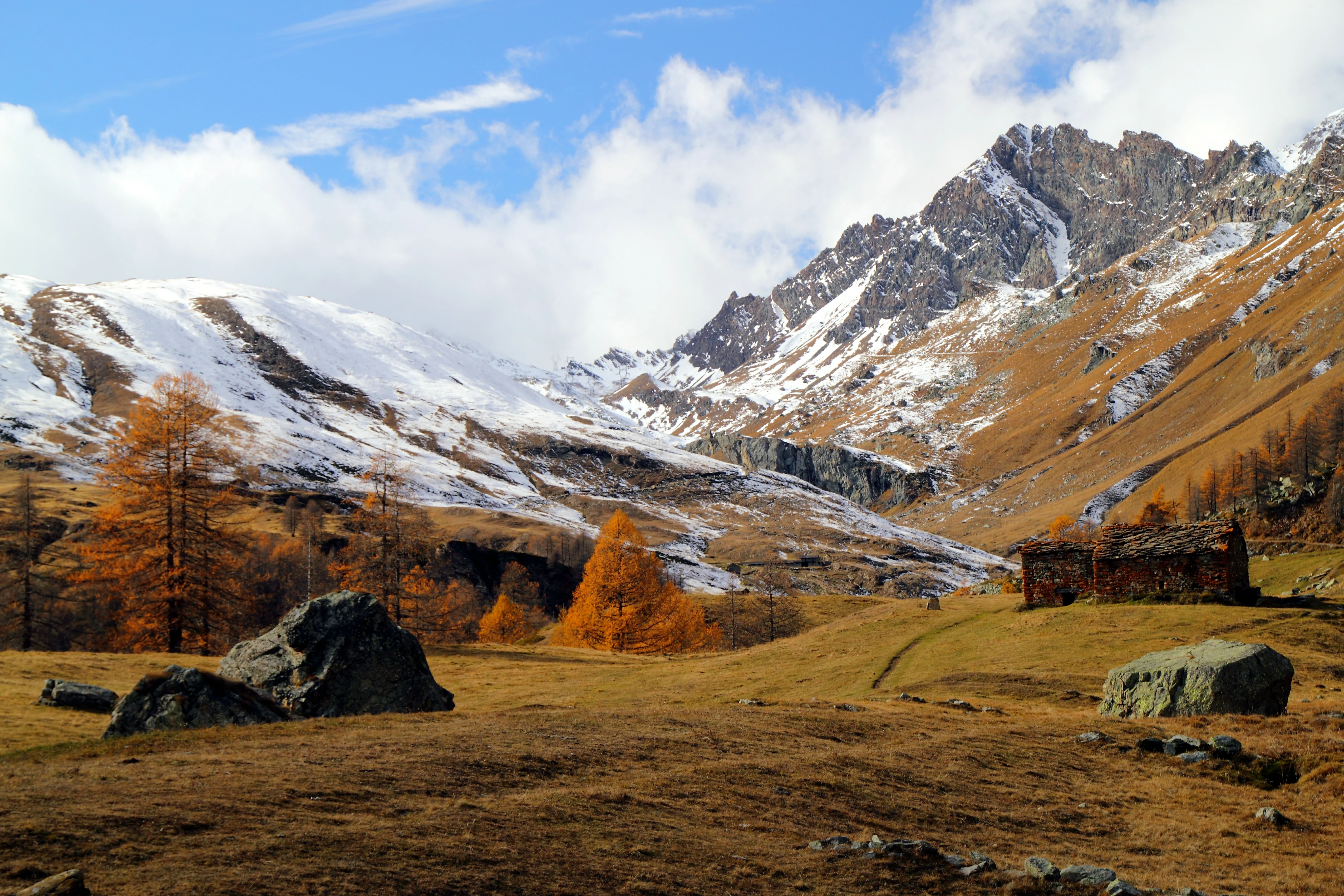
Autumn landscape featuring snow-covered mountain peaks, golden larch trees, rocky terrain, and a small stone structure under a partly cloudy sky
Autumn landscape of Valle di Champorcher with snow-capped mountains and golden larch trees

Gran Paradiso National Park wildlife and species highlights

Gran Paradiso is famed for its Alpine ibex, the species that inspired the park's creation. These mountain goats inhabit the abundant summer pastures above the tree line and descend to lower elevations in winter. The park supports approximately 2,700 ibex, with adult males weighing 90-120 kilograms and bearing impressive curved horns up to 100 centimetres in length. Chamois, another iconic alpine ungulate, number over 8,000 individuals in the park and are known for their elegance and agility on steep terrain. The park has seen the return of predators that were previously exterminated: wolves from central Italy now number 6-7 individuals including a family pack in Valsavarenche, while lynx have been reintroduced and are now present after a century's absence. The gipeto (bearded vulture), once extinct in the Alps, has been reintroduced with approximately 7 individuals and has successfully nested in the park. Golden eagles nest on rocky ledges with 27 breeding pairs recorded in 2013, one of the highest densities in the Alps. The park hosts over 100 bird species including Eurasian eagle-owl, rock ptarmigan, alpine accentor, chough, black woodpeckers, and wallcreepers. Alpine marmots, numbering around 6,000, inhabit underground burrows in alpine meadows. Butterflies including apollos, peak whites, and southern white admirals add to the park's invertebrate diversity.
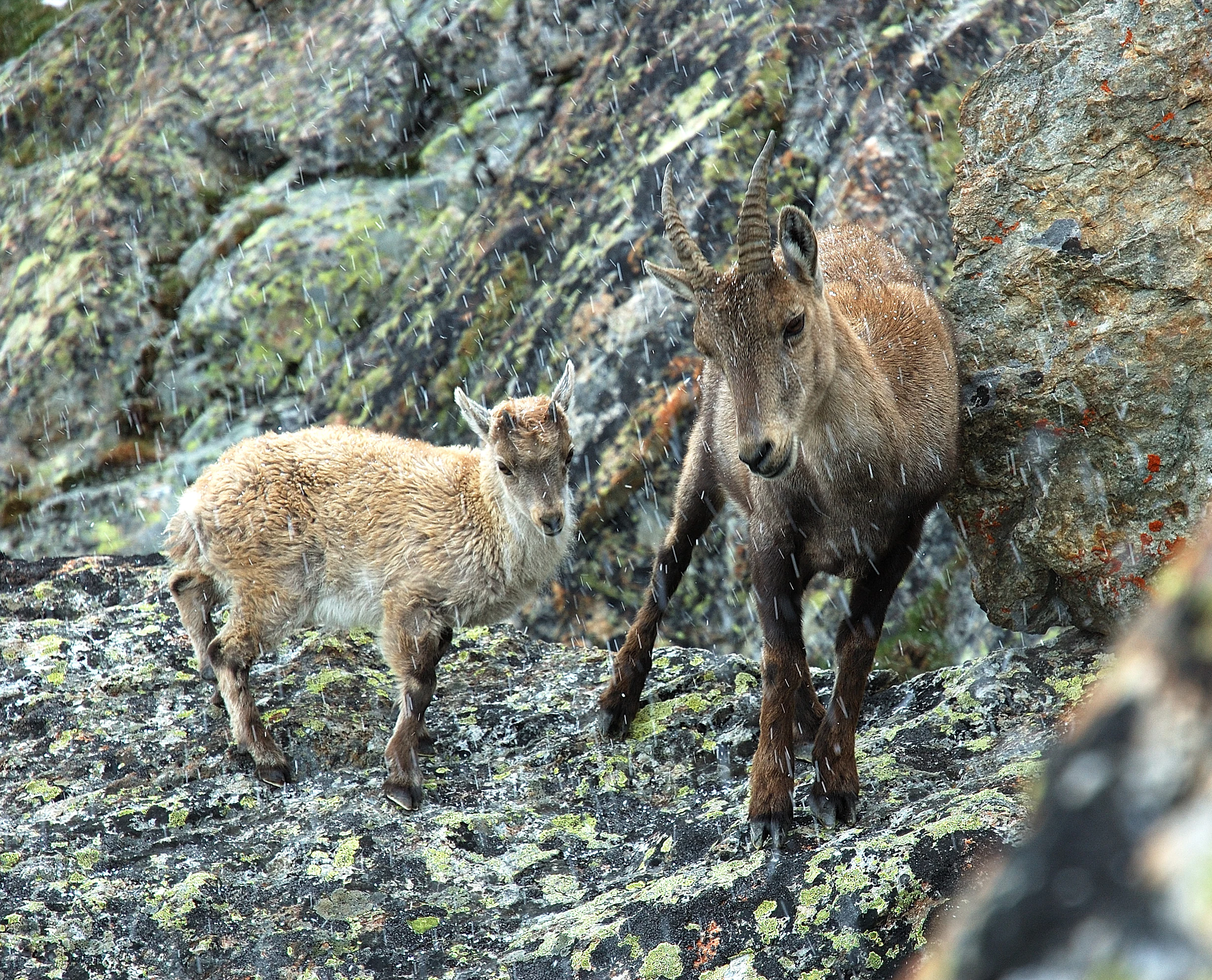
Two ibexes, an adult and a young one, on a rocky mountain slope with moss-covered rocks
Adult and juvenile Alpine ibex standing on rocky terrain in Gran Paradiso National Park

Gran Paradiso National Park conservation status and protection priorities

Gran Paradiso National Park represents a landmark in European conservation history. Established as Italy's first national park specifically to protect the Alpine ibex from extinction, the park has achieved remarkable success in recovering this flagship species from approximately 60 individuals in the early 19th century to over 2,700 today. The park functions as a transboundary protected area with France's Vanoise National Park, enabling cooperative management of the ibex population that migrates seasonally across the international border. The park is recognized under multiple conservation frameworks: as a Natura 2000 site (code IT1201000), as an Important Bird Area (code IT008), and as a Site of Community Importance. The European Diploma of Protected Areas was awarded in 2006 and renewed in 2012. In 2014, Gran Paradiso became the only Italian protected area to join the world Green List of protected areas established by the Council of Europe, a distinction renewed in 2017 and 2021. The park implements zoning with different protection levels including integral reserves, general oriented reserves, protection areas, and areas for economic and social promotion. Visitor centres throughout the park's communes provide educational programmes, while the park's guard service monitors wildlife populations and enforces protection regulations.

Gran Paradiso National Park cultural meaning and human context

The cultural heritage of Gran Paradiso is deeply intertwined with the House of Savoy. King Victor Emmanuel II established the Royal Hunting Reserve in 1856, creating a network of over 300 kilometres of paved mule tracks built specifically to allow the king and his entourage to traverse the terrain on horseback. These historic trails, with their characteristic stone surfaces and gentle gradients maintained by dry-stone walls, remain useable today and form the backbone of the park's hiking network. The royal hunting parties were elaborate affairs, with up to 250 local villagers employed as beaters and carriers. The tradition continued with King Umberto I and Victor Emmanuel III, who made the decisive choice in 1919 to donate his private lands to the state for the creation of a national park. The park encompasses territory from 13 communes, including Ceresole Reale, Cogne, Valsavarenche, Noasca, Locana, and others in both the Aosta Valley and Piedmont. Local traditions including mountain crafts, artisanal copper and leather work, and culinary products such as bodeun (a blood sausage) and mocetta (chamois salami) reflect the cultural identity of these alpine communities. The Sanctuary of Prascondù houses a museum of popular religious culture, demonstrating the enduring connection between local communities and their mountain environment.
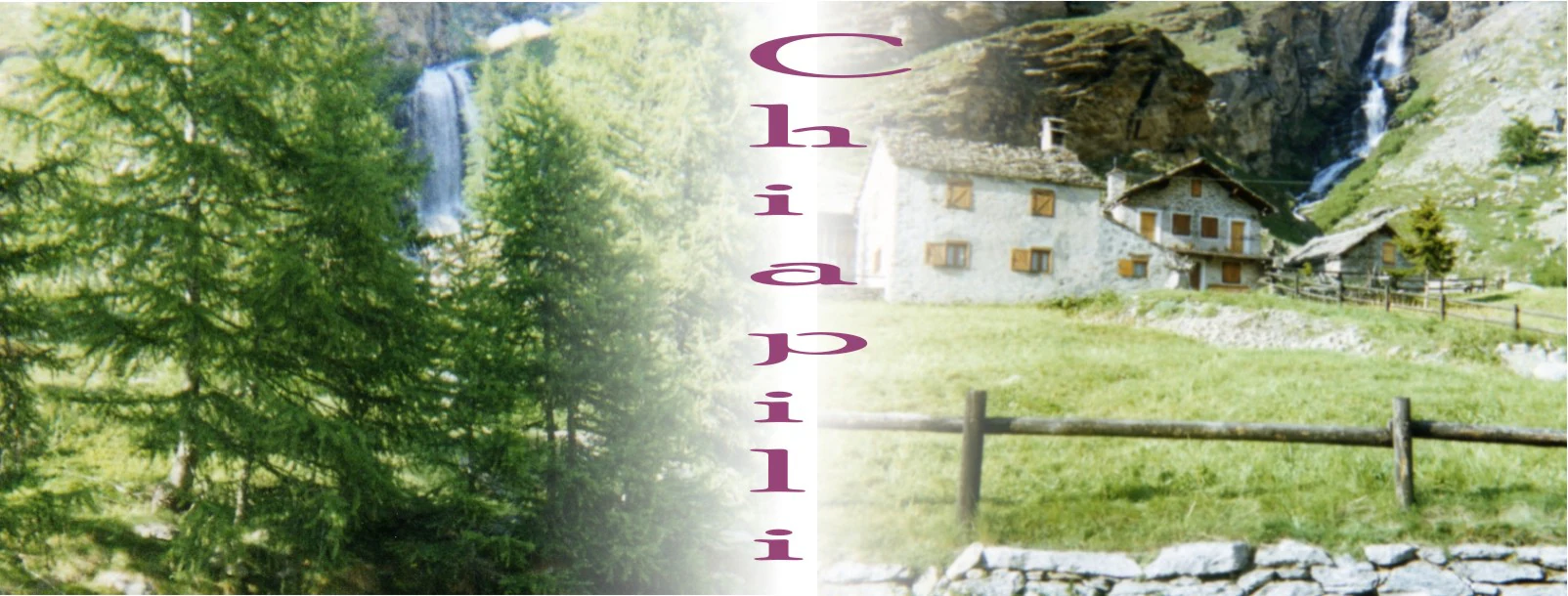
A landscape view of Chiapili with a traditional alpine house, wooden fence, green trees, and a waterfall in the background
Scenic view of Chiapili within Gran Paradiso National Park featuring a traditional alpine house, forest, and waterfall

Top sights and standout views in Gran Paradiso National Park

Gran Paradiso offers exceptional highlights for visitors seeking alpine wilderness. The Plateau de Nivolet provides the park's most spectacular panoramic view, accessible by a scenic road that the park regulates during summer to encourage walking and cycling. The lakes of the Nivolet area, including Lago Rosset and Lago Leità, are among the most beautiful in the Alps, reflecting the towering peaks of the Gran Paradiso massif. The historic royal hunting trails, built in the 19th century, now form 724 kilometres of marked paths for hikers. Wildlife observation is exceptional: the ibex, having lost their fear of humans, are readily observable, while golden eagles soar above the cliffs. The gipeto reintroduction programme has brought back this magnificent vulture, and visitor centres dedicated to the park's wildlife provide interpretive experiences. The Paradisia Alpine Botanical Garden in Valnontey showcases the park's floral diversity. The park's status as Italy's first national park, combined with its successful ibex conservation story, makes it historically significant as well as ecologically valuable.
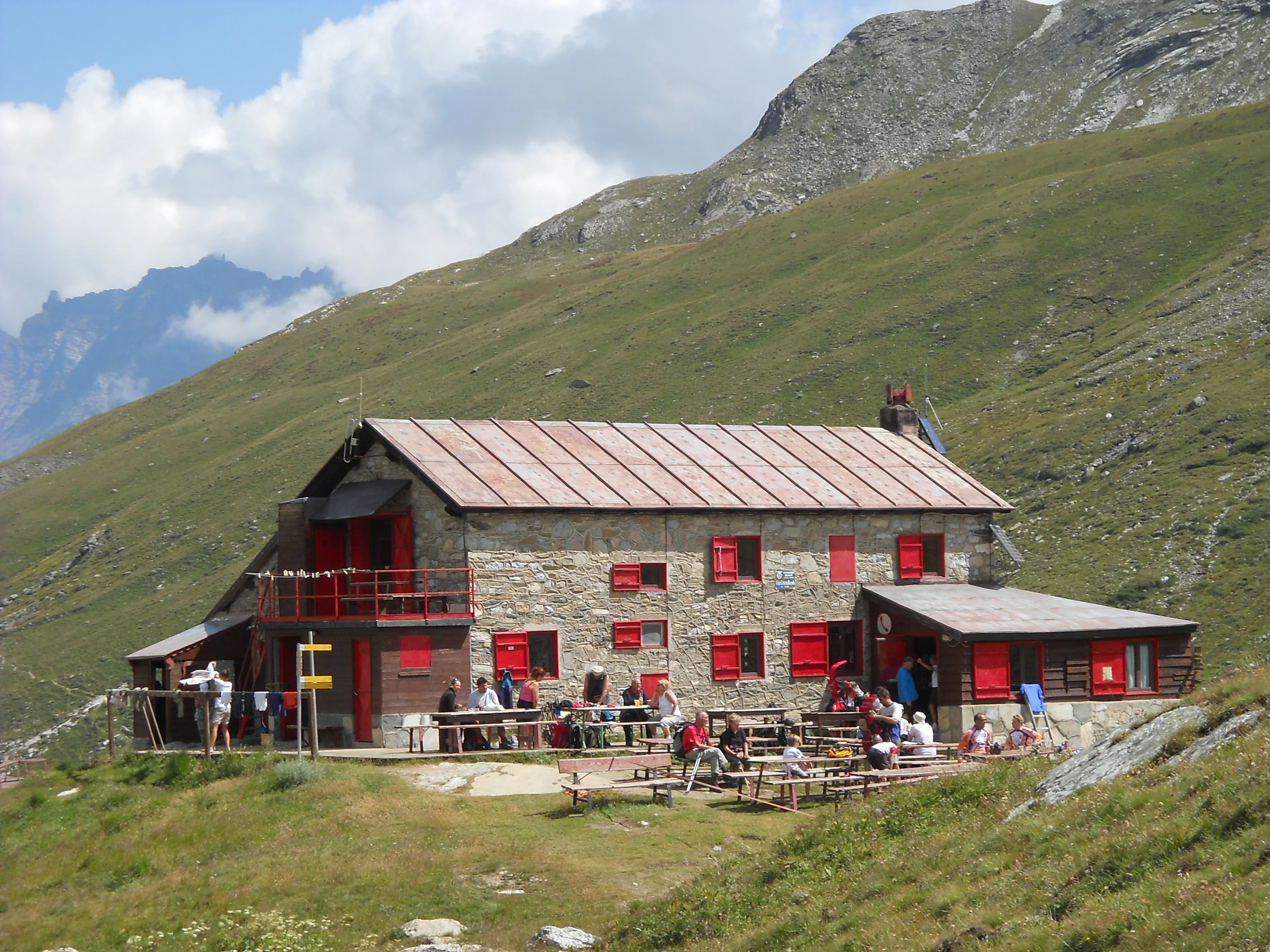
Stone building with red windows and metal roof, surrounded by grassy mountains, with people gathered on a terrace.
Rifugio Benevolo, a mountain refuge in Gran Paradiso National Park, with visitors gathered outside.

Best time to visit Gran Paradiso National Park

The best time to visit Gran Paradiso depends on what visitors wish to experience. Summer, from June through September, offers the most accessible conditions for hiking and wildlife observation, with alpine meadows in full flower and ibex grazing actively above the tree line. The park's high altitude means that even summer temperatures can be cool, and snow may persist on higher trails. Autumn brings golden larch forests and fewer crowds, though days shorten and some facilities may close. Winter transforms the park into a snowy wilderness ideal for ski touring and winter hiking, though many trails are snowbound and access is limited. Spring, as snow melts, sees water tumbling through the valleys in numerous waterfalls and wildlife emerging from winter dormancy. The ibex descend to lower elevations in winter and spring, making them easier to spot in valley areas during these seasons. The road to the Colle del Nivolet is closed to private vehicles in summer as part of the park's mobility programme, encouraging visitors to walk, cycle, or use shuttle buses.
Park location guide

Geography guide, regional context, and park location map for Gran Paradiso National Park

Gran Paradiso National Park park geography, regions, and map view in Italy
Understand where Gran Paradiso National Park sits in Italy through a broader geographic reading of the surrounding landscape, nearby location context, and its mapped position within the national park landscape.

How Gran Paradiso National Park fits into Italy

Italy is a unitary parliamentary republic in Southern and Western Europe, located on the Italian Peninsula with the Alps to the north. It borders France, Switzerland, Austria, Slovenia, Vatican City, and San Marino, and shares maritime boundaries with several Mediterranean countries. The country has approximately 59 million residents and uses the Euro as its currency.

Wider geography shaping Gran Paradiso National Park in Italy

Italy occupies a boot-shaped peninsula in southern Europe, bordered by the Alps to the north. It shares land borders with France, Switzerland, Austria, Slovenia, Vatican City, and San Marino. The country includes the Mediterranean islands of Sicily and Sardinia, along with approximately 800 smaller islands.

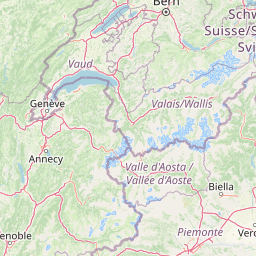
Map view of Gran Paradiso National Park

Use this park location map to pinpoint Gran Paradiso National Park in Italy, understand its exact geographic position, and read its mapped placement within the surrounding landscape more clearly.

Pigeon | © OpenStreetMap contributors

Location context for Gran Paradiso National Park

Aosta ValleyPiedmont

A Visual Atlas of Gran Paradiso's Glacial Valleys, High Mountain Plateaus, and Iconic Alpine Ibex Habitats

Gran Paradiso National Park Photos: Explore Alpine Landscapes and Protected Area Scenery
Visually explore the dramatic alpine landscapes and diverse habitats of Gran Paradiso National Park through a curated collection of imagery. Understand the park's iconic glacial valleys, towering peaks, and vital conservation areas for the Alpine ibex, gaining deeper insight into its unique protected-area character and environment.

Panoramic landscape view from Colle del Nivolet showing Lago Serrù and Lago dell'Agnel surrounded by mountain peaks under a partly cloudy sky

Blue alpine lake surrounded by rocky mountain slopes and grassy terrain under a clear blue sky

Panoramic view of snow-capped mountains, blue alpine lakes, and winding trails in a mountainous national park.

Autumn landscape featuring snow-covered mountain peaks, golden larch trees, rocky terrain, and a small stone structure under a partly cloudy sky

Two ibexes, an adult and a young one, on a rocky mountain slope with moss-covered rocks

A chamois standing in a sunlit snow-covered forest with tall coniferous trees

A landscape view of Chiapili with a traditional alpine house, wooden fence, green trees, and a waterfall in the background

Stone building with red windows and metal roof, surrounded by grassy mountains, with people gathered on a terrace.

Stone mountain hut with black roof and several people gathered outside on a grassy area, with mountains in the background

Two Alpine ibexes standing on a grassy hillside with rocky terrain and mountains in the background

Panoramic view of a mountain valley with snow-covered peaks, dense coniferous forests, and clear blue sky

Grassy alpine garden with rocks and wildflowers in the foreground, a dirt path, and snow-capped mountains in the background under a clear blue sky

Panoramic landscape showing snow-capped mountain peaks, valleys, a dirt road with a vehicle, and stone structures on the left and right edges under a blue sky with scattered clouds

Mountain hut with people on a dirt path, mountain peaks with snow, and valley in background

Snow-covered mountain peaks and valleys with scattered settlements in a rugged alpine landscape

Snow-covered mountain peaks and glaciers under a cloudy sky in Gran Paradiso National Park

Park atlas

Browse the mapped geography and protected landscapes surrounding Gran Paradiso National Park, tracing its Alpine terrain and transboundary connections.

Explore Nearby National Parks and Protected Areas Beyond Gran Paradiso National Park
After exploring Gran Paradiso National Park, continue your discovery by mapping other protected areas that share its dramatic Alpine terrain and rich conservation history. Compare the diverse range of national parks and protected landscapes across the Graian Alps and neighboring regions, understanding their unique geographic features and interconnected ecosystems.
National parkSavoie

Vanoise National Park: Explore France's Original National Park in the Savoie Alps

Mapped Alpine geography, glacial terrain, and protected landscape.

Vanoise National Park is France's pioneering national park, a protected landscape of immense alpine beauty situated in the Savoie department. Renowned for its dramatic glacial terrain, over 100 peaks above 3,000 meters, and the iconic Alpine ibex, this park offers a profound geographic context. Explore its mapped boundaries and discover the unique atlas-level insights into France's mountainous protected areas and their ecological significance.

Area
534 km²
Established
1963
IUCN
II
Relief
Mountain
Watercolor illustration showing green mountains, forests, a river, and snow-capped peaks in the distance
National parkPiedmont

Val Grande National Park: National Park Protected Landscape in Piedmont

Explore its mapped boundaries and regional geographic context.

Val Grande National Park represents a key protected landscape within the Piedmont region of northwest Italy. This canonical page offers detailed insights into the park's designated status as a national park, its specific geographic placement, and its mapped protected boundaries. Users can navigate its atlas-level details to understand its role in the regional geography and conservation landscape, providing a structured foundation for further discovery of Italy's natural protected areas.

Area
170.21 km²
Established
1992
IUCN
II
Relief
Mountain
National park

Écrins National Park: Alpine Glaciated Terrain and Protected Landscape Details

Mapped boundaries and regional geography of a major French National Park.

Delve into Écrins National Park, a defining national park within the French Alps. This page provides a comprehensive overview of its protected landscape, focusing on its dramatic glaciated terrain, significant peaks such as the Barre des Écrins, and its position within the regional geographic context. Explore the mapped extent and understand the unique alpine environment of this protected area.

Area
925 km²
Established
1973
IUCN
II
Watercolor illustration of a mountainous landscape featuring a river, rolling hills, and green vegetation
National park

Mercantour National Park: Mapped Alpine Protected Landscape and Regional Geography

Explore France's dramatic Alps, park boundaries, and unique ecotones.

Mercantour National Park stands as a premier protected area within the French Alps, distinguished by its remarkable geographic diversity and ecological significance. This national park encompasses mountainous terrain featuring dramatic peaks, deep glacial valleys, and a unique ecotone where Mediterranean and Alpine ecosystems converge. MoriAtlas facilitates a detailed atlas-style exploration of Mercantour National Park, highlighting its mapped protected boundaries, varied natural landscapes, and its pivotal role in regional geography and conservation efforts.

Area
679 km²
Established
1979
IUCN
II
Visitors
800K annual
National parkLiguria

Cinque Terre National Park: Protected Area Geography and Mapped Landscape

Explore its regional context in Liguria, Italy.

Examine Cinque Terre National Park as a key protected area within the rugged geography of Italy's Liguria region. This dedicated atlas entry provides essential geographic context, detailing the park's mapped boundaries and its significance as a national park. Understand how this protected landscape fits within the broader regional terrain, offering a structured view for geographic discovery and map-based exploration of Italy's protected areas.

Area
22 km²
Established
1999
IUCN
V
Relief
Mountain
Watercolor painting of rolling green hills under a sunset sky with soft color transitions
National parkEmilia-Romagna

Appennino Tosco-Emiliano National Park: Explore Its National Park Boundaries and Geography

Discover the mapped landscape and regional context of this protected area.

Appennino Tosco-Emiliano National Park is a designated national park offering a rich area for geographic exploration. This MoriAtlas entry details the park's protected landscape, providing insights into its mapped boundaries and its contribution to the natural terrain of the Emilia-Romagna region. Understand its significance within the broader atlas of Italian protected areas, focusing on its unique geographic identity and landscape context.

Area
227.92 km²
Established
2001
IUCN
II
Relief
Mountain
National parkTrentino-Alto Adige/Südtirol

Stelvio National Park National Park: Protected Landscape and Regional Geographic Context

Explore its mapped boundaries and natural terrain.

Navigate Stelvio National Park, a designated national park in Italy's Trentino-Alto Adige/Südtirol region, through a map-centric lens. This page provides critical context for understanding the park's protected landscape, its geographic position within the Alps, and its mapped terrain. Utilize MoriAtlas to grasp the park's boundaries and its place in regional geography for structured natural landscape discovery.

Established
1935
IUCN
II
Relief
Mountain
Scope
Terrestrial
Watercolor painting of a landscape with trees, hills, and a body of water
National park

Port-Cros National Park: French Mediterranean Island National Park & Marine Sanctuary

Discover mapped protected land and unique Mediterranean ecosystems.

Port-Cros National Park offers a glimpse into a pioneering model of integrated terrestrial and marine conservation within the Mediterranean. This park protects a distinctive island geography marked by rugged terrain, endemic species, and vital underwater habitats, including crucial posidonia meadows and rich marine life. Through MoriAtlas, explore the mapped boundaries and ecological significance of Port-Cros, understanding its role as a vital protected landscape in the European atlas.

Area
46 km²
Established
1963
IUCN
II
Visitors
1M annual

Common questions about visiting, size, designation, and location context for Gran Paradiso National Park

Gran Paradiso National Park FAQs for park facts, access, geography, and protected area context
Find quick answers about Gran Paradiso National Park, including protected-area facts, park geography, trail and visitor context, and how the park fits into its surrounding country and regional landscape.
MoriAtlas Explorer

Continue Your Protected Areas Search Across the Global Atlas

Deepen your exploration by continuing the structured search for national parks and protected areas worldwide. Utilize the comprehensive filtering capabilities to compare different conservation landscapes and refine your understanding of global park geography. Discover more about the distribution and characteristics of protected natural areas.

Global natural geography