Mori Atlas logo
Nature reserveRezerwat przyrody Dębowo

Analyzing the ecological boundaries and multi-aged forest structure of this unique Polish nature reserve

Rezerwat przyrody Dębowo: Mapped Geography and Protected Beech Forest Landscape Context

Rezerwat przyrody Dębowo serves as a critical study site for lowland beech forests situated at their eastern ecological distribution limit within the Mrągowski Lakeland. Spanning 25.83 hectares in the Warmian-Masurian Voivodeship, this protected area preserves an uneven-aged canopy featuring 200-year-old veteran trees alongside younger growth. The site illustrates the complex relationship between forest phytosociology and post-glacial terrain, offering significant insight into the persistence of broadleaf woodlands across northern Polish landscapes.

forest reservebeech forestlowland forestphytocenotic reserverange-edge ecologyWarmian-Masurian Voivodeship

Rezerwat przyrody Dębowo

Nature reserve

Park overview

Structured park overview, official facts, and landscape profile for Dębowo Nature Reserve

Dębowo Nature Reserve park facts, protected area profile, and essential visitor context

Review the core facts for Dębowo Nature Reserve, including designation, size, terrain, visitor scale, habitats, and operating context in one park-focused overview.

About Dębowo Nature Reserve

Dębowo Nature Reserve lies in the Biskupiec commune of Olsztyn County, in the Warmian-Masurian Voivodeship of north-eastern Poland. Although small in area, at roughly 25.83 hectares, it occupies a meaningful position within the regional landscape of the Mrągowski Lakeland, a post-glacial terrain of moraines, kettle holes and shallow lakes that characterizes much of the southern Baltic lowlands. The reserve sits within this broader mosaic of mixed forests, lakes and agricultural land, preserving a fragment of older, structurally complex woodland that has largely been replaced elsewhere by managed production forests.

The reserve's principal subject of protection is a multi-aged stand of European beech. The bulk of the canopy is 80 to 100 years old, but scattered veteran beech trees, estimated at around 200 years, create a layered and irregular forest profile. This mixture of age classes is ecologically important: the older trees provide habitat features such as hollows, thick bark and coarse woody structures that are otherwise rare in intensively managed lowland forest, while the younger cohort signals the continued ability of beech to regenerate locally.

Beech woodland in this part of Poland sits at the eastern margin of the species' continuous range. Throughout the historical period, much of the Warmian-Masurian lowland forest has been shaped by forestry that favored Scots pine, spruce, oak and birch. Reserves such as Dębowo therefore serve as small but valuable refuges where the original successional tendencies of beech on suitable soils can still be observed and studied. The reserve's classification as a phytocenotic forest reserve focused on forest and woodland communities, and more specifically on mixed lowland forests, reflects this narrow but clearly defined conservation mandate.

The herb layer of the reserve is unusually diverse for a beech-dominated stand, supporting around 80 species of vascular plants. Among them are characteristic woodland species such as wild garlic (Allium ursinum), mezereon (Daphne mezereum) and the Martagon lily (Lilium martagon), all of which are typical of older, lightly disturbed deciduous forest on fertile soils. Their presence reinforces the reserve's role as a representative of well-developed lowland beech forest rather than a simplified monoculture of beech.

Quick facts and research context for Dębowo Nature Reserve

Dębowo Nature Reserve is a forested nature reserve in gmina Biskupiec, powiat olsztyński, in the Warmian-Masurian Voivodeship of north-eastern Poland. It lies in the Mrągowski Lakeland (Pojezierze Mrągowskie), a region of post-glacial lakes and moraines typical of the southern Baltic landscape.

It was formally created in 1954 to protect a multi-aged beech forest situated at the eastern boundary of the beech's natural range in Poland. The reserve covers approximately 25.83 hectares (with the founding act listing 24.72 hectares), is classified as a phytocenotic forest reserve focused on forest and woodland communities, and specifically protects mixed lowland forest in which beech plays a central role.

Protection and recognition

Examine terrestrial protected area facts and administrative designation details

Rezerwat przyrody Dębowo Protection Status and Designation Records

Verified records outline the documented protection status and management framework established for Rezerwat przyrody Dębowo. Structured conservation data details the terrestrial scope without assuming international recognition programs.

Protection details

Protection scope
Terrestrial
Transboundary protection
No
Park context

Deeper park guide and search-rich context for Dębowo Nature Reserve

Dębowo Nature Reserve history, landscape, wildlife, and travel context

Explore Dębowo Nature Reserve through its history, landscape character, ecosystems, wildlife, conservation priorities, cultural context, and seasonal travel timing in a structured park guide built for atlas discovery and search intent.

Why Dębowo Nature Reserve stands out

Dębowo is best known for protecting an uneven-aged beech forest at the eastern edge of the European beech's range in the Polish lowlands. Its main scientific and conservation significance lies in demonstrating how beech-dominated woodland persists at this distribution limit, where soils, climate and competing species increasingly favor other deciduous and coniferous trees. The presence of scattered very old individuals, estimated at around 200 years, alongside a more uniform 80 to 100 year cohort, gives the reserve an unusually rich vertical structure for a small protected stand. Combined with a diverse herb layer that includes species such as wild garlic, mezereon and the Martagon lily, this makes Dębowo a notable reference site for forest phytosociology in the Warmian-Masurian region.
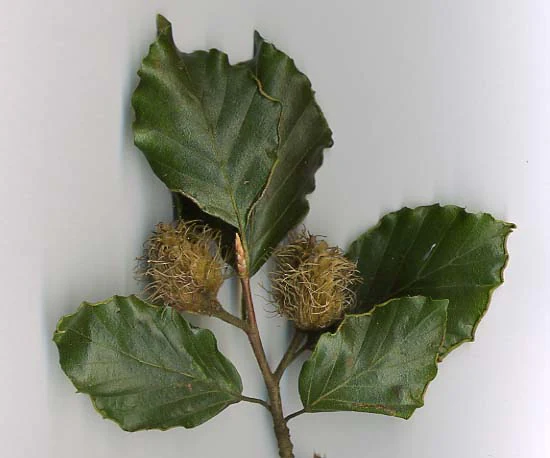
A close-up shot of a European beech branch against a plain white background, showing four green, wavy-edged leaves and two brown, spiky seed pods.
A branch of European beech, featuring dark green leaves and spiky seed husks.

Dębowo Nature Reserve history and protected-area timeline

Dębowo Nature Reserve was established in 1954 by official regulation, with the founding legal instrument published that year. Its creation was driven by the recognition that the local beech forest represented a scientifically valuable example of a lowland beechwood near the eastern limit of beech's natural distribution in Poland.

The reserve was designated during the formative period of Poland's post-war system of nature reserves, when many small forest stands with unusual species composition, age structure or biogeographical position were placed under formal protection. The 1954 founding act specified an initial area of 24.72 hectares; the current officially listed area is 25.83 hectares, suggesting small subsequent adjustments rather than a significant boundary change.

In the decades since, the reserve has continued to function primarily as a reference site for forest research and conservation rather than as a site of major infrastructural development. It has been referenced in regional guides to the Warmia and Mazury region, including late 20th-century local tourism and natural-history literature, indicating its long-standing recognition within local natural heritage networks.

Dębowo Nature Reserve landscape and geographic character

Dębowo lies within the Mrągowski Lakeland, one of the physical-geographical subregions of the broader East Baltic Lakeland. The terrain here is shaped by the last glaciation and consists of moraine ridges, gently undulating plains and numerous lakes and peat basins created by the melting of buried ice blocks.

The reserve itself reflects this glacial inheritance only indirectly: rather than dramatic relief, it presents a typical lowland forest topography, with gentle slopes, modest variations in elevation and soils developed on sandy or loamy glacial deposits. Within the reserve, the eye-level impression is of a softly rolling woodland floor rather than any pronounced landforms.

What defines the visual character of Dębowo is the structure of the forest itself rather than the underlying terrain. The canopy is uneven in height, with the rounded crowns of older veteran beeches rising above a continuous layer of mature trees. In summer the stand appears as a dense, deeply shaded beechwood, while in autumn the same trees turn to the copper and bronze tones characteristic of the species. In winter the exposed branch architecture of the oldest individuals becomes particularly visible against the snow.

Dębowo Nature Reserve ecosystems, habitats, and plant life

Ecologically, Dębowo represents a fragment of lowland mixed deciduous forest in which European beech plays the dominant role. The reserve is classified as a phytocenotic forest reserve focused on forest and woodland communities, and specifically on mixed lowland forests, placing it within the broader category of Polish reserves dedicated to maintaining representative examples of specific forest types.

At the level of plant communities, the reserve exhibits the kind of well-developed beech association typical of fertile, moderately moist lowland soils in this part of Poland. The canopy is dominated by beech, but other broadleaf species and conifers occur as admixtures, contributing to a more heterogeneous community than a pure beech monoculture. The age structure of the stand, with both a mature 80 to 100 year cohort and scattered very old trees, supports a layered vertical profile with a distinct but open understory.

The herb layer is unusually rich for a beech-dominated lowland forest, supporting approximately 80 species of vascular plants. This diversity reflects a combination of factors: the relatively stable microclimate under a mature deciduous canopy, the presence of small gaps created by the fall of old trees, and the underlying edaphic conditions favorable to woodland specialists. Among the recorded species, woodland indicators such as wild garlic, mezereon and the Martagon lily are particularly notable because they help characterize the community as a mature, well-conserved forest rather than a regenerated plantation.

Dębowo Nature Reserve wildlife and species highlights

As a small, predominantly forest reserve, the principal ecological interest at Dębowo lies in its plant communities and forest structure rather than in conspicuous large-mammal fauna. The reserve does not have the open or wetland habitats that would support large ungulate herds or breeding bird colonies, and the dense canopy limits ground-level visibility.

The woodland nonetheless supports typical lowland forest fauna, including common passerine birds of mature deciduous stands, small mammals associated with leaf litter and dead wood, and insects linked to old trees and decaying timber. The presence of very old beeches with features such as cavities, exfoliating bark and dead branches increases the habitat value for cavity-nesting birds, saproxylic beetles and other species dependent on veteran trees.

Because the reserve's size is modest and management appears oriented toward minimal intervention, its role for wildlife is more about continuity of habitat than about hosting rare or high-profile species. It functions as a small but ecologically coherent component of the wider forest matrix of the Mrągowski Lakeland.

Dębowo Nature Reserve conservation status and protection priorities

The principal conservation significance of Dębowo lies in its position at the eastern range margin of European beech in the Polish lowlands. Reserves at such range edges are valuable because they preserve the small, often spatially isolated populations in which evolutionary processes and climate responses can be observed over time. By maintaining a multi-aged stand rather than a single uniform cohort, the reserve also preserves a higher level of structural and microhabitat diversity than typical production forest in the surrounding landscape.

Within Poland's nature reserve system, Dębowo belongs to the category of phytocenotic forest reserves, whose mandate is to protect specific plant communities rather than individual species or entire ecosystems. In this case, the protected community is mixed lowland forest with a strong beech component. By sheltering roughly 80 herb-layer species and a structurally diverse canopy, the reserve illustrates the kind of community integrity that such reserves aim to safeguard.

Its small area, roughly 25.83 hectares, means that Dębowo's conservation value depends on its connection to the broader forest landscape around it. Continued maintenance of a forest-dominated buffer, free from intensive land-use change, is therefore critical to the reserve's long-term role within the regional ecological network of the Warmian-Masurian Voivodeship.

Dębowo Nature Reserve cultural meaning and human context

Dębowo's immediate cultural context is that of the historical Warmia region, part of the broader Warmia and Mazury area of north-eastern Poland. The surrounding landscape has long been shaped by small-scale agriculture, forestry and the network of lakes and rivers that characterize the southern Baltic lowland. The reserve itself takes its name, Dębowo, from the Polish word for oak (dąb), even though the protected forest is dominated by beech rather than oak, suggesting historical naming patterns in the area that predate modern forest typology.

The reserve has been incorporated into regional tourism and natural-history literature, most notably in late 20th-century guidebooks to Warmia and Mazury, where it is presented as one of several small forest reserves accessible from nearby towns. This regional framing situates Dębowo within a wider pattern of small, locally known protected forests that contribute to the identity of the Warmian-Masurian countryside.

Top sights and standout views in Dębowo Nature Reserve

Dębowo's principal highlight is its multi-aged beech stand at the eastern edge of beech's range, with mature 80 to 100 year trees alongside scattered 200 year old veterans. The reserve offers an unusually clear illustration of a lowland beechwood at a biogeographical boundary where the species begins to lose its competitive dominance in the regional forest.

A second highlight is the herb-layer diversity: roughly 80 vascular plant species, including woodland indicators such as wild garlic, mezereon and the Martagon lily, support the reserve's classification as a representative example of well-developed mixed lowland forest. Together, the structural complexity of the canopy and the diversity of the understory make Dębowo a compact but information-rich site for understanding lowland beech forests in northern Poland.

Best time to visit Dębowo Nature Reserve

Spring and early summer are particularly rewarding at Dębowo, when the canopy is fully leafed out, the herb layer is in active growth, and characteristic woodland species such as wild garlic and the Martagon lily are at their most visible. Cool, overcast days are ideal for observing the structure of the forest, as the subdued light emphasizes the layered canopy and the texture of the trunks.

Autumn brings strong seasonal color as the beech leaves turn, and the contrast between bronze and copper canopies and the darker greens of any conifer admixture is striking. Winter has its own appeal for visitors interested in forest structure: with leaves gone, the irregular heights and the gnarled silhouettes of the oldest beeches become clearly visible, and the spatial pattern of the stand is easier to read than in summer. Because the reserve is small and trail-based, visits in any season tend to be quiet and unhurried, and severe weather can make the forest paths muddy or slippery.


Monthly climate preview

Long-term representative point measurements tracking monthly averages at a 119.8 meter elevation

Rezerwat przyrody Dębowo Climate Normals and Annual Temperature Patterns

Representative coordinates record measured multi-year temperature shifts alongside steady precipitation rates across the annual cycle at Rezerwat przyrody Dębowo. Examining the complete twelve-month record reveals detailed monthly climate variations captured across this protected landscape.
Annual mean7 °C
-4 °C18 °C
Jan-4°
Feb-3°
Mar
Apr
May13°
Jun16°
Jul18°
Aug18°
Sep13°
Oct
Nov
Dec-2°
Warmest month
July

18.2 °C

Coolest month
January

-4.3 °C

Wettest month
July

2.7 mm/day

Driest month
March

1.5 mm/day

Park location guide

Geography guide, regional context, and park location map for Dębowo Nature Reserve

Dębowo Nature Reserve park geography, regions, and map view in Poland

Understand where Dębowo Nature Reserve sits in Poland through a broader geographic reading of the surrounding landscape, nearby location context, and its mapped position within the national park landscape.

How Dębowo Nature Reserve fits into Poland

Poland, officially the Republic of Poland, is a Central European country spanning from the Baltic Sea in the north to the Carpathian Mountains in the south. It borders Germany, Czech Republic, Slovakia, Ukraine, Belarus, Lithuania, and Kaliningrad Oblast. The country has a temperate climate, diverse landscapes, and is known for its rich history, cultural heritage, and strong economic position within the EU.

Wider geography shaping Dębowo Nature Reserve in Poland

Poland occupies 312,696 km2 in Central Europe, extending from the Baltic Sea coast in the north to the Sudetes and Carpathian Mountains in the south. It borders Germany to the west, Czech Republic and Slovakia to the south, Ukraine and Belarus to the east, and Lithuania and Kaliningrad Oblast to the northeast. The landscape includes lowland plains, uplands, and mountain ranges.

Map view of Dębowo Nature Reserve

Use this park location map to pinpoint Dębowo Nature Reserve in Poland, understand its exact geographic position, and read its mapped placement within the surrounding landscape more clearly.

Pigeon | © OpenStreetMap contributors

Location context for Dębowo Nature Reserve

Warmian-Masurian Voivodeship

Visual reference for the protected forest canopy and range edge beech habitats

Rezerwat przyrody Dębowo Photos and Landscape Scenery

Visual documentation reveals the layered forest canopy and diverse woodland understory protected within Rezerwat przyrody Dębowo. Examining field photography clarifies the distinct ecological structure of this lowland beech reserve in northern Poland.

A close-up shot of a European beech branch against a plain white background, showing four green, wavy-edged leaves and two brown, spiky seed pods.

Park atlas

Compare regional forest reserves and mapped terrain across northern Poland

Parks Near Rezerwat przyrody Dębowo and Surrounding Protected Landscapes

Browse other protected areas and lowland forest reserves located near Rezerwat przyrody Dębowo in the Warmian-Masurian region. Expanding the geographic comparison reveals how regional woodland communities and glacial landscapes connect across the surrounding terrain.
Nature reserveWarmian-Masurian Voivodeship
About 24 km away#1 closest

Northwest

Rezerwat przyrody Mokradła Żegockie: Nature Reserve Map and Protected Landscape Overview

Lowland marshland habitat in the Warmian-Masurian Voivodeship of Poland

This nature reserve preserves a shallow, boggy depression surrounded by agricultural plains. It is recognized for its bird-rich ecosystem, containing open water, reedbeds, and willow shrubs that returned after the collapse of historic drainage works. Use this atlas resource to understand the park's terrain, mapped boundaries, and environmental role within the local geography.

Area
0.336 km²
Established
1991
Relief
Lowland
Scope
Terrestrial
Protected areaWarmian-Masurian Voivodeship
About 26 km away#2 closest

Southwest

Puszcza Napiwodzko-Ramucka Protected Forest and Glacial Geography in Northeast Poland

An expansive lowland wilderness featuring unique sinkhole terrain.

Spanning over 117,000 hectares, Puszcza Napiwodzko-Ramucka stands as a massive pine-dominated forest complex in the Warmian-Masurian Voivodeship. The terrain is a masterclass in glacial history, defined by sandr plains, moraine hills, and a dense network of post-glacial lakes. This protected area functions as a critical sanctuary for raptor species and large mammals, while its distinct geology, marked by active suffosion processes, distinguishes it as a key subject for landscape-level study.

Area
1,173.2 km²
Relief
Lowland
Climate
Temperate
Access
Access unknown
Nature reserveWarmian-Masurian Voivodeship
About 53 km away#3 closest

Southwest

Dęby Napiwodzkie Nature Reserve: Geographic Overview and Protected Forest Boundaries

Ancient oak woodlands in Warmian-Masurian Voivodeship

Dęby Napiwodzkie preserves a unique mosaic of lowland forest communities, including rare old-growth pedunculate oaks that reach over three centuries in age. This nature reserve provides a critical, well-preserved look at the ecological diversity of the Warmian-Masurian landscape, featuring a dense concentration of forest types that have largely vanished elsewhere in the surrounding terrain.

Area
0.37 km²
Established
1989
Relief
Lowland
Climate
Temperate
A soft watercolor painting showing a green marshy landscape with tall grasses, calm water, and gentle rolling hills in the background.
Nature reserveWarmian-Masurian Voivodeship
About 53 km away#4 closest

Southeast

Rezerwat przyrody Jezioro Nidzkie: Protected Area and Regional Landscape Geography

Mapping the forest and lake terrain of the Mazurian Plain

Examine the geographic characteristics of Rezerwat przyrody Jezioro Nidzkie, a protected nature reserve nestled within the Piska Forest. This profile tracks the spatial distribution of alder swamps, pine forests, and postglacial waters that create a distinct ecological mosaic across the Warmian-Masurian landscape.

Area
29.509 km²
Established
1972
Relief
Lowland
Climate
Temperate
Nature reserveWarmian-Masurian Voivodeship
About 55 km away#5 closest

South

Rezerwat przyrody Małga: Protected Wetland and Ornithological Reserve in Warmian-Masurian

Analyzing the hydrology of the Omulew River valley landscapes

Rezerwat przyrody Małga represents a specialized faunistic nature reserve characterized by expansive sedge marshes and peat-forming wetland vegetation. Situated in the Masurian Plain, the reserve functions as a critical sanctuary for nesting birds and provides a unique look at the interaction between abandoned rural geography and restored riverine wilderness.

Area
1.639 km²
Established
1991
Relief
Lowland
Scope
Terrestrial
A horizontal watercolor illustration of a lake landscape, featuring soft greens and pinks, showing marshy foreground vegetation, calm water, islands, and a distant treeline.
Nature reserveWarmian-Masurian Voivodeship
About 56 km away#6 closest

Northeast

Rezerwat przyrody Jezioro Siedmiu Wysp: Protected Wetland Geography and Map Overview

Wetland ecosystems in the Warmian-Masurian Voivodeship

Examine the geographic layout of Rezerwat przyrody Jezioro Siedmiu Wysp, encompassing Lake Oświn, the Oświnka River corridor, and extensive peat-forming marshes. This protected area offers insight into Masurian wetland dynamics, including the interplay between open water, meadow grazing by konik polski horses, and critical habitats for diverse waterfowl populations across the Polish border region.

Area
17.63 km²
Established
1956
Relief
Lowland
Climate
Temperate
A watercolor painting showing a soft, muted landscape of wetlands, grasses, and distant trees with a white background.
Nature reserveWarmian-Masurian Voivodeship
About 63 km away#7 closest

Southeast

Rezerwat przyrody Jezioro Pogubie Wielkie Nature Reserve Geographic and Wetland Atlas

Mapping wetland habitats in the Warmian-Masurian Voivodeship region

Examine the protected boundaries and layered ecosystem of Rezerwat przyrody Jezioro Pogubie Wielkie. This reserve serves as an important refuge for water birds, defined by its shallow lake basin, charophyte meadows, and the distinctive forested island of Ostrów Wielki within the Pisz Forest complex.

Area
7.158 km²
Established
1971
Relief
Lowland
Scope
Terrestrial
A wide watercolor illustration showing a body of water curving through green forests with soft pink and yellow mountains in the background.
Protected areaWarmian-Masurian Voivodeship
About 65 km away#8 closest

Southwest

Rezerwat przyrody Jezioro Orłowo Małe: Protected Area and Regional Geography

Wetland mosaic within the Masurian Plain

This protected area centers on a small lake and its surrounding forest stands, creating a vital habitat for the European pond turtle. Spanning 14.76 hectares in the Warmian-Masurian region, the reserve showcases the glacial topography and wetland biodiversity characteristic of the Polish landscape.

Area
0.148 km²
Established
1958
Relief
Lowland
Climate
Temperate

Common questions about visiting, size, designation, and location context for Dębowo Nature Reserve

Dębowo Nature Reserve FAQs for park facts, access, geography, and protected area context

Find quick answers about Dębowo Nature Reserve, including protected-area facts, park geography, trail and visitor context, and how the park fits into its surrounding country and regional landscape.
MoriAtlas Explorer

Continue Your Protected Areas Search Across the Global Atlas

Deepen your exploration by continuing the structured search for national parks and protected areas worldwide. Utilize the comprehensive filtering capabilities to compare different conservation landscapes and refine your understanding of global park geography. Discover more about the distribution and characteristics of protected natural areas.

Global natural geography