

Mori Atlas logo
Protected areaRezerwat przyrody Jezioro Orłowo Małe

Examining the ecological boundaries and glacial terrain of this vital Polish nature reserve

Rezerwat przyrody Jezioro Orłowo Małe: A Protected Landscape in Warmian-Masurian Voivodeship

Rezerwat przyrody Jezioro Orłowo Małe serves as a protected mosaic of lake and forest habitat within the Masurian Plain. Spanning over 14 hectares, the area preserves the delicate wetland environment and terrestrial buffers essential for the European pond turtle. This geographic record maps the reserve's specific terrain and its role in regional conservation across northern Poland.

faunistic reservepond turtle habitatsmall lakeglacial lowlandMasurian Plainwetland vegetation
A colorful stylized illustration showing a mountain valley with a tall waterfall cascading down rocky cliffs, surrounded by green pine trees and a winding river under a sunny sky.

Rezerwat przyrody Jezioro Orłowo Małe

Protected area

Park overview

Structured park overview, official facts, and landscape profile for Lake Orłowo Małe Nature Reserve

Lake Orłowo Małe Nature Reserve park facts, protected area profile, and essential visitor context

Review the core facts for Lake Orłowo Małe Nature Reserve, including designation, size, terrain, visitor scale, habitats, and operating context in one park-focused overview.

About Lake Orłowo Małe Nature Reserve

Lake Orłowo Małe Nature Reserve is a small but ecologically focused protected area in the Warmian-Masurian Voivodeship of northeastern Poland. It sits on the Masurian Plain, a lowland region shaped by glacial history and characterized today by an alternating pattern of small lakes, mixed and deciduous forests, meadows, and farmland.

The reserve was designated in 1958 as a faunistic nature reserve, a category that in the Polish system is oriented specifically toward the protection of animal species and their habitats. The species of central concern here is the European pond turtle, which depends on a combination of clean, calm freshwater, sunny banks for basking, and surrounding terrestrial habitat for nesting and seasonal movement. The small Lake Orłowo Małe, together with its fringing vegetation and the adjoining forest, provides that combination at a scale which the reserve can effectively manage.

In 2010 the protected area was enlarged from 4.50 hectares to 14.76 hectares, a change that brought more of the lakeside forest into formal protection. This expansion underscores how conservation value at the site extends outward from the open water: the shoreline, the wetland vegetation bordering the lake, and the forest transitions on dry land all contribute to the persistence of pond turtles and associated wetland fauna. Although modest in size, the reserve plays a targeted role in maintaining a viable habitat patch for a species whose populations have declined across much of central and northern Europe.

Quick facts and research context for Lake Orłowo Małe Nature Reserve

Lake Orłowo Małe Nature Reserve is a faunistic nature reserve located in Gmina Nidzica, within Nidzica County in the Warmian-Masurian Voivodeship of northeastern Poland. It lies on the Masurian Plain, a broad lowland region characterized by glacial lakes, forests, and mixed agricultural land.

The reserve was created in 1958 specifically to protect the European pond turtle population that inhabits the small lake and its immediate surroundings. Its present area is 14.76 hectares, expanded from an original 4.50 hectares in 2010.

Protection and recognition

Documented terrestrial protection framework, historical establishment year, and management scope.

Rezerwat przyrody Jezioro Orłowo Małe Protection Status and Designation History

Rezerwat przyrody Jezioro Orłowo Małe maintains a documented terrestrial protection status established in the year 1958. Official records compile the historical designation timeline and management scope for this protected area.

Protection details

Protection scope
Terrestrial
Designated year
1958
Transboundary protection
No
Park context

Deeper park guide and search-rich context for Lake Orłowo Małe Nature Reserve

Lake Orłowo Małe Nature Reserve history, landscape, wildlife, and travel context

Explore Lake Orłowo Małe Nature Reserve through its history, landscape character, ecosystems, wildlife, conservation priorities, cultural context, and seasonal travel timing in a structured park guide built for atlas discovery and search intent.

Why Lake Orłowo Małe Nature Reserve stands out

The reserve is best known as one of the Polish protected areas dedicated to the conservation of the European pond turtle, a species of significant conservation concern in this part of Europe. The combination of a small, sheltered lake and adjacent woodland creates exactly the kind of mosaic habitat that pond turtles require for basking, feeding, and nesting. Beyond the turtle itself, the reserve is recognized for representing a compact example of the lake-and-forest habitats that still occur across the Masurian Plain, where many smaller waterbodies host relict wetland communities of considerable biodiversity value.
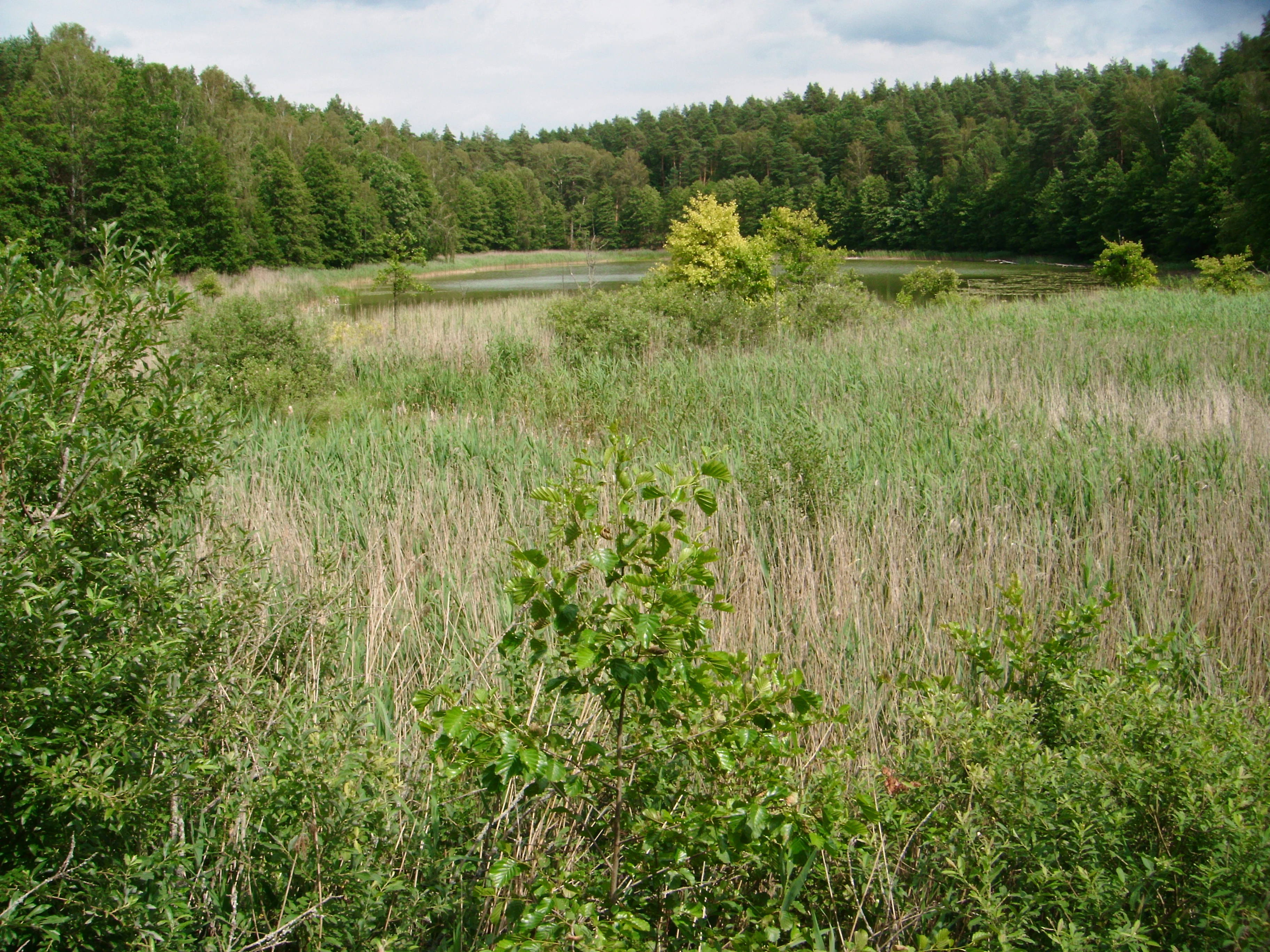
A landscape view of a nature reserve with tall reeds and grasses in the foreground, a small lake in the midground, and dense green forest in the background under a partly cloudy sky
View of the Orłowo Małe Lake Nature Reserve showing reed beds, a small lake, and surrounding forest

Lake Orłowo Małe Nature Reserve history and protected-area timeline

The Lake Orłowo Małe Nature Reserve was established in 1958 through the publication recorded in the official Polish legal gazette under M.P. of 1958, No. 38, item 225. From its inception it was designated as a faunistic nature reserve, reflecting the primary goal of protecting the European pond turtle that inhabits the lake and surrounding habitat.

For more than five decades the reserve remained a relatively small protected area, covering 4.50 hectares around the lake. In 2010 it was enlarged to its current extent of 14.76 hectares, incorporating additional forest stands and buffer habitat that link the aquatic environment to the surrounding landscape.

The enlargement reflects a broader understanding within Polish nature conservation that protecting small wetland-dependent species such as the pond turtle requires safeguarding not just the lake itself but also the surrounding forest edges and transitional habitats that the animals use throughout the year.

Lake Orłowo Małe Nature Reserve landscape and geographic character

The reserve lies within the Masurian Plain, a lowland mesoregion shaped by Pleistocene glaciation and now characterized by gently rolling terrain interspersed with numerous small lakes and patches of forest. Lake Orłowo Małe itself is a very small waterbody, on the order of 2.3 hectares in surface, with shallow depths reaching approximately 2 meters.

The shoreline is buffered by dense vegetation, with reeds and other wetland plants giving way gradually to surrounding woodland. The forest stands belonging to the reserve are part of the typical mixed and deciduous forest cover of this part of the Warmian-Masurian region. The combination of small lake, vegetated shore, and adjacent forest creates a compact landscape mosaic that is characteristic of much of the post-glacial terrain in northern Poland.

Lake Orłowo Małe Nature Reserve ecosystems, habitats, and plant life

Although modest in size, the reserve encompasses a layered set of habitats typical of small glacial-origin waterbodies in northeastern Poland. The lake itself, shallow and sheltered, supports stands of aquatic and emergent vegetation, while the surrounding zone includes reeds, wetland margins, and forest.

Habitat diversity at this small scale is precisely what makes the site valuable for conservation. The mosaic of open water, vegetated shore, and nearby forest offers different microhabitats within short distances, which is essential for species that need both aquatic and terrestrial conditions in order to complete their life cycle.

Lake Orłowo Małe Nature Reserve wildlife and species highlights

The reserve's wildlife profile is dominated by the species it was established to protect, the European pond turtle. This reptile uses the lake for aquatic life during warm seasons and the surrounding dry areas for nesting and winter shelter, making the combination of habitats within the reserve critical to its survival in this part of Poland.

Beyond the turtle, the lake and its vegetated margins are likely to support a range of typical wetland-associated fauna, including amphibians that share similar habitat requirements, as well as invertebrates that form the base of the wetland food web. The surrounding forest supplies habitat for typical woodland bird and mammal species of the Masurian Plain.

Lake Orłowo Małe Nature Reserve conservation status and protection priorities

Lake Orłowo Małe Nature Reserve has clear conservation significance as one of the Polish protected sites explicitly focused on the European pond turtle, a species that has experienced significant declines across much of its European range due to habitat loss, wetland drainage, and historical persecution.

By combining the protection of the lake itself with forest stands and transitional shoreline habitat, the reserve ensures that all the key environmental conditions required by pond turtles remain available within a single managed unit. The 2010 enlargement strengthened this approach by bringing more of the surrounding forest into formal protection, recognizing that long-term viability of small wetland species depends on more than the open water body alone.

Top sights and standout views in Lake Orłowo Małe Nature Reserve

The standout feature of the Lake Orłowo Małe Nature Reserve is its dedicated focus on protecting the European pond turtle within a small but well-integrated mosaic of lake, shoreline vegetation, and forest. The reserve illustrates how a highly localized protected area can serve a meaningful conservation role when its boundaries capture the full range of habitats a target species needs.

The expansion of the reserve in 2010, from 4.50 to 14.76 hectares, also stands out as a milestone that reflects a more modern understanding of how to protect wetland-dependent species, ensuring that the terrestrial buffer around the lake is also formally safeguarded.

Best time to visit Lake Orłowo Małe Nature Reserve

The reserve is most ecologically meaningful during the warmer months of late spring and summer, when pond turtles and other wetland wildlife are active and the lake's shoreline vegetation is in full growth. Cooler months, when reptile activity is reduced, would generally be less rewarding for observing the species the reserve was established to protect. Visitors interested in the broader landscape of the Masurian Plain will find that late spring through early autumn offers the most accessible conditions in this part of northeastern Poland.

Monthly climate preview

Long-term representative monthly temperature and precipitation patterns across the protected landscape

Rezerwat przyrody Jezioro Orłowo Małe Climate Normals and Annual Temperature Rhythm

Historical data records a continuous annual temperature cycle ranging from winter minimums to warm summer maximums alongside measured monthly precipitation rates. Detailed monthly climate normals offer deeper insight into the long-term meteorological profile of the coordinate point.
Annual mean7 °C
-4 °C19 °C
Jan-4°
Feb-3°
Mar
Apr
May13°
Jun16°
Jul19°
Aug18°
Sep13°
Oct
Nov
Dec-2°
Warmest month
July

18.7 °C

Coolest month
January

-4.2 °C

Wettest month
July

2.6 mm/day

Driest month
March

1.4 mm/day

Park location guide

Geography guide, regional context, and park location map for Lake Orłowo Małe Nature Reserve

Lake Orłowo Małe Nature Reserve park geography, regions, and map view in Poland

Understand where Lake Orłowo Małe Nature Reserve sits in Poland through a broader geographic reading of the surrounding landscape, nearby location context, and its mapped position within the national park landscape.

How Lake Orłowo Małe Nature Reserve fits into Poland

Poland, officially the Republic of Poland, is a Central European country spanning from the Baltic Sea in the north to the Carpathian Mountains in the south. It borders Germany, Czech Republic, Slovakia, Ukraine, Belarus, Lithuania, and Kaliningrad Oblast. The country has a temperate climate, diverse landscapes, and is known for its rich history, cultural heritage, and strong economic position within the EU.

Wider geography shaping Lake Orłowo Małe Nature Reserve in Poland

Poland occupies 312,696 km2 in Central Europe, extending from the Baltic Sea coast in the north to the Sudetes and Carpathian Mountains in the south. It borders Germany to the west, Czech Republic and Slovakia to the south, Ukraine and Belarus to the east, and Lithuania and Kaliningrad Oblast to the northeast. The landscape includes lowland plains, uplands, and mountain ranges.

Map view of Lake Orłowo Małe Nature Reserve

Use this park location map to pinpoint Lake Orłowo Małe Nature Reserve in Poland, understand its exact geographic position, and read its mapped placement within the surrounding landscape more clearly.

Pigeon | © OpenStreetMap contributors

Location context for Lake Orłowo Małe Nature Reserve

Warmian-Masurian Voivodeship

Visual reference collection highlighting wetland habitats, lake shores, and forest buffers.

Rezerwat przyrody Jezioro Orłowo Małe Photos and Protected Landscape Scenery

Photographic documentation reveals the distinct terrain, mixed forest borders, and quiet wetland environments that characterize Rezerwat przyrody Jezioro Orłowo Małe. Visual records of the protected landscape illustrate the natural shoreline and forest mosaic required by local fauna.

A landscape view of a nature reserve with tall reeds and grasses in the foreground, a small lake in the midground, and dense green forest in the background under a partly cloudy sky

Park atlas

Compare nearby protected areas and regional wetland landscapes across northern Poland.

Explore Parks Near Rezerwat przyrody Jezioro Orłowo Małe and Surrounding Reserves

Browsing other parks near Rezerwat przyrody Jezioro Orłowo Małe reveals similar post-glacial lake reserves and forested lowland habitats. Extending the geographic comparison exposes broader protected landscapes across the surrounding region.
Protected areaWarmian-Masurian Voivodeship
Mapped location lies within the park boundary#1 closest

Northeast

Puszcza Napiwodzko-Ramucka Protected Forest and Glacial Geography in Northeast Poland

An expansive lowland wilderness featuring unique sinkhole terrain.

Spanning over 117,000 hectares, Puszcza Napiwodzko-Ramucka stands as a massive pine-dominated forest complex in the Warmian-Masurian Voivodeship. The terrain is a masterclass in glacial history, defined by sandr plains, moraine hills, and a dense network of post-glacial lakes. This protected area functions as a critical sanctuary for raptor species and large mammals, while its distinct geology, marked by active suffosion processes, distinguishes it as a key subject for landscape-level study.

Area
1,173.2 km²
Relief
Lowland
Climate
Temperate
Access
Access unknown
Nature reserveWarmian-Masurian Voivodeship
About 15 km away#2 closest

Northeast

Dęby Napiwodzkie Nature Reserve: Geographic Overview and Protected Forest Boundaries

Ancient oak woodlands in Warmian-Masurian Voivodeship

Dęby Napiwodzkie preserves a unique mosaic of lowland forest communities, including rare old-growth pedunculate oaks that reach over three centuries in age. This nature reserve provides a critical, well-preserved look at the ecological diversity of the Warmian-Masurian landscape, featuring a dense concentration of forest types that have largely vanished elsewhere in the surrounding terrain.

Area
0.37 km²
Established
1989
Relief
Lowland
Climate
Temperate
Nature reserveWarmian-Masurian Voivodeship
About 20 km away#3 closest

East

Rezerwat przyrody Małga: Protected Wetland and Ornithological Reserve in Warmian-Masurian

Analyzing the hydrology of the Omulew River valley landscapes

Rezerwat przyrody Małga represents a specialized faunistic nature reserve characterized by expansive sedge marshes and peat-forming wetland vegetation. Situated in the Masurian Plain, the reserve functions as a critical sanctuary for nesting birds and provides a unique look at the interaction between abandoned rural geography and restored riverine wilderness.

Area
1.639 km²
Established
1991
Relief
Lowland
Scope
Terrestrial
Protected landscapeWarmian-Masurian Voivodeship
About 32 km away#4 closest

West

Park Krajobrazowy Wzgórz Dylewskich: Protected Moraine Terrain and Regional Geography

A study of glacial landforms and hydrological patterns in the Warmian-Masurian Voivodeship

Explore the unique geomorphology of Park Krajobrazowy Wzgórz Dylewskich, where Pleistocene glaciation has carved steep slopes, deep valleys, and expansive hill summits. This protected landscape serves as a central hub for regional biodiversity and acts as a primary source for radiating water networks in northern Poland, offering a high-relief counterpoint to the surrounding lakeland.

Area
71.7 km²
Established
1994
Relief
Mountain
Scope
Terrestrial
Nature reserveWarmian-Masurian Voivodeship
About 33 km away#5 closest

West

Dylewo Nature Reserve: Protected Beech Woodland in the Warmian-Masurian Voivodeship

A study of glacial topography and rare fern habitats

Located within the Wzgórza Dylewskie landscape park, Dylewo Nature Reserve protects a stable, closed-canopy beech woodland on elevated morainic terrain. Gain deeper insights into the forest composition and the ecological importance of this site as a sheltered habitat for rare flora within the larger northern Polish lakeland region.

Area
0.101 km²
Established
1970
Relief
Mountain
Scope
Terrestrial
Nature reserveWarmian-Masurian Voivodeship
About 36 km away#6 closest

West

Jezioro Neliwa Nature Reserve: Mapping Protected Landscapes and Glacial Lake Geography

An important eutrophic water reserve in the Warmian-Masurian Voivodeship.

Located within the Welski Landscape Park, this nature reserve protects a vanishing eutrophic lake ecosystem and its unique slope oak-lime forest. The area provides essential habitat for breeding bird populations and rare aquatic plant species, serving as a vital point of study for lowland glacial geography in northeastern Poland.

Area
0.165 km²
Established
2006
Water
Water-dominated
Protected landscapeWarmian-Masurian Voivodeship
About 42 km away#7 closest

West

Welski Park Krajobrazowy: Regional Protected Landscape in the Warmian-Masurian Voivodeship

Mapping glacial landforms and river valley ecosystems

The landscape of Welski Park Krajobrazowy is a study in Pleistocene glacial history, defined by the interplay between sandy outwash plains and morainic uplands. This protected area in the Warmian-Masurian Voivodeship shelters a series of thirteen significant post-glacial lakes and the Wel river valley, creating a dense network of wetlands, forest habitats, and geologic features perfect for atlas-based geographic study.

Area
200.233 km²
Established
1995
Relief
Lowland
Access
Easy access
Nature reserveMazovia Voivodeship
About 49 km away#8 closest

Southwest

Rezerwat przyrody Dolina Mławki: Protected Wetland and Forest Geography

Nature reserve terrain and river valley mapping

Deeply explore the physical geography and conservation profile of Rezerwat przyrody Dolina Mławki. This protected area preserves a complex of alder swamp forests, wet riparian corridors, and vital breeding habitats. The site functions as a key reference for lowland Polish wetland ecosystems, offering insights into the natural hydrological and floristic patterns within the Mławka River valley.

Area
1.474 km²
Established
1994
Relief
Lowland
Scope
Terrestrial

Common questions about visiting, size, designation, and location context for Lake Orłowo Małe Nature Reserve

Lake Orłowo Małe Nature Reserve FAQs for park facts, access, geography, and protected area context

Find quick answers about Lake Orłowo Małe Nature Reserve, including protected-area facts, park geography, trail and visitor context, and how the park fits into its surrounding country and regional landscape.
MoriAtlas Explorer

Continue Your Protected Areas Search Across the Global Atlas

Deepen your exploration by continuing the structured search for national parks and protected areas worldwide. Utilize the comprehensive filtering capabilities to compare different conservation landscapes and refine your understanding of global park geography. Discover more about the distribution and characteristics of protected natural areas.

Global natural geography