Mori Atlas logo
Nature reserveJezioro Neliwa Nature Reserve

A study of vanishing eutrophic lake ecosystems and slope forest landscapes in northeastern Poland.

Jezioro Neliwa Nature Reserve: Regional Geography, Protected Boundaries, and Habitat Atlas

Jezioro Neliwa Nature Reserve preserves a compact yet significant eutrophic lake ecosystem and its surrounding catchment within the Urszulewska Plain. This protected landscape is defined by the dense proliferation of water soldier aquatic vegetation and a distinctive steep oak-lime forest on its northern shoreline. By examining the reserve within its glacial lowland context, viewers can understand the structural diversity of this Polish nature reserve.

water reserveeutrophic lakeaquatic vegetationwater soldier habitatslope oak-lime forestglacial lowland

Jezioro Neliwa Nature Reserve

Nature reserve

Park overview

Structured park overview, official facts, and landscape profile for Jezioro Neliwa Nature Reserve

Jezioro Neliwa Nature Reserve park facts, protected area profile, and essential visitor context

Review the core facts for Jezioro Neliwa Nature Reserve, including designation, size, terrain, visitor scale, habitats, and operating context in one park-focused overview.

About Jezioro Neliwa Nature Reserve

Jezioro Neliwa Nature Reserve is one of the smaller water-focused protected areas in northeastern Poland, but its ecological significance is disproportionate to its size. Established in 2006 in the Warmian-Masurian Voivodeship, the reserve was created specifically to safeguard an eutrophic lake that was gradually being lost, along with a fragment of its catchment that influences its hydrology and water chemistry. The reserve lies inside the boundaries of the Welski Landscape Park, a protected landscape area that already provides a broader buffer of managed countryside around the site.

The reserve is situated on the Urszulewska Plain, a lowland mesoregion shaped by the glacial legacy of the broader northern Polish landscape. Within this setting, the lake itself is the centerpiece. Its surface is largely covered by aquatic plant communities, with water soldier forming the dominant mass. This kind of dense vegetation is typical of nutrient-rich, still-water lakes and is closely tied to the lake's eutrophic character. Protecting this kind of habitat matters because such lakes have become increasingly rare in the region as a result of drainage, land-use change, and shifts in water quality.

Around the lake, the reserve extends to include a portion of the surrounding terrestrial habitats. A particularly distinctive feature is a steep slope with northern exposure along the shore, which supports a grąd zboczowy, a slope oak-lime forest. This woodland type introduces vertical structure and habitat diversity that contrasts with the open water and adds to the reserve's ecological complexity. The combination of open water, dense aquatic vegetation, slope forest, and catchment area makes Jezioro Neliwa a compact but ecologically layered site.

In practical terms, the reserve is also organized for low-impact public engagement. A viewing tower erected on site in 2014 allows visitors to observe the lake's surface and the birdlife that depends on it, and an educational trail called 'Nad Neliwą' of roughly three kilometers begins nearby, marked in green. These features make the reserve accessible for nature interpretation without compromising the protected ecosystems that define its purpose.

Quick facts and research context for Jezioro Neliwa Nature Reserve

Jezioro Neliwa is a water nature reserve located in the Warmian-Masurian Voivodeship, within the Welski Landscape Park. It was established in 2006 by regional regulation and covers about 16.50 hectares. The reserve sits in the gmina Rybno in Działdowo County, in the Urszulewska Plain mesoregion. It protects a vanishing eutrophic lake with dense aquatic vegetation, part of the surrounding catchment, and a slope oak-lime forest on a steep northern shoreline. The reserve is notable for the presence of rare plant species and for supporting roughly 41 bird species, including 20 breeding species.

Park context

Deeper park guide and search-rich context for Jezioro Neliwa Nature Reserve

Jezioro Neliwa Nature Reserve history, landscape, wildlife, and travel context

Explore Jezioro Neliwa Nature Reserve through its history, landscape character, ecosystems, wildlife, conservation priorities, cultural context, and seasonal travel timing in a structured park guide built for atlas discovery and search intent.

Why Jezioro Neliwa Nature Reserve stands out

Jezioro Neliwa is best known for protecting a small, vanishing eutrophic lake dominated by water soldier (Stratiotes aloides), and for combining aquatic habitat with a slope oak-lime forest on a steep northern bank. The reserve is also valued for its rare plant species and its concentration of breeding and visiting waterbirds within a compact protected area.
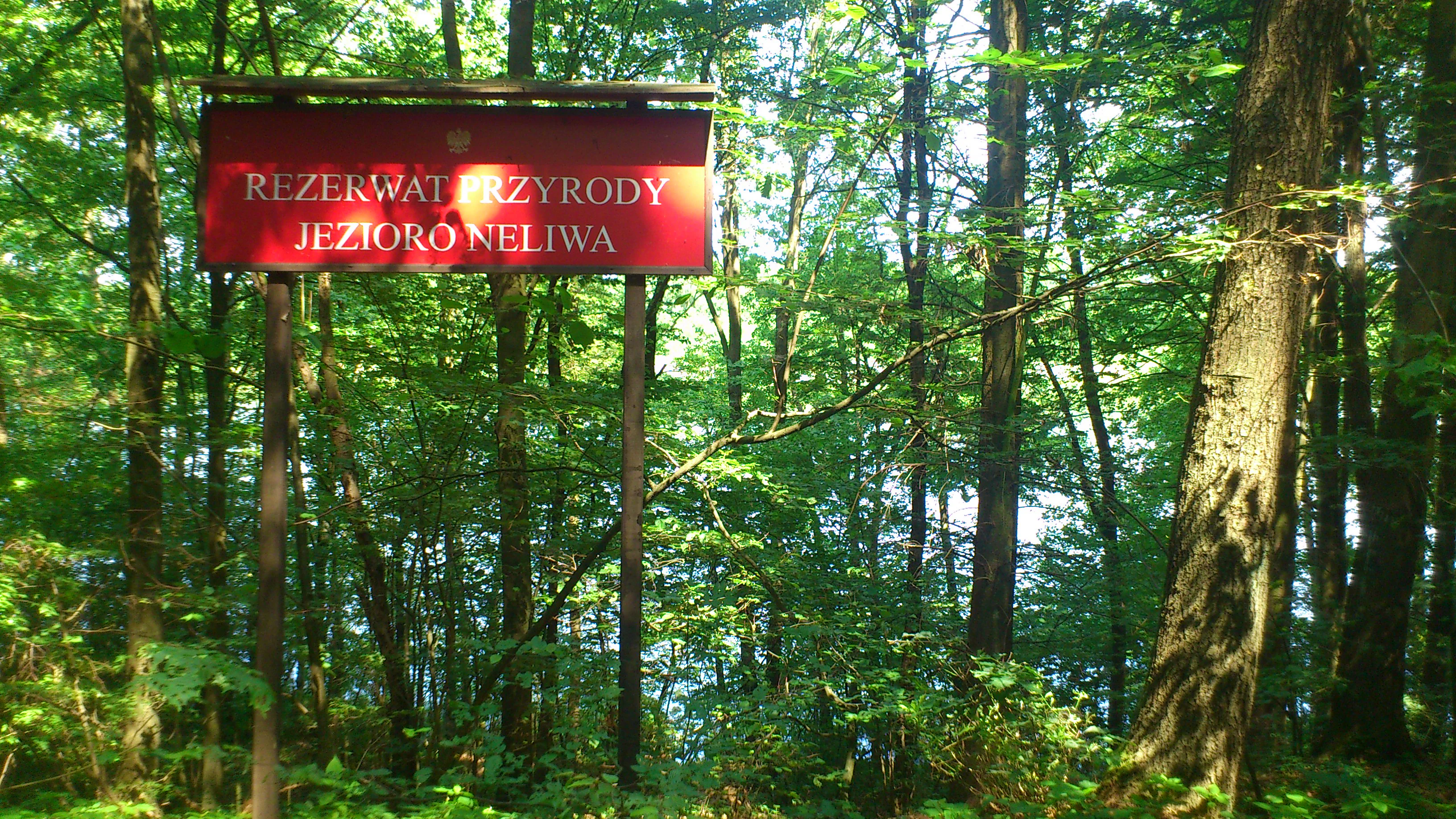
A red rectangular sign with white text reading REZERWAT PRZYRODY JEZIORO NELIWA mounted on two posts within a dense green forest.
Information sign at the entrance to Jezioro Neliwa Nature Reserve in Poland.

Jezioro Neliwa Nature Reserve history and protected-area timeline

Jezioro Neliwa was formally designated as a nature reserve in 2006. The founding regulation, issued at the end of that year and published in the official journal of the Warmian-Masurian Voivodeship in early January 2007, established the reserve to protect the lake and a small portion of its catchment from further degradation. The founding document described the protected area as slightly larger than its subsequently cited size, a minor discrepancy typical of administrative boundary adjustments.

The reserve was created within the existing framework of the Welski Landscape Park, allowing the smaller strict-reserve designation to fit within a broader landscape-level protection regime. In 2014, a viewing tower was constructed within the reserve to support observation of the lake's surface and its associated birdlife, and a green-marked educational trail of about three kilometers, 'Nad Neliwą', was established in the surrounding area. These additions marked an effort to balance strict ecological protection with accessible environmental education, without altering the underlying purpose of the reserve.

Jezioro Neliwa Nature Reserve landscape and geographic character

The reserve lies on the Urszulewska Plain, a flat to gently rolling lowland mesoregion in northeastern Poland that belongs to the broader post-glacial landscape of the region. Within this generally subdued terrain, the most distinctive physical feature of the reserve is the steep northern shoreline of the lake, whose slope and exposure create conditions that differ sharply from the surrounding lowlands.

This slope supports a grąd zboczowy, a slope oak-lime forest that stands out against the more typical lowland habitats found across the plain. The contrast between the open water surface, its dense fringe of aquatic vegetation, the steep wooded bank, and the gentler surroundings of the catchment gives the reserve a compact but visually layered physical character. The lake itself is a eutrophic water body, a nutrient-rich type that historically formed part of the region's glacial lake inventory and is now considered a vanishing ecosystem in Polish lowlands.

Jezioro Neliwa Nature Reserve ecosystems, habitats, and plant life

Ecologically, Jezioro Neliwa is defined by the interaction between an eutrophic lake and its surrounding terrestrial habitats. The lake's waters support dense aquatic plant communities, in which water soldier (Stratiotes aloides) is the dominant species. This kind of vegetation is characteristic of still, nutrient-rich waters and is itself part of what makes the lake ecologically distinctive and worth protecting.

The reserve's terrestrial component is anchored by a grąd zboczowy, a slope oak-lime forest developed on the steep northern shore. This woodland type represents a specific habitat associated with slope topography and particular soil conditions, and its inclusion in the reserve broadens the habitat spectrum beyond open water. Together, the lake vegetation and the slope forest form a small but coherent ecological mosaic typical of certain glacial lowland landscapes in northeastern Poland.

Jezioro Neliwa Nature Reserve wildlife and species highlights

Although small in area, Jezioro Neliwa supports a meaningful bird community. Surveys of the plant communities surrounding the lake have recorded around 41 bird species in the reserve, including 20 breeding species. The lake's open water, dense aquatic vegetation, and wooded shoreline together provide a combination of habitats that supports both water-associated and woodland birdlife within a compact area.

The presence of breeding waterbirds is particularly relevant given the reserve's focus on its eutrophic lake ecosystem, a habitat type that has become increasingly threatened in the region. The viewing tower erected in 2014 reflects the importance of birdlife as one of the reserve's most accessible and visible ecological assets, both for monitoring and for public engagement.

Jezioro Neliwa Nature Reserve conservation status and protection priorities

The reserve was established to protect an eutrophic lake that was gradually disappearing, together with a small fragment of its catchment. By including part of the catchment, the reserve design acknowledges that the lake's ecological character depends on hydrology and water inputs from the surrounding land. The protected status therefore extends beyond the open water to the processes that sustain it.

In conservation terms, Jezioro Neliwa is significant because eutrophic lakes of this type have become rare in the Polish lowlands due to drainage, water-quality change, and landscape transformation. The reserve also protects rare plant species and supports protected habitats, including the slope oak-lime forest on the northern bank. Its location within the Welski Landscape Park adds an additional layer of regional context, situating the strict reserve within a broader landscape-level protection framework that helps cushion the site from surrounding land-use pressures.

Top sights and standout views in Jezioro Neliwa Nature Reserve

The reserve's strongest points of distinction are its compact combination of a vanishing eutrophic lake, a dense water soldier-dominated aquatic plant community, and a steep slope oak-lime forest along the northern shore. The presence of rare plant species and a breeding bird community of around 20 species adds further weight to its conservation profile, despite its small overall area. The 2014 viewing tower and the 'Nad Neliwą' educational trail also make the reserve a notable example of how small Polish water reserves combine strict ecological protection with accessible nature interpretation.

Best time to visit Jezioro Neliwa Nature Reserve

As a lowland lake and forest reserve in northeastern Poland, Jezioro Neliwa is most rewarding when its waterbird life is most active and when the aquatic vegetation and woodland are in their clearest seasonal condition. Late spring and early summer typically bring the strongest breeding-bird activity around the lake, while the warmer months make the lake's surface vegetation most visually evident. Cooler months can still offer wildlife observation but the surrounding trails and viewing tower are best appreciated during the frost-free season.

Monthly climate preview

Long-term representative monthly temperature and precipitation patterns

Jezioro Neliwa Nature Reserve Climate Normals and Annual Temperature Rhythm

Jezioro Neliwa Nature Reserve exhibits a measured annual temperature and precipitation rhythm across twelve recorded climatological periods. Examining the complete monthly climate normals reveals detailed long-term averages for temperature bounds and daily precipitation.
Annual mean7 °C
-4 °C19 °C
Jan-4°
Feb-3°
Mar
Apr
May13°
Jun16°
Jul19°
Aug18°
Sep13°
Oct
Nov
Dec-2°
Warmest month
July

18.7 °C

Coolest month
January

-4 °C

Wettest month
July

2.7 mm/day

Driest month
April

1.4 mm/day

Park location guide

Geography guide, regional context, and park location map for Jezioro Neliwa Nature Reserve

Jezioro Neliwa Nature Reserve park geography, regions, and map view in Poland

Understand where Jezioro Neliwa Nature Reserve sits in Poland through a broader geographic reading of the surrounding landscape, nearby location context, and its mapped position within the national park landscape.

How Jezioro Neliwa Nature Reserve fits into Poland

Poland, officially the Republic of Poland, is a Central European country spanning from the Baltic Sea in the north to the Carpathian Mountains in the south. It borders Germany, Czech Republic, Slovakia, Ukraine, Belarus, Lithuania, and Kaliningrad Oblast. The country has a temperate climate, diverse landscapes, and is known for its rich history, cultural heritage, and strong economic position within the EU.

Wider geography shaping Jezioro Neliwa Nature Reserve in Poland

Poland occupies 312,696 km2 in Central Europe, extending from the Baltic Sea coast in the north to the Sudetes and Carpathian Mountains in the south. It borders Germany to the west, Czech Republic and Slovakia to the south, Ukraine and Belarus to the east, and Lithuania and Kaliningrad Oblast to the northeast. The landscape includes lowland plains, uplands, and mountain ranges.

Map view of Jezioro Neliwa Nature Reserve

Use this park location map to pinpoint Jezioro Neliwa Nature Reserve in Poland, understand its exact geographic position, and read its mapped placement within the surrounding landscape more clearly.

Pigeon | © OpenStreetMap contributors

Location context for Jezioro Neliwa Nature Reserve

Warmian-Masurian Voivodeship

Visualizing aquatic habitats, glacial lowlands, and wooded shorelines

Jezioro Neliwa Nature Reserve Photos and Mapped Landscape Scenery

Photographic documentation reveals the distinctive terrain and vanishing eutrophic lake environments protected within Jezioro Neliwa Nature Reserve. Visual records capture the complex interplay between dense aquatic vegetation, steep wooded slopes, and regional post glacial topography.

A red rectangular sign with white text reading REZERWAT PRZYRODY JEZIORO NELIWA mounted on two posts within a dense green forest.

Park atlas

Compare adjacent wetland reserves and regional post-glacial landscapes

Explore Parks Near Jezioro Neliwa Nature Reserve and Surrounding Protected Areas

Browse protected areas and wetland habitats situated near Jezioro Neliwa Nature Reserve across the surrounding lowland terrain. Comparing adjacent nature reserves provides deeper context on regional glacial lake ecosystems and local conservation geography.
Protected landscapeWarmian-Masurian Voivodeship
About 7.5 km away#1 closest

Southwest

Welski Park Krajobrazowy: Regional Protected Landscape in the Warmian-Masurian Voivodeship

Mapping glacial landforms and river valley ecosystems

The landscape of Welski Park Krajobrazowy is a study in Pleistocene glacial history, defined by the interplay between sandy outwash plains and morainic uplands. This protected area in the Warmian-Masurian Voivodeship shelters a series of thirteen significant post-glacial lakes and the Wel river valley, creating a dense network of wetlands, forest habitats, and geologic features perfect for atlas-based geographic study.

Area
200.233 km²
Established
1995
Relief
Lowland
Access
Easy access
Protected landscapeWarmian-Masurian Voivodeship
About 11 km away#2 closest

North

Park Krajobrazowy Wzgórz Dylewskich: Protected Moraine Terrain and Regional Geography

A study of glacial landforms and hydrological patterns in the Warmian-Masurian Voivodeship

Explore the unique geomorphology of Park Krajobrazowy Wzgórz Dylewskich, where Pleistocene glaciation has carved steep slopes, deep valleys, and expansive hill summits. This protected landscape serves as a central hub for regional biodiversity and acts as a primary source for radiating water networks in northern Poland, offering a high-relief counterpoint to the surrounding lakeland.

Area
71.7 km²
Established
1994
Relief
Mountain
Scope
Terrestrial
Nature reserveWarmian-Masurian Voivodeship
About 19 km away#3 closest

North

Dylewo Nature Reserve: Protected Beech Woodland in the Warmian-Masurian Voivodeship

A study of glacial topography and rare fern habitats

Located within the Wzgórza Dylewskie landscape park, Dylewo Nature Reserve protects a stable, closed-canopy beech woodland on elevated morainic terrain. Gain deeper insights into the forest composition and the ecological importance of this site as a sheltered habitat for rare flora within the larger northern Polish lakeland region.

Area
0.101 km²
Established
1970
Relief
Mountain
Scope
Terrestrial
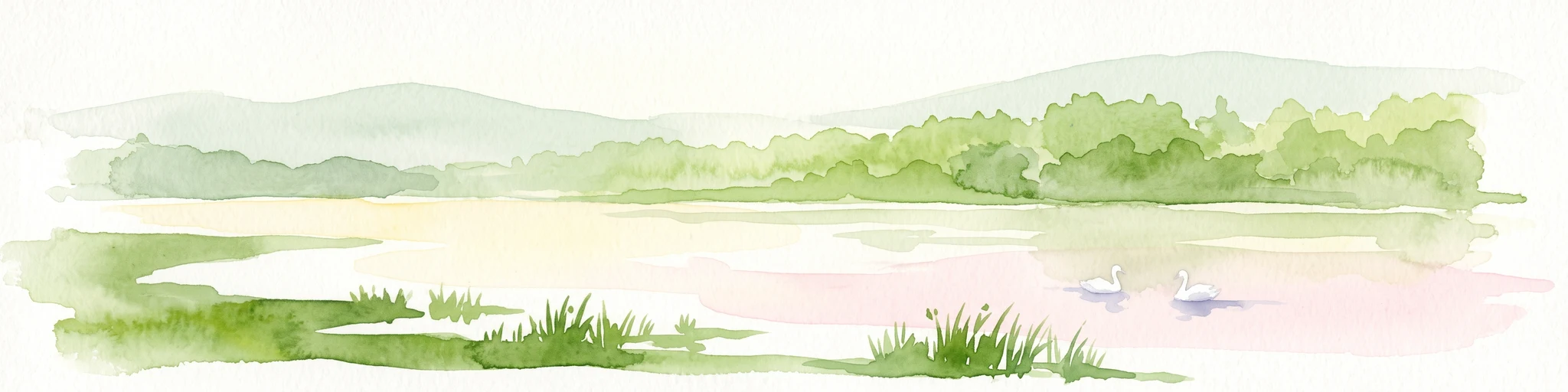
A wide watercolor illustration showing a calm lake with a forested shoreline and distant hills under a pale sky, with reeds in the foreground.
Protected landscapeKuyavian-Pomeranian Voivodeship
About 22 km away#4 closest

West

Brodnicki Park Krajobrazowy: Protected Landscape and Post-Glacial Terrain in Northern Poland

Mapped lake districts and glacial tunnel valleys

Brodnicki Park Krajobrazowy preserves a textbook young-glacial landscape in the Kuyavian-Pomeranian Voivodeship. The terrain features rolling moraine hills and dense chains of lakes linked by slow streams, creating a significant ecological corridor. This protected area offers deep insights into the region's complex hydrological and forest history, spanning across classic lowland meadows, peat bogs, and mature oak-pine woodlands.

Area
166.85 km²
Established
1985
Relief
Lowland
Climate
Temperate
A horizontal watercolor illustration depicting a soft, pale green and reddish wetland environment with scattered trees and marsh vegetation.
Nature reserveKuyavian-Pomeranian Voivodeship
About 32 km away#5 closest

Southwest

Mszar Płociczno Nature Reserve: Protected Peatland Geography and Landscape Boundaries in Poland

Regional protected area analysis for Kuyavian-Pomeranian landscape maps.

The Mszar Płociczno nature reserve acts as a critical refuge for transitional peatland, harboring a mosaic of Sphagnum mires, swamp forests, and coniferous woodland. This area functions as a key component of the Brodnica peatland ecological network, demonstrating long-term conservation success within the flat terrain of the Równina Urszulewska mesoregion.

Area
1.824 km²
Established
1997
Relief
Lowland
Scope
Terrestrial
Protected areaWarmian-Masurian Voivodeship
About 32 km away#6 closest

East

Puszcza Napiwodzko-Ramucka Protected Forest and Glacial Geography in Northeast Poland

An expansive lowland wilderness featuring unique sinkhole terrain.

Spanning over 117,000 hectares, Puszcza Napiwodzko-Ramucka stands as a massive pine-dominated forest complex in the Warmian-Masurian Voivodeship. The terrain is a masterclass in glacial history, defined by sandr plains, moraine hills, and a dense network of post-glacial lakes. This protected area functions as a critical sanctuary for raptor species and large mammals, while its distinct geology, marked by active suffosion processes, distinguishes it as a key subject for landscape-level study.

Area
1,173.2 km²
Relief
Lowland
Climate
Temperate
Access
Access unknown
Nature reserveWarmian-Masurian Voivodeship
About 32 km away#7 closest

West

Rezerwat przyrody Jezioro Mścin: Protected Wetland Landscapes and Regional Geography

Nature reserve habitat in the Brodnica Lake District

Rezerwat przyrody Jezioro Mścin serves as a primary example of successful wetland restoration for biodiversity conservation. Situated in the Warmian-Masurian Voivodeship, this faunistic reserve integrates open water, marsh, and forest edges to support waterfowl and migratory bird populations within a broader regional network of protected Polish landscapes.

Area
0.499 km²
Established
2024
Relief
Lowland
Climate
Temperate
A wide watercolor illustration showing a body of water curving through green forests with soft pink and yellow mountains in the background.
Protected areaWarmian-Masurian Voivodeship
About 36 km away#8 closest

East

Rezerwat przyrody Jezioro Orłowo Małe: Protected Area and Regional Geography

Wetland mosaic within the Masurian Plain

This protected area centers on a small lake and its surrounding forest stands, creating a vital habitat for the European pond turtle. Spanning 14.76 hectares in the Warmian-Masurian region, the reserve showcases the glacial topography and wetland biodiversity characteristic of the Polish landscape.

Area
0.148 km²
Established
1958
Relief
Lowland
Climate
Temperate

Common questions about visiting, size, designation, and location context for Jezioro Neliwa Nature Reserve

Jezioro Neliwa Nature Reserve FAQs for park facts, access, geography, and protected area context

Find quick answers about Jezioro Neliwa Nature Reserve, including protected-area facts, park geography, trail and visitor context, and how the park fits into its surrounding country and regional landscape.
MoriAtlas Explorer

Continue Your Protected Areas Search Across the Global Atlas

Deepen your exploration by continuing the structured search for national parks and protected areas worldwide. Utilize the comprehensive filtering capabilities to compare different conservation landscapes and refine your understanding of global park geography. Discover more about the distribution and characteristics of protected natural areas.

Global natural geography