Why Ettrick Conservation Park stands out
Ettrick Conservation Park is best known for protecting one of the last remaining patches of tussock grassland in its section of the Murray-Darling Basin, a vegetation community listed as critically endangered. It is also recognised for its open mallee eucalypt woodland, which supports species such as the malleefowl and the regent parrot in a landscape where such habitat has largely been cleared or fragmented.
Ettrick Conservation Park history and protected-area timeline
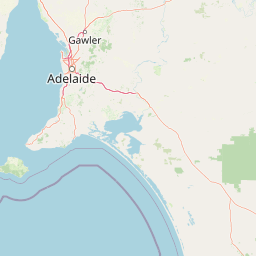
Ettrick Conservation Park was formally established on 31 October 2013 by proclamation under the South Australian National Parks and Wildlife Act 1972. The land it protects is crown land described as Allotment 99 in Deposited Plan 26809 within the cadastral unit known as the Hundred of Ettrick, and the park takes its name from that historical land division.
On the same date, a separate proclamation was issued to preserve existing rights of entry, prospecting, exploration, or mining under the state's Mining Act 1971 and Petroleum and Geothermal Energy Act 2000. The park's IUCN Category VI classification reflects this balance between conservation and the continued possibility of regulated resource activity.
The creation of the park was framed by then Minister for Sustainability, Environment and Conservation Ian Hunter as a step toward protecting rare local habitats, particularly the tussock grassland remnant, and securing refuge for threatened bird species such as the malleefowl.
Ettrick Conservation Park landscape and geographic character
The landscape of Ettrick Conservation Park is shaped by the dry, gently undulating country that characterises much of the Murray-Darling Basin's southern fringe. Soils in this part of South Australia are typically poor and shallow, conditions that favour the hardy vegetation the park protects rather than dense forest growth.
Open mallee dominates the visual impression of the area. The mallee trees are low and bushy, often with their trunks branching from a large underground lignotuber, which gives the woodland a layered, slightly scattered look. Beneath and between the eucalypts is a mix of shrubs and grasses, with patches of bare or sparsely covered ground typical of semi-arid Australian environments.
Where the mallee gives way to tussock grassland, the landscape shifts to something more open and grass-dominated. The native tussock grasses form a distinctive hummocky ground layer that has become increasingly rare in this region due to historical clearing for agriculture. The result is a small protected landscape in which woodland and grassland habitats sit side by side, creating an unusually varied ecological fabric for such a compact reserve.
Ettrick Conservation Park ecosystems, habitats, and plant life
Ecologically, Ettrick Conservation Park straddles two of southern Australia's most threatened native vegetation types: open mallee eucalypt woodland and temperate tussock grassland. While mallee remains relatively widespread across drier parts of the continent, the specific structure of the park's mallee, with its mix of eucalypt species and intact understorey, gives it additional value in a region heavily modified by land clearing.
The tussock grassland component is the most ecologically sensitive feature of the park. This vegetation community has been reduced to scattered remnants across southeastern Australia, with the local form found at Ettrick regarded as critically endangered. Preserving even a small fragment of this habitat within a formally protected reserve provides a living reference point for the species and processes that once characterised the broader landscape, and offers potential reference value for restoration work elsewhere.
The combination of woodland and open grassland also creates habitat edges and transitions that support a wider range of native species than either habitat type would on its own. Ground-layer complexity, fallen woody debris, patches of bare soil, and areas of regenerating growth all contribute to the ecological character of the park.
Ettrick Conservation Park wildlife and species highlights
Wildlife within Ettrick Conservation Park reflects the habitat preferences of the mallee and tussock grassland environments it protects. The park is particularly important for the malleefowl, a ground-dwelling mound-building bird that depends on intact leaf-litter and open understorey for feeding and breeding, and whose populations have declined sharply across southern Australia due to habitat loss and predation.
The regent parrot, a striking bird of the mallee belt, is also highlighted as a species the park supports. Smaller woodland birds are part of the park's birdlife as well, including the shy heathwren, hooded robin, jacky winter, restless flycatcher, white-winged chough, and painted buttonquail. Together these species indicate an understorey-rich environment with a healthy mix of ground-foraging and shrub-dwelling birds, which is a useful indicator of habitat condition.
While the park's wildlife profile in public documentation emphasises its birdlife, the combination of mallee litter, fallen timber, and tussock grass cover is also likely to support a range of reptiles, small mammals, and invertebrates typical of similar South Australian reserves.
Ettrick Conservation Park conservation status and protection priorities
Ettrick Conservation Park's conservation significance lies less in its size and more in what it still contains. The park was established specifically to protect remnants of vegetation that have been heavily reduced elsewhere in the region, most notably the tussock grassland listed as critically endangered in this part of the Murray-Darling Basin. By placing this habitat under formal protection, the park helps anchor a small but genuine foothold for that community in the regional landscape.
The park's designation as an IUCN Category VI protected area reflects its role as a refuge for biodiversity while still permitting certain forms of land use, including prospecting and exploration rights retained under earlier legislation. This acknowledges the broader South Australian approach in which conservation, resource management, and historical land use coexist within defined regulatory boundaries.
The presence of species such as the malleefowl and regent parrot adds further conservation weight, as both depend on the kind of habitat structure that the park's mallee woodland offers. Protecting these habitats helps maintain landscape connectivity for wildlife in a region dominated by agricultural land, where native vegetation has increasingly been reduced to scattered patches.
Top sights and standout views in Ettrick Conservation Park
Ettrick Conservation Park is a compact reserve that punches above its weight ecologically, protecting both open mallee eucalypt woodland and one of the last surviving tussock grassland remnants in its part of the Murray-Darling Basin. Its birdlife, including the malleefowl and regent parrot, reflects the value of intact understorey and ground cover in mallee habitats. The park also illustrates how small protected areas can play an important role in conserving critically endangered vegetation communities in working agricultural landscapes.
Best time to visit Ettrick Conservation Park
Because Ettrick Conservation Park protects semi-arid mallee and grassland habitat, cooler and milder months generally offer more comfortable conditions for field exploration. Spring can be a particularly rewarding time, when milder temperatures, active birdlife, and seasonal growth in the ground layer all enhance the experience of the park. Very hot summer conditions can make outdoor activity difficult in this kind of open landscape, while winter is typically quieter but cooler. As with any small South Australian conservation park, visitors should plan around current conditions and local signage rather than fixed seasonal schedules.