Why Goobang National Park stands out
Goobang National Park is best known for protecting the largest remaining forest and woodland tract in central west New South Wales, a region where inland and coastal species intermix. The park's significance is underscored by its five endemic ecological communities that exist nowhere else, including red stringybark woodland on siliceous hillslopes, black cypress pine hummock grass shrubland on volcanic and sedimentary ranges, and red ironbark shrubby woodland on sandy soils derived from sandstone. The park provides crucial habitat for several threatened species including the koala, carpet python, brush-tailed rock wallaby, and the endangered regent honeyeater. Burrabadine Peak Walking Track offers a 3.6-kilometer round-trip hike to panoramic views from Caloma lookout, showcasing the park's diverse woodland scenery.
Goobang National Park history and protected-area timeline
The history of Goobang National Park reflects broader patterns of Australian colonial exploration, resource exploitation, and eventual environmental conservation. The area was first recorded by European explorers when John Oxley named the range Herveys Range in 1817 during an expedition through inland New South Wales. Recognizing the timber value of the tall eucalyptus forests and cypress woodlands, the colonial government reserved the area as state forest in 1897, making it one of the earliest reserved timber areas in the central west region. For nearly a century, the forest was managed primarily for timber production, with various selective harvesting and fire management practices employed. Growing recognition of the area's ecological significance, particularly its role as a biodiversity refuge in an increasingly cleared agricultural landscape, led to its redesignation as a national park on 22 December 1995. This transition marked a shift from extractive use to conservation priority, though the park's management continues to address challenges from its historical uses including altered fire regimes and invasive species.
Goobang National Park landscape and geographic character
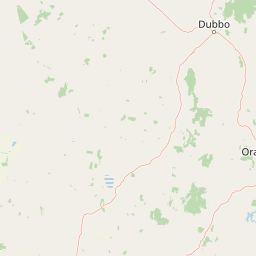
The landscape of Goobang National Park is characterized by the ancient Hervey Range, a series of ridges and valleys carved from sedimentary and volcanic substrates. The terrain ranges from steep sandstone ridgelines to gentle slopes and valley floors, creating a diverse topography that influences local climate, drainage, and vegetation patterns. The park spans a climatic transition zone between the temperate coastal influences and the semi-arid interior, resulting in a landscape of mixed woodland character. Ridges are typically covered in open forests of ironbark and stringybark species, while valley floors support more dense woodlands of box and gum species along watercourses. The combination of sandstone and volcanic geology creates varied soil types that support distinct plant communities, from heathland on acidic siliceous ridges to shrubby woodlands on deeper valley soils. The park's visual character is quintessentially Australian woodland, with gnarled eucalypts, cypress pines, and an understory of native grasses and shrubs across rolling hills.
Goobang National Park ecosystems, habitats, and plant life
The ecological character of Goobang National Park is defined by its position at a biogeographic crossroads and the diversity of microhabitats created by its complex terrain. The park contains 459 recorded plant species across 11 distinct ecological communities, with five of these communities found only within Goobang, making it critically important for regional biodiversity conservation. The dominant vegetation includes various eucalyptus associations such as red stringybark, red ironbark, mugga ironbark, and scribbly gum, often in combination with black cypress pine and diverse understory species. Several plant species are threatened, including Tylophora linearis listed as vulnerable under state legislation and endangered under federal law, Pomaderris queenslandica, and Astrotricha linearis which has its only known record west of the Great Dividing Range within this park. The park also protects significant fragments of white box woodland, a community that has been heavily cleared throughout its former range for agriculture. This ecological diversity supports a corresponding richness of fauna, with 31 mammal species, 31 reptile species, and 14 frog species recorded within the park boundaries.
Goobang National Park wildlife and species highlights
Goobang National Park supports a rich fauna community across its woodland and forest habitats, with 31 mammal species, 31 reptile species, and 14 frog species documented within the park. Mammals include common species such as echidnas, various wallaby and kangaroo species, possums, and bats, alongside threatened species that depend on the park's old-growth trees and rock shelters. The koala, listed as endangered in some Australian states, finds important habitat within the park's eucalyptus woodlands, though populations face pressures from disease, drought, and habitat fragmentation. The brush-tailed rock wallaby inhabits rocky outcrops and cliff lines, while the grey-headed flying-fox roosts in dense vegetation and serves as an important pollinator. Reptile diversity includes carpet pythons and various skink and dragon species, while frogs occupy the park's creeks and temporary water bodies. The avifauna is particularly significant, with birds such as the endangered regent honeyeater, painted honeyeater, varied sittella, and glossy black cockatoo recorded in the park's woodlands. Many woodland bird species are declining throughout Australia due to habitat clearing, making Goobang's protected woodlands increasingly important for their survival.
Goobang National Park conservation status and protection priorities
Goobang National Park represents a critical conservation asset in a largely cleared agricultural landscape, protecting the largest remaining forest and woodland tract in central west New South Wales. The park's significance is amplified by five ecological communities that exist only within its boundaries, representing irreplaceable genetic reservoirs and habitat types. Conservation challenges include managing the impacts of feral animals such as cats, foxes, rabbits, goats, and dogs that predate native wildlife and compete for resources, while environmental weeds particularly blackberry form dense thickets that alter native vegetation structure. Agricultural practices surrounding the park, including grazing and vegetation clearing for crop production, threaten to sever wildlife corridors between the park and remaining woodland fragments. Climate change poses an increasingly serious threat, with projections suggesting significant impacts on frog and bird populations, while koalas face particular risks from changing eucalyptus leaf nutrition, increased drought frequency, and more intense bushfire regimes. The park employs prescribed burning to maintain biodiversity, recognizing that fire is an intrinsic feature of Australian ecosystems despite the risks of wildfire from dry lightning strikes.
Goobang National Park cultural meaning and human context
Goobang National Park exists within the traditional Country of Aboriginal peoples, though the source material does not provide detailed information about specific Indigenous connections to this landscape. The park's European history dates to early colonial exploration when John Oxley named the Hervey Range in 1817, and subsequent timber extraction shaped the landscape through nearly a century of state forest management before national park designation in 1995. The surrounding agricultural region has been extensively cleared for cropping and grazing, making the park's preserved woodlands increasingly significant as a cultural and ecological reference point for understanding the pre-colonial landscape. Place names in the region, including the park's name derived from the Indigenous term for the area, reflect the long human presence in this landscape even if specific traditional knowledge is not documented in available sources.
Top sights and standout views in Goobang National Park
The largest remaining forest and woodland in central west New South Wales makes Goobang a flagship conservation area for the region, protecting five ecological communities found nowhere else on Earth. The park provides essential habitat for threatened species including koalas, carpet pythons, brush-tailed rock wallabies, and the endangered regent honeyeater. Caloma lookout offers panoramic views across timbered ridges and valleys along the Burrabadine Peak Walking Track, a 3.6-kilometer moderate hike. The park's position at the overlap between interior and coastal NSW species creates unique ecological assemblages not found in other protected areas. Visitors can camp within the park and explore diverse vegetation communities ranging from ironbark ridges to box-gum valley forests.
Best time to visit Goobang National Park
Goobang National Park can be visited throughout the year, with each season offering different experiences of the park's woodland landscapes. Autumn and spring generally offer mild daytime temperatures comfortable for hiking and wildlife observation, with wildflower displays in spring adding color to the woodland understory. Summer brings warmer conditions with daytime temperatures ranging from 17 to 32 degrees Celsius and the heaviest rainfall, which can make some tracks muddy and difficult while also supporting frog activity in creeks and ponds. Winter temperatures drop to between 4 and 15 degrees Celsius, offering cool conditions for extended walks but requiring warm clothing for early mornings and evenings. The park's semi-arid character means that conditions can be dry for much of the year, so visitors should carry adequate water regardless of season and check current fire restrictions before visiting.