
Why Jenaer Forst stands out
Jenaer Forst is best known as a peri-urban Thuringian forest where active ecological restoration is taking place on top of a complex landscape legacy. The reserve is recognized for its calcareous woodland flora, particularly orchid-rich sites that develop on the limestone bedrock, and for the unusual combination of conservation work, forest management, and public recreation that defines its modern identity. It is also notable for the layered human history embedded in its terrain, including wartime camps, Soviet missile bases, and former barracks that have all left traces now being addressed through demolition, rewilding, and contaminated-site remediation.
Jenaer Forst history and protected-area timeline
The forest area today called Jenaer Forst carries a dense twentieth-century history, much of it driven by military and industrial use. In the 1930s, parts of the woodland were developed into accommodation for anti-aircraft artillery units of the Luftwaffe. From 1939 to 1945, the so-called 'Lager Forst' housed prisoners of war and forced laborers, and the plateau toward Jena and Waldschlößchen also saw barracks construction in 1944 to 1945 that was never completed. Carl Zeiss Jena operated a worker and prisoner-of-war camp in the forest area during the same period, and numerous quarrying operations took place across the landscape.
After the war, the Soviet military occupied and used the area intensively. Between 1960 and 1990, the 8th Guards Army stationed Scud-B and later SS-23 Spider missile systems in the Jenaer Forst. The site also included barracks complexes and associated infrastructure, parts of which were later repurposed as a first reception center for asylum seekers. These successive waves of use left an unusually dense material legacy: abandoned buildings, filled cellars, drainage ditches, air-raid shelters, remnants of driving training tracks, derelict sports facilities, and large volumes of buried waste.
In 2008, a substantial portion of the wider Jenaer Forst was placed under nature protection, receiving the official designation NSG 452. Since then, significant efforts have been directed at renaturation and remediation. Unused buildings have been demolished, old landfills have been consolidated and capped to remove their status as Altlast (active contaminated sites), and new groundwater monitoring wells have been installed toward Jena. The former 'Schott-Deponie' has been stabilized and sealed, though it remains classified as an Altablagerung capable of reverting to contaminated-site status if pollutants escape. Additional landfills near the village of Coppanz, partly filling former quarries and valley notches, are also being addressed.
A 2025 discovery of a presumed Soviet anti-tank mine highlighted how much of the forest's military-era material legacy remains to be dealt with. The establishment of the Forum Natura at Otto-Schott-Platz in 2022 marked a turning point, providing a dedicated public-facing venue for interpreting the forest's natural and cultural history. Throughout these changes, the reserve has continued to function as both a working forest and a local recreation area for Jena.
Jenaer Forst landscape and geographic character
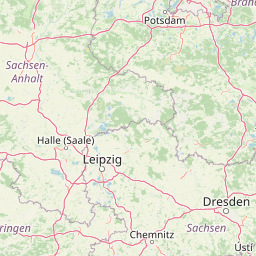
Jenaer Forst occupies a forested limestone plateau west of Jena, with the Saale river valley marking its eastern edge. The terrain is shaped by its underlying geology: relatively thin, dry soils over calcareous parent material create a mosaic of woodland, edge habitats, and historically cleared patches. This geological setting, combined with the plateau's topography, is responsible for the reserve's dry, herb-rich character and supports the botanical specialism of the site.
The protected area is closely bounded by major transport corridors that also shape its landscape context. The Bundesstrasse 7 runs along the northern edge, the A4 autobahn skirts the south, and the Saale and the L2308 road define the eastern boundary. Small valleys, old quarry workings, former barracks sites, and remediated landfill areas punctuate the plateau, producing a varied, layered terrain that combines natural woodland with visible traces of past human activity.
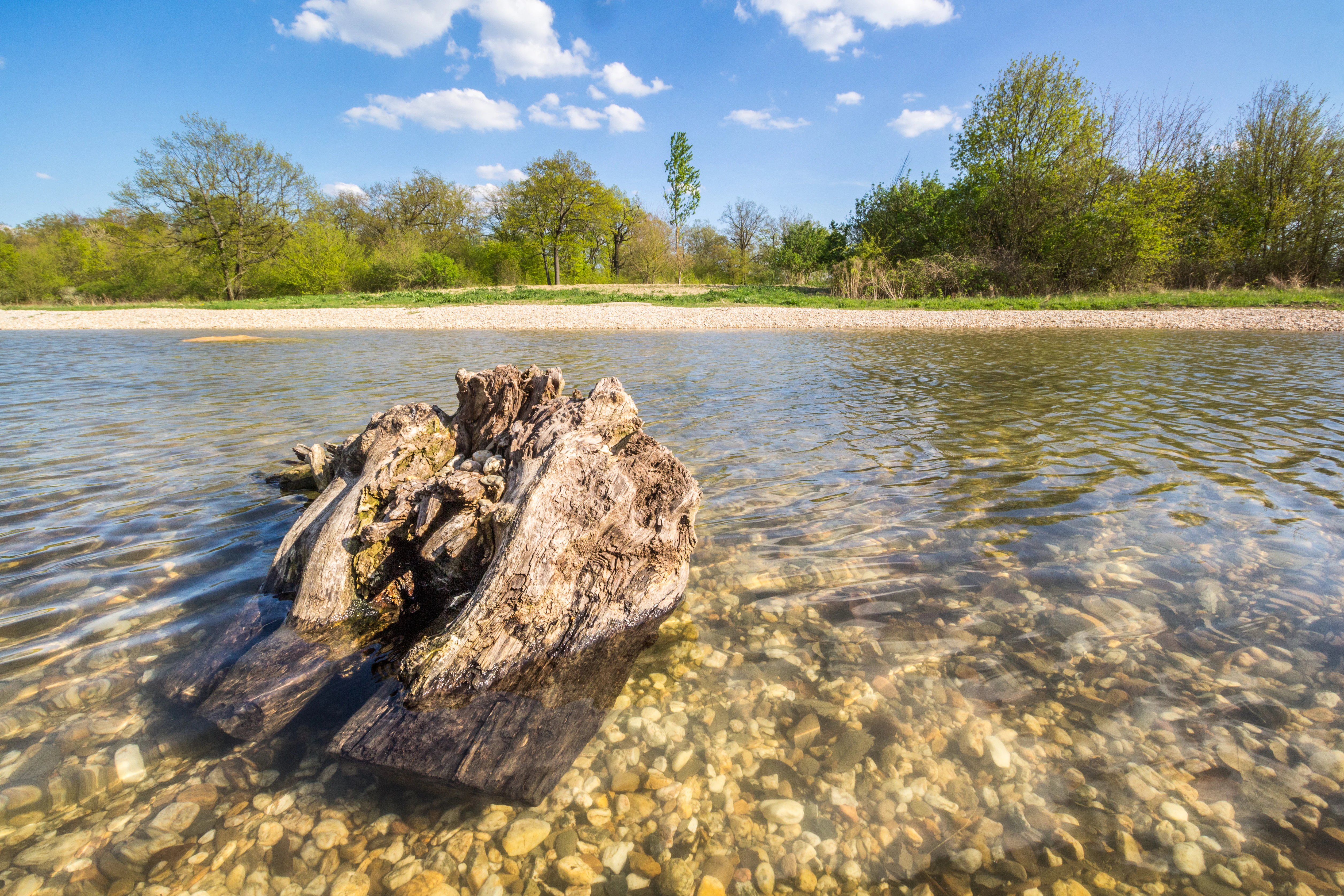
Distinctive landscape features include artificially created ponds added as part of restoration work, such as the Himmelteich, and the avenue leading to the Bismarckturm, which provides one of the more recognizable cultural vistas at the forest's edge. The Otto-Schott-Platz, while technically outside the NSG boundary, functions as an important recreational threshold zone where visitors transition between the urban environment and the forest landscape.
Jenaer Forst ecosystems, habitats, and plant life
The ecological character of Jenaer Forst is defined by its dry, calcareous woodland and associated edge habitats. The combination of limestone bedrock, thin soils, and historical openings in the forest canopy creates conditions that favor light-demanding, base-rich plant communities. This is the foundation for the reserve's most distinctive flora, including several orchid species that are regionally uncommon and a focus of conservation attention.
Woodland structure across the reserve varies from closed mature forest to more open, regenerating areas where recent renaturation work has altered light and ground conditions. The creation of ponds, the removal of derelict buildings, and the gradual restoration of former settlement and landfill sites have introduced new microhabitats, including wet features and bare ground, that complement the older woodland habitats. These interventions actively broaden the ecological profile of the reserve rather than merely preserving a static condition.
The reserve is integrated into a broader mosaic of protected sites in the Jena region, including the Kernberge und Wöllmisse, the Leutratal und Cospoth, the Hufeisen-Jenzig, and the Spitzenberg area. Together, these sites create a connected network of calcareous, slope, and forest habitats that supports biodiversity across the wider Saale-Holzland landscape.
Jenaer Forst wildlife and species highlights
The woodland and edge habitats of Jenaer Forst support a varied fauna, with notable concentrations of species tied to calcareous woodland structure. Several bat species occur in the reserve, supported by the mosaic of mature trees, old buildings awaiting demolition, and underground or sheltered features. The bat fauna is part of why the area is recognized as important for species management, in line with the reserve's IUCN Category IV status.
Breeding bird communities in the forest include threatened species that respond to the mix of closed canopy, edge zones, and open regenerating areas. Habitat heterogeneity created by past land use and current renaturation is a defining feature of the ornithological value of the site, rather than any single habitat type alone.
Invertebrate diversity is closely tied to the orchid-rich calcareous flora and to the open, warm microsites scattered across the plateau. The reserve is recognized as a regionally important site for rare insects, whose presence is closely linked to the conservation management of flowering plants and small-scale disturbance regimes. Together, the bat, bird, and invertebrate communities reflect the wider significance of the site as a habitat and species management area.
Jenaer Forst conservation status and protection priorities
Jenaer Forst was designated as a nature reserve in 2008 under the German Naturschutzgebiet framework, with the official identifier NSG 452. It is classified as an IUCN Category IV area (Habitat/Species Management Area), a designation that reflects its role in actively managing habitats and species rather than leaving them untouched. Conservation in the reserve is shaped by a commitment to combine ecological restoration with continued forest use and public recreation.
A central thread of conservation work is the remediation of contaminated and disturbed sites. Old landfills, including the Schott-Deponie, have been stabilized, sealed, and reclassified as Altablagerungen, with groundwater monitoring infrastructure maintained to detect any future pollutant migration. Multiple former landfills and quarry fills near Coppanz remain part of the long-term management agenda. The ongoing demolition of derelict buildings and removal of settlement remains has been a major component of restoring functional habitat.
Ecologically, the reserve is significant for dry calcareous woodland and its associated orchid flora, as well as for bat, breeding bird, and invertebrate communities that depend on habitat heterogeneity. Conservation management balances the protection of these specialist communities with the broader functions of the forest, including its role as a local recreation area, its value as working woodland, and its role within a wider network of protected sites in the Saale-Holzland-Kreis and the city of Jena.
Jenaer Forst cultural meaning and human context
The cultural identity of Jenaer Forst is inseparable from its layered twentieth-century history. Between the 1930s and the early 1990s, the forest hosted successive waves of military and paramilitary use, including anti-aircraft training, prisoner-of-war and forced-labor camps during World War II, and prolonged Soviet occupation with missile systems stationed on the plateau. The Carl Zeiss 'Lager Forst' camp is one of the most significant pieces of this history. Ruins of barracks, burial sites, and abandoned infrastructure remain visible reminders of these periods.
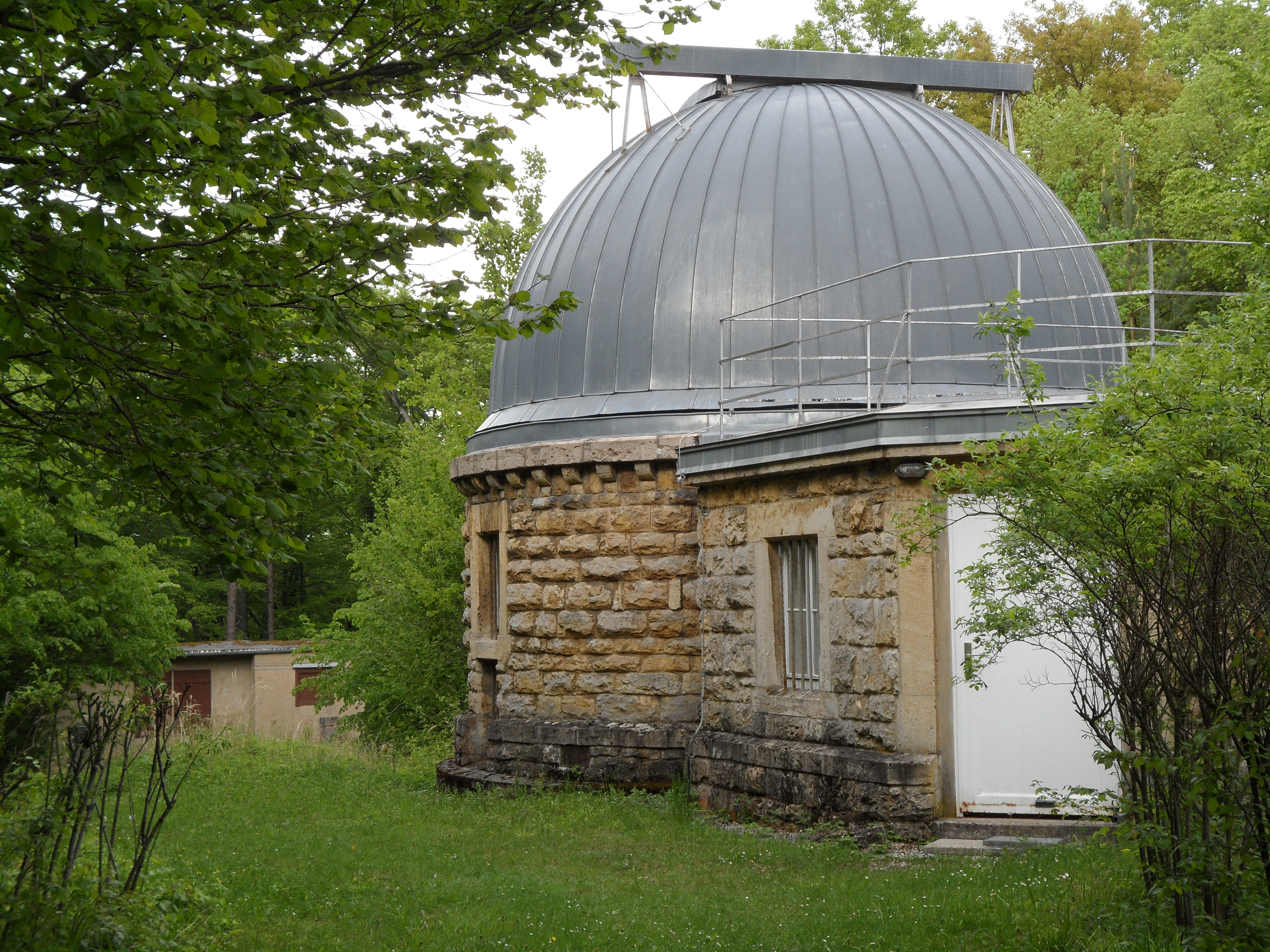
Alongside this difficult heritage, the forest carries a more celebratory cultural layer. The 1874 Forstturm observation tower, the Forststernwarte observatory, the avenue to the Bismarckturm, and the Schullandheim Stern together form a rich set of educational, recreational, and commemorative landmarks. The Otto-Schott-Platz and the Forum Natura visitor center, opened in 2022, mark an effort to interpret this combined natural and cultural landscape for the public. The avenue leading to the Bismarckturm has become a recognizable cultural image associated with the reserve.
Top sights and standout views in Jenaer Forst
The highlights of Jenaer Forst converge around three themes: ecological distinctiveness, layered cultural history, and active restoration. Ecologically, the dry calcareous woodland with its orchid-rich flora, bat populations, and threatened breeding birds defines the reserve's natural identity. Culturally, the forest combines Ottoman-era and Bismarck-era monuments, the historic Forstturm, and the Forststernwarte, all set within a landscape still bearing traces of wartime camps and Cold War missile deployments. Restoration-wise, ongoing remediation of landfills, demolition of derelict buildings, and the creation of new habitat features such as the Himmelteich demonstrate a rare combination of ecological ambition and direct, visible intervention.
Best time to visit Jenaer Forst
Jenaer Forst can be visited throughout much of the year, but spring and early summer are particularly rewarding for the botanical character of the reserve. This is when the calcareous woodland flora, including the orchid-rich sites, is most visible and the forest edges and openings are at their most floristically active. Warmer months also support the most active bat, bird, and insect activity, making wildlife observation more feasible.
Autumn brings a different appeal, with mature woodland color, mushroom-and-forage interest in a working forest, and quieter trails. Winter visits are possible but should account for the seasonal character of forest weather in the Saale region and shorter daylight hours; many visitors find the cultural landmarks such as the Bismarckturm especially atmospheric during this period. The surrounding hiking network and the Otto-Schott-Platz give visitors flexibility to combine protected-area exploration with broader Jena-area recreation.