
Why Krietes Wald (Im Holze) stands out
Krietes Wald (Im Holze) is best known for its old and dead wood-rich beech and oak-hornbeam forest, which supports one of the largest known populations of the hermit beetle (Osmoderma eremita) in northwest Germany. The small urban woodland has become a regional reference point for saproxylic insect conservation and for the value that even compact city-edge forests can hold when left to develop mature structural features. Equally notable is the site's layered protection status: in addition to its designation as a Bremen nature reserve, around 6 hectares are recognized as an FFH habitat area under the EU Habitats Directive, connecting the site to the wider European Natura 2000 framework and reinforcing its role as a small but meaningful node in transboundary habitat conservation.
Krietes Wald (Im Holze) history and protected-area timeline
Krietes Wald (Im Holze) is a relatively young protected area in formal terms, having been placed under nature reserve status on 30 May 2015 via an ordinance dated 26 May 2015. Its designation as nature reserve number 20 in the Bremen register formalized the protection of a woodland fragment that had already existed as a recognizable, mature forest patch, but had previously lacked explicit protective status.
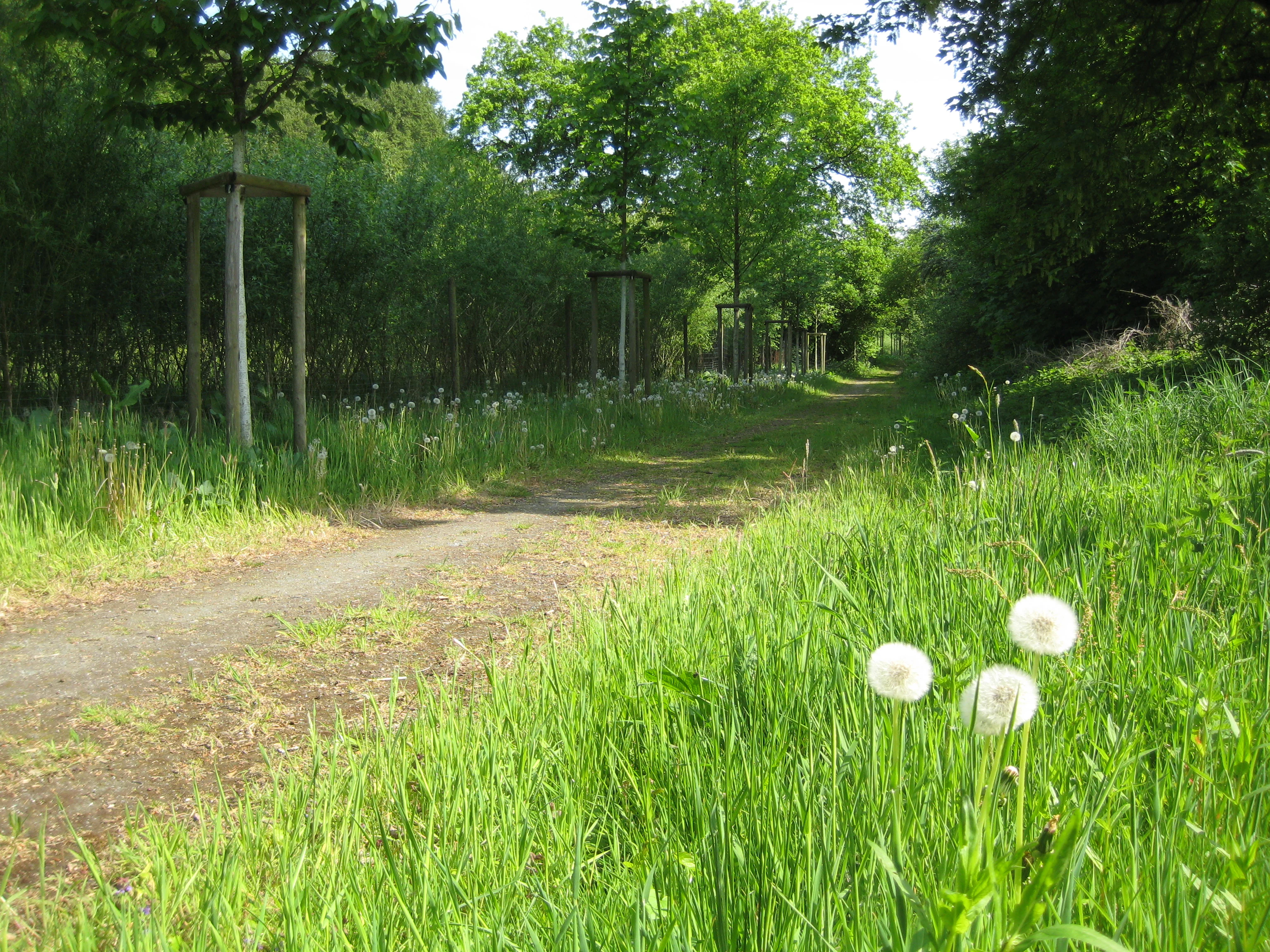
A second, more recent chapter in the reserve's history involves the 2013 completion of the Mahndorf mobility hub (Mobilitätsdrehscheibe Mahndorf) near Bremen-Mahndorf station. The construction project resulted in the loss of woody vegetation, and as a compensatory mitigation measure under Germany's impact regulation rules, a grassland area between the woodland and the railway embankment was reforested. A path with a tree-themed nature trail was also created along the embankment, transforming a once purely railway-side corridor into an interpretive landscape element connected to the wider protected area. These measures show how the reserve's modern form was shaped as much by transport-infrastructure compensation practice as by traditional forest preservation.
Krietes Wald (Im Holze) landscape and geographic character
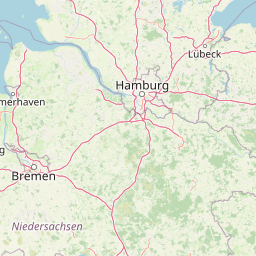
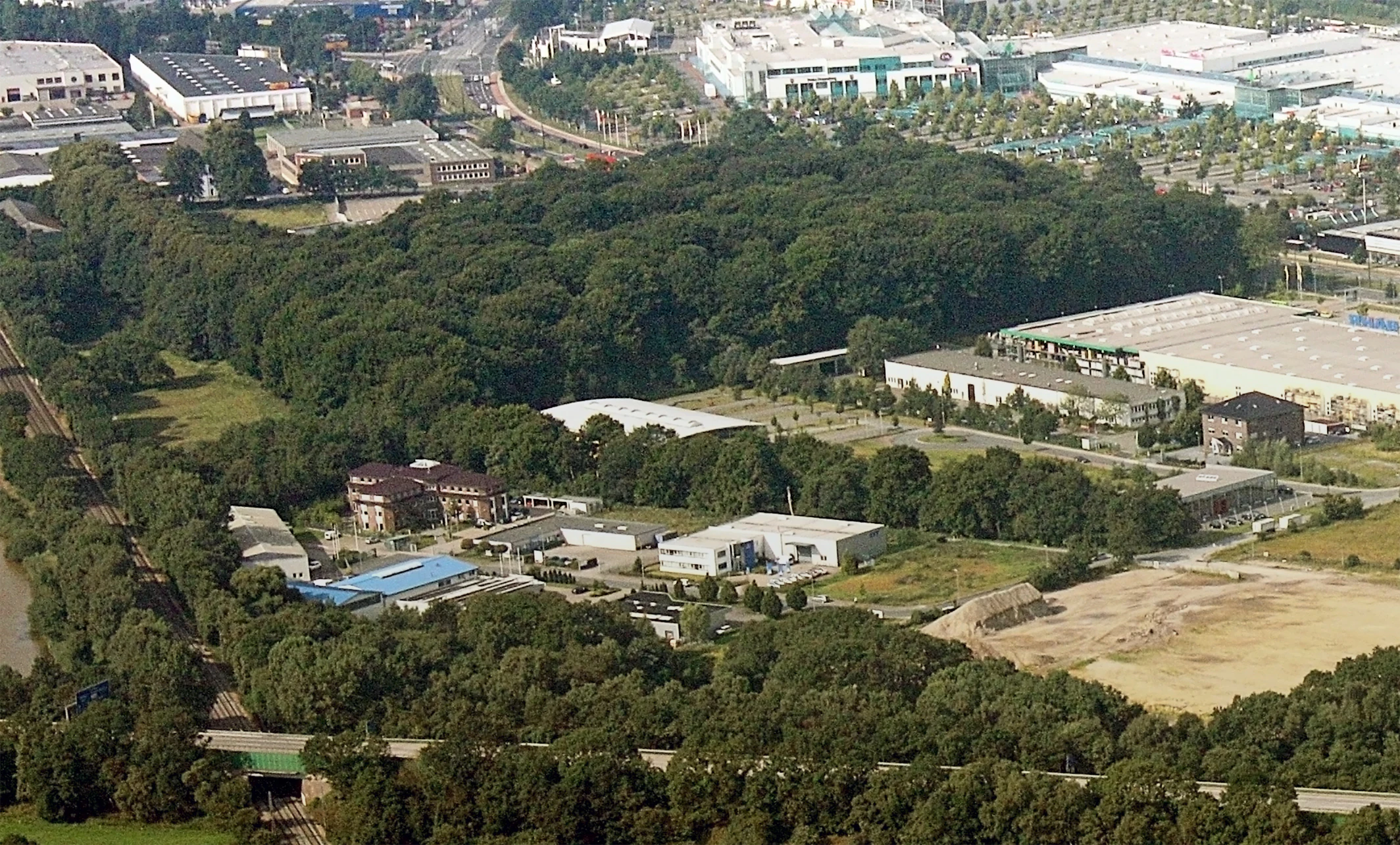
The landscape of Krietes Wald (Im Holze) is small-scale and distinctly urban in context, yet it carries the structural character of a much older forest. The protected zone occupies a narrow corridor between two types of infrastructure: a road to the west and a freight railway embankment to the east. To the north and south lie the commercial and industrial plots of the Bremer Kreuz business district, so the reserve functions visually and ecologically as a green wedge pressed into a working industrial landscape.
Within this narrow frame, the terrain is gently undulating lowland typical of the Bremen region, without steep slopes or dramatic relief. The defining feature is the wooded ridge of Krietes Wald itself, an uneven, irregularly bordered forest patch shaped by decades of incremental growth and the absence of modern clear-cutting. A drainage ditch, lined with trees, runs eastward from the forest toward Julius-Faucher-Straße, adding a linear watercourse element to the reserve's profile. The tree-lined educational trail along the railway embankment introduces an additional, human-designed linear feature, giving the reserve both natural and interpretive landscape layers.
Krietes Wald (Im Holze) ecosystems, habitats, and plant life
Ecologically, Krietes Wald (Im Holze) is defined by its forest type rather than its size. The woodland is a deciduous forest community dominated by beech and oak-hornbeam forest associations, a forest profile that is otherwise increasingly rare in heavily urbanized northwest German lowlands. What makes the habitat especially valuable is its structural maturity: a significant share of old trees and standing or fallen dead wood. This dead wood is the key ecological driver of the site, providing the microhabitats required by saproxylic beetles, fungi, and other organisms.
The forest floor shows a typical beech-oak herb layer for the region, including hairy wood-rush (Luzula pilosa), two-leaved Solomon's seal (Maianthemum bifolium), and wood sorrel (Oxalis acetosella), along with various ferns and fungi. Beyond the core woodland, the reserve includes a reforested grassland strip between the forest and the railway embankment, and the tree-lined ditch extending east, creating a small mosaic of woodland, young plantation, wet-edge vegetation, and ruderal railway-side environments. Roughly 6 hectares of the reserve are simultaneously designated as an FFH area, formally integrating the site into the EU's network of protected habitat sites.
Krietes Wald (Im Holze) wildlife and species highlights
The wildlife profile of Krietes Wald (Im Holze) is unusually distinctive for such a small site because of its strong association with old-growth and deadwood-dependent species. The reserve's most iconic inhabitant is the hermit beetle (Osmoderma eremita), a large saproxylic beetle associated with ancient deciduous trees. The woodland holds what is considered the largest known population of this species in northwest Germany, a fact that has done much to elevate the reserve's conservation profile well beyond its modest area.
Beyond the hermit beetle, the deadwood-rich forest supports a broader community of beetles and other insects dependent on aging trees. Seven bat species have been recorded in the area, including the common noctule, the common pipistrelle, and the soprano pipistrelle, which use tree cavities and the wooded ditch corridor for roosting and foraging. Cavity-nesting birds are also characteristic: jackdaw and stock dove nest in the older trees, while green woodpecker and great spotted woodpecker, along with various songbirds, use the structurally diverse woodland as breeding habitat. Together, these groups turn the small reserve into a disproportionately rich urban wildlife refuge.
Krietes Wald (Im Holze) conservation status and protection priorities
Krietes Wald (Im Holze) carries meaningful conservation significance despite its small footprint. Its formal designation as a Bremen nature reserve (Naturschutzgebiet) places it under long-term protective status, with management oversight provided by Bremen's Senator for Environment, Climate and Science. The site's IUCN Category IV classification reflects its role as a Habitat/Species Management Area, where active protection of specific habitat features and species is central to its management purpose.
On a European scale, around 6 hectares of the reserve are also recognized as an FFH (Fauna-Flora-Habitat) area under the EU Habitats Directive, with the hermit beetle as a key qualifying species. This dual designation aligns the site with the Natura 2000 framework, ensuring that Bremen's local forest conservation efforts are mirrored in broader European habitat protection. The reserve also demonstrates how impact regulation and compensatory measures linked to transport infrastructure can be channeled into genuine ecological gain, as the reforestation and educational trail associated with the Mahndorf mobility hub project show.
Krietes Wald (Im Holze) cultural meaning and human context
Krietes Wald (Im Holze) has a quiet but real cultural dimension rooted in its setting within an urban-industrial part of Bremen. The forest is a remnant and a local landmark within Osterholz, providing nearby residents and workers in the Bremer Kreuz industrial area with direct access to a piece of older, semi-natural landscape. The naming of the area itself carries local tradition, with the parenthetical "Im Holze" reflecting a historical reference to woodland in this part of the city.
The most visible cultural expression is the educational tree trail (Baum-Lehrpfad) along the railway embankment, established as part of the compensatory measures connected to the Mahndorf mobility hub. By pairing each tree with explanatory information, the trail introduces a layer of public environmental education into what is otherwise an infrastructure-dominated landscape, allowing the reserve to function simultaneously as a refuge for rare species and as a place where local residents can learn about native tree species.
Top sights and standout views in Krietes Wald (Im Holze)
One of the standout qualities of Krietes Wald (Im Holze) is its concentration of ecological value in a very small area: a mature beech and oak-hornbeam forest in an urban setting, with unusually high amounts of old and dead wood. This structural richness is the foundation of the reserve's role as a regional stronghold for the hermit beetle and other saproxylic species. Equally distinctive is the dual protective framework, pairing local Bremen nature reserve status with EU-level FFH recognition.
The reserve also stands out for the way conservation and urban infrastructure interact. The reforested grassland and tree-lined educational trail along the railway embankment, both linked to compensation measures for the nearby Mahndorf mobility hub, show how transport-linked impacts have been turned into habitat creation and public environmental learning. Combined with the wooded drainage ditch and the surrounding industrial context, this gives the reserve a layered identity as forest, wetland edge, and interpretative green corridor.
Best time to visit Krietes Wald (Im Holze)
Krietes Wald (Im Holze) is a small urban nature reserve, so its seasonal character follows typical northwest German woodland rhythms rather than dramatic seasonal shifts. Spring and early summer bring the most rewarding herb-layer display, when woodland floor species such as wood sorrel, hairy wood-rush, and two-leaved Solomon's seal bloom beneath the emerging beech and oak canopies. Late spring and early summer also tend to be the most active period for saproxylic insects around the old trees, which are central to the reserve's ecological identity.
Autumn is another appealing season, when the deciduous canopy takes on color and fungi associated with the deadwood-rich forest become more visible to visitors walking the tree trail along the railway embankment. Winter visits tend to be quieter for wildlife observation but expose the forest structure itself, making it easier to appreciate the old trees, standing dead wood, and tree cavities that underpin the reserve's conservation value year-round. Visitors should generally treat the site as a year-round, walkable urban nature stop rather than a seasonal destination.