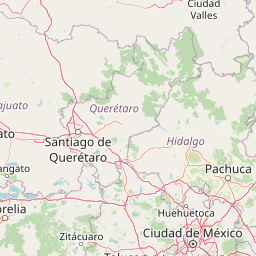
Why Los Mármoles National Park stands out
Los Mármoles National Park is best known for its exceptional biodiversity concentrated within a relatively compact mountain landscape. The park protects one of the most diverse oak forest ecosystems in Mexico, with 18 native Quercus species documented within its boundaries, representing a significant concentration of global oak diversity. The park also holds particular importance for bat conservation, serving as a critical habitat for 11 species including the common vampire bat, lesser long-nosed bat, and several Myotis species. The dramatic elevation range from 600 to 3,000 meters creates distinct ecological zones that support pine-oak forests, juniper woodlands, and xeric scrub communities in close proximity. The steep Barranca San Vicente, descending 600 meters deep, offers one of the most visually striking canyon landscapes within Hidalgo's protected areas.
Los Mármoles National Park history and protected-area timeline
Los Mármoles National Park was established through a presidential decree issued by General Lázaro Cárdenas del Río on August 12, 1936, with the decree entering formal force on September 8, 1936. This places Los Mármoles among the earliest national parks created in Mexico during a period when the country was systematically establishing its protected area system. The establishment during the Cárdenas administration reflected broader land reform and natural resource management priorities of that era, which emphasized both conservation and sustainable use of natural resources. The original decree articulated three primary objectives: protecting soil resources from degradation while maintaining favorable regional climate conditions through forest conservation; utilizing the natural beauty and picturesque character of surrounding communities as tourism attractions; and improving road access to benefit agricultural communities in the region. These objectives revealed an integrated vision that linked ecological conservation with community development and economic utilization, a relatively progressive approach for park management in that historical period. The park has maintained its national park designation continuously since 1936, though management practices and regulatory frameworks have evolved alongside Mexico's broader environmental policy development.
Los Mármoles National Park landscape and geographic character
The landscape of Los Mármoles National Park is defined by pronounced topographic relief resulting from its position along the western edge of the Sierra Madre Oriental. The terrain is characterized by steep-walled canyons, rounded mountain peaks, and narrow valleys that collectively create a visually dramatic mountain environment. Cerro Cangando, the park's highest point, rises to approximately 3,000 meters above sea level and forms a prominent landmark visible from the surrounding lowlands. In contrast, the Barranca San Vicente descends to approximately 600 meters elevation, creating a vertical span of roughly 2,400 meters within the park's boundaries. This canyon, with its sheer walls and seasonal watercourses, represents one of the most spectacular geomorphological features in the region. The mountains form part of a chain running north-south that lies west of the main Sierra Madre Oriental crest, positioning the park in a transitional zone between higher mountain environments and the interior basins of central Mexico. The underlying geology contributes to the diverse soils and vegetation patterns observed across the elevation gradient, with different rock types influencing drainage patterns and moisture availability at various sites.
Los Mármoles National Park ecosystems, habitats, and plant life
The ecological character of Los Mármoles National Park reflects the complex interplay of elevation, moisture availability, and geographic position within the Sierra Madre Oriental system. The park encompasses several distinct plant communities arranged along the elevation gradient. Oak forests dominate at mid-elevations, with Quercus crassifolia, Quercus laeta, Quercus mexicana, and Quercus affinis among the most common species. This oak diversity is exceptional, with 18 native oak species documented within the park, representing one of the most species-rich oak forest communities in Mexico. Pine forests occur in two principal configurations: a Pinus cembroides-JUNIPERUS deppeana association typical of drier sites, and a more diverse community featuring Pinus greggii, Pinus teocote, Pinus patula, and Pinus pseudostrobus in areas with greater moisture availability. Juniper forests and woodlands occupy transitional areas, while xeric scrub communities dominate the lower canyon floors and ridgetops in rain shadow positions. The vegetation pattern creates a vertically stratified landscape where different forest types can be observed in relatively close proximity as one ascends from the canyon bottoms to the mountain peaks. The climate is primarily temperate subhumid, becoming semiwarm subhumid at the lowest elevations, with annual rainfall ranging from approximately 1,500 millimeters in the wettest areas to around 450 millimeters in the driest rain-shadow locations.
Los Mármoles National Park wildlife and species highlights
Los Mármoles National Park supports a diverse fauna community reflecting the multiple habitat types present within its boundaries. The park holds particular significance for bat populations, with 11 species documented including the common vampire bat (Desmodus rotundus), Aztec fruit-eating bat (Dermanura azteca), lesser long-nosed bat (Leptonycteris yerbabuenae), California myotis (Myotis californicus), southwestern myotis (Myetis auriculus), hoary bat (Aeorestes cinereus), and desert red bat (Lasiurus blossevillii). This bat diversity has led to recognition of Los Mármoles as an important site for bat conservation within Mexico. Mammalian fauna includes the ringtail (Bassariscus astutus), with the Spanish source additionally documenting rabbits, bobcats, skunks, armadillos, squirrels, ocelots, raccoons, badgers, and opossums. The introduced presence of black bears has been noted in the park area. Bird communities include the white-eared hummingbird (Basilinna leucotis), along with hawks, eagles, swallows, doves, falcons, vultures, woodpeckers, and roadrunners as documented in the Spanish source. Reptile diversity includes the spiny lizard (Sceloporus minor), lagarto alicante del Popocatepetl (Barisia imbricata), and various snake species including rattlesnakes. The documented species total exceeds 880, with 35 species classified within some category of risk under Mexico's NOM-059 official species protection standard.
Los Mármoles National Park conservation status and protection priorities
Los Mármoles National Park represents an important conservation legacy in Mexico's protected area system, having been among the earliest national parks established in the country in 1936. The park's conservation significance derives from several factors: its role in protecting representative examples of Sierra Madre Oriental ecosystems; its exceptional oak species diversity, with 18 native Quercus species within a relatively limited geographic area; its importance as bat habitat, supporting 11 species in an area recognized as significant for Mexican bat conservation; and its function as a protective buffer for watersheds serving downstream communities. The original conservation mandate emphasized soil protection and climate regulation through forest maintenance, reflecting understanding of the ecosystem services provided by healthy forest cover. However, the presence of 35 species within risk categories according to Mexican environmental standards indicates ongoing conservation challenges requiring active management attention. The park encompasses multiple municipalities and supports traditional communities whose land use practices interact with conservation objectives, requiring management approaches that balance human settlement with wildlife protection.
Los Mármoles National Park cultural meaning and human context
Los Mármoles National Park contains within its boundaries approximately 39 rural communities with a population of roughly 9,300 inhabitants according to 2000 census data. These communities maintain traditional land use practices including small-scale agriculture, livestock husbandry, and forest resource collection that have shaped the landscape over generations. The park was established with explicit objectives that included benefiting local agricultural communities through improved road access, reflecting an integrated conservation-development approach typical of early Mexican protected area policy. The traditional settlements include villages such as Encarnación, which appears in documentation associated with the park and represents the type of picturesque communities referenced in the original park establishment decree as part of the area's tourism appeal. The indigenous and mestizo communities occupying this portion of Hidalgo maintain cultural connections to the landscape that predate formal protected area designation, creating a complex cultural-ecological context where conservation objectives must be reconciled with resident community needs and traditional resource use patterns.
Top sights and standout views in Los Mármoles National Park
Los Mármoles National Park offers visitors an accessible mountain wilderness experience in central Mexico with remarkable ecological diversity compressed into a relatively compact landscape. The dramatic elevation gradient from 600 to 3,000 meters creates opportunities to traverse multiple distinct ecological zones within a single visit. Oak forest landscapes with exceptional species diversity provide exceptional botanical interest, while the deep Barranca San Vicente canyon offers striking scenery and descending trails into canyon environments. The park's significance for bat conservation makes it particularly interesting for those interested in nocturnal wildlife, though the bats themselves are often more easily observed at dusk than during daylight hours. The proximity to Pachuca de Soto, approximately 126 kilometers, makes Los Mármoles accessible for day trips or longer stays from the state capital while maintaining a sense of wilderness removal from major urban centers. The presence of traditional communities within the park provides opportunities to experience rural Mexican culture and hospitality in conjunction with nature-based recreation.
Best time to visit Los Mármoles National Park
The optimal time to visit Los Mármoles National Park depends on the type of experience sought, but general seasonal patterns guide visit planning. The climate exhibits distinct wet and dry seasons, with summer months from approximately June through September receiving the majority of annual rainfall. This rainy season transforms the landscape with fresh vegetation and flowing water in canyon streams, though afternoon thunderstorms can interrupt outdoor activities. The drier months from November through April typically offer more predictable weather conditions for hiking and wildlife observation, though higher elevation areas may experience colder temperatures during winter nights. The transition seasons of spring and fall offer moderate temperatures and reduced precipitation, though spring may coincide with the start of the dry season's hottest period. The park's subhumid climate means that moisture conditions vary significantly between the wetter upper elevations and the drier canyon floors, potentially offering different visitor experiences depending on which areas of the park one explores.