Why Moczary Nature Reserve stands out
Moczary is known primarily for housing one of the most important Polish populations of Allium victorialis, the wild garlic or victory onion, which is treated here as a glacial relict from the Boreal climatic phase of the Holocene. This unusual relict status, combined with the unusually high density of individuals across roughly four hectares, gives the reserve a distinctive botanical identity rooted in postglacial history. The reserve is also recognized for its concentration of protected herbaceous plants in the understory of a lowland oak-hornbeam forest. Species such as the common snowdrop, Fuchs's orchid, eggleaf twayblade, and the common bird's-nest orchid share habitat here with sub-Carpathian mountain plants, creating an unusually diverse forest-floor community for a site of this small size.
Moczary Nature Reserve history and protected-area timeline
Moczary Nature Reserve was officially established on 19 April 2004 through a regulation of the Wojewoda (Voivodeship Governor) of the Subcarpathian Voivodeship. Its creation responded to the recognition that the local lowland forest contained one of the most significant Polish populations of Allium victorialis, a valuable and ecologically meaningful relict species.
The founding act was published in the official journal of the voivodeship (Dziennik Urzędowy Województwa Podkarpackiego, 04.42.444), with the initial legal acreage listed at 12.25 hectares; subsequent administrative documentation adjusted this figure to 12.42 hectares. The reserve has been recorded in the voivodeship register under number 90, anchoring it firmly within the Subcarpathian regional system of protected areas.
Subsequent environmental policy extended its protection context through its inclusion within the Natura 2000 Łukawiec site, designation code PLH180024 in the European Natura 2000 network of habitat areas. This layering of national and European protection frameworks has marked the reserve as a regionally and internationally recognized conservation site since the mid-2000s.
Moczary Nature Reserve landscape and geographic character
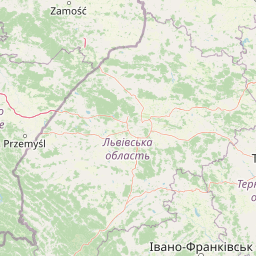
Physically, Moczary lies within the Płaskowyż Tarnogrodzki, a mesoregion characterized by flat to gently undulating terrain typical of the eastern Polish plain. Elevations remain modest and the topography is lowland in character, with subtle relief rather than dramatic landforms. Within this broad plain, the reserve occupies a relatively small tract of forested land that fits seamlessly into the surrounding rural and forest matrix of the Wielkie Oczy gmina.
Hydrologically and ecologically, the landscape is shaped by a long history of postglacial vegetation development. The reserve's soils and forest communities have matured over thousands of years, allowing the persistence of relicts that arrived during colder postglacial phases. Today the surface of the reserve is covered by lowland broadleaf forest, primarily oak-hornbeam stands, whose closed canopy generates the cooler, stable microclimate that supports moisture-loving herbaceous plants.
Although the area lacks prominent cliffs, rivers, or major landforms, the small-scale mosaic of shaded canopy, decomposing leaf litter, and stable humidity is precisely the kind of environment in which ancient forest-floor species thrive. The surrounding agricultural and forested landscape of the Tarnogrodzki Plateau provides the broader geographic context that makes this small protected plot ecologically meaningful.
Moczary Nature Reserve ecosystems, habitats, and plant life
The ecological identity of Moczary is fundamentally linked to lowland oak-hornbeam forest, specifically the subcontinental variant (grąd subkontynentalny). This community type blends European lowland forest elements with species of more continental affinity, producing a forest floor of considerable floristic richness that distinguishes it from typical lowland broadleaf forest.
The defining ecological feature of the reserve is its dense, viable population of Allium victorialis. This species is recognized as a glacial relict whose presence reflects ancient vegetation patterns inherited from the Boreal climatic phase of the Holocene. Such relicts are rare in modern central European lowland forests and provide direct ecological evidence of the continuity and age of forest development at this site.
Alongside this relict, the forest understory supports a layered community of protected and regionally notable plants. Snowdrops, Fuch's orchid, twayblade species, and bird's-nest orchids share the habitat with plant species more characteristic of the Eastern Carpathian foothills, including East-Carpathian vetchling, glandular coralroot, and shining chervil. This unusual blend of lowland relict and submontane elements gives the reserve a strong scientific and ecological profile within the Subcarpathian region.
Moczary Nature Reserve conservation status and protection priorities
The conservation value of Moczary centers on the protection of a single, exceptionally well-developed relict plant population combined with a structurally rich lowland forest ecosystem. By reserving 12.42 hectares of subcontinental oak-hornbeam forest, the site safeguards not only Allium victorialis but the surrounding community of protected herbaceous plants that depend on the same shaded and stable microclimate.
Moczary is additionally embedded in the Natura 2000 habitat network through site PLH180024 "Łukawiec". This inclusion extends European-level habitat protection to the area and reinforces the need to manage and monitor it under common European biodiversity criteria. In combination with national-level floristic reserve status, the reserve participates in a multi-layered conservation framework.
The presence of glacial relict flora of confirmed Boreal age is of particular scientific importance, since surviving relict populations in European lowland forests are rare and represent irreplaceable elements of postglacial biodiversity. Protecting the full community in which these plants live, rather than just isolated species occurrences, increases the long-term resilience of the population and maintains the ecological conditions that allow it to persist.
Top sights and standout views in Moczary Nature Reserve
The principal highlight of Moczary Nature Reserve is its concentrated population of Allium victorialis, a glacial relict that occupies about four hectares of the reserve and supports several tens of thousands of individuals. The reserve's compact size amplifies its scientific value, since the entire forest community supporting this relict is preserved within one continuous protected site.
A second major highlight is the diversity of protected understory species, including snowdrop, Fuch's orchid, eggleaf twayblade, and common bird's-nest orchid, growing together with sub-Carpathian species such as East-Carpathian vetchling, glandular coralroot, and shining chervil. This unusual lowland-montane mix gives the reserve a distinctive botanical signature that goes beyond any single flagship species.
Finally, the inclusion of the reserve within the Natura 2000 Łukawiec site ties Moczary to European-scale habitat protection, providing a strong, layered conservation framework around a small but ecologically meaningful forest patch in the Subcarpathian Voivodeship.
Best time to visit Moczary Nature Reserve
The most rewarding time to visit Moczary is in spring and early summer, when the herbaceous layer of the lowland oak-hornbeam forest is at its most expressive. The presence of snowdrops indicates an early seasonal emergence of understory blooms, while Fuch's orchid and other orchids flower later in the season. The Allium victorialis population would be most visible during its active growth phase in late spring and early summer, when its broad basal leaves and flowering stems are fully developed.
For general appreciation of the forest atmosphere, late spring through early autumn offers favorable conditions for walking and observation without winter snow cover. In cooler, wetter years, late summer can also be an attractive time to observe the lush herb layer, though the most critical botanical observations should be planned around the phenology of the understory species.