Mori Atlas logo
National parkYavoriv National Nature Park

Discover the mapped boundaries and natural terrain of this Ukrainian national park.

Yavoriv National Nature Park: Protected Landscape and Geographic Context in Lviv Oblast

(Яворівський національний природний парк)

Yavoriv National Nature Park represents a significant protected landscape within Lviv Oblast, Ukraine, serving as a key entity for geographic discovery. This national park offers a detailed view of mapped natural terrain and protected area boundaries, situated in a region known as a gateway to the Carpathian Mountains. Explore its specific contribution to the protected lands of Western Ukraine and understand its place in the broader atlas of natural landscapes.

national parkforest landscapewatershedRoztoczeWestern Ukraineprotected area

Yavoriv National Nature Park

National park

Park overview

Structured park overview, official facts, and landscape profile for Yavoriv National Nature Park

Yavoriv National Nature Park park facts, protected area profile, and essential visitor context

Review the core facts for Yavoriv National Nature Park, including designation, size, terrain, visitor scale, habitats, and operating context in one park-focused overview.

About Yavoriv National Nature Park

Yavoriv National Nature Park protects a remarkable segment of the Ukrainian Roztocze, a physiographic region that stands out as one of western Ukraine's most unusual landscapes. The Roztocze forms a narrow, elongated band of hills that rises prominently above the surrounding Lowland Polissia, creating a distinct topographic feature that influences both climate and ecological patterns across the region. The park's position along the main European watershed adds particular significance, as water falling on its slopes ultimately reaches two different seas, making this a hydrologically meaningful boundary in the European landscape.

The protected area was created in 1998 through the expansion of the earlier Yavoriv Regional Landscape Park, which had been established in 1996. The national park incorporated not only the core protected landscape but also surrounding territories from the Yavoriv military base area and Maherivskoho forestry enterprises, creating a unified conservation entity of more than 7,100 hectares. The park maintains a scientific division and visitor services, though its primary function is the preservation of the Roztocze's distinctive natural character.

The forest ecosystems within the park represent some of the most intact woodland in the region, with the combination of deciduous and coniferous species creating a complex and varied landscape. The presence of relict tree species at their range limits indicates the park's importance as a refugium for species with restricted distributions in this part of Europe.

Quick facts and research context for Yavoriv National Nature Park

Yavoriv National Nature Park occupies 7,108 hectares in the Roztocze region of western Ukraine, approximately 49.98°N 23.73°E. The park protects a forested landscape at the boundary of two major European watershed systems. The region experiences a moderately humid climate with average annual precipitation of 700mm and mean temperatures around 7.5°C. The area features high forest cover with hornbeam-oak and pine forests as the dominant vegetation types, along with notable relict populations of spruce, fir, and sycamore at their northeastern range limits.

Protection and recognition

Verifying the terrestrial framework and documented conservation status within European geography

Yavoriv National Nature Park Protection Status and Conservation Profile

Explorers can verify the documented terrestrial protection status and established administrative boundaries of Yavoriv National Nature Park. Reviewing official database records and management frameworks provides essential geographic context for understanding regional conservation efforts in Western Ukraine.

Protection details

Protection scope
Terrestrial
Transboundary protection
No
Park context

Deeper park guide and search-rich context for Yavoriv National Nature Park

Yavoriv National Nature Park history, landscape, wildlife, and travel context

Explore Yavoriv National Nature Park through its history, landscape character, ecosystems, wildlife, conservation priorities, cultural context, and seasonal travel timing in a structured park guide built for atlas discovery and search intent.

Why Yavoriv National Nature Park stands out

The park is distinguished by its location along the main European watershed, a rare geographic feature where drainage systems split between the Black Sea and Baltic Sea basins. The Roztocze landscape within the park supports exceptional forest diversity, including relict pockets of spruce, fir, and sycamore that represent the northeastern limits of these species' ranges. The area also contains beech forests near the eastern border of the Roztocze range, adding to the ecological significance of the protected landscape.

Yavoriv National Nature Park history and protected-area timeline

Yavoriv National Nature Park traces its institutional roots to the establishment of the Yavoriv Regional Landscape Park in 1996, which initially protected an area of 4,190 hectares. This earlier protected area recognized the ecological and landscape value of the Roztocze terrain in this location. On July 4, 1998, the President of Ukraine elevated the protection status by establishing the national nature park and expanding the protected boundaries to encompass a larger territory. The expansion incorporated surrounding areas from the Yavoriv military base territory and the Maherivskoho forestry enterprise, bringing the total protected area to 7,108 hectares. Of this total, 2,915 hectares were designated for permanent use by the park institution, while an additional 4,193 hectares were incorporated into the park structure without removal from existing land use designations. The park operates with a staff of approximately 44 personnel, including 4 scientists and 16 service workers.

Yavoriv National Nature Park landscape and geographic character

The landscape of Yavoriv National Nature Park is defined by the characteristic topography of the Roztocze, a narrow range of hills that rises abruptly from the surrounding lowlands. The terrain varies from gentle slopes to more pronounced undulations, creating a hilly landscape that contrasts sharply with the extensive lowland areas of Lesser Polissia to the south. The elevation changes and varied aspects of the hillsides contribute to habitat diversity across the park.

The forest-covered hillsides dominate the visual character of the protected area, with the tree canopy covering the majority of the terrain. In the depressions between hills and along watercourses, different vegetation communities emerge, with alder groves occupying the wetter valley positions. The forest composition changes across the park in response to slope aspect, soil conditions, and moisture availability, creating a mosaic of vegetation types that reflects the underlying environmental gradients.

Yavoriv National Nature Park ecosystems, habitats, and plant life

The ecological character of Yavoriv National Nature Park centers on its diverse forest communities, which represent some of the finest woodland in the Ukrainian Roztocze. Hornbeam-oak forests form the primary deciduous woodland type, while pine-oak and pure pine forests occupy drier or poorer soils. This mix of forest types creates a structurally diverse landscape that supports varied ecological communities. The presence of beech forests near the eastern border of the Roztocze within the park marks an important ecological transition zone, as beech reaches the eastern edge of its optimum distribution range in this area.

Of particular significance are the relict islands of spruce, fir, and sycamore that survive within the park. These stands represent the northeastern limits of these species' European ranges, making them botanically notable for their biogeographic importance. The survival of these relict populations through the Holocene period indicates the long continuity of suitable habitat in this part of the Roztocze. Herbaceous vegetation occupies smaller areas, primarily in natural meadows, former pasturelands, and along river corridors.

Yavoriv National Nature Park wildlife and species highlights

While the source material provides limited specific information about fauna, the diverse forest ecosystems of Yavoriv National Nature Park support typical woodland wildlife communities of the Roztocze region. The mix of deciduous and coniferous forest types, combined with the presence of old-growth relict stands, provides habitat structure for various bird and mammal species associated with mature forest environments. The watershed location and the variety of forest communities create conditions that support biodiversity across multiple taxonomic groups.

Yavoriv National Nature Park conservation status and protection priorities

Yavoriv National Nature Park plays an important role in protecting the distinctive Roztocze landscape and its associated biodiversity. The protected area preserves relict forest communities that represent the northeastern limits of several tree species, making it significant for European biogeography. By protecting the main European watershed divide, the park also contributes to water resource conservation across a broader geographic scale. The establishment of the national park status elevated protection of this landscape beyond the earlier regional landscape park designation, reflecting recognition of its national-level conservation importance.

Yavoriv National Nature Park cultural meaning and human context

The park is situated near the towns of Novoiavorivsk and Ivano-Frankove in Lviv Oblast, within a region of western Ukraine that has a complex historical landscape. The incorporation of areas from the Yavoriv military base into the park boundaries reflects the particular land use history of this area. The Roztocze region has historically been a zone of cultural transition between different populations and traditions, though the park itself focuses primarily on natural landscape preservation.

Top sights and standout views in Yavoriv National Nature Park

The European watershed divide passing through the park represents a rare geographic feature of continental significance. The forest diversity, including relict spruce, fir, and sycamore stands at their northeastern range limits, distinguishes this area botanically. The Roztocze landscape itself, with its characteristic hilly terrain rising from the surrounding lowlands, provides the scenic and ecological context that makes this protected area distinctive within Ukraine's protected area network.

Best time to visit Yavoriv National Nature Park

The park can be visited throughout the year, with each season offering different aspects of the Roztocze landscape. The summer months of June and July bring the highest precipitation, creating lush vegetation conditions. Winter months of January and February are driest but also coldest, with January averaging -4.2°C. The moderate continental climate means that spring and autumn provide pleasant conditions for forest exploration, with the changing seasons bringing visible shifts in forest appearance and atmosphere.

Monthly climate preview

Long-term temperature averages and monthly precipitation across the Lviv Oblast protected landscape.

Climate Patterns and Weather by Month in Yavoriv National Nature Park

Long-term measurements at the representative elevation of 254 meters reveal an annual cycle ranging from freezing winter averages around minus four degrees Celsius up to warm summer peaks near twenty degrees Celsius. Accessing the full monthly profile provides a detailed comparison of daily precipitation and temperature ranges throughout Yavoriv National Nature Park.
Annual mean8 °C
-4 °C20 °C
Jan-4°
Feb-3°
Mar
Apr
May14°
Jun18°
Jul20°
Aug19°
Sep14°
Oct
Nov
Dec-3°
Warmest month
July

19.7 °C

Coolest month
January

-4.3 °C

Wettest month
July

2.9 mm/day

Driest month
January

1.3 mm/day

Park location guide

Geography guide, regional context, and park location map for Yavoriv National Nature Park

Yavoriv National Nature Park park geography, regions, and map view in Ukraine

Understand where Yavoriv National Nature Park sits in Ukraine through a broader geographic reading of the surrounding landscape, nearby location context, and its mapped position within the national park landscape.

How Yavoriv National Nature Park fits into Ukraine

Ukraine is a sovereign nation in Eastern Europe, bordered by Russia, Belarus, Poland, Slovakia, Hungary, Romania, Moldova, and the Black Sea. It is the second-largest country in Europe by area. Kyiv is the capital and largest city, followed by Kharkiv, Odesa, and Dnipro. The official language is Ukrainian. Ukraine has a population of approximately 32.9 million and operates as a unitary semi-presidential republic.

Wider geography shaping Yavoriv National Nature Park in Ukraine

Ukraine occupies 603,628 km² in Eastern Europe, making it the second-largest country in Europe. It shares borders with Russia, Belarus, Poland, Slovakia, Hungary, Romania, and Moldova. The country has a southern coastline along the Black Sea and Sea of Azov. The terrain includes plains, steppes, and the Carpathian Mountains in the west.

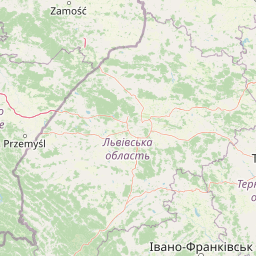
Map view of Yavoriv National Nature Park

Use this park location map to pinpoint Yavoriv National Nature Park in Ukraine, understand its exact geographic position, and read its mapped placement within the surrounding landscape more clearly.

Pigeon | © OpenStreetMap contributors

Location context for Yavoriv National Nature Park

Lviv Oblast
Park atlas

Browse additional national parks and protected areas in western Ukraine, tracing the unique Roztocze physiographic region and its watershed features.

Discover Other Protected Areas Near Yavoriv National Nature Park and the Ukrainian Roztocze Landscape

After exploring Yavoriv National Nature Park, continue your geographic discovery by mapping adjacent protected areas and comparing their distinct forest ecosystems across the western Ukrainian landscape. Compare how the Roztocze hills, European watershed, and diverse woodlands shape other conservation landscapes in the surrounding region.
A minimalist watercolor painting showing rolling green hills and distant mountain ridgelines in soft pastel tones of green and violet against a white background.
Protected areaAlbania
About 5.1 km away#1 closest

Southwest

Primeval Beech Forests of the Carpathians and Other Regions of Europe: Protected Area and Forest Atlas

A transnational network of old growth beech forest reserves across Europe.

Examine the geographic distribution and protected boundaries of the Primeval Beech Forests of the Carpathians and Other Regions of Europe. This site highlights the continent's most intact beech forest ecosystems, illustrating essential ecological processes from the Balkans and Carpathians to the Alps and Western Europe.

Area
583.53 km²
Established
2007
Relief
Mountain
Access
Access unknown
Protected areaPodkarpackie Voivodeship
About 33 km away#2 closest

Northwest

Uroczyska Roztocza Wschodniego: Protected Area and Forested Ridge Geography

Extensive forest sanctuary in the Podkarpackie Voivodeship

Uroczyska Roztocza Wschodniego comprises vast, compact forest tracts on the Eastern Roztocze, defined by high-value woodland communities including beech and oak-hornbeam forests. The area functions as a critical protected landscape that supports diverse fauna and complex hydrological corridors within a significant regional conservation network.

Area
58.1 km²
Established
2011
Relief
Upland
Climate
Temperate
Protected areaPodkarpackie Voivodeship
About 41 km away#3 closest

West

Łukawiec Protected Area Mapping and Landscape Context in the Podkarpackie Voivodeship

Fragmented forest and wetland habitats in southeastern Poland

Łukawiec represents a vital ecological intersection in the Podkarpackie Voivodeship, preserving rare forest types and wetland systems on the Płaskowyż Tarnogrodzki plateau. This site is defined by its complex mosaic of riparian woodlands, Molinia meadows, and boggy coniferous patches that sustain a variety of protected animal species.

Area
22.702 km²
Established
2011
Relief
Upland
Scope
Terrestrial
Nature reservePodkarpackie Voivodeship
About 46 km away#4 closest

West

Rezerwat przyrody Moczary: Geographic Overview and Protected Forest Reserve Mapping

Botanical sanctuary and lowland forest habitat in Podkarpackie.

Rezerwat przyrody Moczary represents a focused, twelve-hectare protected forest area known for its exceptional concentration of glacial relicts and diverse herbaceous understory. Located within the Natura 2000 Łukawiec site, this reserve offers a detailed look at lowland oak-hornbeam ecology and sub-Carpathian botanical signatures across the Płaskowyż Tarnogrodzki mesoregion.

Area
0.124 km²
Established
2004
Relief
Lowland
Scope
Terrestrial
Nature reservePoland
About 52 km away#5 closest

Northwest

Rezerwat przyrody Minokąt Nature Reserve: Geography, Forest Terrain, and Mapping

Protected Carpathian forest within the Roztocze landscape

Located in the Narol commune, Rezerwat przyrody Minokąt protects a rare, mature Carpathian fir-beech forest ecosystem. The reserve provides a critical study in regional geography, characterized by rolling upland terrain and fertile woodland soils that anchor the broader Roztocze Protected Landscape Area and regional conservation efforts.

Area
0.231 km²
Established
1996
Relief
Upland
Scope
Terrestrial
Nature reservePoland
About 53 km away#6 closest

Northwest

Uroczyska Puszczy Solskiej: Protected Forest and Peatland Landscape in Eastern Poland

Natura 2000 nature reserve encompassing diverse lowland forest mosaics

Uroczyska Puszczy Solskiej spans over 34,000 hectares of eastern Poland, forming a vital protected mosaic of raised bogs, transitional mires, and varied forest communities. This area provides a crucial reference for peatland and wetland ecology, supporting a wide range of forest-dependent species within a landscape shaped by glacial and fluvial processes.

Area
346.715 km²
Established
2009
Relief
Lowland
Climate
Temperate
Nature reservePodkarpackie Voivodeship
About 60 km away#7 closest

West

Rzeka San Nature Reserve: Mapped Geographic Overview and Protected Riverine Corridor

Protected landscape geography in Podkarpackie Voivodeship

Rzeka San is a significant river-based nature reserve that defines a crucial ecological passage through southeastern Poland. By focusing on the aquatic and riparian habitats along the San River, this protected area provides vital support for diverse freshwater species. Its strategic position within the Podkarpackie Voivodeship and its integration with larger landscape parks showcase a complex, multi-layered approach to regional environmental conservation and riverine terrain management.

Area
13.75 km²
Established
2009
Scope
Terrestrial
Water
Water-dominated
Nature reservePoland
About 77 km away#8 closest

Northwest

Rezerwat przyrody Debry Nature Reserve: Geography, Forest Ecology, and Protected Boundaries

Exploring the Carpathian-linked landscapes of the Polish Roztocze

Rezerwat przyrody Debry stands as a significant nature reserve in eastern Poland, known for protecting a mosaic of upland fir and fertile beech forest communities. The landscape features deep, characteristic erosional incisions that host a rich array of montane plant species. This area is essential for understanding the regional distribution of protected forest ecosystems and the complex relief of the Roztocze plateau.

Area
1.796 km²
Established
1983
Relief
Upland
Climate
Temperate

Common questions about visiting, size, designation, and location context for Yavoriv National Nature Park

Yavoriv National Nature Park FAQs for park facts, access, geography, and protected area context

Find quick answers about Yavoriv National Nature Park, including protected-area facts, park geography, trail and visitor context, and how the park fits into its surrounding country and regional landscape.
MoriAtlas Explorer

Continue Your Protected Areas Search Across the Global Atlas

Deepen your exploration by continuing the structured search for national parks and protected areas worldwide. Utilize the comprehensive filtering capabilities to compare different conservation landscapes and refine your understanding of global park geography. Discover more about the distribution and characteristics of protected natural areas.

Global natural geography