Mori Atlas logo
National parkHalych National Nature Park

Discover the mapped protected boundaries and diverse terrain of this key Ukrainian national park.

Halych National Nature Park: National Park Landscape & Geography in Ivano-Frankivsk Oblast

Halych National Nature Park represents a significant protected landscape situated within Ukraine's Ivano-Frankivsk Oblast. This national park is defined by its unique transitional geography, where the Carpathian Mountains meet the East European Plain. Explore the park's diverse terrain, encompassing rolling hills, oak-beech forests, extensive wetlands, and rare steppe patches, all visually mapped within the MoriAtlas geographic discovery platform. Understand its ecological significance and its place in the regional atlas.

forestwetlandssteppeCarpathian foothillsbiodiversitynational park

Halych National Nature Park

National park

Park overview

Structured park overview, official facts, and landscape profile for Halych National Nature Park

Halych National Nature Park park facts, protected area profile, and essential visitor context
Review the core facts for Halych National Nature Park, including designation, size, terrain, visitor scale, habitats, and operating context in one park-focused overview.

About Halych National Nature Park

Halych National Nature Park occupies a distinctive position in western Ukraine’s protected area network. Established by presidential decree in August 2004, the park was created to preserve, restore, and sustainably use the typical and unique forest and forest‑steppe ecosystems of the Precarpathian region. Its territory is fragmented into 16 separate tracts that follow the Dniester River and several large tributaries, extending from the river valleys up onto the surrounding hills. This layout reflects the varied topography of the Carpathian northern foothills, where erosion, gravitational, and karst processes have produced a diverse landscape of steep slopes, V‑shaped valleys, limestone outcrops, and rolling interfluves.

The park’s functional zoning reflects its multiple conservation and recreation goals. Approximately 5,105 hectares are designated as a strict nature reserve (zapovidna zone), where human activity is minimal to protect the most sensitive ecosystems. Another 4,405 hectares form a regulated recreation zone, allowing controlled access for visitors, while a small 14‑hectare area is set aside for stationary recreation facilities. The remaining 5,161 hectares constitute an economic zone, where sustainable forestry and limited agricultural use are permitted. This differentiated regime enables the park to balance habitat protection with public enjoyment and sustainable resource management.

The park’s headquarters are located in the historic city of Halych, a former capital of the medieval Galician‑Volhynian Principality. The on‑site museum, “Nature of Galician Earth,” presents exhibitions on the region’s geology, flora, and fauna, with dioramas depicting local habitats and displays of more than 180 animal specimens. In addition to its educational role, the park maintains a wildlife rehabilitation centre that treats injured or orphaned animals, providing veterinary care and preparing them for eventual release back into the wild.

Public access is supported by an extensive network of hiking and ecological trails. Several marked routes lead visitors through the park’s key landscapes, such as the “Stone–Simlin” trail that traverses the karst lake Simlin and its surrounding beech forests, and the “To Kasova Hora” trail that climbs the steppe‑covered hill with its rare plant communities. The park also offers guided eco‑educational programs and manages a modest entry fee that contributes to its maintenance and conservation activities.

Quick facts and research context for Halych National Nature Park

Halych National Nature Park is located in Ivano-Frankivsk Raion, Ivano-Frankivsk Oblast, western Ukraine, near the city of Ivano-Frankivsk. It covers 14,685 hectares along the Dniester River and its tributaries in the Carpathian foothills. The park was created in 2004 and is managed by Ukraine’s Ministry of Ecology and Natural Resources. About 70 percent of the area is forested, with oak‑hornbeam and oak‑beech stands, while roughly 15 percent is wetland. The park lies in a humid continental climate (Köppen Dfb) with average temperatures of -4 °C in January and 18 °C in July and annual rainfall between 600 and 800 mm. It is situated at the meeting point of two major ecoregions, supporting a rich variety of flora and fauna, including many species listed in Ukraine’s Red Book.

Park context

Deeper park guide and search-rich context for Halych National Nature Park

Halych National Nature Park history, landscape, wildlife, and travel context
Explore Halych National Nature Park through its history, landscape character, ecosystems, wildlife, conservation priorities, cultural context, and seasonal travel timing in a structured park guide built for atlas discovery and search intent.

Why Halych National Nature Park stands out

The park is best known for its diverse transitional landscape where Carpathian foothill forests meet the East European Plain, creating a unique blend of oak‑hornbeam and oak‑beech woodlands, wetlands, and relict steppe patches. Its wetlands, especially the Borshtyn Reservoir and fish ponds, serve as crucial resting and breeding grounds for migratory waterbirds, while the karst limestone cliffs and caves on the left bank of the Limnytsia River provide habitat for rare bat species and distinctive floral communities. The steppe remnants on Kasova Hora and Kamenia preserve several rare plant associations, including various feather‑grass communities, and support species such as the bee orchid (Ophrys apifera), one of the rarest orchids in Ukraine.

Halych National Nature Park history and protected-area timeline

Halych National Nature Park was established on 9 August 2004 by a decree issued by President Leonid Kuchma. The decree designated an area of 14,684.8 hectares for the new protected area, of which 12,159.3 hectares were placed under the park’s permanent management. The creation of the park was driven by the need to conserve the region’s distinctive natural complexes, which represent the transitional ecosystems between the Carpathian Mountains and the East European Plain. The primary objectives outlined in the decree were the preservation of biodiversity, the restoration of degraded habitats, and the promotion of sustainable use of natural resources.

Since its establishment, the park has operated under the jurisdiction of the Ministry of Ecology and Natural Resources of Ukraine. It became a collective member of the Association of Nature Conservation Territories of Ukraine, reflecting its role in the broader network of Ukrainian protected areas. Over the years, the park has developed infrastructure for visitors, including the museum and rehabilitation centre, and has implemented various conservation programs focused on protecting endangered species and restoring habitats. The park’s management plan emphasizes a differentiated approach to conservation, with distinct zones that balance strict protection with controlled recreation and sustainable economic activities.

Halych National Nature Park landscape and geographic character

The physical landscape of Halych National Nature Park is shaped by its location in the Carpathian foothills and the influence of the Dniester River and its tributaries. The terrain consists of rolling hills and steep valleys carved by erosional processes, with the terrain rising from the river floodplains toward the surrounding uplands. The park’s tracts follow the Dniester, Limnytsia, Lukva, and Hnyla Lypa rivers, creating a linear pattern of habitats that follows the watercourses.

On the left bank of the Dniester, the landscape is characterized by V‑shaped valleys, deeply dissected interfluves, and light‑grey podzolized soils that support meadow‑steppe vegetation and scattered oak‑hornbeam forests. The lower reaches of the Hnyla Lypa and the low terraces of the Dniester feature loess‑derived deposits with meadow and chernozem‑meadow soils, largely converted to agricultural fields. The right bank of the Dniester exhibits terraced loamy and gravelly interfluves between the Limnytsia and Bystrytsa rivers, where extensive oak‑beech forests grow on sod‑podzolic soils. Along the floodplains of the Limnytsia and Lukva, sand‑gravel deposits host willow shrubs and meadow vegetation, while the low terraces support agriculture.

Karst phenomena are particularly evident on the left bank of the Limnytsia, where limestone outcrops, sinkholes, and caves have developed. These karst features provide unique microhabitats for specialized flora and fauna, and the area is known for its old‑growth beech forests and the deep, clear karst lake Simlin. The presence of gypsum outcrops on the southern slopes of the Opillian hills adds another dimension to the park’s geodiversity, preserving relicts of ancient marine sediments that now support rare steppe plant communities.

Halych National Nature Park ecosystems, habitats, and plant life

The ecological character of Halych National Nature Park is defined by its position at the crossroads of two major ecoregions—Central European mixed forests and Carpathian montane forests—combined with significant wetland and steppe components. Approximately 70 percent of the park’s area is covered by forests, primarily oak‑hornbeam and oak‑beech associations, while wetlands account for about 15 percent of the territory. The remaining land includes meadow, steppe, and agricultural areas.

The forest composition is dominated by Quercus robur and Quercus petraea in the canopy, with Carpinus betulis forming a well‑developed understory. Other tree species include Acer platanoides, Acer pseudoplatanus, Tilia cordata, Fraxinus excelsior, and, in select locations, Fagus sylvatica. The understory supports species such as Corylus avellana, Crataegus spp., Euonymus europaea, and Viburnum latifolium, while the herb layer features a diverse array of spring ephemeroids (Galanthus nivalis, Leucojum vernum, Anemone nemorosa) as well as typical woodland species like Oxalis acetosella and Galium odoratum.

Wetlands within the park include the Borshtyn Reservoir, floodplain marshes, and fish ponds, which together provide critical habitat for waterbirds, amphibians, and fish. The water bodies support浮 plant communities such as Salvinia natans, Nuphar lutea, and Trapa natans, while the surrounding reed beds and meadows host a variety of bird species.

The steppe fragments, particularly on the southern slopes of the Opillian hills and at Kasova Hora and Kamenia, preserve a distinctive flora that includes several rare feather‑grass (Stipa) associations and a range of calcareous grassland species. These steppe areas are among the most southerly and isolated grassland patches in the region and host many species listed in the Red Book of Ukraine, such as the orchid Ophrys apifera and various leguminous plants.

Overall, the park is home to roughly 5,000 animal species, including about 355 vertebrate species, and more than 700 higher vascular plant species. Forty‑five plant species and 48 animal species recorded in the park are protected under Ukraine’s Red Book, reflecting its high conservation value.

Halych National Nature Park wildlife and species highlights

The wildlife of Halych National Nature Park is remarkably diverse, reflecting the variety of habitats present in the park. The park supports significant populations of both forest‑dwelling and wetland‑dependent species. Among mammals, typical forest inhabitants include red deer (Cervus elaphus), roe deer (Capreolus capreolus), wild boar (Sus scrofa), and red fox (Vulpes vulpes). Badgers (Meles meles) and various mustelids, such as the stone marten (Martes foina) and European polecat (Mustela putorius), are also present. Occasionally, brown bear (Ursus arctos) and wildcat (Felis silvestris) are reported in the more remote forest tracts.

The wetland areas are particularly important for birds. During migration, up to 20,000 individuals representing about 85 species stop over in the park, while around 3,500 birds of 40 species winter there. Approximately 57 bird species breed within the park, including the black stork (Ciconia nigra), lesser spotted eagle (Aquila pomarina), and the recently recorded spoonbill (Platalea leucorodia). The park also hosts a notable bat fauna, with nine species recorded, including a maternity colony of the lesser horseshoe bat (Rhinolophus hipposideros) roosting in one of the caves.

Reptiles and amphibians are well represented, with species such as the European pond turtle (Emys orbicularis), smooth snake (Coronella austriaca), and common grass snake (Natrix natrix) found in suitable habitats. Amphibians include the smooth newt (Lissotriton vulgaris), great crested newt (Triturus cristatus), and various frogs and toads. The aquatic environments support a rich fish community, with 56 species recorded, including sterlet (Acipenser ruthenus) and European grayling (Thymallus thymallus) in the Dniester and its tributaries.

Insect diversity is also high, with an estimated 12,000 to 15,000 species of insects, including 700 to 800 butterfly species and 1,500 to 2,000 beetle species, underscoring the park’s role as a center of invertebrate biodiversity.

Halych National Nature Park conservation status and protection priorities

Halych National Nature Park plays a crucial role in the conservation of Ukraine’s natural heritage. Its position at the junction of two major ecoregions and its mosaic of habitats make it a biodiversity hotspot, with numerous species listed in the Red Book of Ukraine. The park’s strict nature reserve zone provides protection for the most sensitive ecosystems, including old‑growth beech forests, karst lakes, and steppe remnants, while its regulated recreation zone allows visitors to experience the natural values while minimizing impact.

Conservation measures implemented by the park include the construction of nest boxes for birds, repair of raptors’ nests, and closure of hunting on key wetlands to protect waterbird populations. The park also conducts public outreach and environmental education, raising awareness among local communities, schools, and fish farm operators about the importance of protecting wildlife and habitats. Ongoing monitoring and research programs focus on assessing the status of rare species and developing adaptive management strategies.

The park’s wetland complexes, particularly the Borshtyn Reservoir and the network of fish ponds, serve as important refuges for migratory birds and are recognized at the national level for their ecological significance. The presence of rare steppe communities on gypsum outcrops adds a unique conservation dimension, as these habitats are among the few remaining in Ukraine. The wildlife rehabilitation centre further contributes to conservation by treating injured and orphaned animals and returning them to the wild, directly supporting the survival of local populations.

Halych National Nature Park cultural meaning and human context

The park’s territory lies within the historic region of Galicia, also known as Halychyna, which has deep historical and cultural roots in Ukrainian history. The city of Halych, located at the park’s headquarters, was the capital of the medieval Galician‑Volhynian Principality and later became an important centre of trade and culture. The region’s name is reflected in the park’s Ukrainian designation, “Галицький національний природний парк,” which emphasizes the connection between the landscape and the cultural heritage of the area.

Human presence in the region dates back to ancient times, with archaeological evidence of settlement along the Dniester River and the surrounding hills. The landscape has been shaped by centuries of traditional land use, including agriculture, forestry, and fishing, which have influenced the composition and structure of the park’s current ecosystems. The management of the park acknowledges this human history, integrating elements of cultural heritage into its educational programs and visitor interpretation.

The park’s name and identity are closely tied to the historic town of Halych, and the museum “Nature of Galician Earth” provides an opportunity for visitors to learn about both the natural and cultural aspects of the region. The inclusion of traditional land use practices within the park’s functional zoning, such as the economic zone that permits sustainable forestry, reflects a balanced approach to conservation that considers the historical relationship between local communities and the landscape.

Top sights and standout views in Halych National Nature Park

Halych National Nature Park offers a blend of habitats and natural features that are unique in western Ukraine. Its forests, wetlands, and steppe patches create a varied landscape that supports a high concentration of biodiversity. Notable highlights include the ancient beech forests on the limestone cliffs of the Limnytsia River, the deep karst lake Simlin surrounded by old‑growth trees, and the steppe slopes of Kasova Hora with their rare feather‑grass communities. The Borshtyn Reservoir and surrounding fish ponds provide outstanding birdwatching opportunities, especially during migration, while the park’s network of trails and the on‑site museum make it an accessible destination for families and nature enthusiasts. The wildlife rehabilitation centre adds an interactive element, allowing visitors to learn about the park’s conservation efforts.

Best time to visit Halych National Nature Park

The best time to visit Halych National Nature Park depends on the type of experience sought. Spring (April to May) is ideal for observing the forest understory in bloom, with abundant spring ephemeroids such as snowdrops and crocuses, and for witnessing migratory birds arriving at the wetlands. Summer (June to August) offers warm weather suitable for hiking, though the park’s forests provide ample shade, and the wetland areas are alive with bird activity. Autumn (September to October) brings colorful foliage and the opportunity to see migrating waterbirds as they stop over at the reservoirs. Winter (December to February) provides a quieter experience, with the possibility of tracking animal footprints in the snow and observing wintering bird species around open water. Each season showcases a different aspect of the park’s natural character, making it a year‑round destination for nature lovers.
Park location guide

Geography guide, regional context, and park location map for Halych National Nature Park

Halych National Nature Park park geography, regions, and map view in Ukraine
Understand where Halych National Nature Park sits in Ukraine through a broader geographic reading of the surrounding landscape, nearby location context, and its mapped position within the national park landscape.

How Halych National Nature Park fits into Ukraine

Ukraine is a sovereign nation in Eastern Europe, bordered by Russia, Belarus, Poland, Slovakia, Hungary, Romania, Moldova, and the Black Sea. It is the second-largest country in Europe by area. Kyiv is the capital and largest city, followed by Kharkiv, Odesa, and Dnipro. The official language is Ukrainian. Ukraine has a population of approximately 32.9 million and operates as a unitary semi-presidential republic.

Wider geography shaping Halych National Nature Park in Ukraine

Ukraine occupies 603,628 km² in Eastern Europe, making it the second-largest country in Europe. It shares borders with Russia, Belarus, Poland, Slovakia, Hungary, Romania, and Moldova. The country has a southern coastline along the Black Sea and Sea of Azov. The terrain includes plains, steppes, and the Carpathian Mountains in the west.

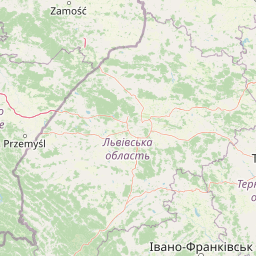
Map view of Halych National Nature Park

Use this park location map to pinpoint Halych National Nature Park in Ukraine, understand its exact geographic position, and read its mapped placement within the surrounding landscape more clearly.

Pigeon | © OpenStreetMap contributors

Location context for Halych National Nature Park

Ivano-Frankivsk OblastIvano-Frankivsk Raion
Park atlas

Trace the regional spread of protected areas, comparing diverse park geography across Ivano-Frankivsk Oblast and western Ukraine.

Explore National Parks and Protected Areas Near Halych National Nature Park in Ukraine
Explore a curated selection of national parks and protected areas located near Halych National Nature Park, tracing the varied landscapes from the Carpathian foothills to the East European Plain. This geographic view allows for deeper comparison of conservation landscapes, revealing regional patterns in forest, wetland, and steppe habitats across Ivano-Frankivsk Oblast.
National parkIvano-Frankivsk Oblast

Syniohora National Nature Park: Protected Carpathian Landscape and Geographic Context

Explore the mapped terrain and protected area boundaries within the Gorgany mountains.

Syniohora National Nature Park, located in Ivano-Frankivsk Oblast, is a vital protected area safeguarding a significant portion of the Gorgany mountain massif. This park offers a unique opportunity to explore the mapped geography and natural landscape characteristic of the Ukrainian Carpathians. Its establishment as a national park underscores the importance of preserving the region's mountain terrain, protected forest ecosystems, and distinctive natural heritage for structured geographic discovery.

Area
108.66 km²
Established
2009
IUCN
II
Scope
Terrestrial
National parkIvano-Frankivsk Oblast

Carpathian National Nature Park: Protected Landscape Within Ivano-Frankivsk Oblast

National Park mapped boundaries and regional geography.

Carpathian National Nature Park represents a significant protected area within Ivano-Frankivsk Oblast, Ukraine. This page offers detailed insights into its protected landscape identity, helping users understand its geographic setting and mapped boundaries. As part of the Carpathian region, the park serves as a key point for atlas-based discovery, providing context for its place within the broader geography of western Ukraine.

Area
515.7 km²
Established
1980
IUCN
II
Visitors
1M annual
Watercolor painting showing green hills, pink fields, and purple mountains under a pale sky
National parkLviv Oblast

Northern Podillia National Nature Park: Protected Area Mapping and Regional Geography

Explore unique karst features and ancient forests in Lviv Oblast.

Northern Podillia National Nature Park is a protected national park in Lviv Oblast, Ukraine, safeguarding a significant area of the Podolian Upland. The park is distinguished by its ancient beech forests, rare karst lakes known as the Blue Windows, and geological formations reflecting ancient sea reefs. This page serves as a dedicated atlas entry for understanding the park's mapped boundaries, its ecological significance, and its place within the regional geography of western Ukraine.

Area
156 km²
Established
2009
IUCN
II
Relief
Highland
Watercolor illustration of a winding river through rolling green hills with distant mountains under a soft sky
National parkTernopil Oblast

Dniester Canyon National Nature Park: National Park Protected Landscape and Geographic Context

Mapped boundaries and regional geography in Ternopil Oblast

Delve into the protected landscape of Dniester Canyon National Nature Park, a designated national park in Ukraine. This entry offers a structured view of the park's geographic setting within Ternopil Oblast, focusing on its mapped boundaries and its role as a significant protected natural area. Understand its placement within the broader atlas of Ukrainian natural landscapes and regional geography, offering a factual basis for exploration.

Area
108 km²
Established
2010
IUCN
II
Relief
Mixed relief
National parkZakarpattia Oblast

Synevyr National Nature Park: National Park Protected Landscape in Zakarpattia Oblast

Mapped geographic context and protected area identity

Delve into Synevyr National Nature Park, a designated national park situated in the diverse geography of Zakarpattia Oblast, Ukraine. This page provides essential atlas-driven context, detailing the park's mapped boundaries and its significance as a protected landscape within the Carpathian region. Understand its unique place in Ukraine's network of natural areas and explore its regional geographic setting for a comprehensive overview.

Area
404 km²
Established
1974
Relief
Mountain
Climate
Temperate
National parkVerkhovyna Raion

Verkhovyna National Nature Park: Explore Protected Landscape Geography in Verkhovyna Raion

Discover Ukraine's Verkhovyna National Nature Park mapped terrain.

Verkhovyna National Nature Park represents a vital protected area within the Verkhovyna Raion of Ukraine. This detailed atlas entry focuses on the park's geographic significance, providing insights into its mapped boundaries and its role within the regional landscape context of the Carpathian Mountains. It serves as a focused point for understanding the park's protected status and its place in a structured geographic discovery framework.

Area
120 km²
Established
2010
IUCN
II
Relief
Mountain
National parkUkraine

Skole Beskids National Nature Park: Protected Landscape Atlas and Geographic Context in Ukraine

Explore the mapped boundaries and regional geography of this Ukrainian national park.

Delve into the specifics of Skole Beskids National Nature Park, a designated national park contributing to Ukraine's protected lands. This detail page offers a structured atlas view, focusing on the park's geographic positioning, its mapped natural landscape features, and its significance within the regional context. Understand the core identity of this protected area through detailed geographic and landscape data, enabling focused map exploration.

Area
357 km²
Established
1999
IUCN
II
Relief
Mountain
National parkChernivtsi Oblast

Vyzhnytsia National Nature Park: Protected National Park Landscape Exploration

Mapped boundaries and regional terrain in Chernivtsi Oblast.

Delve into the specific protected landscape of Vyzhnytsia National Nature Park, a designated national park in Ukraine's Chernivtsi Oblast. This detailed entry provides context on its geographic positioning, mapped natural features, and the surrounding regional terrain, aiding in structured atlas exploration and understanding its significance within the protected areas network.

Area
7,928.4 km²
Established
1995
IUCN
II
Relief
Mountain

Common questions about visiting, size, designation, and location context for Halych National Nature Park

Halych National Nature Park FAQs for park facts, access, geography, and protected area context
Find quick answers about Halych National Nature Park, including protected-area facts, park geography, trail and visitor context, and how the park fits into its surrounding country and regional landscape.
MoriAtlas Explorer

Continue Your Protected Areas Search Across the Global Atlas

Deepen your exploration by continuing the structured search for national parks and protected areas worldwide. Utilize the comprehensive filtering capabilities to compare different conservation landscapes and refine your understanding of global park geography. Discover more about the distribution and characteristics of protected natural areas.

Global natural geography