
Visitor Planning Basics
When to Visit Mount Rainier National Park: The Essential Timing Overview
Determining the best time to visit Mount Rainier National Park requires a clear understanding of the tension between the park's vertical geography and the Pacific Northwest climate. Because the landscape ranges from lowland river valleys to a 14,410-foot summit, the experience of a visit is dictated more by elevation and snowpack than by simple calendar months. For most travelers, the core trade-off exists between the brief window of high-elevation accessibility and the rugged, snow-covered reality that dominates the mountain for the remainder of the year.
The Alpine Summer Paradox
If your primary goal involves exploring the subalpine meadows of Paradise or reaching the highest vehicle-accessible points at Sunrise, the best time to go is limited to the short summer season. During July and August, average maximum temperatures in the mid-mountain areas climb toward 30 degrees Celsius, and snow coverage finally recedes enough to reveal the park's famous wildflower displays. This period offers the most predictable weather and the widest range of trail access, but it also represents a narrow window. Visitors aiming for this high-elevation experience often find that even in mid-summer, the weather remains volatile, and conditions can shift rapidly as moist air encounters the massive volcanic obstruction.
Navigating the Snowy Extended Season
The majority of the year at Mount Rainier is defined by heavy precipitation and deep, persistent snowpack. From November through late May, the park functions largely as a winter landscape. While lowland areas may experience rain and milder temperatures, the higher elevations frequently accumulate 10 to 20 feet of snow. This extensive winter period restricts road access and limits hiking to lower-elevation trails, yet it provides a distinct set of experiences for those interested in snow-based recreation. Recognizing that the mountain creates its own localized weather systems is essential, as the presence of lenticular clouds or shifting winds can signify rapid changes in visibility and safety, regardless of the season.
Factors Shaping Your Visit
Rather than seeking a universally optimal month, successful planning involves matching your priorities with the environmental constraints of the season. Precipitation levels, which rise significantly in late autumn and persist through winter, directly impact which road corridors remain open to traffic. Furthermore, the variance in daylight hours between mid-winter, when days can be as short as eight hours, and mid-summer, when the mountain enjoys over 15 hours of daylight, fundamentally changes how much ground you can cover in a single day. By focusing on these environmental interactions rather than assuming a standard seasonal calendar, you can align your trip with the specific character of the mountain you hope to experience, whether that is the blooming meadows of summer or the silent, snow-encased forests of the colder months.
Seasonal Comparison
Best Months to Visit Mount Rainier: A Quick Seasonal Snapshot
Peak Summer for Alpine Exploration: July and August
The most reliable window for accessing the park’s high-altitude areas is mid-summer. During July and August, mean temperatures at elevation typically reach their annual peak, and precipitation levels remain at their lowest. This is the primary season for hikers looking to traverse the subalpine meadows or reach areas like Sunrise, where vehicle access is generally possible during these months. The primary trade-off for these favorable conditions is increased competition for limited parking and backcountry permits, as this period aligns with the narrowest window of snow-free accessibility for higher-elevation trails.
The Shoulder Season Transition: June and September
These transition months offer a middle ground for visitors who prioritize solitude over guaranteed access. June serves as a period of thaw, where lower-elevation trails may be clear while upper-mountain routes remain snow-bound and potentially hazardous. Conversely, September often provides stable, dry weather, yet the increasing probability of early snowfall and shorter daylight hours dictates a more cautious approach to backcountry planning. These months are ideal for those who prefer cooler temperatures and a slower pace, provided they remain flexible regarding which specific park roads or high-elevation trailheads are open.
Low-Elevation Winter Landscapes: November through April
For visitors interested in the park as a winter destination, the period from November to April transforms the landscape into a high-snowfall environment. While Paradise receives significant snow accumulation, lower valleys often remain accessible for those prepared for winter driving and cold-weather conditions. This window is suited for snowshoeing and cross-country skiing in designated areas, but visitors must accept that significant portions of the park, including many high-altitude roads, will be closed or restricted. The primary planning requirement during these months is constant monitoring of road status and avalanche information, as the mountain's rapid weather shifts can create unpredictable conditions even in the lower reaches.
Spring Thaw and Variable Conditions: May
May acts as a volatile bridge between the winter season and the warmer months. While daylight increases substantially compared to the mid-winter months, the park remains in a state of flux. Snowpack is often deep and softening, creating challenging conditions for hikers and limiting vehicle access to many high-elevation vistas. This time of year may appeal to travellers who enjoy the sight of cascading meltwater and the gradual return of greenery to the lower forests, but it is rarely the best choice for those seeking expansive views or high-country trekking.
Annual Climate Overview
Understanding Mount Rainier Weather and Climate by Month
Interpreting Annual Temperature and Humidity Cycles
Understanding the climate of Mount Rainier requires looking beyond simple averages, as the park operates on a distinct rhythm dictated by its massive elevation and proximity to the Pacific. The annual cycle reveals a sharp contrast between the dormant winter months and the short, intense summer window. While mean temperatures in December and January hover near freezing, they climb steadily through spring before reaching their peak in August, when daily highs average around 30 degrees Celsius. This warming trend is coupled with a significant shift in relative humidity. During the wettest winter months, humidity levels frequently exceed 94 percent, contributing to the persistent dampness that defines the local landscape. By August, this figure drops to its annual low of roughly 74 percent, reflecting the drier, clearer air that defines the prime visitor season.
Patterns in Precipitation and Daylight
Rainfall and daylight hours fluctuate in ways that directly impact trail accessibility and park exploration. The park experiences its highest precipitation levels from November through January, with averages peaking at over 8 millimeters of daily rainfall. These months also feature the shortest daylight windows, dropping to just over 8 hours in December. This combination of heavy precipitation and minimal sun creates a period where travel is heavily restricted to lower elevations. Conversely, the transition into June begins a marked decline in rainfall, bottoming out in July at less than 1 millimeter per day. This dry spell aligns with the longest days of the year, providing nearly 16 hours of potential daylight in June and July. Visitors should note that these figures represent long-term climate normals based on specific elevation data and serve as a baseline for expectations rather than a guarantee of conditions for a specific trip.
Managing Weather Expectations
It is essential for travelers to distinguish between these long-term climate trends and actual, daily weather forecasts. Because the mountain itself is a significant obstacle to moving air, it frequently generates localized phenomena, such as lenticular clouds, that can obscure the summit and alter temperatures unexpectedly. Even during the warmest months of July and August, when average minimums rise to around 5 degrees Celsius, high-altitude terrain remains susceptible to rapid shifts in wind and temperature. Winds, which average roughly 2.5 meters per second during the winter months, can increase significantly in exposed alpine areas. Always consult current, localized forecasts provided by official park sources before departure, as these averages cannot capture the intensity of late-spring snowstorms or sudden mid-summer shifts that are characteristic of such a high-relief volcanic environment.
Seasonal Conditions
Understanding Seasonal Weather Patterns and Transition Phases at Mount Rainier
Defining the Mountain Climate Cycle
Mount Rainier does not adhere to a standard four-season calendar. Instead, the park experiences two distinct environmental phases defined by snow accumulation and vertical relief. The long, dominant period of winter-like conditions typically spans from November through May, characterized by high precipitation, significant snowpack, and limited access to high-elevation corridors. This gives way to a short, dry, and warmer window during July and August, which serves as the only reliably snow-free period for subalpine meadows and high-elevation trails.
The Long Winter and Early Spring Transition
From November through April, the park exists in a state of suspended growth. Climate data shows peak precipitation occurs during these months, with humidity levels frequently exceeding 90 percent. At elevations like Paradise, the primary visitor area, this translates to heavy, consistent snowfall rather than rain. Travellers should view this period as a stable environment of cold, wet, and snowy conditions. While visitors may experience brief intervals of clear weather, the base of the mountain and its subalpine zones remain buried under a substantial snowpack that can exceed ten feet.
May acts as a volatile transition month. While mean temperatures rise toward 8 degrees Celsius, the lingering snowpack makes this period unpredictable. Spring at the mountain is not defined by warming temperatures alone but by the slow, often incomplete, recession of snow that blocks infrastructure and trails. Visitors often mistake the increasing daylight and warmer low-elevation air for an early start to summer, but high-altitude areas remain fully winter-bound throughout much of this month.
The High Summer Window
July and August represent the peak of the park’s abbreviated warm season. During these two months, precipitation reaches its annual low, often falling to roughly one millimeter per day. This is the only phase where moisture levels drop, and sustained daylight provides the necessary conditions for the mountain’s famous wildflower blooms. Temperatures remain moderate, rarely reaching extremes, as the mountain’s elevation naturally tempers the summer heat. Unlike the transition periods, this window offers the highest probability of trail access and clear visibility of the glaciated summit. It is important to note that even in this period, the park retains its capacity for rapid weather shifts; the mountain’s mass creates localized clouds, and temperatures can drop significantly as soon as the sun dips below the horizon.
The Autumnal Shift
September serves as a brief, dry, and cool bridge back to the winter cycle. By the time October arrives, the environmental rhythm shifts perceptibly. Precipitation begins to increase as the influence of Pacific moisture systems returns, and night-time temperatures regularly dip below freezing. This month is defined by the cessation of summer-like stability. While the first significant snows of the year often arrive in late October or early November, the environment becomes increasingly damp, dark, and difficult to traverse, effectively marking the end of the high-access season well before the calendar year concludes.
Annual Experiences
What Visiting Mount Rainier National Park is Like Through the Year
The experience of visiting the park is dictated by a clear separation between the temperate, low-elevation forests and the volatile, high-altitude volcanic landscape. Understanding this distinction is essential for choosing a trip that aligns with your specific interests, whether you seek access to subalpine meadows or are interested in the quieter, sheltered experiences found in the deep valleys.
Accessing Subalpine Meadows and High-Country Trails
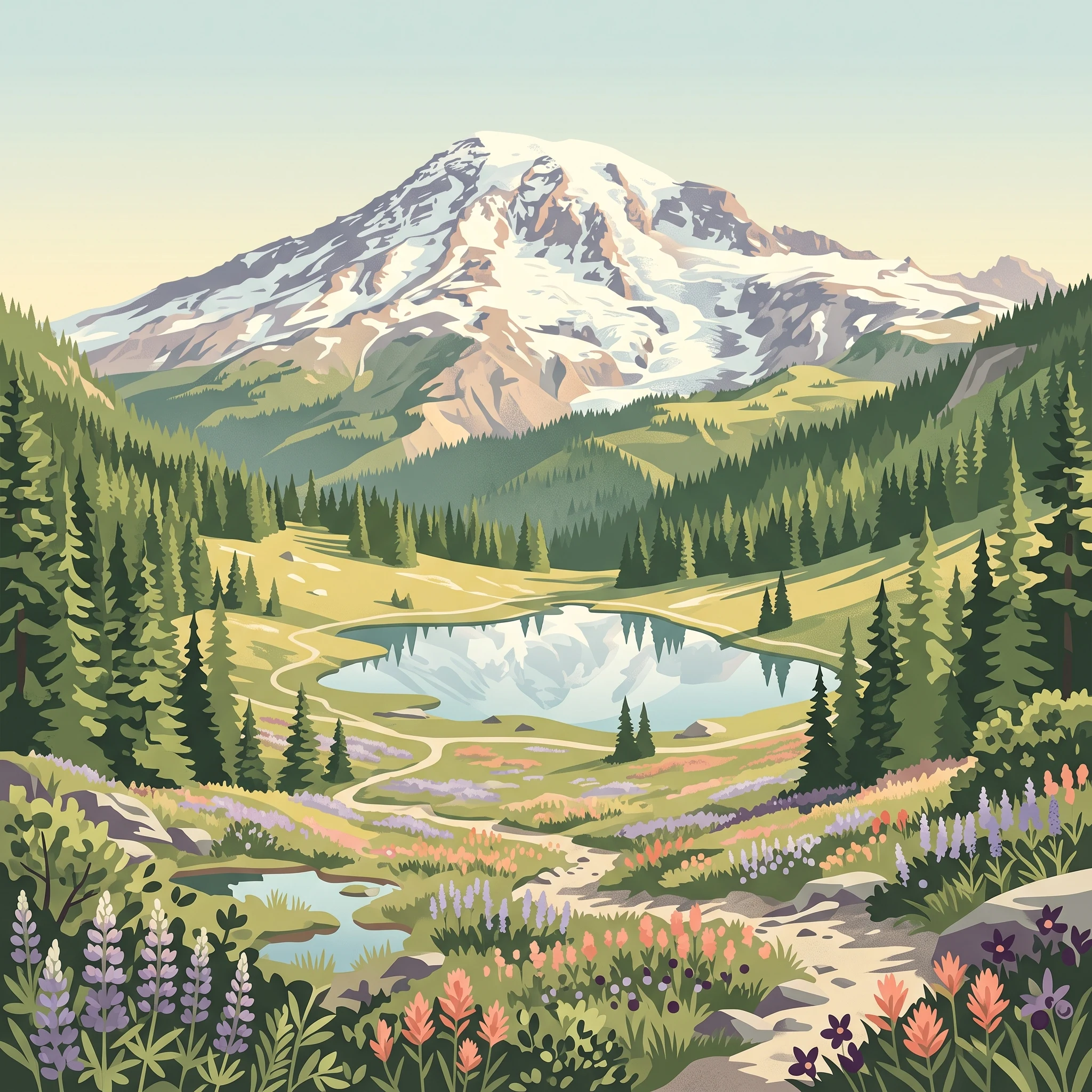
For those drawn to the park's iconic subalpine meadows, the window of opportunity is strictly tied to snowmelt. These areas, including the famous Paradise and Sunrise regions, remain under a thick snowpack for most of the year. The experience of walking through these meadows, vibrant with wildflowers or providing expansive views of the glacier-clad volcano, is essentially restricted to the short period between mid-July and early September. During this time, the daylight reaches its peak, and the high-elevation trails become navigable for the average visitor. Outside of this window, the scenery in these areas is dominated by deep winter conditions, where snowshoes or skis replace hiking boots as the necessary equipment for exploration.
Exploring Old-Growth Forests and Low-Elevation Waterfalls
In contrast to the alpine zones, the lower-elevation environments, such as the areas near Longmire, remain accessible for a much larger portion of the year. These zones offer an entirely different experience, characterized by lush, old-growth forests of Douglas fir, western red cedar, and western hemlock. Because these regions are shielded from the most severe alpine weather, they provide a consistent environment for walking and viewing waterfalls throughout the spring and autumn. Visitors who prioritize the damp, moss-covered aesthetics of the forest floor often find that the shoulder months, when the high country is still inaccessible, offer a sense of solitude and calm that is harder to replicate during the crowded summer peak. Features such as the Trail of the Shadows or the paths leading to lower-elevation waterfalls provide a stable experience that is not reliant on the brief, erratic summer heat.
Mountaineering and Glacial Navigation
The experience of mountaineering on the peak is a highly technical pursuit that demands extreme caution regardless of the calendar month. While many climbers target the summer months due to better daylight and relatively milder temperatures, the mountain environment at 14,410 feet remains harsh. The glaciers and crevasses present constant, dynamic hazards. Those interested in this level of engagement must be prepared for severe, winter-like conditions that can manifest rapidly even in mid-July. The experience of reaching the summit is never guaranteed, and the timing of your visit should prioritize safety, current route stability, and your own technical proficiency over any preferred weather window. All climbing activities above 10,000 feet require specific permits, and the experience is fundamentally different from standard park tourism, requiring extensive training and adherence to strict safety protocols.
Visitor Priorities
Choosing the Best Time to Visit Mount Rainier Based on Your Travel Priorities
Planning for Alpine Meadow Wildflowers and High-Altitude Access
If your priority is witnessing the subalpine meadows in their peak bloom, you must align your travel with the brief window when winter snowpack finally retreats. This phenomenon is typically concentrated in late July and August. While earlier dates might seem appealing to avoid the heat, the meadows at Paradise and Sunrise are often covered in deep snow until well into July. Choosing this period provides access to the vibrant color displays that define the park's mid-summer identity, but the trade-off is high visitor density. Because this window is the only time these high-elevation areas are fully reachable for most travelers, the concentration of traffic is unavoidable. Plan to prioritize early morning arrivals to mitigate the limitations on parking and crowded trailheads.
Targeting Drier and Milder Conditions for Backcountry Exploration
For those seeking the driest conditions for extended hiking or backpacking on the Wonderland Trail, the late summer period remains the most reliable. August stands out as the month with the lowest average precipitation, typically measuring around 1.04 mm per day, accompanied by the lowest relative humidity levels of the year at approximately 73.88 percent. These conditions offer the most stability for high-elevation excursions where afternoon thunderstorms can otherwise complicate safety. The compromise here is the loss of the spring meltwater that fuels the park's dramatic early-season waterfalls. If you choose this drier time, you gain predictable weather but sacrifice the sheer force and volume of the spring-fed cascades found earlier in the year.
Selecting for Cool Walking Weather and Longer Daylight
Visitors who prefer active days but want to avoid the peak heat of August afternoons might look toward the transitional month of June or the cooler days of September. June offers the longest daylight hours of the year, averaging 15.6 hours, which provides immense flexibility for longer, less-strenuous loops through the old-growth forests at lower elevations. However, the higher you attempt to climb in June, the more likely you are to encounter lingering snowfields that require specialized gear and navigation skills. Conversely, September provides a cooling trend with a mean temperature of 12.4 degrees Celsius and fewer crowds, yet the daylight hours decrease significantly to around 12.3 hours. The trade-off is clear: choose June for maximum sunlight and forest greenery, or September for cooler, calmer walking weather at the cost of shorter days and the potential for early-season mountain storms.
When to Prioritize Lower Elevation Trails
If you find yourself visiting outside of the mid-summer peak, your success depends on focusing on lower-elevation zones rather than the mountain peaks. Trails around Longmire and the lower valleys are often free of snow significantly earlier and later than the subalpine areas. These zones remain accessible even when the road to Paradise might be restricted or when high-elevation trails are impassable. Prioritizing these areas allows for a rewarding experience during the shoulder months, such as May or October, when the rest of the park may be transitioning into or out of its winter state. The trade-off is accepting that the iconic, looming views of the summit may be obscured by low-hanging clouds or that the meadows will lack their signature blooms, shifting your experience toward the lush, rain-fed forest ecosystems.
Access and Logistics
Seasonal Access and Operational Planning for Mount Rainier
Access to Mount Rainier National Park is fundamentally shaped by elevation and the heavy winter snowpack, which dictates the operational status of roads, facilities, and trailheads. While the lower-elevation zones remain reachable throughout the year, the high-altitude areas like Paradise and Sunrise depend on successful snow removal and safe road conditions. Because these access windows vary annually based on the timing of spring melts and autumn snowfalls, visitors must always verify current road status, facility opening schedules, and potential construction impacts through the official National Park Service website before finalizing their travel dates.
Navigating Seasonal Road Constraints
The primary access route to the Paradise area is generally maintained for year-round vehicle traffic, though heavy snow can cause temporary closures or the requirement of tire chains. In contrast, the road to the Sunrise area, which reaches a higher elevation, is typically closed during the winter and early spring months. These roads do not follow a fixed calendar date for opening or closing; instead, they are governed by local weather conditions and the progress of the annual clearing operations. Travelers planning trips in late spring or early autumn should treat all high-elevation road access as tentative until the park service confirms the routes are clear of snow and hazards.
Managing Peak Season Demand and Parking
During the peak summer window of July and August, visitor density is at its highest, particularly on weekends. High-traffic destinations like Paradise and Sunrise often experience extreme parking congestion, which can effectively limit access for those who arrive late in the day. The park often encourages visitors to aim for arrival times before 7:00 am or after 4:00 pm to avoid the busiest periods. While the park has experimented with various entry management systems in past seasons to regulate flow, visitors should check for any active reservation or timed-entry requirements for the specific year of their visit. Relying on outdated information regarding vehicle access protocols is a common planning pitfall, as these policies may be adjusted by park management to protect resources and improve the visitor experience.
Wilderness Permits and Backcountry Access
For those intending to explore the wilderness, permit requirements are a standard component of planning, especially for backcountry camping or climbing the summit. Access to the Wonderland Trail and high-altitude climbing routes involves specific regulatory processes that may change depending on the season and current park capacity. Because permit availability and application procedures can shift, travelers must consult the official park portal to understand the specific rules for the dates they intend to visit. Never assume that access is unrestricted, particularly for specialized activities that require designated permits or credentials, as these are subject to strict management to ensure environmental preservation and visitor safety.
Safety and Gear
Essential Safety and Seasonal Preparation for Mount Rainier
Adapting to Rapid Weather Fluctuations
Preparation for a visit to Mount Rainier requires acknowledging that the climate is rarely uniform. While climate normals indicate a dry, temperate trend during July and August, the mountain landscape generates its own localized weather systems. Visitors should be prepared for sudden shifts in temperature and cloud cover, even on clear mornings. The transition from sunny conditions to cold, misty, or rainy weather can occur within a single afternoon, particularly at higher elevations like Paradise or Sunrise. Layering clothing is essential, as the presence of snow patches into early summer and the rapid drop in temperature at higher altitudes necessitate a versatile approach to personal comfort and safety.
Seasonal Considerations for Gear and Clothing
The most significant factor for preparation is the elevation at which you plan to spend your time. During the late spring and early summer, trails in higher reaches of the park often remain snow-covered, even if the lower valleys feel warm. Packing for these months requires waterproof footwear and traction considerations, as snowmelt creates muddy, slick, and uneven terrain. In contrast, late summer visitors encounter significantly drier trails but may face intense sun exposure in subalpine meadows where shade is limited. Carrying sun protection and adequate hydration is critical during these peak months, regardless of the temperature, due to the combination of high ultraviolet exposure and sustained physical exertion on steep slopes.
Essential Safety Practices and Environmental Awareness
Beyond clothing and gear, safe exploration involves understanding the park as an active volcanic landscape. Hazards such as rockfalls, unpredictable stream rises, and minor geological activity can occur. If you are hiking in river valleys or near drainage areas, pay attention to environmental cues. A sudden increase in water flow or an unusual rumbling sound should be treated as a signal to move to higher ground immediately. Always verify the current status of trails and roads via official park alerts before departing, as temporary closures or restricted access points are common during shoulder seasons.
Wildlife interactions are another component of planning. Whether you are visiting during the busy summer months or the quieter shoulder seasons, practice standard safety protocols by keeping a respectful distance from all animals. Never store food or scented items in your vehicle, as these can attract wildlife even when you are on a short excursion. By focusing on site-specific preparation and remaining flexible based on current weather reports, visitors can enjoy the diverse ecosystems of the park while minimizing unnecessary risk.
Final Planning Decisions
How to Select Your Ideal Time for Visiting Mount Rainier National Park
Deciding when to visit Mount Rainier requires moving beyond a simple preference for warmth and instead evaluating your comfort with high-elevation variability and specific accessibility constraints. Because the park operates on a distinct dichotomy between the brief, snow-free summer window and the long, snow-dominated winter, your choice of dates dictates not only the weather you will encounter but also the landscapes you can realistically access. If your priority is reaching the iconic subalpine meadows at Paradise or Sunrise for hiking or wildflower viewing, your window is essentially limited to July and August. Outside of these months, road access is frequently restricted by deep snowpack, and trail conditions at higher elevations can remain hazardous or obscured well into early summer.
Conversely, if you prefer avoiding peak crowds and are interested in lower-elevation forest hikes or snow-based recreation, the shoulder seasons or mid-winter periods offer a different experience. Autumn provides crisp, cooler conditions with more stable weather before the onset of heavy winter precipitation, while spring offers the unique visual contrast of blooming lowlands set against the still-glaciated, snow-covered volcanic flanks. However, these periods demand a higher degree of self-sufficiency. You must be prepared for rapidly shifting conditions where a mild, sunny day in the valleys can transition into a winter-like storm at higher elevations, a common reality given the mountain's role as a potent, weather-generating mass.
Ultimately, no single month satisfies every visitor type. The most rewarding trips are planned with an understanding that climate normals reflect general historical patterns rather than guaranteed forecasts. Before finalizing your dates, verify current road status, snow levels, and facility availability through official park resources. By matching your primary activity goals with the seasonal access realities, you can select the window that best aligns with your expectations, knowing that the mountain landscape often dictates the terms of the visit regardless of the calendar date.