
Trip Timing
When is the best time to visit Munga-Thirri-Simpson Desert National Park
For most travellers, the best time to visit Munga-Thirri-Simpson Desert National Park is during the cooler months, specifically from May through August. During this period, the intense, often life-threatening heat of the desert interior subsides to levels that allow for safer exploration of this expansive, 3.6 million-hectare landscape. Travelling outside of this narrow window exposes visitors to extreme temperatures that can regularly exceed 40 degrees Celsius, creating conditions where heat-related illness and vehicle breakdown risks increase significantly.
Balancing Comfort and Environmental Constraints
Determining the right time to travel requires balancing personal temperature tolerance against the park's strict conservation status as an IUCN Category Ia strict nature reserve. This designation reflects the park's commitment to prioritizing ecological protection over human recreation. As such, the climate acts as the primary gatekeeper for the park. The cooler window provides a vital respite from the heat, but it also marks the period when night-time temperatures drop significantly, occasionally approaching freezing. Prospective visitors must be prepared for a wide diurnal temperature range where daytime sun is tempered by crisp, cold air once the sun sets.
The Impact of Seasonal Heat
While the prospect of visiting this vast dune desert is alluring for many, the environmental reality of the region dictates a clear distinction between the tolerable and the dangerous. Mid-summer, spanning December through February, is characterized by persistent, extreme heat and high wind conditions that challenge even experienced desert travellers. During these months, the desert landscape becomes an unforgiving environment where safety margins evaporate. The lack of infrastructure and the sheer scale of the park mean that help is never close, making the choice of when to travel a fundamental safety decision rather than a matter of personal preference.
Interpreting Seasonal Transitions
Transition months, such as April and September, present a complex middle ground. While temperatures begin to moderate from the peaks of summer, the heat remains volatile and can reach hazardous levels with little notice. These shoulder periods require careful monitoring of weather patterns, as the residual heat from the desert floor can quickly turn a mild day into a dangerous one. By focusing on the mid-winter months, visitors align their trip with the period of greatest stability in an otherwise highly dynamic arid environment. Understanding this fundamental rhythm is the first step toward a safe and meaningful journey into the heart of the Simpson Desert.
Visitor timing windows
Best months to visit Munga-Thirri-Simpson Desert National Park
The core winter window
For those planning a visit to the park, the period from May through August represents the only viable window for most travellers. During these months, daytime maximum temperatures drop from the mid-thirties down to more manageable levels, typically hovering in the high twenties. This is the period when the desert climate allows for safe exploration of the dune systems. Nighttime temperatures can fall significantly, often dropping toward freezing in June and July, which requires specialized gear for anyone camping. This cooling trend is the essential trade-off for the ability to access the environment, as the heat levels during other times of the year create risks that make travel dangerous.
Navigating the shoulder transitions
September and April serve as transitional bookends to the primary winter season. In September, the landscape begins its rapid climb back into extreme heat, with maximum daily temperatures often returning to the high thirties. Conversely, April marks the end of the long summer burn, as the blistering average maximums of the previous months start to subside. These transition months are characterized by high volatility. A traveller might encounter unseasonably cool days or, more likely, sudden spikes into extreme temperature territory. These months are generally suited only for experienced visitors who have the flexibility to adjust their itinerary on short notice based on immediate weather developments.
Avoiding the summer extreme
From October through March, the park experiences intense, sustained heat. Mean temperatures during the heart of this period, particularly in December and January, are frequently above 30 degrees Celsius, with daily maximums regularly exceeding 44 degrees. Humidity remains low, but the combination of high temperatures and arid conditions creates a high risk of heat-related illness. Because the park is a strictly protected, remote environment, there is little to no natural shade or immediate support infrastructure to mitigate these conditions. For these reasons, visiting during this half of the year is universally discouraged. The climatic data confirms that the environment during this time is hostile to human activity, regardless of one's level of experience or preparedness. Travelers seeking to understand the landscape should prioritize the stable, cooler air of the winter months to avoid the severe environmental constraints of the desert summer.
Climate data
Annual climate and weather patterns at Munga-Thirri-Simpson Desert National Park
The Arid Rhythm of the Simpson Desert
The climate of Munga-Thirri-Simpson Desert National Park is defined by extreme thermal volatility and significant moisture deficits. While these climate normals provide a baseline for understanding the environment, they are long-term averages for a specific reference elevation and do not act as local forecasts. Visitors must recognize that weather across this massive 36,000 square kilometre landscape can fluctuate significantly based on local topography and shifting atmospheric conditions, which often differ from historical records.
Patterns in Annual Temperature Extremes
The park experiences a severe temperature cycle that dictates the viability of travel. During the peak of summer, particularly in December and January, daily maximums consistently reach into the mid-forties Celsius. These periods represent the most challenging thermal conditions, as the lack of vegetative cover across the dune fields offers no respite from solar radiation. In contrast, the mid-winter months of June and July mark the annual thermal minimum. While daytime temperatures during this window remain moderate, typically hovering in the high twenties, the primary climatic shift occurs after sunset. Nighttime lows during these months can plummet toward the freezing point, creating a dramatic diurnal swing that catches unprepared visitors off guard.
Moisture Availability and Aridity
Rainfall in this environment is characterized by scarcity and extreme unpredictability. Rather than a consistent rainy season, precipitation occurs primarily as ephemeral, sporadic events. While records indicate higher humidity and occasional rainfall peaks in late summer, these averages do not equate to a reliable water cycle. The humidity levels remain generally low throughout the year, usually dropping below thirty percent during the hottest months, which accelerates dehydration risks for anyone exposed to the elements. During the cooler winter window, humidity levels rise slightly, though this shift is rarely sufficient to mitigate the fundamental aridity of the desert ecosystem.
Wind Dynamics and Daylight Exposure
Wind is a constant presence in the Munga-Thirri-Simpson landscape, with average speeds remaining relatively consistent across the seasons. This constant airflow, while sometimes providing a cooling effect in the shoulder months, can also cause significant sand movement and reduce visibility during gusts. Daylight duration fluctuates in accordance with the southern hemisphere solar cycle, reaching its minimum in June with approximately ten hours of light, and expanding to over thirteen hours by December. This variation in daylight is a critical factor for logistical planning, as the shorter winter days limit the safe window for movement across the desert, requiring early starts and strict adherence to daily travel plans before the rapid temperature drop at dusk.
Interpreting Seasonal Transitions
The shoulder months of April, May, September, and October serve as the primary transition periods between the harsh summer heat and the stable winter window. During these months, the average maximum temperatures begin to shift significantly, often moving between thirty and forty degrees Celsius. These periods of change are perhaps the most deceptive, as they may offer days that feel comfortable while still harboring the potential for sudden, unseasonal heat spikes. Because these normals are statistical averages, they cannot predict the specific arrival of heat waves or unseasonable cold snaps that characterize the transition between the arid winter and the intense summer heat.
Seasonal dynamics
Annual weather phases and seasonal patterns in Munga-Thirri-Simpson Desert National Park
Defining the core desert cycle
Munga-Thirri-Simpson Desert National Park does not conform to a traditional four-season calendar. Instead, the park functions through a binary environmental rhythm dominated by the presence or absence of life-threatening heat. The year is best understood as a divide between the cooler, relatively stable winter period and the intense, high-risk thermal regime that spans the remainder of the year. This distinction is critical for understanding why the park operates as a strict nature reserve where environmental conditions dictate accessibility.
The winter stabilization window: May to August
This phase represents the only window where ambient temperatures are historically moderated, characterized by a transition into lower thermal ceilings and increased diurnal stability. Starting in May, maximum temperatures consistently drop below the extreme heat thresholds, allowing for a period where daytime highs sit between 28 and 32 degrees Celsius. June and July are the coldest months of the cycle, with average daily maximums hovering near 28 degrees.
However, this period is defined by a significant, paradoxical challenge: the plummeting night temperatures. While the sun provides relief during the day, nighttime minima can drop toward the low single digits. Visitors during this phase must prepare for this sharp contrast, as the heat of the day can dissipate rapidly once the sun sets over the dunes. This cycle represents a narrow band of survival and relative safety compared to the rest of the year, making it the only window where ground-level exploration is reasonably managed.
The heat-stress transition: April and September
The shoulder months of April and September serve as volatile bridges between the habitable winter and the extreme summer. In April, the daily maximums often still reach into the high 30s, meaning that summer-like conditions can persist well into autumn. Similarly, September initiates a rapid climb back toward extreme heat. These months are categorized by uncertainty, where the cooling trends of winter are not yet fully established or have already retreated. For those planning a visit, these periods present a high risk of encountering unseasonal spikes that can rapidly change from manageable warmth to dangerous heat exposure within a few days. Relying on these months for safe passage is risky, as the climatic buffer provided by the winter months is absent.
The thermal extreme: October to March
From October through March, the park enters a phase of sustained thermal extremes. This period is defined by mean maximum temperatures that frequently exceed 40 degrees Celsius, with January reaching the highest average peaks. During these months, the desert environment becomes physiologically punishing. The combination of intense solar radiation, high wind speeds, and low humidity creates an environment that is largely incompatible with human activity. While rainfall is statistically most frequent during this period, these are typically erratic, isolated events that do not mitigate the persistent, life-threatening heat. The environmental intensity during this phase is the primary reason the park is managed with strict conservation priorities, effectively limiting human presence to protect both the visitor and the fragile dune ecology from the stresses of high-temperature activity.
Seasonal Experiences
What Visiting Munga-Thirri-Simpson Desert National Park is Like Through the Year
Navigating the Sand Ridge Landscape
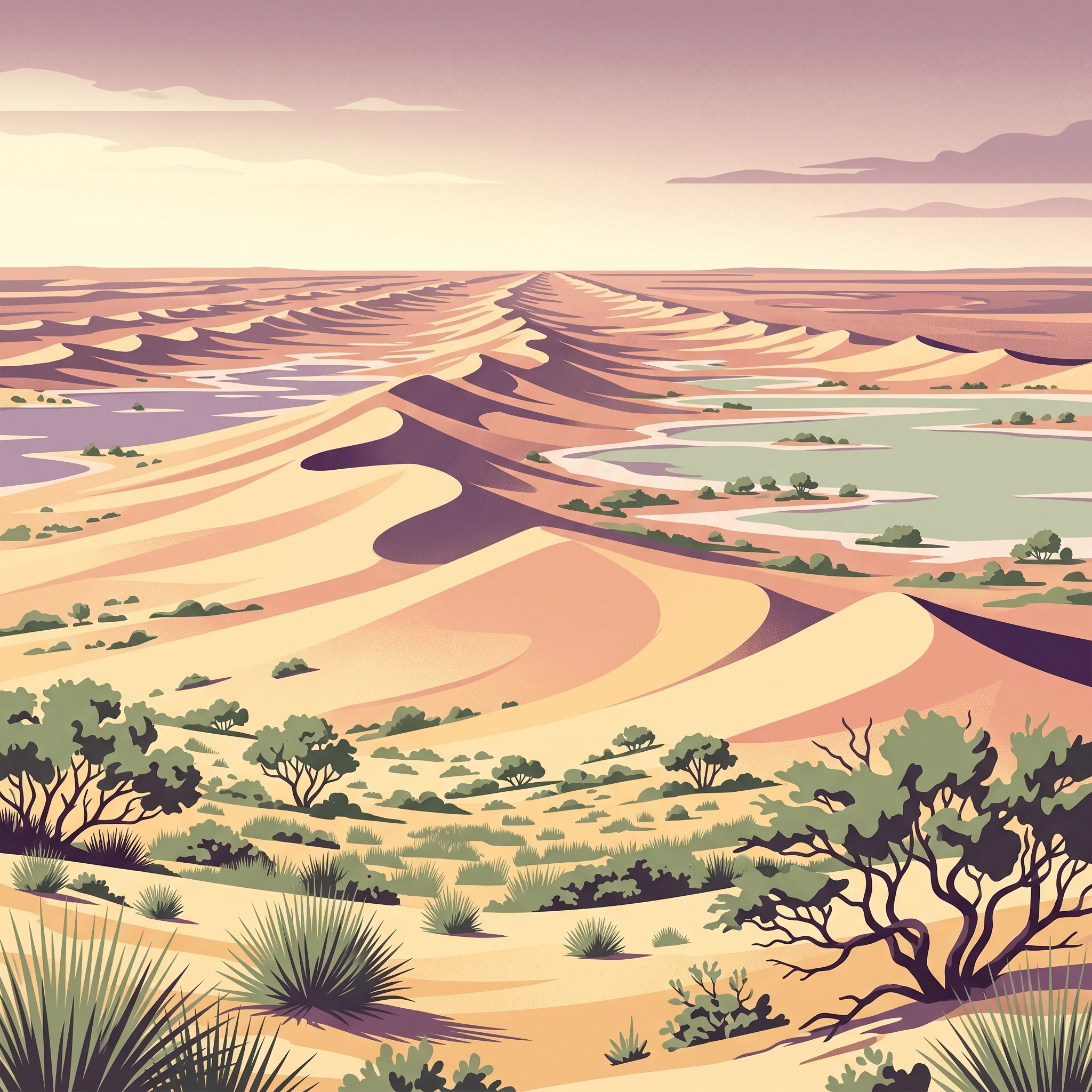
The primary experience of visiting Munga-Thirri-Simpson Desert National Park is dictated by the interaction between the vast, parallel red sand ridges and the seasonal temperature limits that govern human safety. Because the park functions as an IUCN Category Ia strict nature reserve, activities are intentionally limited. The landscape does not support traditional bushwalking, as there are no established trails or tracks. Instead, the park is defined by its 4WD accessibility, which serves as the primary method for traversing the massive, dune-dominated terrain.
Visiting during the cooler months, generally from May to August, provides the necessary environmental stability to engage with this environment. During this window, the daytime mean temperatures range from approximately 13 degrees Celsius to 17 degrees Celsius. This reduction in heat makes the physical exertion required for managing a vehicle through deep, soft sand significantly more viable. When temperatures rise, the sand itself can become more volatile, and the risk of vehicle-related issues increases, which is why exploration is restricted or discouraged during the hotter months.
Seasonal Constraints on Desert Exploration
The ability to traverse the desert is fundamentally tied to the thermal cycle. From October through March, the park experiences maximum temperatures that frequently exceed 40 degrees Celsius, with peak averages reaching near 45 degrees Celsius in January. These extreme heat levels preclude most forms of active exploration, as the harsh conditions create significant risks for dehydration and physical exhaustion. Consequently, the park effectively closes or limits access during these months because the environment itself acts as a barrier to human presence. The period from late autumn into early spring offers the only defensible window for the core experience of navigating the dune systems by vehicle.
Observing the Desert Ecosystem
Visitors should calibrate their expectations regarding wildlife and scenic features based on the extreme aridity of the region. The park is characterized by spinifex grasslands and acacia woodlands that have evolved to survive in a highly arid climate. Ephemeral playa lakes, which appear during rare, high-rainfall events, are not seasonal features that can be scheduled for a visit. Instead, they remain a highlight of the landscape only when climate conditions align unpredictably. During the winter months of June and July, while the air is dry and daytime temperatures are moderate, the nocturnal temperatures drop to an average minimum of approximately 3 degrees Celsius. This provides a stark, clear atmosphere that contrasts sharply with the blistering daytime heat of the desert's active season. Experiencing the park requires accepting these volatile daily temperature swings as a constant, influencing how visitors approach their day, from the early morning light to the cold desert nights.
Visitor Priorities
Best Time to Visit Munga-Thirri-Simpson Desert National Park for Specific Preferences
Navigating for Milder Temperatures
If your primary objective is to avoid the extreme heat that characterizes much of the year in the Simpson Desert, the window from June to July offers the most stable conditions. While the daytime maximums remain comfortable, usually averaging between 28 degrees Celsius, the true appeal for those seeking mild conditions is the reliable absence of the oppressive heat waves common in the shoulder seasons. The trade-off for this daytime comfort is significant nocturnal cold. Temperatures can frequently drop near or below freezing, requiring specialized camping equipment and thermal clothing designed for sub-zero conditions. Visitors prioritizing mild daytime air must be prepared for the rapid thermal transition that occurs once the sun dips below the dune horizon.
Prioritizing Longer Daylight for Navigation
For travellers who require more daylight for driving the park's 4WD tracks, the transition period of late August offers a distinct advantage. While July provides the coolest air, daylight hours are at their shortest, often dipping to approximately 10.5 hours. By late August, the daylight duration extends toward 11 hours and beyond, providing a slightly larger margin for completing long distances across the sand ridges before nightfall. This is a subtle but essential calculation, as the park's vast scale requires consistent daily progress to reach designated stopping points. The compromise is a marginal increase in daytime maximum temperatures compared to the peak of winter, though it remains far more manageable than the mid-spring heat that follows in September.
Managing the Risk of Aridity
Visitors who prioritize drier conditions often mistakenly aim for the peak of summer, unaware that the desert's extreme heat renders travel dangerous or impossible. True dryness in this environment is best experienced during the mid-winter months of July and August. While the relative humidity remains low year-round, July and August combine lower average maximum temperatures with minimal precipitation levels, often reaching the lowest monthly rainfall normals of the year. This period provides the most predictable environment for those concerned about vehicle traction on sandy tracks, as moisture in the air or recent, albeit rare, rain events are at their annual minimum. The trade-off remains the requirement for extreme cold-weather preparation during the nights, which can feel disproportionately harsh against the arid, clear-sky daytime conditions.
Balancing Experience with Environmental Constraints
It is important to emphasize that all preferences must be secondary to the environmental reality of the desert. Unlike parks with diverse activity options, this area is strictly focused on 4WD transit. If you are specifically seeking a window for prolonged outdoor exposure, you must adjust your expectations. Because the park is an IUCN Category Ia reserve, it does not support traditional hiking or long-term stationary camping during the warmer months. Any plan to visit for a specific preference, such as a desire for mild light or cooler air, should be firmly anchored in the June to August window. Attempting to force these preferences into other months based on individual comfort is not viable, as the temperature swings move from uncomfortable to dangerous very quickly.
Access and Operations
Seasonal access and planning for Munga-Thirri-Simpson Desert National Park
Accessing this vast wilderness is fundamentally different from visiting standard national parks. Because the area is classified as an IUCN Category Ia strict nature reserve, recreational access is secondary to conservation, and the landscape remains intentionally undeveloped. There are no marked roads, paved highways, or support facilities within the core of the park. Visitors must navigate through extreme dunal terrain, which requires significant 4WD experience, self-sufficiency, and advanced outback survival knowledge. If you have not previously managed extended travel through remote desert environments, this destination is not a suitable entry point for gaining that experience.
Navigational Requirements and Access Routes
Entry into the park is largely defined by the tracks that approach its borders, such as those from Oodnadatta via the Oodnadatta Track and the route passing Purni Bore, or from Birdsville in the east. These are not standard public roads. Route status can change rapidly based on localized rainfall, wind-driven sand accumulation on tracks, or damage from previous vehicles. You should never assume a route is open simply because the climate is within the seasonal travel window. Always consult the latest South Australia National Parks and Wildlife Service alerts, which provide the only authoritative word on whether tracks are currently accessible to the public.
Regulatory Requirements and Permits
Planning for a visit requires securing the appropriate authorizations well in advance. Unlike parks where you might pay a daily entry fee, access to this desert region typically requires a Desert Parks Pass. This permit is specifically designed to manage visitor numbers and support the maintenance of remote areas. It provides access for defined periods, but it does not act as a guarantee of entry during extreme weather events. You must verify current permit requirements, booking lead times, and any area-specific access restrictions directly through official South Australian government portals before finalizing your itinerary.
The Importance of Verification
Because the desert environment is highly dynamic, the information provided here serves as a structural overview rather than a set of current operational conditions. Infrastructure such as bore water points or track markers can shift or become unserviceable without warning. Even when the climate normals suggest the temperature is cooling, sudden heatwaves or unseasonal rain events can trigger immediate management-led closures to protect the sensitive dunal ecosystem. Always prioritize official bulletins over general planning resources to ensure your intended route remains legally accessible and physically traversable at the time of your trip.
Safety and Preparation
Seasonal Safety and Essential Preparation for Munga-Thirri-Simpson Desert
Adapting Gear to Desert Thermal Extremes
Preparation for the park requires a clear understanding of the dramatic diurnal temperature shifts characteristic of the arid interior. While daytime maximums during the recommended winter visiting months of May through August may hover between 28 and 32 degrees Celsius, the lack of atmospheric moisture often leads to rapid heat loss once the sun sets. Nighttime minimums frequently approach or drop below 3 degrees Celsius in June and July. This necessitates a modular approach to clothing: lightweight, breathable layers for active daytime exploration that can be quickly augmented with heavy thermal insulation for the cold desert nights.
Navigating Arid Wind and Sun Exposure
Although wind speeds across the desert fluctuate, the persistent, dry air and high UV index during daylight hours remain constant environmental factors regardless of the season. The relative humidity, which drops significantly outside of the mid-winter window, exacerbates moisture loss for the body. Travelers must prioritize sun protection strategies that account for the reflection of light off the extensive, light-colored sand dune systems. Because the park is a remote IUCN Category Ia nature reserve with limited infrastructure, visitors are responsible for their own environmental management. This includes planning for prolonged exposure and having the means to protect against high-wind events that can occur during transition months, potentially impacting visibility on sandy tracks.
Essential Communication and Self-Sufficiency
There is no mobile phone reception within the park, meaning standard cellular devices are insufficient for safety and communication. Preparation must include the acquisition of reliable, independent satellite communication equipment to monitor weather alerts, track changing road conditions, and reach out in the event of an emergency. Because the park's fragile ecosystem relies on minimal human impact, visitors must practice strict self-sufficiency. This involves bringing sufficient water and food supplies to remain secure for an extended period, accounting for the possibility that track conditions could shift due to localized weather events or management closures.
Verifying Conditions Before Departure
Climate data provides a guide to long-term patterns, but individual days within the desert are subject to volatility. Before departing, you must consult current official park alerts and regional weather forecasts to verify that tracks are open and that no severe fire or storm warnings are in effect. Because the environment is strictly protected, access can be revoked abruptly based on weather data that overrides general seasonal expectations. Always check the South Australian government parks website or relevant authority notifications for the latest, site-specific safety guidance before entering the region.
Trip decision
Choosing the best time to visit Munga-Thirri-Simpson Desert National Park
Deciding when to visit this vast protected area requires balancing personal endurance against the unforgiving reality of a desert climate. The primary decision factor is the window between May and August, which provides the only reliable period for safe navigation. Outside of these months, the combination of extreme daytime heat and potential track closures makes visiting hazardous and often impractical. Choosing the right time within this four-month window depends on whether you prioritize thermal stability or daylight hours for travel. June and July offer the most consistent, cooler daytime conditions, though these months bring the highest risk of near-freezing temperatures at night. If you prefer to mitigate the risk of overnight cold, August serves as a practical compromise, providing slightly warmer nights while still maintaining manageable daytime temperatures that avoid the dangerous heat spikes seen in the shoulder seasons of April and September.
Your decision-making process should begin by assessing your level of self-sufficiency. Because this is a strict nature reserve, there are no amenities to mitigate poor timing. A visit during the peak of the winter window is not merely a preference for milder weather, but a functional requirement for safe movement across the dunal landscape. If your schedule forces you toward the boundaries of the recommended season, you must be prepared to cancel or delay your trip based on current environmental alerts. Weather patterns are not guarantees, and the transition into or out of the winter months can bring sudden, unseasonable heat that renders even well-planned trips dangerous.
Finalize your travel dates only after confirming the operational status of the routes you intend to traverse. While the winter months are the standard for visitation, the actual viability of a trip relies on conditions that change daily. Check the most recent information from the relevant park authorities regarding access, fire danger ratings, and track closures. By focusing on the May to August period, you align your trip with the only season where the environment is less likely to obstruct your path, allowing you to prioritize the safety and logistical preparation necessary for such an remote destination. Use the climate normals to set your expectations for a range of temperatures, but always rely on real-time forecasts to guide your final decision on whether to depart.