Why Nyungwe Forest National Park stands out
Nyungwe Forest is renowned for its extraordinary primate populations, particularly the large colonies of chimpanzees and Angola colobus monkeys that inhabit the canopy. The forest supports the highest concentration of primate species found anywhere in Africa, with 13 documented species including the rare L'Hoest's monkey, golden monkey, and Hamlyn's monkey. It is also celebrated as one of the most important birdwatching destinations on the continent, harboring over 300 bird species with 30 Albertine Rift endemics. The park's distinction as the best-preserved montane rainforest in Africa, combined with its UNESCO World Heritage status, makes it a cornerstone of regional conservation and a flagship for Rwanda's eco-tourism industry.
Nyungwe Forest National Park history and protected-area timeline
Nyungwe Forest Reserve was established in 1933 by the Belgian colonial government amid growing concern about accelerating forest conversion to agricultural land in Rwanda during the 1920s. Colonial regulations prohibited clearing forests for agriculture while preserving community rights to collect firewood and permitting commercial exploitation of valuable hardwood timber, though enforcement remained inconsistent. Following Rwanda's independence in 1962, forest reserves fell under the jurisdiction of the Ministry of Agriculture. The period from 1958 to 1973 saw significant forest loss, with Nyungwe reduced by over 150 square kilometers due to fires, logging, hunting, and small-scale agriculture. By 1969, elephant populations had declined dramatically, and the last buffalo was killed in 1974. In 1984, biodiversity surveys conducted by the Wildlife Conservation Society documented colobus groups of up to 400 individuals, an unprecedented finding. The 1994 genocide devastated the country and destroyed research facilities at Uwinka, though park staff remained to protect the resource. The park began systematic recovery in 1995, and in 2005 it was officially designated as a national park. African Parks assumed management in 2020 through a 20-year agreement with the Rwanda Development Board.
Nyungwe Forest National Park landscape and geographic character
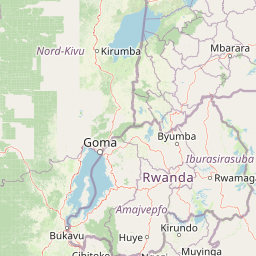
Nyungwe Forest occupies a dramatic mountainous landscape in southwestern Rwanda, characterized by steep ridges, deep valleys, and cascading streams that descend from the central highlands. The terrain is bisected by numerous rivers and streams that have carved intricate drainage patterns through the ancient rainforest. Mount Bigugu, rising to 2,921 meters, dominates the eastern section of the park and provides sweeping views across the forest canopy to Lake Kivu and the Democratic Republic of the Congo beyond. The park's topography creates a mosaic of microclimates and habitats, from the misty, cool conditions of the upper montane forest to the warmer, more humid lower slopes. Bamboo forest zones interrupt the evergreen canopy in certain areas, creating distinct visual and ecological character. The landscape also includes extensive swampy areas and bogs that serve as critical water storage and filtration systems.
Nyungwe Forest National Park ecosystems, habitats, and plant life
The ecological character of Nyungwe Forest is defined by its status as the most intact montane rainforest ecosystem in Africa. The forest represents a critical stronghold for Albertine Rift montane forest species, harboring more endemic species than any other surveyed forest in this mountain range. The park's vegetation includes tall primary forest trees exceeding 50 meters in height, dense understory layers, and open bamboo thickets. The combination of high rainfall, persistent mist, and nutrient-rich soils supports extraordinary plant productivity and diversity. The forest sits within a transitional zone where Central African and East African floral provinces meet, creating a unique blend of species assemblages. This ecological crossroads position, combined with the elevational range, produces remarkable habitat diversity within a relatively compact area.
Nyungwe Forest National Park wildlife and species highlights
Nyungwe Forest contains one of the highest concentrations of primate species in Africa, with 13 species documented within the park boundaries representing approximately one-quarter of all primate species found on the entire continent. Chimpanzee populations thrive throughout the forest, and the park supports some of the largest known social groups. The Angola colobus monkey, now extinct in its namesake country due to intensive hunting, maintains significant populations here in groups that can exceed 400 individuals, a remarkable aggregation unique to Nyungwe. The bird fauna includes over 300 species with 30 Albertine Rift endemics such as the Rwenzori turaco and several sunbird species. The park also supports 85 mammal species, 38 reptile species, and 32 amphibian species, many of which are restricted to the Albertine Rift ecoregion.
Nyungwe Forest National Park conservation status and protection priorities
Nyungwe Forest National Park represents a conservation priority of global significance, recognized by its 2023 UNESCO World Heritage inscription. The park protects what is considered the best-preserved montane rainforest in Africa and serves as a critical refuge for numerous species with extremely limited distributions. The Albertine Rift montane forests are identified as a biodiversity hotspot of global importance, and Nyungwe stands as one of its largest and most intact remaining fragments. The presence of 13 primate species, including several threatened species, makes the park essential for primate conservation in Africa. African Parks' management partnership, established in 2020, brings professional conservation expertise and sustainable financing to ensure long-term protection. The park generates significant revenue for Rwanda's economy while supporting conservation programs, infrastructure development, and community livelihoods.
Nyungwe Forest National Park cultural meaning and human context
While Nyungwe Forest is primarily valued for its ecological significance, the forest has historical connections to local communities who traditionally relied on its resources for honey collection, woodcutting, and subsistence activities. These traditional uses were incorporated into the colonial-era regulations that governed the forest reserve, allowing community access for firewood collection while restricting agricultural conversion and commercial timber extraction. The forest holds cultural significance for surrounding communities, though the primary value today lies in conservation and eco-tourism rather than traditional resource extraction.
Top sights and standout views in Nyungwe Forest National Park
Nyungwe Forest offers exceptional chimpanzee tracking experiences through guided activities that provide intimate encounters with these intelligent primates in their natural habitat. The park's canopy walkway, suspended high above the forest floor, provides unprecedented access to the otherwise inaccessible upper forest layers and panoramic views across the treetops. Birdwatchers find particular value in the park's 30 Albertine Rift endemic species, including specialized sightings of rwenzori turacos, great blue turacos, and a diversity of sunbirds. The trail system, developed from 1987 onward from the Uwinka center, allows access to waterfalls, tea plantations at the park edges, and scenic viewpoints overlooking the Congo-Nile watershed. The recent UNESCO World Heritage designation elevates the park's international recognition and reinforces Rwanda's commitment to preserving this irreplaceable ecosystem.
Best time to visit Nyungwe Forest National Park
The dry seasons from June to September and December to February generally offer the most favorable conditions for wildlife viewing and hiking in Nyungwe Forest. During these periods, trail conditions are more accessible and wildlife tends to concentrate near water sources, making chimpanzee and primate tracking more productive. The wetter months from March to May and October to November bring heavier rainfall that can make trails slippery and visibility reduced, though the forest remains lush and green. The monsoon seasons also bring increased mist and cloud cover to the higher elevations, creating the atmospheric conditions that define the montane rainforest environment. Visitors seeking to see primates should be prepared for variable weather regardless of season, as the forest's elevation creates its own climate patterns distinct from the surrounding lowlands.