Why Pituamkek National Park Reserve stands out
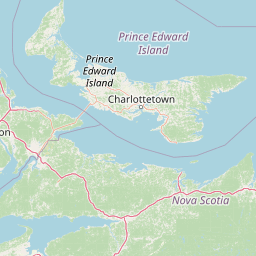
Pituamkek is best known for its distinctive barrier island chain that forms a natural protective barrier along Prince Edward Island's Gulf of St. Lawrence coast. The park preserves the Cascumpec, Conway, and Malpeque Sand Hills, which support significant dune ecosystems and provide critical habitat for threatened species including the piping plover and little brown bat. The area contains Iron Rock, an unusual igneous rock formation representing the province's only volcanic incursion. The park is also notable for its deep Mi'kmaq heritage, with the name Pituamkek meaning "at the long sand dune" and archaeological evidence of Indigenous use spanning four millennia. The 2024 establishment represents a modern model of Indigenous-Canada co-management in national park creation.
Pituamkek National Park Reserve history and protected-area timeline
The history of Pituamkek stretches back at least 4,000 years, with archaeological evidence confirming continuous Indigenous presence and use of the barrier islands as traditional hunting and fishing grounds from the Woodlands period through post-European contact. The Mi'kmaq name Pituamkek, meaning "at the long sand dune," reflects the deep cultural connection between Indigenous peoples and this coastal landscape.
In 1942, the Canadian government purchased Hog Island to be added to the nearby Lennox Island First Nation, though the purchased land was never formally designated as a reserve. On December 3, 1996, the Lennox Island First Nation submitted a Specific Land Claim over Hog Island to Canada, initiating a process that would eventually intersect with broader conservation negotiations.
The modern protected area movement began in 2009 when Mi'kmaq band governments of Prince Edward Island started lobbying provincial and federal governments for formal protection of the land. That same year, the Nature Conservancy of Canada and Island Nature Trust began purchasing land on the Cascumpec and Conway Sand Hills to support conservation objectives. In 2006, representatives from the Lennox Island and Abegweit First Nations along with the Canadian Museum of Civilization conducted a survey identifying several archaeological sites, including a shell midden dating to 2,300 years before present known as pitawelkek ("where tea is made"), which showed evidence of seasonal fishing, shellfish harvesting, seal and walrus hunting, and tool-making activities.
A feasibility assessment for a new national park reserve was announced on August 14, 2019. The 2024-25 Canadian federal budget, released on April 16, 2024, committed CA$71.9 million over twelve years to establish the park reserve, plus CA$7.5 million annually for operations. The park reserve was formally established through the co-management agreement signing on July 4, 2024.
Pituamkek National Park Reserve landscape and geographic character
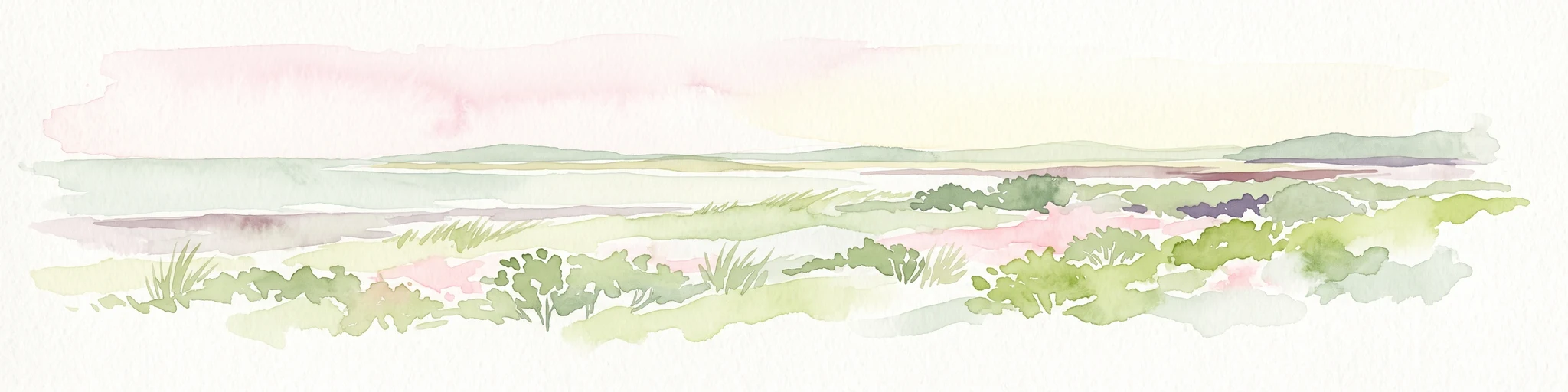
The landscape of Pituamkek National Park Reserve is defined by its dynamic barrier island system, a chain of sand deposits that parallel the Prince Edward Island coast and separate shallow bays from the open waters of the Gulf of St. Lawrence. These barrier islands represent a constantly evolving coastal environment shaped by wind, waves, and tidal forces. The 50-kilometre chain includes three main dune complexes: the Cascumpec Sand Hills in the northwest, the Conway Sand Hills occupying the central section, and the Malpeque Sand Hills in the southeast.
The sand dunes rise above the surrounding coastal plain, creating a distinctive topography that supports specialized plant communities adapted to sandy, exposed conditions. Between the barrier islands and the mainland lie Cascumpec Bay and Malpeque Bay, both shallow marine environments that contribute to the ecological richness of the region.
One of the most distinctive geological features within the reserve is Iron Rock, an unusual igneous rock formation that represents the only volcanic incursion in Prince Edward Island. This ancient volcanic remnant stands as evidence of the deep geological processes that shaped the region long before the contemporary coastal dune systems developed. The combination of dune systems, tidal bays, and this rare volcanic formation creates a landscape of considerable scientific and aesthetic interest.
Pituamkek National Park Reserve ecosystems, habitats, and plant life
The nature of Pituamkek centers on a complex coastal ecosystem where dune habitats, marine wetlands, and tidal flats support remarkable biodiversity. The barrier islands and their associated sand hills provide critical habitat for specialized plant species adapted to the challenging coastal environment, including dune grasses and salt-tolerant vegetation that stabilize the shifting sands.
Cascumpec Bay and Malpeque Bay, which the barrier islands help protect from direct Gulf of St. Lawrence exposure, have been designated as Important Bird Areas, recognition of their significance for migratory and nesting bird populations. The sand dunes within the park reserve serve as important nesting grounds, providing protected locations where ground-nesting birds can raise their young away from human disturbance and many predators.
The dune ecosystems support several threatened species, most notably the piping plover, a small shorebird that breeds on sandy beaches and is listed as a species of conservation concern across its range. The little brown bat, another species of note found within the reserve, occupies the dune areas where suitable roosting habitat exists. These species represent the ecological values that the protected area designation aims to preserve, ensuring that the coastal habitats remain functional for generations to come.
Pituamkek National Park Reserve wildlife and species highlights
The wildlife of Pituamkek reflects the rich biodiversity of Prince Edward Island's northern coastal zone. The sand dune environments provide crucial breeding and nesting habitat for the piping plover, a small shorebird whose populations have faced significant declines across North America, making the protected dunes essential for species survival. The little brown bat, a common but increasingly concerning species due to white-nose syndrome affecting bat populations elsewhere, finds suitable roosting habitat within the dune complex.
The bays separated by the barrier islands, particularly Cascumpec Bay and Malpeque Bay, support diverse marine and bird communities. As Important Bird Areas, these waters attract migratory waterfowl, shorebirds, and seabirds throughout the year, with seasonal concentrations during spring and fall migrations providing spectacular birdwatching opportunities. The intertidal zones support clam beds and other invertebrates that sustain foraging bird populations and represent traditional harvesting areas for local communities.
Historical records indicate that the islands supported populations of seal and walrus in times past, though the current status of these marine mammals in the area would require more recent survey data to characterize accurately. The overall wildlife community reflects the transition between terrestrial dune ecosystems and marine coastal environments that defines this distinctive protected area.
Pituamkek National Park Reserve conservation status and protection priorities
Pituamkek National Park Reserve represents an important conservation achievement for several interconnected reasons. The protected area preserves the last significant chain of barrier islands and sand dune systems along Prince Edward Island's north coast, ensuring that these dynamic coastal ecosystems remain intact against development pressures that have altered much of the island's shoreline. The establishment of the park provides formal federal protection for critical piping plover habitat, contributing to recovery efforts for this threatened species across its Canadian range.
The co-management structure between Parks Canada and the Mi'kmaq of Prince Edward Island represents a significant evolution in Canadian protected area management, moving toward models that recognize Indigenous governance and knowledge systems. This approach acknowledges that the ecological values of the area are inseparable from the cultural values that Indigenous peoples have maintained over millennia.
The financial commitment of CA$71.9 million over twelve years for establishment and CA$7.5 million annually for operations demonstrates a substantial federal investment in both the ecological and cultural dimensions of this protected area. The ongoing boundary finalization process indicates that the protected area may expand further, potentially increasing the conservation footprint and protection of additional coastal habitats.
Pituamkek National Park Reserve cultural meaning and human context
The cultural context of Pituamkek is profoundly shaped by millennia of Mi'kmaq presence and continued connection to this coastal landscape. The name Pituamkek itself, meaning "at the long sand dune" in the Mi'kmaq language, reflects a worldview that centers the landscape as part of cultural identity rather than separate from it. Archaeological evidence of Indigenous use dates to approximately 4,000 years before present, with continuous occupation and use through the Woodlands period and into the historical era following European contact.
The 2006 archaeological survey conducted jointly by the Lennox Island and Abegweit First Nations and the Canadian Museum of Civilization revealed sites of significant cultural value. Among these was the pitawelkek shell midden, dating to 2,300 years before present, named for the tea-like color of the sediment and showing evidence of seasonal habitation for fishing, shellfish harvesting, seal and walrus hunting, and tool-making activities including pottery production.
The park's establishment through a co-management agreement acknowledges the Mi'kmaq as partners in stewardship rather than stakeholders to be consulted, representing a meaningful shift in how protected areas interact with Indigenous communities. The continued involvement of the Lennox Island and Abegweit First Nations in managing the reserve ensures that Indigenous knowledge and perspectives inform ongoing management decisions.
Top sights and standout views in Pituamkek National Park Reserve
Pituamkek National Park Reserve stands as Canada's newest national park, protecting a rare barrier island chain along Prince Edward Island's Gulf of St. Lawrence coast. The 50-kilometre stretch of sand hills and islands represents the last significant undeveloped coastal dune system in the province. The park features Iron Rock, the province's only volcanic rock formation, a geological anomaly that provides insight into the ancient volcanic history beneath the island. The area serves as critical habitat for piping plovers and other threatened species, with both adjacent bays designated as Important Bird Areas. The 2024 establishment represents a groundbreaking co-management partnership between Parks Canada and the Mi'kmaq of Prince Edward Island, the first new national park in Canada in years and a model for Indigenous partnership in protected area stewardship. Archaeological evidence documents 4,000 years of continuous Indigenous connection to these lands.
Best time to visit Pituamkek National Park Reserve
As a newly established park reserve with boundaries still being finalized, visitor infrastructure and programming for Pituamkek will likely develop over coming years. The coastal location means that visiting during the warmer months from May through September offers the most comfortable conditions for exploring the outdoor environments. The spring migration period in April and May brings heightened bird activity to the bay areas, while late summer provides opportunities for observing shorebird populations as they prepare for their southward migration. The barrier islands and beach environments are most accessible during low tide periods, when the sand flats and tidal zones expand. Visitors interested in experiencing the cultural dimensions of the park should note that any future interpretive programming will likely reflect the Mi'kmaq perspective and knowledge systems that are central to the co-management approach.