
Mori Atlas logo
Park guides

Explore detailed thematic guides covering visit timing and regional park characteristics

Ranthambore National Park: Comprehensive Guide Collection for Rajasthan Protected Lands

Access a structured collection of thematic resources for Ranthambore National Park in Rajasthan. These guides offer focused perspectives on seasonal visit planning and environmental characteristics within the dry deciduous forest and rocky terrain of this tiger reserve.

Related tags

Tiger ReserveDry Deciduous ForestRajasthan National ParkProject Tiger ReserveWildlife Conservation

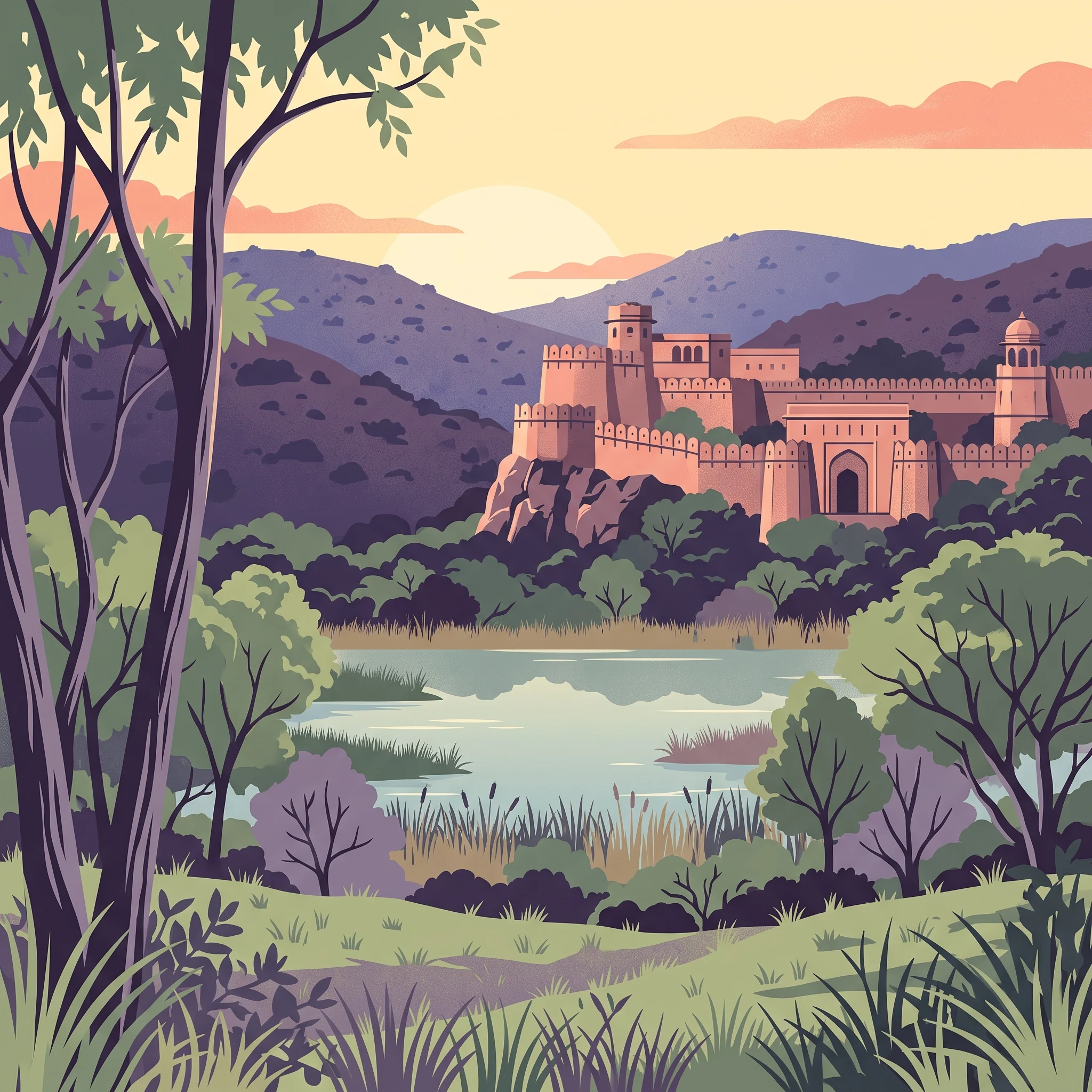
Royal tiger reserve blending ancient fort ruins with dry deciduous forests in Rajasthan

Ranthambore National Park

Ranthambore National Park occupies a significant position in India's protected area network, representing a crucial conservation landscape in the semi-arid zone of Rajasthan. The park's geography is defined by a complex topography of rocky hills, steep cliffs, narrow valleys, and flat plateaus interspersed with numerous seasonal and perennial water bodies. The Aravalli range, one of the oldest mountain ranges in the world, forms the backdrop to this landscape, contributing to the park's rugged character. The park's boundaries are naturally delineated by two major river systems: the Banas River to the north and the Chambal River to the south, both of which support riparian ecosystems within the broader arid matrix. Within the park's perimeter, visitors encounter the imposing Ranthambore Fort, a medieval fortress that changed hands multiple times between Rajput rulers and Muslim sultans before becoming a prominent historical landmark. The fort houses several ancient temples, including those dedicated to Ganesh, Shiva, and Jain tirthankaras, adding a spiritual and architectural dimension to the wildlife experience. The park's ecological significance extends beyond its charismatic megafauna. It serves as a critical corridor connecting the tiger populations of central India with those in the northwestern region, facilitating genetic exchange essential for long-term population viability. The diverse habitats within the park, ranging from dense forest patches to open grasslands, support a wide array of species and maintain ecological processes that would otherwise be lost in this climatically challenging region.

Location
India
Park type
National park
Established
1980
Area
1,334 km²
Ranthambore National Park Protected Landscape
1 guide

Compare published thematic guides covering seasonal timing and wildlife observation conditions.

Ranthambore National Park Published Guide Collection and Topic Index

Published guides for Ranthambore National Park organize essential planning topics into focused resources covering seasonal timing and wildlife visibility. Specific thematic coverage helps readers evaluate optimal visiting periods ranging from winter months to warmer spring conditions.
MoriAtlas Explorer

Continue Exploring Ranthambore National Park's Mapped Terrain and Regional Geography

Delve deeper into the geographic identity and atlas significance of Ranthambore National Park. Understanding its protected boundaries, landscape character, and ecological context within Rajasthan provides essential insights for landscape and conservation studies. This park entry serves as a gateway to appreciating the structured geographic data available for this vital protected area.