
Planning Essentials
When to Visit Salamajärvi National Park: Core Seasonal Considerations
Deciding on the best time to visit Salamajärvi National Park involves navigating a profound transition between the long, luminous days of the northern summer and the stark, frozen quiet of the Finnish winter. Because this park protects vast, sensitive mire ecosystems and old-growth forests on the Suomenselkä watershed, your travel window dictates whether you experience the vibrant, accessible wetlands or a secluded, snow-bound wilderness that demands significant logistical preparation.
The Summer Advantage for Mire Exploration
For most visitors, the most favorable conditions occur from June through August. During these months, the park experiences its peak daylight, with the sun lingering for up to 19 hours a day in June. This extended light creates a practical window for traversing the roughly 60 kilometers of marked trails. The mire ecosystems, which define the park’s ecological character, are most navigable when the ground has thawed and dried sufficiently, allowing for easier access to the unique peatland flora and the diverse wildlife that thrives in these protected pockets. During this period, temperatures are at their most moderate, with summer mean temperatures comfortably above 13 degrees Celsius, creating a hospitable environment for hiking and wildlife observation, including the chance to spot the rare forest reindeer that seek refuge in these remote areas.
Navigating the Winter Trade-offs
Visiting during the colder months, particularly from November through March, transforms the park into an entirely different environment. The Suomenselkä highlands are prone to sub-zero temperatures that regularly drop well below negative 20 degrees Celsius, and the daylight hours shrink to as few as four or five per day by December. This is not a time for casual exploration, but rather a season for those seeking total isolation in a landscape dominated by snow and silence. Access becomes considerably more challenging as traditional trail navigation is hampered by deep snow, and the environmental requirements for safety increase exponentially. If you choose to visit during this period, you are trading the accessibility of summer for the peace of a pristine, undisturbed winter wilderness, provided you possess the necessary equipment and experience to manage harsh conditions.
Key Timing Factors in the Watershed Landscape
Two environmental drivers dictate the timing of your trip above all others: daylight availability and ground accessibility. Because the park sits on a continental divide, moisture and temperature patterns are often volatile during the shoulder seasons. Spring thaw can create saturated, impassable mire conditions, while autumn brings an increase in precipitation and falling temperatures that precede the permanent winter frost. Understanding these shifts is essential, as the park is designed to protect fragile peatlands that remain sensitive to human impact. Aligning your arrival with the appropriate season ensures that you can enjoy the wilderness safely while respecting the ecological integrity of the Suomenselkä region.
Seasonal Planning
Best Times to Visit Salamajärvi National Park for Different Experiences
Peak Summer for Mire Exploration and Trail Access
For most visitors, the period from late June through mid-August offers the most reliable window for accessing the park's extensive mire and forest trail network. During this interval, the park benefits from the highest average temperatures, which peak at around 16.2°C in July, and the most abundant daylight hours of the year. The long days, which stretch toward 20 hours in June, provide a significant practical advantage for hikers covering the park's 60 kilometres of trails. Because these wetlands are ecologically sensitive, summer visiting cycles allow travellers to experience the landscape when the ground is most stable, though the damp nature of the environment remains a constant factor to consider regardless of the specific week.
Transition Periods for Wildlife and Scenery
May and September represent distinct shoulder seasons that offer a different pace for those interested in the park's unique biodiversity. In May, the landscape begins to emerge from the deep winter freeze, characterized by rapidly increasing temperatures and the lengthening of daylight hours from approximately 14 to over 17 hours. This is a time of renewal, but visitors should be prepared for lingering ground frost and variable conditions. Conversely, September brings a shift toward cooler temperatures, with averages dropping toward 9.1°C, and the onset of autumn foliage. This window is often preferred by those seeking solitude, as the primary summer rush subsides, allowing for a quieter observation of the local forest reindeer population as they prepare for the colder months.
The Winter Wilderness Experience
Between November and March, the park transforms into a frozen, low-light environment dominated by the Suomenselkä watershed's harsh winter climate. Temperatures frequently drop to extreme sub-zero levels, with January and February seeing average daily minimums near -24°C. This period is suited specifically for experienced winter adventurers equipped for deep cold and limited natural light, which reaches a low of just over four hours in December. While the snow-covered mires offer a profound sense of isolation and a rare perspective on the wilderness, the operational challenge is significantly higher compared to the summer months. Access during this timeframe requires careful planning around visibility, thermal management, and the realities of travel within a remote, uninhabited protected area where temperatures and ground conditions can shift rapidly.
Annual Climate Context
Understanding the Annual Climate and Weather Patterns in Salamajärvi National Park
Interpreting the Suomenselkä Watershed Climate
The climate at Salamajärvi National Park is defined by its position on the Suomenselkä watershed, a high-altitude drainage divide that significantly influences local weather patterns. Because this region functions as a continental divide, the environment experiences substantial seasonal shifts in moisture, daylight, and temperature. Visitors should understand that these climate normals, based on long-term data from 1991 to 2020, represent broad regional trends rather than daily weather forecasts. Conditions inside the park can fluctuate based on local terrain, specifically the proximity to the expansive mire ecosystems, which hold moisture differently than the surrounding old-growth forests.
The Shift from Deep Winter to Rapid Spring
January and February represent the core of the cold season, with mean temperatures hovering near -9.6 degrees Celsius and average minimums dropping toward -24 degrees. During these months, humidity remains exceptionally high, often exceeding 99 percent, which intensifies the perception of cold. Daylight is at its most limited during this period, with December offering only about 4 hours of light. As the calendar shifts into March and April, the duration of daylight increases dramatically, climbing from roughly 11 hours to over 14 hours. While April still brings freezing nights with average minimums near -8 degrees, the daytime maximums begin to climb into the low double digits, signaling the slow thaw of the watershed.
Peak Daylight and Summer Temperature Cycles
The most noticeable change in the park's climate occurs between May and July. By May, the daylight window expands to nearly 18 hours, providing a massive increase in solar energy. June and July are the warmest months, with mean temperatures typically between 13 and 16 degrees Celsius. These months also see the highest precipitation levels, with July averaging 3.39 millimeters of rain per day. Because the terrain is dominated by peatlands and bogs, this rainfall is crucial for the ecological health of the park but also means that ground saturation is at its peak. Despite the higher precipitation, the increase in wind and sun exposure helps manage humidity levels, which drop to their annual lows in June at approximately 78 percent.
Transition to Autumn and Winter Return
The transition into autumn is relatively swift. September marks a sharp decline in temperatures, with mean readings falling to around 9 degrees and the daily daylight duration retreating to 12 hours. By October, freezing temperatures return during the night, and humidity levels begin a steady climb back toward the saturation points seen in winter. November acts as a volatile bridge month where light diminishes rapidly to about 6 hours and wind speeds start to increase as the arctic air mass moves over the Suomenselkä region. Readers should be aware that these long-term normals cannot predict the specific arrival of snow or the freezing of forest lakes, as these vary annually. Travellers planning visits during any transition month should prioritize flexibility, as the climate data reflects averages that may not account for sudden cold snaps or unseasonably warm weather patterns.
Annual Climate Phases
Understanding Seasonal Transitions and Weather Cycles in Salamajärvi
The High Summer Growth Phase (June to August)
The most distinct climatic period at the park is the high summer window, characterized by the longest daylight hours and stable temperatures that rise into the mid-teens on average. During this phase, the Suomenselkä watershed landscape transitions into its most accessible state, with ground moisture levels beginning to recede from the spring thaw. This period is not a desert-dry season, but rather a time of active drainage and biological productivity. Travelers will notice that the mire ecosystems, which define the park’s visual character, are firmest underfoot during these months. This is the only phase where the combination of daylight and ambient warmth allows for extended wilderness exploration without the risk of rapid temperature drops associated with the sub-arctic climate.
The Autumnal Transition and Cooling Phase (September to October)
As daylight diminishes rapidly in September, the park enters a clear transitional phase. This period acts as a buffer between the summer warmth and the approaching freeze. Visitors often encounter higher relative humidity as the air cools, and early frosts become common toward the end of October. This is a quiet, atmospheric time where the park’s flora shifts and the moisture levels on the ground begin to rise again as evaporation rates drop significantly. It is marked by a noticeable cooling trend, where the daily mean temperature shifts from nearly 10 degrees in September toward the freezing point by the end of October. This phase is best understood as a period of environmental withdrawal, where the activity of summer flora gives way to the dormancy of late autumn.
The Deep Winter and Solitude Phase (November to March)
Winter in the watershed is not a single point but a prolonged five-month phase dominated by near-total darkness and sub-zero temperatures. From November through March, the park is defined by a consistent, cold climate where daylight hours remain low, often bottoming out at just over four hours in December. This period is defined by high relative humidity and consistent freezing conditions. Unlike many other Finnish regions, the topography of the Suomenselkä highlands keeps these temperatures consistently low, creating a stable, snow-covered wilderness. This phase requires the most rigorous preparation, as the environmental feedback is entirely focused on cold management and navigation within a landscape that is largely dormant and obscured by snow.
The Rapid Spring Thaw (April to May)
April and May constitute the final, most volatile phase of the annual cycle. This is a period of intense transition where the landscape emerges from deep winter. Temperatures climb rapidly, with mean values shifting from just above freezing to double digits as the snow cover recedes. This is the most dynamic time for local hydrology, as the melting snow saturates the mire complexes, often rendering trails muddy or difficult to navigate. Unlike the stable winter or the high-growth summer, this phase is defined by constant change and shifting ground conditions. It represents the shortest phase of the year but is critical for understanding the park’s environmental recovery before the next high summer begins.
Seasonal Experiences
Experiencing the Landscape and Wildlife of Salamajärvi National Park Throughout the Year
Navigating Mire Landscapes and Wetland Ecosystems
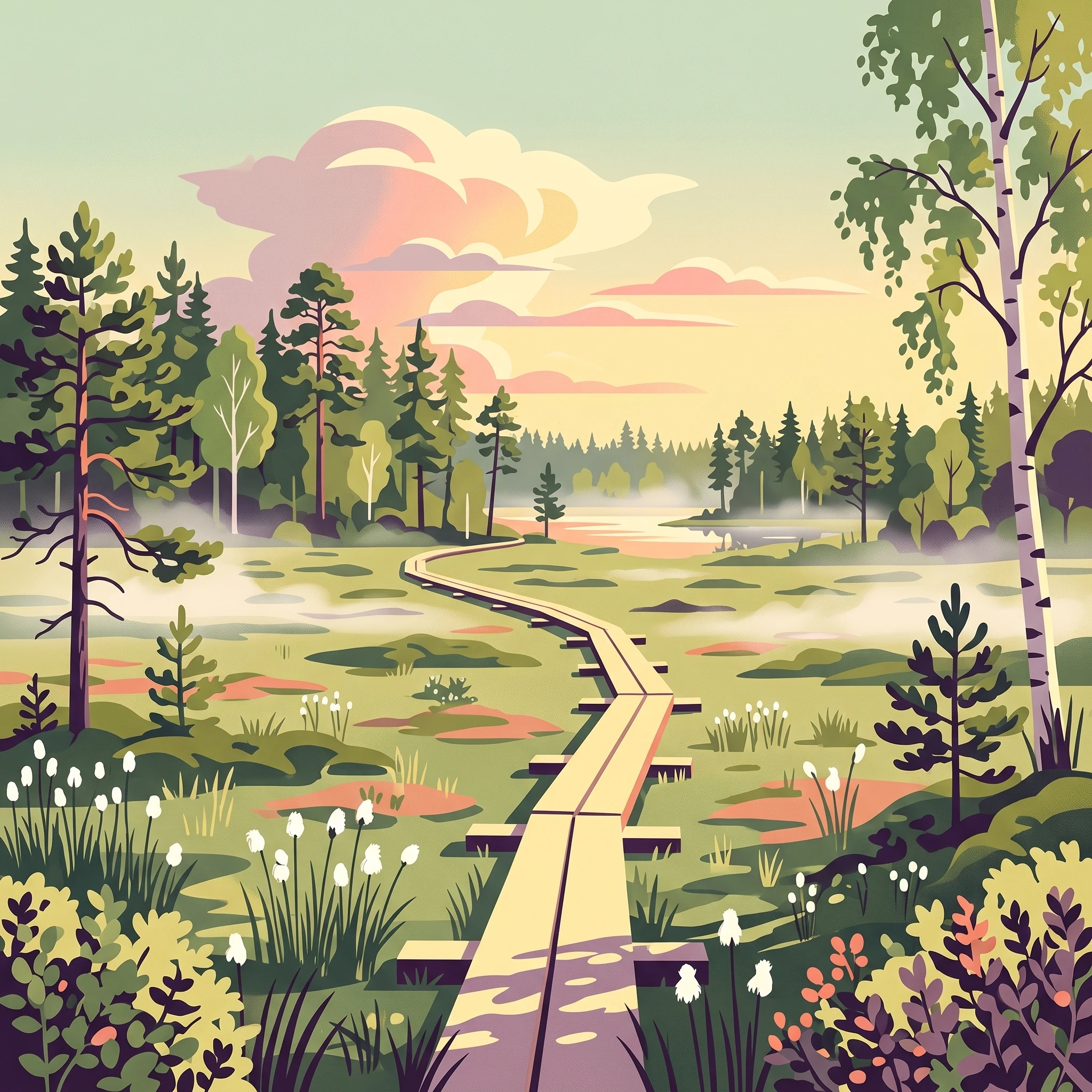
The experience of traversing the park is fundamentally defined by its peatland terrain. During the summer months, the mire ecosystems become accessible via boardwalks and trails, allowing visitors to witness the unique flora of these open fens and wooded bogs. Because these environments are delicate, timing your visit to match the periods when the ground is firm or protected by boardwalks is essential for both your safety and ecosystem preservation. Late spring and early autumn are notable for the visual transitions in these wetlands, as the mosses and shrubs change color, offering a distinct aesthetic that contrasts with the vibrant green of midsummer.
Observing Forest Reindeer and Wildlife
The presence of the wild Finnish forest reindeer is a defining feature of the park, and observing these animals is highly dependent on seasonal behavior and human activity levels. These reindeer often seek out the shelter of old-growth forests and the quiet seclusion of the mires. Visitors hoping to spot wildlife often find success during the quieter shoulder seasons, such as late spring or early autumn, when human trail traffic is lower than in the peak summer period. While tracks of predators like wolves and wolverines are documented within the area, sightings are exceptionally rare and require significant patience and knowledge of the terrain. As with all wildlife encounters, the timing of your visit should prioritize the natural rhythms of the animals rather than human convenience.
Seasonal Water-Based and Wilderness Activities
The park's water bodies, including lakes such as Koirajärvi, shape the visitor experience throughout the year. Fishing remains a popular pursuit from mid-June through mid-August, when the ice has fully receded and the waters are productive. Outside of this peak window, many of these same locations offer quiet spots for lakeside reflection or sauna use. Winter transforms these water features entirely, with ice fishing becoming a primary activity once the lakes reach a sufficient thickness. If you are planning to engage in water-related activities, be aware that certain zones within the park are subject to temporary access restrictions between mid-March and mid-July to protect nesting grounds and wildlife populations. Always verify these current local closures before finalizing your trip itinerary to ensure your chosen activities remain permissible during your dates.
Visitor Priorities
Choosing the Best Time to Visit Salamajärvi for Specific Experiences
Planning for Hiking and Mire Exploration
If your primary goal is to traverse the park's diverse mire ecosystems and utilize the full extent of the marked trail network, the window from late June through August provides the most reliable ground conditions. During these months, the daily mean temperatures hover between 13°C and 16°C, which minimizes the physiological stress of walking long distances. While summer precipitation averages are slightly higher than in early spring, the increased warmth aids in drying out the terrain, particularly on the duckboards and trails that cross the more delicate peatland sections. The trade-off for this accessibility is the presence of seasonal insects, which are most active during the peak of summer, necessitating appropriate protective clothing and preparation.
Targeting Milder Temperatures and Extended Daylight
Visitors seeking the longest possible daylight for extended outdoor sessions should prioritize the period between late May and early July. During this time, daylight hours reach their annual zenith, offering nearly 20 hours of light in June. This extended period is ideal for those who prefer to avoid the intensity of mid-afternoon heat while maximizing their time on the water or trails. However, the trade-off is the state of the ground during the early part of this window, as the residual effects of the spring thaw can lead to saturated trails and boggy sections on lower-lying paths. If mild, stable temperatures are a higher priority than absolute daylight duration, August offers a superior balance. By late summer, the humidity levels stabilize and the environment becomes more predictable, though daylight hours begin to decline noticeably toward September.
Seeking the Driest Conditions for Wilderness Transit
For travellers whose priorities are defined by minimizing exposure to precipitation, the late winter into early spring period provides the lowest monthly rainfall totals. March and April demonstrate the lowest precipitation averages, often under 1.7 mm per day. However, this is a significant trade-off in terrain stability. While the surface may be drier in terms of liquid rain, these months feature fluctuating temperatures that cycle around the freezing point, leading to unstable snow cover and potential icing on boardwalks. This period is better suited for cross-country skiing or snow-based activities rather than standard hiking, as the underlying mire remains frozen or waterlogged from the melt. Visitors planning for dry conditions must distinguish between the relative lack of liquid precipitation in winter and the actual ground accessibility required for specific activities.
Prioritizing Wildlife Observation and Natural Cycles
Observers interested in the park's reindeer and native bird populations should look toward the shoulder seasons, specifically September. As the summer activity levels subside, the park experiences a cooling trend with temperatures shifting toward a mean of 9°C. This period offers a unique quietude that is often absent during the high-summer months. The main trade-off here is the rapid reduction in daylight and the return of colder nighttime lows, which often dip toward freezing. Access remains open, but the shift in climate requires a more rigorous approach to equipment and thermal management compared to the relative ease of summer travel.
Visitor Access
Seasonal Access and Practical Planning for Salamajärvi National Park
Navigating Seasonal Trail Access
Access to the park's trail network is inherently linked to the state of the mire ecosystems and the Suomenselkä watershed. While the summer months from June to August typically provide the most reliable conditions for hiking across boardwalks and marked forest paths, the ground remains sensitive to moisture. During periods of heavy rain or following the spring snowmelt, certain low-lying sections may experience higher saturation, making footing uneven or potentially muddy. Travelers should approach trail planning with the expectation that seasonal shifts dictate which routes remain accessible and comfortable. Always consult the latest status updates via official park authorities before starting a hike, as trail conditions can change rapidly due to local weather events or infrastructure maintenance needs.
Visitor Facilities and Information Services
The Koirasalmi Nature Information Hut serves as a primary hub for visitors, though its operating hours are subject to seasonal changes rather than being open year-round. Services such as equipment rentals, including forest skis, snowshoes, and canoes, are tailored to the relevant time of year. Because these services are governed by local operators and administrative schedules, travelers must confirm current opening times and availability directly with the facility. Reliance on static online information or travel guides published in previous years is discouraged, as business hours and rental availability can be adjusted without public notice. If you require specific logistical support, such as guided tours or pre-booked hut access, reaching out to the management before your departure is the only way to ensure your needs are met.
Planning for Remote Wilderness Travel
Salamajärvi is a wilderness area where infrastructure is intentionally kept minimal to preserve the environment. While the network of marked trails allows for navigation across the mire landscapes, it is essential to recognize that public transport options to the park borders may be limited or non-existent depending on the season and local transport provider schedules. Visitors planning to reach the park by bus or other shared transit should verify current connections, as these services are often optimized for peak tourism windows and may not operate frequently, or at all, during the quieter winter months. Preparation for a visit involves acknowledging the distance from urban support systems and the necessity of self-sufficiency. If your itinerary depends on specific road access or shuttle services, contact the local municipal authorities or the official park website to verify current transit protocols and ensure your travel plan remains viable for your chosen dates.
Safety and Gear
Weather, Safety, and Seasonal Preparation in Salamajärvi National Park
Navigating Terrain and Temperature Fluctuations
Preparation for a visit to Salamajärvi hinges on understanding the physical demands of the Suomenselkä watershed. Because the terrain features extensive mire ecosystems and rugged, old-growth forest paths, surface conditions can change rapidly. During the spring thaw and following periods of high precipitation, ground moisture levels rise significantly, turning well-trodden trails into soft or muddy footing. Visitors should anticipate these variations and prioritize footwear that offers both support and moisture resistance. In winter, the same trails are often covered by a deep snowpack, shifting the primary challenge from surface moisture to cold-management and navigation.
Temperatures across the year oscillate between extreme sub-zero averages in the winter months and mild, occasionally warm conditions in mid-summer. Given these swings, layering is the most effective strategy. Even in summer, when daytime temperatures can feel comfortable, the ambient humidity of the peatlands can make evenings feel cooler than expected. Checking localized, current weather forecasts is essential before departure, as these records provide only long-term averages rather than real-time conditions. Visitors should remain flexible, as an unseasonable cold snap can occur even during warmer months, and sudden wind shifts are common in the more open, exposed mire areas.
Daylight Management and Orientation
Daylight hours are perhaps the most influential factor in your safety planning. In the depths of December, the park receives just over four hours of light, which necessitates careful planning of any outdoor activity to ensure you return to your vehicle or shelter well before sunset. Conversely, the long, bright days of June and July can occasionally lead to fatigue if visitors underestimate the distance of the trails they choose. Regardless of the season, do not rely solely on digital devices for navigation. While marked trails are clear, the remote character of the park means that mobile phone coverage can be inconsistent or absent in certain valleys or low-lying mire sections. Carrying a physical map and compass remains a standard safety practice, and visitors should inform a contact of their intended route and expected return time.
Wildlife Awareness and Minimal Impact
Safety in this park also involves respecting the forest reindeer and other wildlife. These animals are a defining feature of the wilderness, and maintaining a respectful distance is both a safety measure and a conservation requirement. During the spring and early summer breeding periods, sensitive zones may have specific restrictions to prevent human disturbance. Always adhere to signage at trailheads and check official park alerts for any temporary closures or guidelines regarding sensitive habitat areas. By remaining on marked paths, you protect the delicate peatland vegetation and ensure you stay within areas where help is more accessible if needed. Always verify the current status of park trails and service facilities through official sources, as site-specific conditions are subject to change throughout the year.
Final Decision Framework
How to Choose the Right Time for Your Salamajärvi Visit
Balancing Personal Priorities with Seasonal Realities
Determining the right time for your visit requires a clear assessment of how your interests align with the distinct environmental rhythms of the Suomenselkä watershed. There is no singular ideal window for every visitor, as the trade-offs between trail accessibility and the tranquil, snowy stillness of the wilderness create fundamentally different experiences. If your primary goal is to traverse the mire paths and experience the park during its most biologically active phase, the summer months offer the greatest accessibility. During this period, the extended daylight hours facilitate longer excursions, though you should be prepared for the ecological realities of a wetland environment, including the presence of insects and the importance of strictly adhering to marked routes to protect sensitive peatlands.
Weighing Light, Weather, and Access
For those who prioritize silence and the stark aesthetic of a frozen landscape, the winter months provide a unique opportunity to explore the park under quiet, sub-zero conditions. This choice demands a different set of expectations, as the limited daylight significantly restricts the time available for outdoor activities and necessitates advanced preparation for cold-weather navigation. Transition periods, such as the late spring thaw or the early autumn onset, serve as compromises that offer fewer crowds but require careful attention to ground conditions. During the spring, melting snow can lead to saturated trails and variable footing, while autumn brings cooler temperatures and earlier sunsets that shift the rhythm of daily park usage.
Making Your Final Decision
Your selection should ultimately reflect your comfort level with the park's climate normals. Remember that these figures represent long-term trends rather than specific weather forecasts. Regardless of when you choose to go, the integrity of your visit relies on your willingness to adapt to the conditions you find upon arrival. Before finalize your travel dates, consult official authorities for current trail status, specific seasonal alerts, and any closures that may impact your planned routes. By prioritizing your specific interests against the known environmental constraints of the region, you can align your visit with the type of wilderness experience that matters most to you, ensuring your expectations are well-grounded in the reality of this unique protected area.