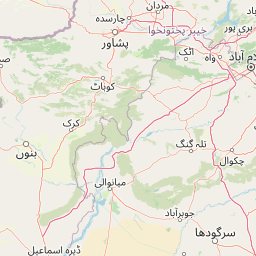
Why Salt Range National Park stands out
The park is primarily known for its geological setting within the Salt Range, one of Pakistan\'s most distinctive geological formations. The region contains significant salt deposits that have been extracted for centuries, and the landscape features characteristic domed salt formations, gypsum ridges, and fossil-rich sedimentary rocks. The area is also noted for its archaeological significance, with ancient Buddhist sites and historical mining operations in the surrounding region.
Salt Range National Park history and protected-area timeline
The establishment of Salt Range National Park reflects Pakistan\'s broader efforts to develop a comprehensive system of protected areas that encompass geological as well as biological diversity. The Salt Range has been an area of human activity for millennia, with evidence of ancient settlement, Buddhist monastic communities, and traditional salt mining operations. The formal designation of portions of this region as a national park represents relatively recent conservation efforts aimed at preserving both the natural landscape and the cultural heritage embedded in this geological province.
Salt Range National Park landscape and geographic character
The landscape of Salt Range National Park is defined by its characteristic salt domes and geological formations that rise prominently from the surrounding terrain. The topography features rolling hills, exposed rock formations, and the distinctive white and gray hues of salt and gypsum deposits. The semi-arid environment supports sparse vegetation adapted to the harsh conditions, with drought-resistant shrubs and grasses dominating the ground cover. The geological formations create a landscape of visual distinction, with the salt domes and mineral-rich strata offering evidence of the region\'s ancient geological history.
Salt Range National Park ecosystems, habitats, and plant life
The ecological character of the Salt Range area reflects its semi-arid setting and geological substrate. Vegetation in the region consists primarily of xeric (drought-adapted) plant communities adapted to limited rainfall and mineral-rich soils. The park\'s location within a geological formation rather than a typical ecological zone means that biodiversity documentation remains limited compared to more extensively studied protected areas in Pakistan. The area supports specialized plant species adapted to the unique soil conditions created by the salt and gypsum deposits.
Salt Range National Park wildlife and species highlights
Wildlife presence in the Salt Range area reflects the semi-arid and somewhat harsh environmental conditions of this geological landscape. Available documentation indicates that the area supports populations of adapted species including various rodents, reptiles, and bird species that have specialized to survive in the dry, mineral-rich environment. Specific detailed wildlife inventories for the national park boundaries are not extensively documented in available sources.
Salt Range National Park conservation status and protection priorities
Salt Range National Park represents a conservation designation aimed at protecting geological heritage alongside natural landscapes in a region that has historically been subject to mining and resource extraction. The protected area status reflects an awareness of the need to preserve both the geological formations and the natural ecosystems that exist within this distinctive landscape. The broader Salt Range region faces pressures from mining activities, and protected area status provides a framework for balancing resource use with conservation values.
Salt Range National Park cultural meaning and human context
The Salt Range holds significant cultural and historical importance beyond its geological significance. The region has been inhabited for thousands of years, with archaeological evidence of ancient Buddhist communities, historic temples, and traditional mining settlements. The salt deposits of the range have been exploited since antiquity, making this one of the world\'s oldest continuously mined salt sources. The cultural landscape includes remnants of various historical periods, from ancient Buddhist monasteries to more recent colonial-era mining infrastructure.
Top sights and standout views in Salt Range National Park
The most distinctive aspect of Salt Range National Park is its unique geological character, defined by salt dome formations and mineral deposits that create a landscape unlike any other in Pakistan. The park offers opportunities to observe geological processes and formations in a relatively accessible setting. The broader region contains archaeological sites and historical mining heritage that add cultural dimension to visits. The semi-arid landscape creates a distinctive visual environment with rolling hills and exposed geological strata.
Best time to visit Salt Range National Park
The optimal time to visit Salt Range National Park would be during the cooler winter months from November through March, when temperatures are more comfortable for outdoor exploration. Summers in this region can be extremely hot, making outdoor activities challenging. The winter period also offers clearer visibility for observing the geological formations and landscape. The semi-arid conditions mean that rainfall is limited throughout the year, reducing seasonal variation in accessibility.