
Why San Isabel National Forest stands out
San Isabel National Forest is best known for its extraordinary concentration of high-altitude peaks, including nineteen fourteeners and the highest summit in the Rocky Mountains. The forest's mountain terrain spans the Sawatch Range, the Collegiate Peaks, and the Sangre de Cristo Range, giving it a level of vertical relief and topographic variety that few other national forests match. Equally distinctive is the forest's wilderness character. Seven designated wilderness areas protect major portions of these mountains, including the Collegiate Peaks Wilderness, one of the most heavily used alpine wilderness areas in the country, and the Sangre de Cristo Wilderness, which extends into neighboring national park land. Together, these features make San Isabel a defining landscape of Colorado's high country.
San Isabel National Forest history and protected-area timeline
San Isabel National Forest was established on April 11, 1902, in the early years of the U.S. Forest Service's expansion across the American West. Its creation reflected the growing federal recognition that the mountainous forests of central Colorado played an essential role in protecting watersheds, supplying timber, and supporting the agricultural and ranching economy of the surrounding valleys. The forest's early management was oriented around these practical uses, with grazing, logging, and water conservation as central priorities.
Over the course of the twentieth century, San Isabel's role expanded significantly as outdoor recreation grew in importance. The rise of automobile travel, highway infrastructure, and Front Range population centers transformed the forest into a major recreation destination, with trails, campgrounds, ski areas, and scenic roads drawing visitors from across Colorado and beyond. Iconic high-country destinations within the forest, including Mount Elbert and the Collegiate Peaks, became focal points for hiking, climbing, and wilderness exploration.
The modern identity of the forest has also been shaped by a series of administrative and conservation milestones. San Isabel was brought into a combined management unit with Pike National Forest and the Cimarron and Comanche National Grasslands, which together share leadership and infrastructure. Seven wilderness areas have been formally designated within the forest, securing long-term protection for major portions of its alpine environment. Today, the forest stands both as a working landscape and as a centerpiece of Colorado's outdoor heritage.
San Isabel National Forest landscape and geographic character
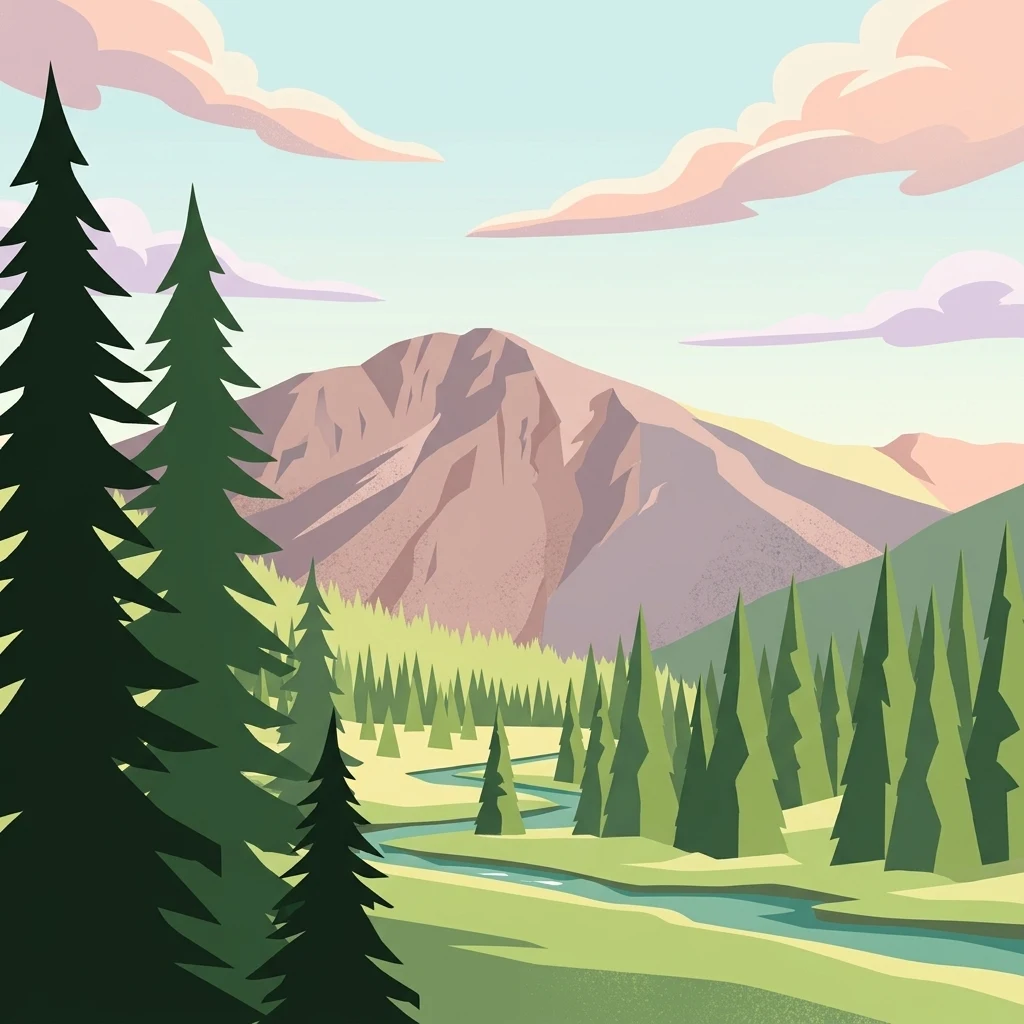
San Isabel National Forest is defined above all by its mountains. The forest holds large segments of the Sawatch Range, the backbone of central Colorado and home to many of the state's highest peaks, including Mount Elbert. The Sawatch are wide, broad-shouldered mountains with deep glacial valleys, and they give the forest much of its high-alpine character. Together with the Sawatch, the Collegiate Peaks add dramatically steep, pointed summits that are among the most visually striking in the southern Rockies.
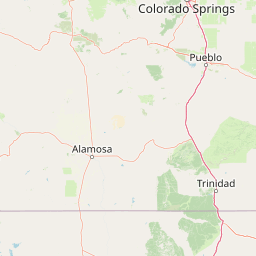
To the south and east, the Sangre de Cristo Range contributes an entirely different kind of mountain terrain. Long, narrow, and rugged, the Sangre de Cristo rise abruptly from the surrounding plains and valleys, with sharp ridgelines, deep cirques, and dramatic vertical relief. Large portions of this range fall within designated wilderness, preserving some of the wildest and least developed terrain in the forest. The Spanish Peaks, two prominent volcanic summits in the southern part of the forest, add a distinctive geological signature and are themselves protected as a wilderness area.
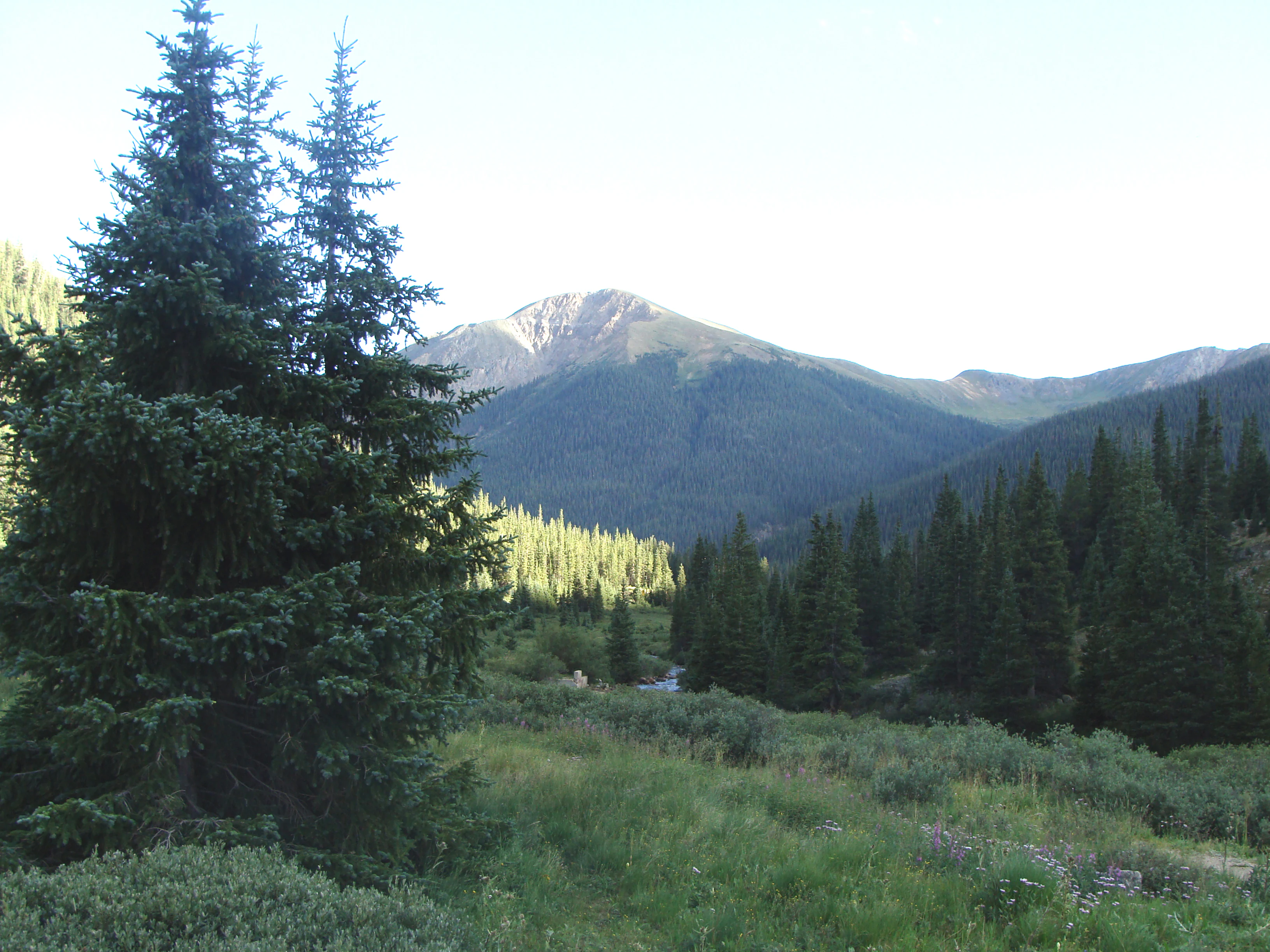
Between these ranges lie extensive forests of spruce, fir, pine, and aspen, interspersed with open meadows, beaver ponds, mountain lakes, and glacial moraines. Lower elevations give way to piñon-juniper woodlands and grassy foothills, while the highest slopes transition into alpine tundra, bare rock, and permanent snow. This diversity of terrain creates a landscape of extraordinary variety, where travelers can move from dry southern foothills to high alpine summits within a single national forest.
San Isabel National Forest ecosystems, habitats, and plant life
The ecological character of San Isabel National Forest reflects its dramatic elevation range. Lower elevations support stands of ponderosa pine, piñon, juniper, and Gambel oak, gradually giving way to mixed conifer forests at middle elevations. Higher slopes are dominated by Engelmann spruce, subalpine fir, and lodgepole pine, while aspen groves add seasonal color and ecological diversity across multiple elevation zones. At the very top of the forest's range, vegetation gives way to alpine tundra, krummholz, and exposed rock.
The forest's watersheds are among its most ecologically significant features. Snowmelt from the Sawatch and Sangre de Cristo ranges feeds major rivers, including the Arkansas, creating downstream ecological and agricultural value far beyond the forest's boundaries. Wet meadows, willow thickets, beaver ponds, and high mountain lakes provide habitat for a wide range of birds, mammals, and aquatic species, and they create wet microhabitats that contrast with the surrounding dry slopes.
Large contiguous blocks of wild habitat are preserved within the forest's seven wilderness areas, which help maintain ecological processes across a significant portion of the landscape. This protected network, combined with the varied topography, supports a level of biological diversity uncommon in managed mountain forests. Different wilderness areas represent different ecological templates, from the Collegiate Peaks' high alpine environment to the Sangre de Cristo's rugged southern slopes.
San Isabel National Forest wildlife and species highlights
Wildlife in San Isabel National Forest is shaped by the same elevation gradients and habitat diversity that define the rest of the landscape. Large mammals including elk, mule deer, bighorn sheep, and moose are found across many parts of the forest, with bighorn sheep especially associated with the rugged Sangre de Cristo Wilderness and the Spanish Peaks. Black bears inhabit the forested middle elevations, while mountain lions and, more rarely, lynx move through the more remote terrain. Mountain goats are found in several of the high alpine zones, particularly among the most rugged peaks.
Birdlife is equally diverse. The forest supports breeding populations of raptors such as golden eagles and peregrine falcons, both of which nest on high cliffs and crags. More broadly, the range of elevations and habitats creates niches for everything from mountain bluebirds and Clark's nutcrackers in alpine zones to warblers, woodpeckers, and nuthatches in the coniferous forests. Wet meadows and beaver-created wetlands support additional bird diversity, including waterfowl and shorebirds during migration.
Aquatic life is supported by the forest's many streams, lakes, and high alpine wetlands, which sustain populations of trout and other cold-water fish. These aquatic habitats depend heavily on the watershed protection provided by surrounding forest and wilderness lands, making the forest's ecological connectivity an important factor in sustaining fish populations. Together, these wildlife patterns make San Isabel one of the more notable wildlife habitats in the central Rockies.
San Isabel National Forest conservation status and protection priorities
San Isabel National Forest plays a significant role in conservation across the southern Rocky Mountains, both through its wilderness system and through the broader landscape values it protects. Its seven designated wilderness areas collectively preserve hundreds of thousands of acres of high-alpine and subalpine wilderness, conserving core habitat for species such as bighorn sheep, mountain goats, and raptors while also safeguarding water quality and ecological processes.
The forest's importance extends well beyond its boundaries. Because much of central and southern Colorado's water supply originates in the high country managed by San Isabel, the forest contributes directly to downstream water quality, agricultural water availability, and ecological function. Watershed protection is therefore a central element of conservation management, alongside habitat preservation for wildlife and the protection of scenic and recreational resources.
The forest also benefits from being part of a wider conservation network. Its wilderness areas connect ecologically with neighboring national forests, national park land at Great Sand Dunes National Park, and even with U.S. Fish and Wildlife Service holdings. Together, these linked landscapes form one of the more significant blocks of protected mountain habitat in the southern Rockies, providing resilience, connectivity, and long-term ecological security across a substantial portion of Colorado's high country.
San Isabel National Forest cultural meaning and human context
The lands that make up San Isabel National Forest have a long human history that predates federal forest designation. Indigenous peoples inhabited the mountain valleys and high passes of central Colorado for thousands of years, with cultural and seasonal use patterns tied closely to the elevation, water, and wildlife resources that the forest still protects. Later, Hispanic and Anglo-American settlement, ranching, and mining brought new layers of cultural presence, especially in the valleys near Leadville, Salida, and the upper Arkansas River corridor.
Mining heritage is especially visible in parts of the forest and its surroundings. Historic mining districts left a legacy of trails, abandoned structures, and place names that remain part of the forest's cultural landscape. Railways that once served ore shipments, such as routes that crossed the mountains near Poncha and La Veta Passes, are remembered today in the form of recreational routes and scenic byways.
Recreation culture also defines the modern context of the forest. San Isabel is a major destination for hikers chasing fourteeners, families camping along its reservoirs and rivers, hunters pursuing elk and deer in the surrounding forests, and anglers fishing its high mountain streams. This combination of historic and contemporary uses gives the forest a layered identity that reflects both its natural and its human dimensions.
Top sights and standout views in San Isabel National Forest
San Isabel National Forest stands out for its exceptional concentration of Colorado's highest peaks, including Mount Elbert, the highest point in the Rocky Mountains. Its wilderness system is another defining feature, with the Collegiate Peaks, Sangre de Cristo, Mount Massive, and Spanish Peaks wilderness areas together protecting a remarkable range of alpine and subalpine environments. The forest's mix of dramatic ranges, deep glacial valleys, and broad forests gives it a topographic richness that few other national forests in the region can match.
Equally important is the forest's accessibility and recreational reach. Combined management with neighboring Pike National Forest and the Cimarron and Comanche National Grasslands connects the high country to a wider network of public lands, while nearby towns, scenic byways, and long-distance trails make the forest a centerpiece of outdoor life in central Colorado.
Best time to visit San Isabel National Forest
San Isabel National Forest offers distinctly different seasonal experiences. Summer is the most popular time to visit, as most alpine trails, high passes, and fourteeners become accessible once the snow melts. Wildflower displays in mid to late summer and long daylight hours make this season especially appealing for hiking and mountaineering, though afternoon thunderstorms are common.
Fall brings cooler weather, fewer crowds, and vibrant aspen colors across the mid-elevation forests, with the Sangre de Cristo and Sawatch ranges offering some of the most celebrated autumn scenery in Colorado. Winter transforms the forest into a snow-covered landscape suited to cross-country skiing, snowshoeing, and snowmobiling, while spring remains a transitional period when lower elevations begin to green up and high-country roads are often still closed. Each season emphasizes a different dimension of the forest's character.