
Why Scheelhecke von Groß-Zimmern stands out
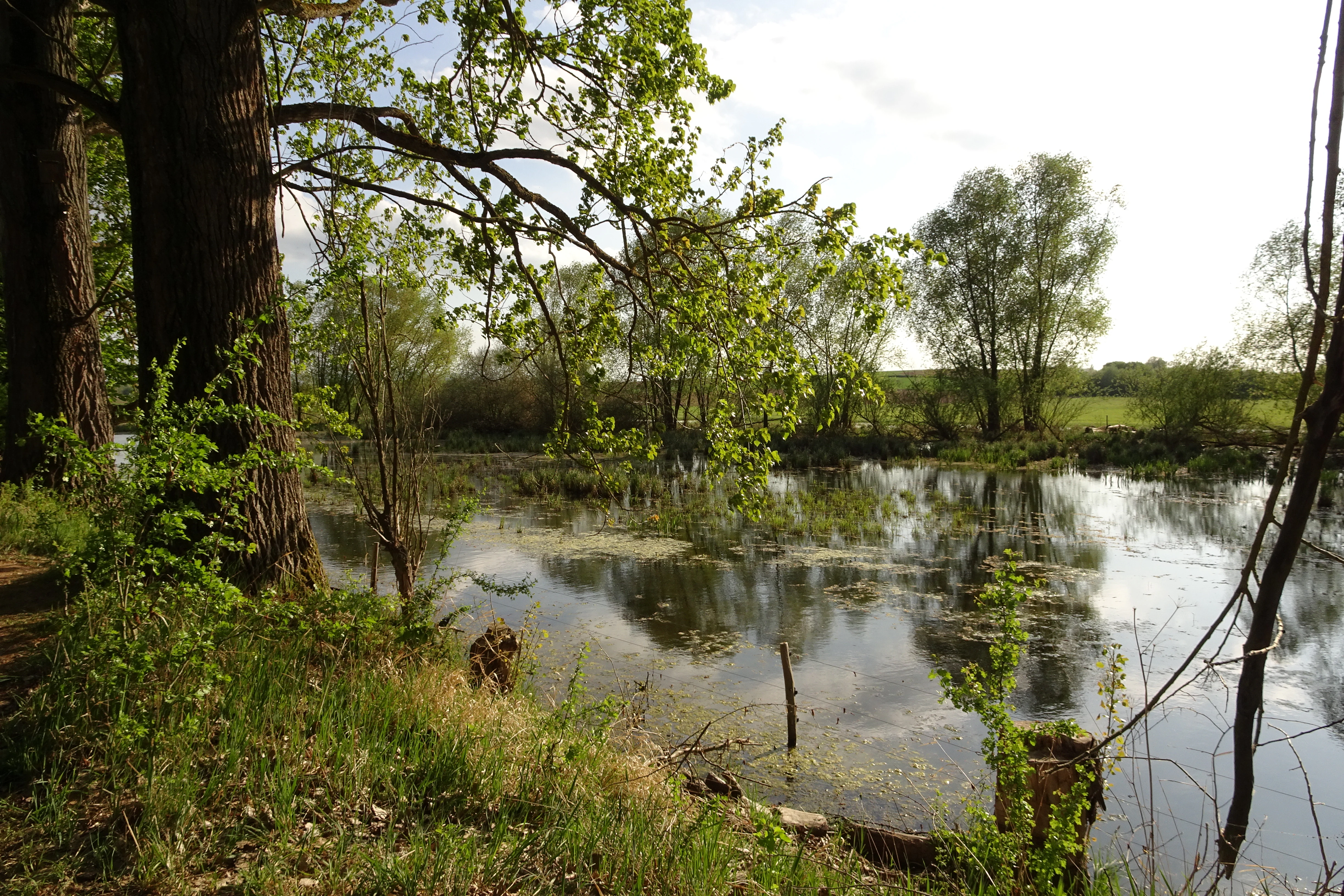
Scheelhecke is best known as a small, intensively managed lowland wetland reserve that combines species-rich wet meadows, sedge beds, and willow-alder floodplain forest along the lower Gersprenz tributaries. It is particularly recognized among local naturalists for its amphibian populations, its breeding snipe, and the return of the European beaver, which has built dams visible along the Landwehrgraben. The reserve is also distinguished by its integration into the Natura 2000 network, which links its local protection to broader EU-level conservation goals for habitats and birds of the Gersprenz floodplain. The visible conservation work, including shallow water areas and grazing by traditional Rotes Höhenvieh cattle, has become a defining feature of the modern site.
Scheelhecke von Groß-Zimmern history and protected-area timeline
The protection history of Scheelhecke von Groß-Zimmern began on 11 August 1983, when the area was formally designated as a Naturschutzgebiet under Hessian nature conservation law. At that time the reserve covered approximately 4.034 hectares, focused on the core wetland stretch of meadow and brook between Groß-Zimmern and the Gersprenz. The original designation was published in the Hessian state gazette in 1983.
On 20 September 1993, the reserve was formally expanded, increasing the area to roughly 4.578 hectares and adding additional meadow, brook corridor, and riparian woodland to the protected zone. This enlargement reflected growing awareness of the ecological value of the broader floodplain around the Landwehrgraben, the Hirschbach, and the eastern bank of the Gersprenz.
In 2008, the reserve became part of the larger Natura 2000 network through the designation of the Untere Gersprenz as a Flora-Fauna-Habitat site (6019-303) and the Untere Gersprenzaue as an EU Bird Directive site (6119-401). From 2015 onward, targeted management measures have been carried out under the Natura 2000 management plan, including the creation of shallow open water and the redirection of water into surrounding meadows. Since 2020, grazing has been conducted using Rotes Höhenvieh, an old hardy cattle breed from the Odenwald and Rhön, as a tool for maintaining open wetland vegetation. The reappearance of the European beaver around 2009 marked an informal but ecologically significant turning point in the site's recent history.
Scheelhecke von Groß-Zimmern landscape and geographic character
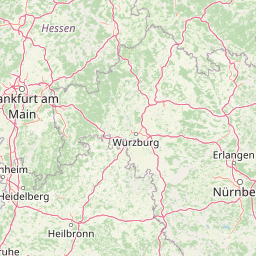
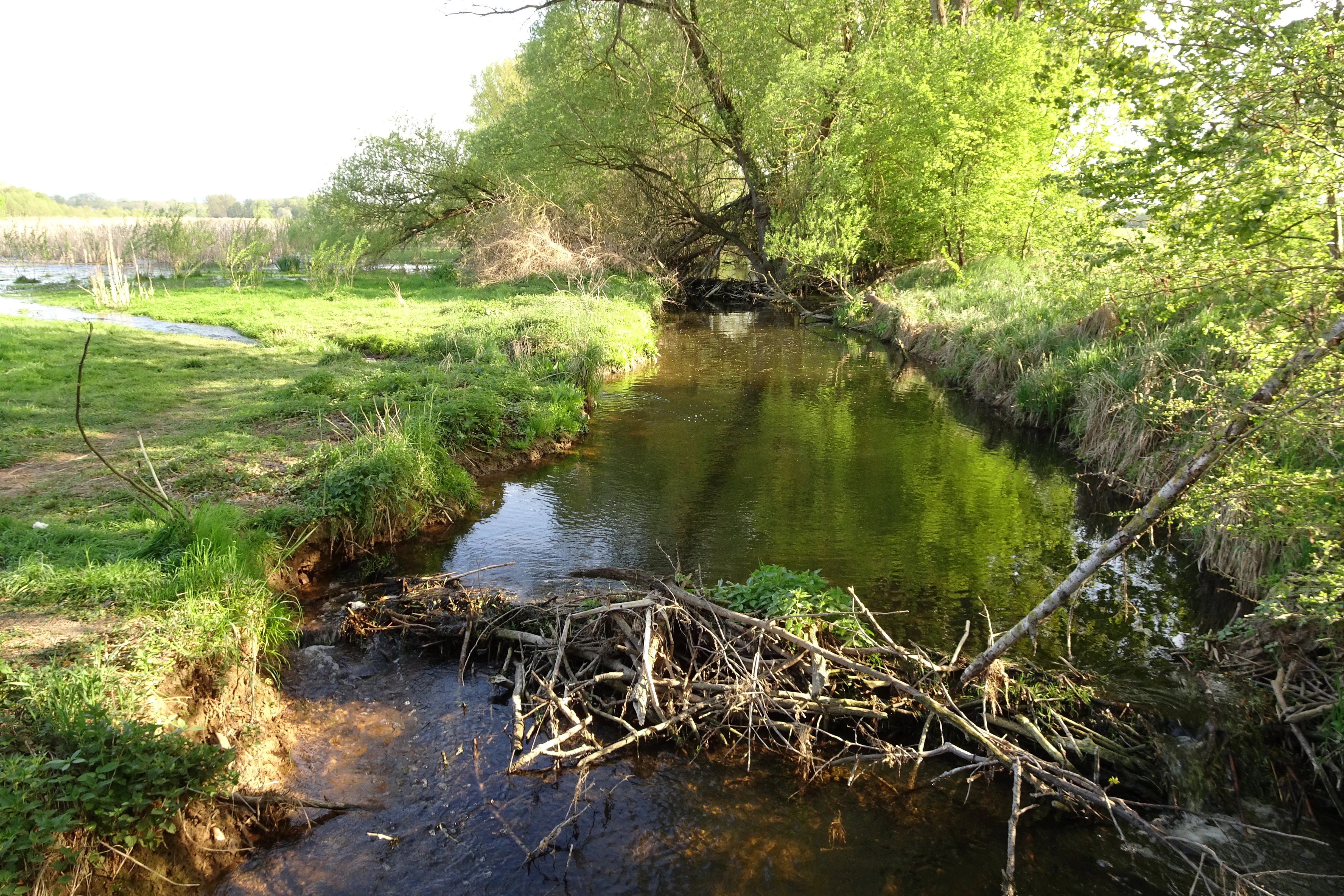
The landscape of Scheelhecke is shaped by the gentle relief of the Reinheimer Hügelland, where low hills and soft slopes give way to shallow brook valleys. Within this setting the reserve protects the narrow floodplain corridor where the Landwehrgraben, the Hirschbach, and the Gersprenz meet, creating a low-lying zone of wet meadows, sedge beds, and small open water surfaces.
The terrain is predominantly flat to gently undulating within the protected area, contrasting with the rising agricultural land around Groß-Zimmern and the wooded ridges of the surrounding region. The Landwehrgraben, a small tributary of the Gersprenz, runs through the heart of the site and is flanked by occasionally flooded meadows that shift seasonally between dry grassland and shallow standing water.
To the north, the wet ground transitions into a softwood floodplain forest of willows and alder, marking the boundary between open meadow and moist woodland. South of the reserve lies the adjoining Naturschutzgebiet Reinheimer Teich, and together the two sites form a continuous stretch of wetland and brook habitat along the lower Gersprenz.
Scheelhecke von Groß-Zimmern ecosystems, habitats, and plant life
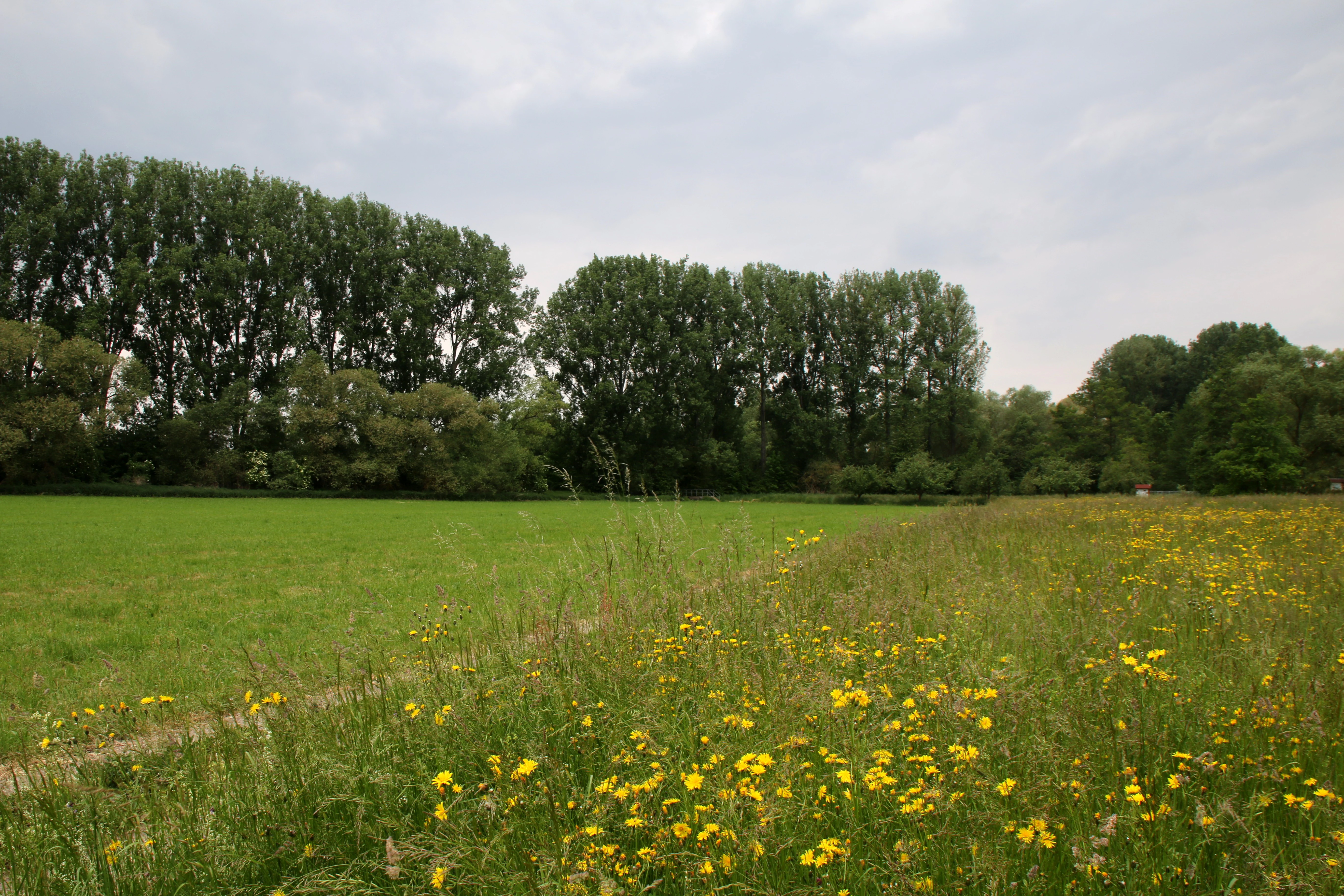
Ecologically, Scheelhecke is defined by its mosaic of wetland habitats arranged along a short stretch of the Gersprenz floodplain. The open ground is dominated by extensively managed, species-rich wet meadows that support meadowsweet-rich tall herb communities, cabbage thistle fen meadows, and slender sedge beds. These plant communities reflect a long tradition of low-intensity grassland use and the influence of rewetting measures that have raised the water table across parts of the reserve.
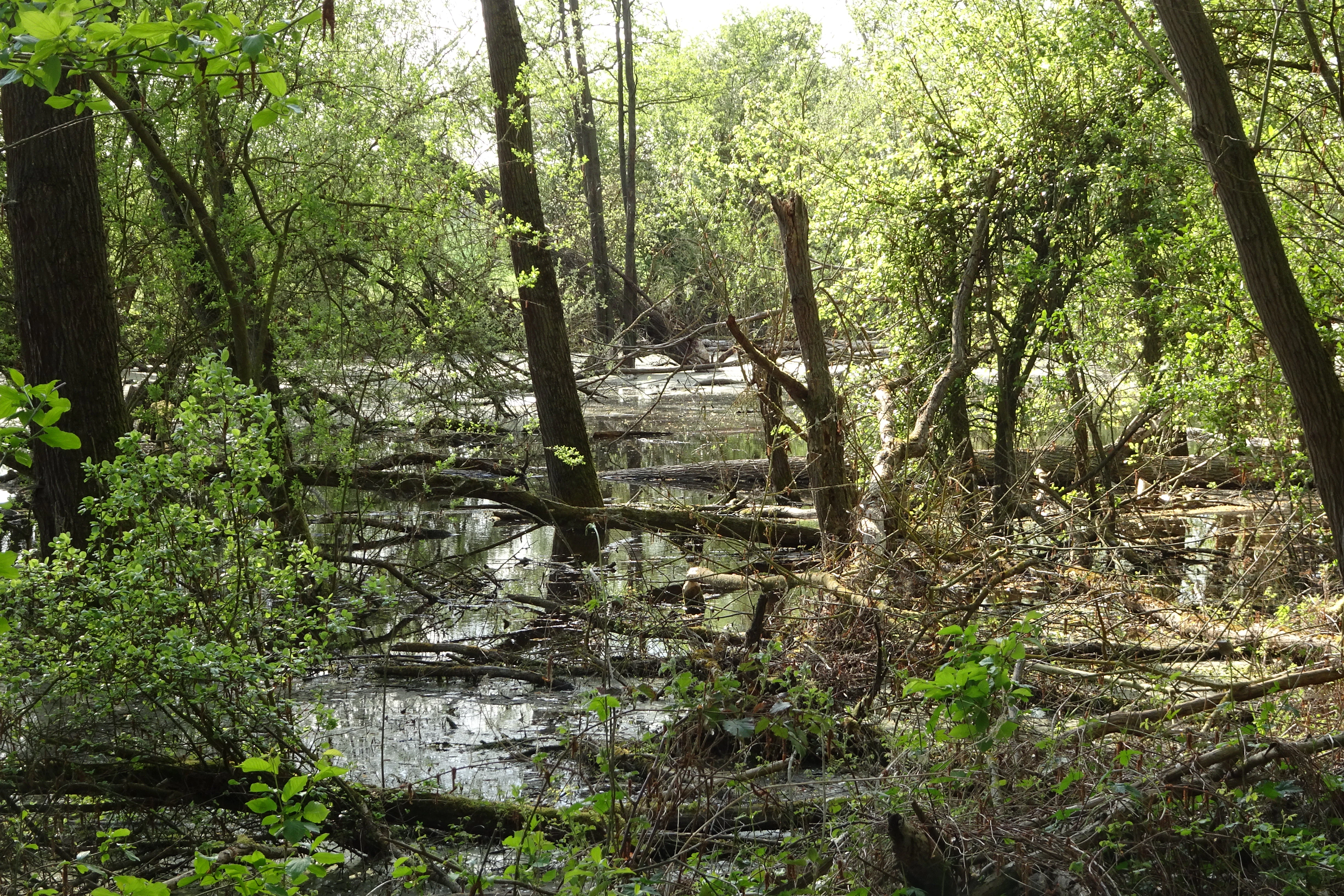
Along the northern edge of the site a softwood floodplain forest, or Weichholzaue, develops on the wettest ground. This vegetation, made up of willow and alder in a swamp forest setting, provides a structural contrast to the open meadows and acts as a refuge and dispersal corridor for wetland wildlife. The interface between sedge bed, wet meadow, brook, and swamp forest is one of the defining ecological features of the reserve.
Since the reserve's integration into the Natura 2000 Untere Gersprenz and Untere Gersprenzaue sites in 2008, habitat management has intensified. The creation of shallow open water areas from 2015 onward has expanded the range of standing water habitats, while grazing with Rotes Höhenvieh cattle from 2020 has helped maintain open vegetation structure and prevented succession toward dense scrub.
Scheelhecke von Groß-Zimmern wildlife and species highlights
The wildlife profile of Scheelhecke is dominated by wetland-associated birds, amphibians, and mammals tied to the brook and meadow complex. The reserve is a recognized breeding site for the common snipe, and has recorded visiting species such as the common kingfisher, the white-throated dipper, and the whinchat, which use the wet meadows and brook edges as seasonal habitat.
Amphibians are a particular highlight. The common frog is abundant throughout the site, while the European tree frog also occurs in the wetter sections. There have been observations of pond turtles, though the exact species has not been confirmed. The shallow water areas created as part of conservation management have improved breeding conditions for these amphibians.
The most charismatic wildlife development in recent years has been the return of the European beaver around 2009. Beavers have built dams along the Landwehrgraben, raising water levels, shaping pond and marsh conditions, and influencing the broader wetland habitat. Their presence is now a defining wildlife feature of the reserve and one of the indicators of successful wetland restoration at the site.
Scheelhecke von Groß-Zimmern conservation status and protection priorities
From a conservation perspective, Scheelhecke functions as a small but strategically placed node within the larger Natura 2000 network of the lower Gersprenz. Its designation as a Naturschutzgebiet under Hessian law gives it strong national-level protection, while its inclusion in the Untere Gersprenz FFH site and the Untere Gersprenzaue EU Bird Directive site connects its local management with European biodiversity objectives for habitats and birds.
The reserve's conservation value lies in the preservation and restoration of wet meadows, brook corridors, sedge communities, and softwood floodplain forest, all habitat types that have become rare in the intensively farmed landscapes of southern Hesse. Maintaining these habitats requires active management rather than passive protection, and the site demonstrates a deliberate combination of rewetting, shallow water creation, and traditional grazing as restoration tools.
Grazing with Rotes Höhenvieh from 2020 reflects a broader conservation philosophy that links open-land habitat maintenance with the preservation of traditional land-use practices and regional livestock breeds. Combined with the natural regulation introduced by returning beavers, this management approach has turned Scheelhecke into a working example of how small lowland wetland reserves can deliver disproportionate ecological value within a regional landscape.
Scheelhecke von Groß-Zimmern cultural meaning and human context
The cultural context of Scheelhecke is tied to the long agricultural and small-stream land use that has shaped the lower Gersprenz region for centuries. Wet meadows such as those protected in the reserve were once common features of the Hessian lowlands, used for hay production and seasonal grazing, and the survival of the site reflects the persistence of these traditional practices in some parts of the Reinheimer Hügelland.
The use of Rotes Höhenvieh cattle, an old breed associated with the Odenwald and Rhön regions, links contemporary conservation management directly to the regional rural heritage. The presence of the Landwehrgraben, a historical small stream boundary, also reflects older land-management traditions in which brooks were deliberately maintained as part of the local landscape structure.
Top sights and standout views in Scheelhecke von Groß-Zimmern
Scheelhecke is a small wetland reserve that punches above its weight in ecological value, protecting a compact mosaic of wet meadows, sedge beds, willow-alder floodplain forest, and brook corridors in southern Hesse. Its highlights include breeding snipe, visiting kingfishers and whinchats, thriving populations of common frogs and tree frogs, and a thriving beaver population that has reshaped parts of the reserve through dam-building.
The site's integration into the Natura 2000 Untere Gersprenz network, combined with active rewetting measures and traditional cattle grazing, has turned it into a regional showcase for lowland wetland restoration. For visitors interested in wetland ecology, brook habitats, and small-scale conservation management, the reserve offers a focused and rewarding landscape.
Best time to visit Scheelhecke von Groß-Zimmern
Scheelhecke is best experienced in the warmer months, when the wet meadows are at their most diverse and visible and when amphibians and birdlife are most active. Late spring and early summer typically bring the richest display of meadowsweet, cabbage thistle, and sedge vegetation, while the shallow waters created as part of conservation management become important sites for amphibian breeding and observation.
In late summer and early autumn, grazing by Rotes Höhenvieh cattle is in full effect, and the open character of the meadows is at its most apparent. Winter visits offer a quieter atmosphere where beaver dams, flooded meadows, and the bare structure of the softwood floodplain forest can be clearly seen, though bird and amphibian activity is reduced. Throughout the year, conditions along the meadow paths can be wet, so sturdy footwear is appropriate in any season.