Why Südliches Versener Moor stands out
Südliches Versener Moor is best known as an example of an industrially cut-over raised bog in the Bourtanger Moor that is undergoing active rewetting and restoration. The reserve represents the typical modern conservation challenge in this part of northwestern Germany: protecting fragments of intact raised bog while attempting to revive peatland hydrology on large areas that were formerly drained and exploited for peat extraction. The site is also notable for its position within the International Nature Park Bourtanger Moor-Bargerveen, one of the most important transboundary peatland conservation landscapes in northwestern Europe. Its small remnant of uncut raised bog, in the eastern part of the area, gives the reserve particular conservation significance within an otherwise heavily altered peatland.
Südliches Versener Moor history and protected-area timeline
The Südliches Versener Moor acquired its formal protected status on 26 February 1999, when it was designated as a Naturschutzgebiet under the code NSG WE 234 in Lower Saxony. The establishment of the reserve was part of the broader effort across the Emsland and the German-Dutch border region to protect what remained of the historically extensive Bourtanger Moor.
Long before its formal protection, the area was profoundly shaped by industrial peat extraction. Like much of the surrounding Bourtanger Moor, the peatlands around Versen were drained and cut for peat over many decades, leaving a heavily modified landscape. Only a small section in the eastern part of the present reserve escaped full extraction and still contains intact raised bog.
Since its designation, the reserve's history has increasingly been defined by restoration rather than just preservation. The site's small size and degraded condition made rewetting and careful management the central focus of its conservation history, reflecting a wider shift in northwest German peatland conservation toward active rewetting of formerly drained bogs.
Südliches Versener Moor landscape and geographic character
The landscape of Südliches Versener Moor is dominated by flat, low-lying peatland terrain typical of the Emsland region. Elevations across the reserve range from only about 16 to 18 meters above sea level, making it a near-featureless plain in topographic terms, but one with a distinctive ecological character shaped by its peat soils and water regime.
The reserve lies within the larger Bourtanger Moor, a vast former raised bog landscape that once extended across the border between Germany and the Netherlands. After decades of peat extraction and drainage, much of the local landscape consists of cut-over peatland and drainage channels rather than the original raised bog surface. In the eastern part of the reserve, a roughly six-hectare patch of uncleared Hochmoor survives, offering a glimpse of the bog vegetation that historically dominated this part of the Emsland.
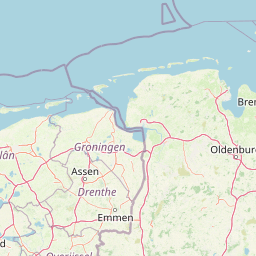
Drainage ditches crisscross the site and ultimately discharge into the Wesuwer Schloot, which flows south past the village of Wesuwe before emptying into the River Ems. To the east, the A 31 motorway cuts through the former peatland, with part of the moor area physically built over during the construction of the road. Surrounding the reserve, the landscape transitions into managed agricultural land, other nearby nature reserves such as the Wesuweer Moor and Versener Heidesee, and the broader landscape mosaics of the Bourtanger Moor-Bargerveen International Nature Park.
Südliches Versener Moor ecosystems, habitats, and plant life
Ecologically, Südliches Versener Moor represents a heavily modified raised bog system, with most of its surface shaped by industrial peat cutting and subsequent drainage. The reserve is therefore less an example of pristine bog wilderness than a working example of contemporary peatland restoration in northwest Germany.
The small patchwork of uncut raised bog in the eastern part of the site holds particular ecological value, since intact raised bogs in the Emsland have become increasingly rare. This remnant supports bog vegetation communities that depend on a stable high water table, acidic nutrient-poor conditions, and the slow accumulation of peat over centuries.
Around this core, the surrounding matrix of cut-over peatland is gradually being managed to allow bog conditions to return. By restoring hydrology through rewetting, conservation managers aim to recreate conditions suitable for Sphagnum mosses and associated bog flora, and to re-establish the peat-forming processes that once defined the Bourtanger Moor. The reserve is thus both a protection site for what remains and a long-term experiment in peatland restoration.
Südliches Versener Moor wildlife and species highlights
The source material does not provide detailed information on the specific fauna of Südliches Versener Moor. As a small raised bog and cut-over peatland within the larger Bourtanger Moor-Bargerveen landscape, however, the site contributes to a habitat network that generally supports bog-adapted species in the Emsland, including peatland invertebrates and birdlife associated with open, wet moorland and adjacent heath and water features.
Südliches Versener Moor conservation status and protection priorities
The principal conservation significance of Südliches Versener Moor lies in its role within the broader effort to protect and restore the Bourtanger Moor. Although it covers only 100 hectares, the reserve safeguards an important fragment of uncut raised bog in the east while providing space to test and demonstrate rewetting strategies on cut-over peatland.
The site is classified as IUCN Category IV (Habitat/Species Management Area), reflecting its management-oriented role rather than its status as a strict nature reserve. Management focuses on Wiedervernässung, or rewetting, which involves raising water tables by controlling the dense network of drainage ditches that still channel water out of the site via the Wesuwer Schloot into the River Ems.
By joining neighboring reserves such as the Wesuweer Moor and Versener Heidesee, Südliches Versener Moor forms part of a chain of protected peatland parcels within the International Nature Park Bourtanger Moor-Bargerveen. Together with the broader park and other moor protection sites in the Emsland, it contributes to the preservation of one of the historically most important raised bog complexes along the German-Dutch border, while also illustrating the practical challenges of restoring peatlands that were intensively exploited for peat during the 20th century.
Top sights and standout views in Südliches Versener Moor
Südliches Versener Moor stands out for its compact 100-hectare size, making it a focused, manageable site for peatland conservation in a region dominated by much larger moor complexes. Its uncut raised bog core in the east, covering roughly six hectares, is a particularly important highlight given how rare intact Hochmoor has become in the Emsland.
The reserve also offers an instructive example of how a heavily modified peatland can be reintegrated into a restoration landscape. Its position within the International Nature Park Bourtanger Moor-Bargerveen, alongside neighboring nature reserves like the Wesuweer Moor and Versener Heidesee, gives it a meaningful role in the wider story of Bourtanger Moor conservation.