
Why Talassemtane National Park stands out
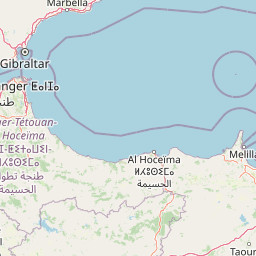
Talassemtane National Park is best known for protecting the last remaining old-growth forests of Moroccan fir (Abies pinsapo), a relict conifer species that survived the last glacial period and now exists in only a handful of locations worldwide. The park contains the only Spanish firs native to Morocco, growing under the highest level of protection within its core areas. Its dramatic landscapes feature the famous Bridge of God, a natural stone arch formation, and the park supports exceptional bird diversity including the bearded vulture, a striking Mediterranean raptor. The combination of endemic conifer forests, significant biodiversity, and accessible mountain scenery makes this park a flagship conservation site for Morocco's Mediterranean mountain ecosystems.
Talassemtane National Park history and protected-area timeline
The creation of Talassemtane National Park in October 2004 represented the culmination of growing recognition that Morocco's Mediterranean mountain forests required formal protection to prevent further ecological decline. The site had already gained international attention when it was added to UNESCO's World Heritage Tentative List in October 1998, acknowledging its outstanding universal value as a Mediterranean forest ecosystem. The primary driver for park establishment was the urgent need to conserve the last remaining stands of Moroccan fir, a species that had been severely depleted by centuries of logging and forest clearance.
Prior to national park status, the forest had experienced significant pressure from logging operations and grazing, leading to concerns among conservation scientists about the long-term survival of the fir populations. The designation as a national park provided legal framework for stricter protection of the old-growth forest areas and enabled more coordinated management of the broader landscape. The park's inclusion in the Intercontinental Biosphere Reserve of the Mediterranean also situates it within a broader transcontinental conservation framework that recognizes the ecological connections between Mediterranean ecosystems across national boundaries.
Talassemtane National Park landscape and geographic character
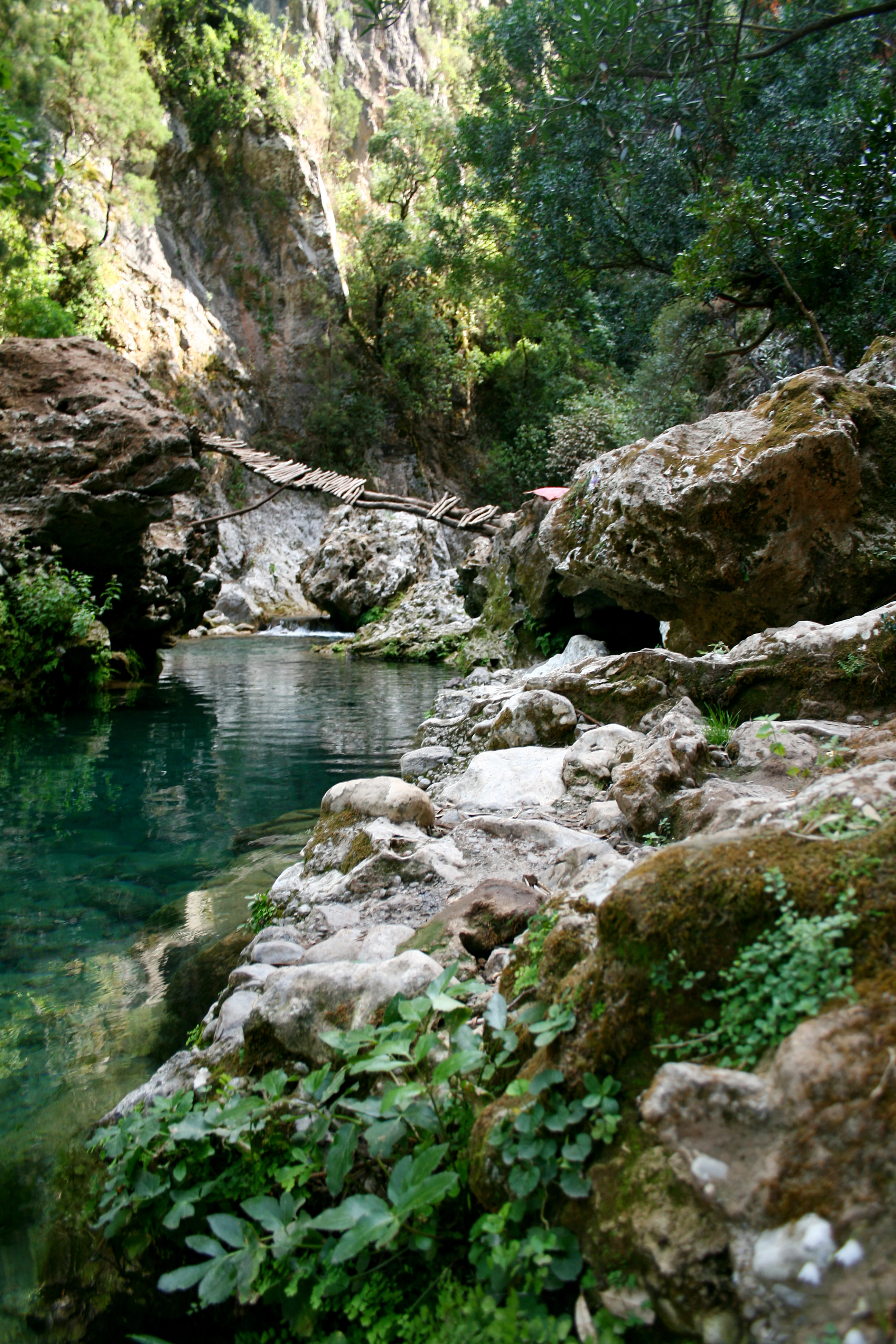
The landscape of Talassemtane National Park embodies the rugged character of the Rif Mountains, a range that runs parallel to Morocco's Mediterranean coast and creates a dramatic backdrop of steep peaks and forested slopes. The terrain is characterized by limestone and sandstone formations that have been sculpted by millions of years of erosion, creating a network of deep ravines, cliff faces, and mountain ridges. The elevation range of 350 to 1,050 meters creates a varied topography that supports distinct ecological communities across relatively short distances.
The park's most distinctive geological feature is the Bridge of God, a natural arch formation that has become one of the park's signature landmarks. This impressive stone bridge spans a small valley and can be reached via hiking trails from the surrounding villages. The landscape transitions through woodland zones as elevation increases, with the lower slopes supporting mixed forests of evergreen oaks and juniper before giving way to the pure stands of Moroccan fir that characterize the higher elevations. Rocky outcrops and cliff faces provide habitat for specialized plant species and create visual diversity throughout the park.
Talassemtane National Park ecosystems, habitats, and plant life
Talassemtane National Park supports extraordinary botanical diversity, with over 1,380 plant species recorded within its boundaries, including 47 species that are endemic to Morocco. The park lies within the Spanish-Maghrebi biodiversity hotspot, one of the world's most significant centers of plant diversity. The most ecologically important feature is the population of Moroccan fir (Abies pinsapo), a relict species that survived the Pleistocene ice ages in this limited refugium and represents a crucial component of the park's conservation value. These fir forests represent the only native Spanish fir populations in Morocco and occur in only a few isolated locations globally.
The park also protects significant populations of Atlas cedar (Cedrus atlantica), another iconic Mediterranean conifer that has been designated as endangered. The understory of the forest supports the Andalusian Belladonna (Atropa baetica), a relative of the deadly nightshade that adds to the botanical distinctiveness of the area. The combination of endemic conifers, Mediterranean evergreen species, and specialized mountain flora creates an ecosystem of considerable scientific and conservation importance. The vegetation zones reflect the elevation gradient, with holm oak and juniper woodland giving way to pure fir forest at higher elevations, creating a layered landscape of considerable ecological complexity.
Talassemtane National Park wildlife and species highlights
Talassemtane National Park supports remarkable avian diversity, with over 100 bird species recorded within its boundaries, leading to its designation as an Important Bird Area by BirdLife International. The bearded vulture (Gypaetus barbatus), one of the Mediterranean's most impressive raptors, inhabits the park's cliffs and mountain terrain, using its unique feeding ecology to scavenge carcasses across the landscape. The park supports significant populations of several bird species of conservation concern, including the Barbary partridge, a gamebird species with declining numbers across its range.
The diverse bird community includes species such as the red-necked nightjar, Levaillant's woodpecker, both subalpine and Sardinian warblers, spotless starlings, Moussier's redstarts, and both black-eared and black wheatears. These species represent the Mediterranean avifauna that has evolved in step with the region's distinctive forest and scrub habitats. Beyond birds, the park supports populations of Barbary macaques (Macaca sylvanus), the only wild primate species in North Africa, as well as Greek tortoises and the many-scaled cylindrical skink, a specialized lizard species. The combination of forest, cliff, and open habitat types supports this diversity of vertebrate life.
Talassemtane National Park conservation status and protection priorities
Talassemtane National Park represents one of Morocco's most significant conservation achievements, protecting a unique Mediterranean forest ecosystem that had been under considerable pressure. The park's primary conservation focus on Moroccan fir forests addresses a critical gap in global biodiversity protection, as this species exists in only a handful of locations worldwide. The inclusion of the park in UNESCO's World Heritage Tentative List reflects international recognition of its outstanding universal value as a representative Mediterranean forest ecosystem.
The park's designation as part of the Intercontinental Biosphere Reserve of the Mediterranean connects it to broader conservation frameworks that coordinate protection across national boundaries in the Mediterranean basin. The protection of both Moroccan fir and Atlas cedar addresses the conservation needs of two endangered conifer species, while the Important Bird Area designation acknowledges the site's significance for bird conservation. Management challenges include balancing conservation objectives with the growing tourism pressure from visitors to the Chefchaouen area, requiring careful visitor management and trail planning to protect sensitive forest areas.
Talassemtane National Park cultural meaning and human context
The landscape of Talassemtane National Park has been shaped by centuries of human activity, with traditional Berber communities maintaining a presence in the villages surrounding the protected area. The villages of El Kalaá and Akchour serve as traditional access points into the mountain environment, with settlement patterns that reflect the agricultural potential of the valley floors and the use of higher elevations for seasonal grazing. The local communities have historically relied on the forests for timber, charcoal production, and grazing, creating a complex relationship between human use and forest ecosystems.
The Rif region has a rich cultural history as part of the broader Amazigh (Berber) cultural region of North Africa, with distinctive traditions, architecture, and land management practices that have shaped the landscape over generations. The proximity to Chefchaouen, a city with its own distinctive cultural identity shaped by its founding as a refuge for Moorish exiles from Granada in the 15th century, provides cultural context for understanding the human geography of the region. Modern park management seeks to balance traditional land use patterns with conservation objectives, recognizing the importance of local community involvement in sustainable protected area management.
Top sights and standout views in Talassemtane National Park
Talassemtane National Park offers exceptional Mediterranean mountain experiences centered on its ancient fir forests and dramatic Rif mountain scenery. The opportunity to walk among the last old-growth Moroccan fir trees, some of which are hundreds of years old, provides a profound connection to a forest ecosystem that survived the Ice Age and now depends on protected area management for survival. The hike to the Bridge of God natural arch rewards visitors with both physical challenge and one of the park's most photogenic landmarks. Birdwatchers can seek the elusive bearded vulture soaring on thermal currents above the cliffs, while the more than 100 additional bird species provide diverse observation opportunities throughout the year. The accessibility from Chefchaouen makes this park an ideal destination for travelers seeking to experience Morocco's natural heritage alongside its famous cultural sites.
Best time to visit Talassemtane National Park
The best time to visit Talassemtane National Park is during the spring months of April and May, when wildflowers carpet the forest understory and bird activity peaks with migratory species present. Summer months from June to August can be warm but offer long days for hiking and the opportunity to experience the Mediterranean forest at its most verdant. Autumn brings changing colors to the deciduous elements of the forest and provides good conditions for walking, while winter, though cooler, offers a different character with reduced visitor numbers and the possibility of snow on the higher peaks. The park can be visited year-round, though conditions in the higher elevations may be more challenging during winter months.