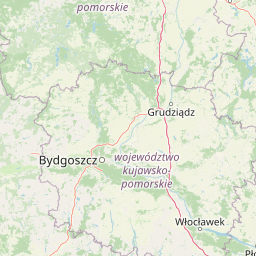

Why Uroczyska Kujańskie stands out
Uroczyska Kujańskie is best known for its rare and well-preserved charophyte lakes, especially Lake Borówno, which hosts the protected stonewort Lychnothamnus barbatus; one of very few documented Polish populations of a species recorded at the site nearly a century ago and still present. The site is equally recognized for its old-growth acid oak forests and pine stands, some more than 200 years old, which form a rare and well-developed example of a continental acid oak forest variant. Complementing these forests are dystrophic lakes such as Mały Smólsk, the only known clear-water deep dystrophic lake in Wielkopolska, and spring fens with active travertine formation supporting rare moss species from Annex II of the Habitats Directive.
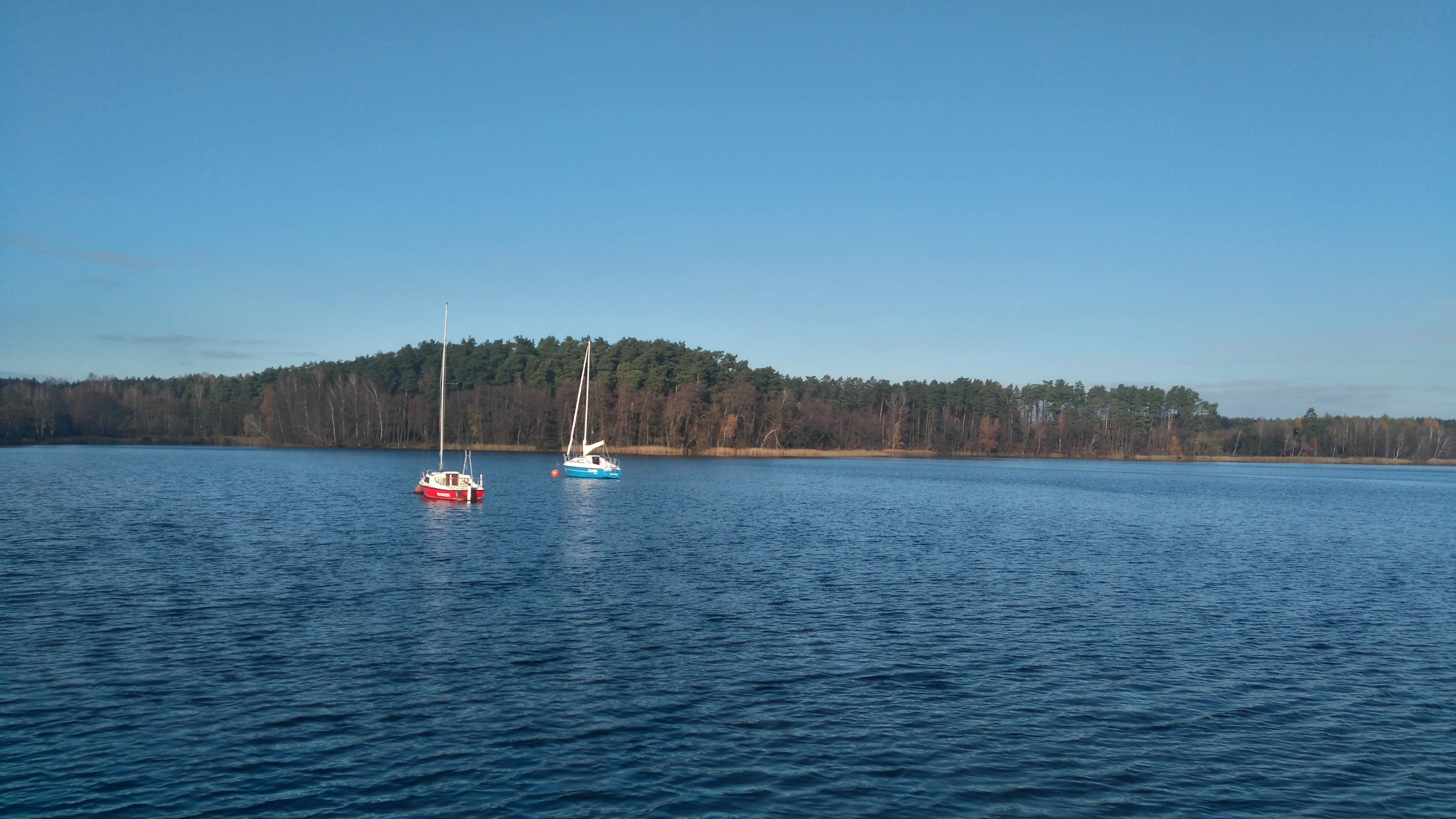
Uroczyska Kujańskie history and protected-area timeline
Uroczyska Kujańskie was formally designated as a Natura 2000 Special Area of Conservation under the EU Habitats Directive, registered with the code PLH300052, in order to protect the most valuable portion of the Bory Kujańskie forest complex. Its formal documentation, compiled through the Standard Data Form and ecological surveys by researchers including Owsianny and colleagues, established that it shelters 12 natural habitat types alongside seven protected species.
Ecological research underpinning the designation dates back more than a century for some of its key species. Lychnothamnus barbatus, the protected charophyte algae in Lake Borówno, was first noted at the site nearly 100 years before modern surveys confirmed its continued presence, providing a striking example of long-term habitat persistence.
Beyond the protected site itself, the broader Bory Kujańskie region, including Uroczyska Kujańskie at its core, has been the subject of proposals to establish the Krajna Złotowska Landscape Park. This larger initiative aims to combine high natural value with significant cultural and historical features, including the Łobżonka river valley, the Sławianowskie Wielkie and Stryjewo lake areas, and the Basilica of the Immaculate Conception of the Blessed Virgin Mary in Górka Klasztorna. The landscape park proposal awaits approval by the Sejmik of the Wielkopolska Voivodeship.
Uroczyska Kujańskie landscape and geographic character
Uroczyska Kujańskie occupies a glacially shaped section of the Krajeńskie Lakeland, where the most recent Baltic glaciation left a clear imprint on the terrain. The area's main axis is defined by Lake Borówno and the smaller water bodies connected to it hydrologically, all lying within subglacial tunnel valleys. These valleys form the deepest landscape elements and create conditions favorable for lake development and for the accumulation of organic material in their low-lying edges.
Outwash plains stretching away from the tunnel valleys carry extensive sandy substrates that today support broad tracts of pine forest. Where these plains meet the edges of glacial channels, water and soil conditions change enough to allow the development of richer forest communities, most notably acid oak forests and oak-hornbeam forests. In the southern part of the site, additional variation comes from patches of beech forest and other broadleaf woodland on more favorable soils.
Between the lakes and the surrounding forests, biogenic plains host meadows, fens, and transitional mires. Some of these mires, particularly around Lake Wierzchołek, are spring-fed fens with active travertine formation, a relatively rare geomorphological and hydrological feature in this part of Poland. Wet bog forests and alder carrs occupy low-lying terraces and the margins of overgrown former water bodies, adding further textural variety to the landscape. The overall result is a finely patterned mosaic of water, mire, meadow, and forest typical of high-quality post-glacial lowland landscapes.
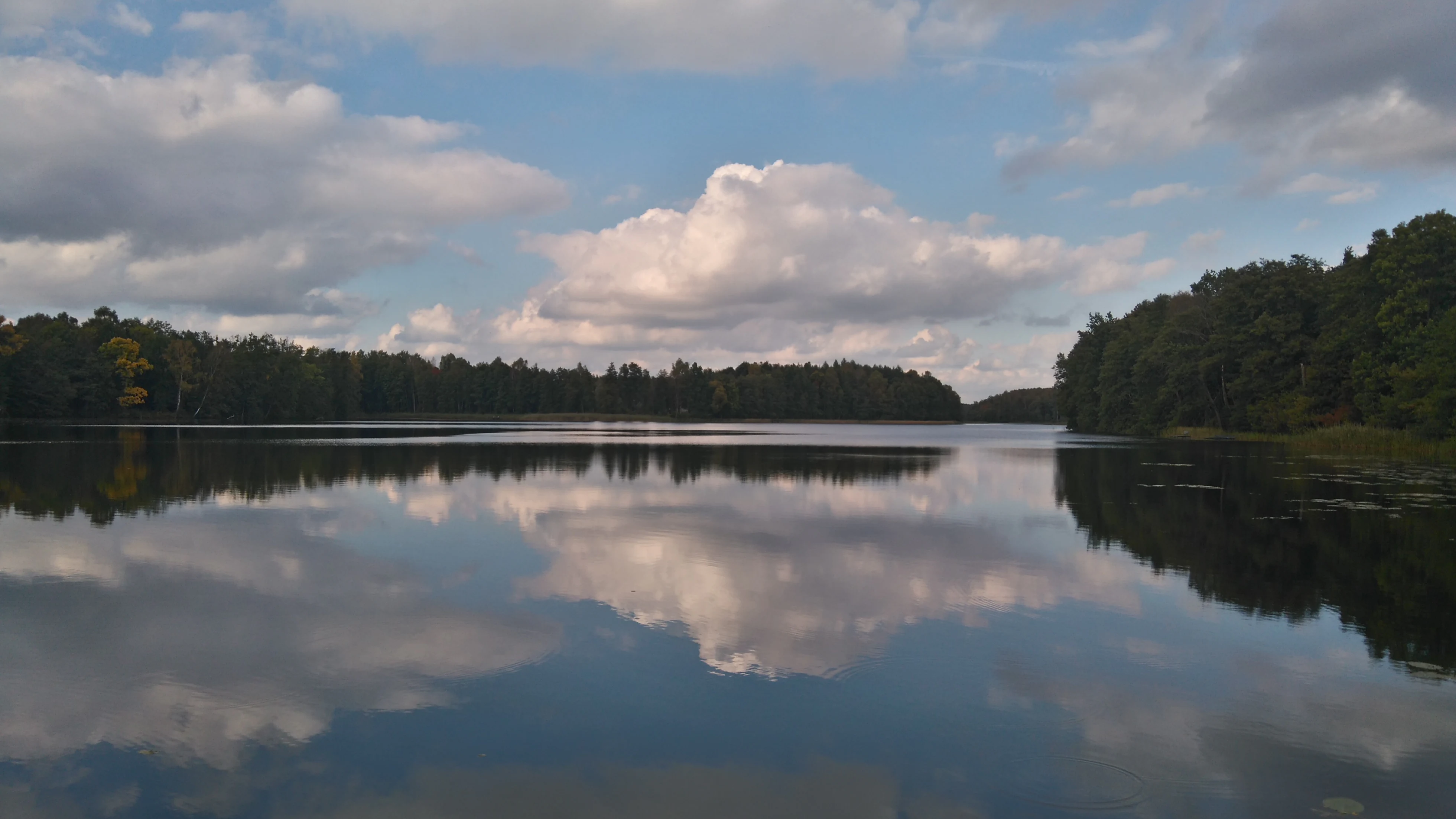
Uroczyska Kujańskie ecosystems, habitats, and plant life
Uroczyska Kujańskie protects a wide spectrum of habitat types typical of a post-glacial lowland landscape in north-central Poland. The site formally safeguards 12 natural habitat types, reflecting the ecological richness generated by the interplay of glacial relief, hydrology, and soils. Aquatic habitats are particularly diverse and include charophyte, dystrophic, eutrophic, and alloiotrophic lake types within a relatively small area.
Among the most ecologically distinctive habitats are the charophyte communities of Lake Borówno, where Lychnothamnus barbatus grows together with meadows built by Nitellopsis obtusa and Chara tomentosa in the southern part of the lake. These submerged charophyte beds represent a high-quality reference for calcareous lake vegetation of European conservation interest.
Forests range from acid oak forests in their continental variant, exceptionally well-developed and rich in veteran trees, through oak-hornbeam and beech forest fragments to extensive pine woods and boggy coniferous forests on wetter ground. Wetland habitats include well-functioning spring fens with active travertine accumulation around Lake Wierzchołek and Sphagnum-dominated mires flanking Mały Smólsk. These habitat mosaics support the site's diverse associated flora and fauna, including bryophytes protected at both national and European levels.
Uroczyska Kujańskie wildlife and species highlights
The wildlife interest of Uroczyska Kujańskie is closely tied to its habitat diversity, particularly its combination of old-growth broadleaf forest, open水域 charophyte lakes, and spring-fed mires. Lake Borówno supports charophyte-dominated aquatic vegetation that creates habitat conditions for species associated with clear, calcareous waters, and it has maintained populations of rare stonewort species such as Lychnothamnus barbatus across decades of observation.
The site's spring fen near Lake Wierzchołek is notable for populations of protected mosses, including Drepanocladus vernicosus (also referred to as Hamatocaulis vernicosus), a species listed on Annex II of the EU Habitats Directive, as well as Tomentypnum nitens and Helodium blandowii. These bryophyte concentrations mark the site as regionally important for mire conservation.
Around Lake Czarcie, the dragonfly Leucorrhinia pectoralis (the yellow-spotted whiteface) has been recorded, another Annex II species whose presence reflects the value of undisturbed aquatic and wetland habitats. In the old parkland near Lake Kujan Mały and within veteran oak stands along the shores of Lake Borówno, the hermit beetle (Osmoderma eremita) has been documented. This saproxylic beetle, also listed under Annex II, depends on ancient living and dead broadleaf trees, underlining the importance of the site's oldest oak individuals for forest-dwelling invertebrates.
Uroczyska Kujańskie conservation status and protection priorities
As a Natura 2000 Special Area of Conservation coded PLH300052, Uroczyska Kujańskie holds formal European-level protection status under the EU Habitats Directive. The designation obliges Poland to maintain or restore the site's protected habitat types and species in favorable conservation status, providing a strong legal framework for ongoing management and monitoring.
The site's conservation value rests on the combination of habitat rarity, habitat quality, and the presence of multiple Annex II species. These include Lychnothamnus barbatus in Lake Borówno, Hamatocaulis vernicosus in the Wierzchołek spring fen, Leucorrhinia pectoralis associated with Lake Czarcie, and Osmoderma eremita in old oak forests and parkland near Lake Kujan Mały. The Standard Data Form documents coverage of 12 protected habitat types and seven protected species, indicating that conservation efforts here are safeguarding a broad ecological portfolio rather than a single feature.
At the regional level, recognition of Uroczyska Kujańskie as the ecological core of Bory Kujańskie has supported proposals for the establishment of the Krajna Złotowska Landscape Park. This larger designation would formalize protection for surrounding forests and adjacent cultural and historical features, integrating ecological protection with the conservation of regionally significant landscape character. Although the landscape park has not yet been approved, its proposal underscores the high standing of Uroczyska Kujańskie within broader regional conservation planning.
Uroczyska Kujańskie cultural meaning and human context
Uroczyska Kujańskie lies within a region of significant natural and cultural-historical value that extends well beyond the boundaries of the Natura 2000 site itself. The wider Bory Kujańskie region combines forest, lake, and agricultural landscapes with notable cultural landmarks, including the Basilica of the Immaculate Conception of the Blessed Virgin Mary in Górka Klasztorna. The Łobżonka river valley, Lake Sławianowskie Wielkie, and the Stryjewo lake area contribute additional historical and landscape context to the surrounding region.
The proposed Krajna Złotowska Landscape Park explicitly aims to recognize this combination of natural, scenic, and cultural-historical qualities. Within the protected site itself, the old parkland near Lake Kujan Mały represents a layer of historical land use, with veteran trees that today support protected saproxylic species such as Osmoderma eremita. This link between past human management and present-day ecological value is a notable feature of the site's cultural and natural heritage.
Top sights and standout views in Uroczyska Kujańskie
Uroczyska Kujańskie unites rare aquatic, mire, and forest habitats within a single compact Natura 2000 site. The persistence of Lychnothamnus barbatus in Lake Borówno for nearly a century, the unique character of dystrophic Lake Mały Smólsk, and the active travertine spring fen near Lake Wierzchołek each represent features of regional or national rarity.
Equally distinctive is the site's old-growth forest component, with acid oak forests and pine stands exceeding 200 years in age and rich associations of protected invertebrates such as Osmoderma eremita. The combined ecological, scientific, and landscape value of Uroczyska Kujańskie has already positioned it as the core of broader regional conservation planning for Bory Kujańskie.
Best time to visit Uroczyska Kujańskie
As a nature conservation area rather than a developed visitor destination, Uroczyska Kujańskie is best appreciated in seasons that highlight its ecological character. Late spring and early summer are favorable for observing the development of charophyte meadows in Lake Borówno and the activity of wetland-dependent invertebrates such as dragonflies, while the surrounding forests and lakes are most visually expressive in autumn, when foliage, bog vegetation, and lake reflections become especially prominent. Winter visits can offer quieter, more atmospheric experiences of the forest-and-lake mosaic, though access may be influenced by local conditions.