
Planning essentials
When to visit White Desert National Park: The core seasons
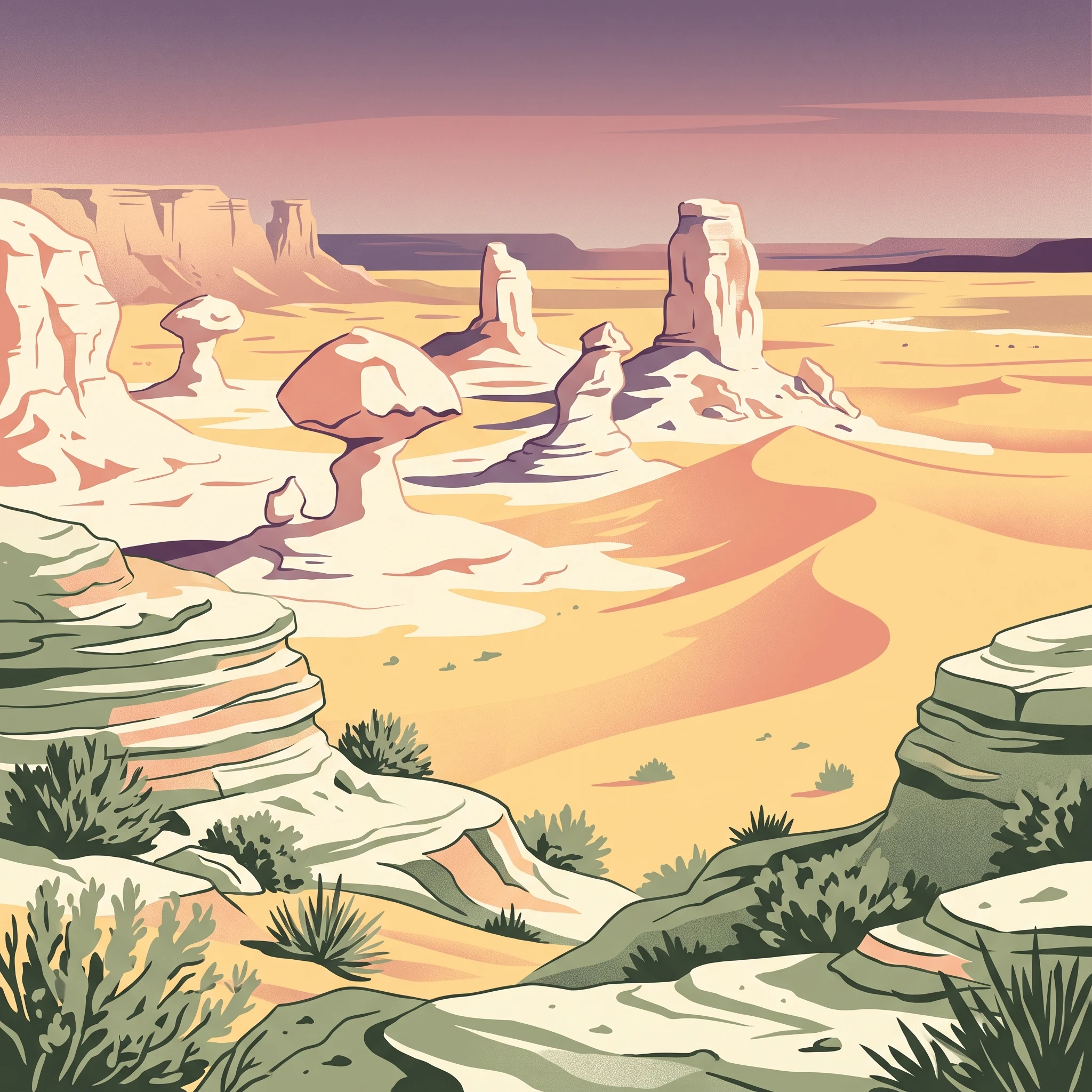
Determining the best time to visit White Desert National Park requires balancing your tolerance for the Saharan climate against the stark, exposed nature of the chalk landscape. For most visitors, the ideal window falls between November and March. During these months, daytime temperatures remain moderate enough for extended exploration of the unique mushroom-shaped rocks and limestone spires without the physiological strain caused by extreme heat. Because the park is a wide-open desert environment with limited natural shade, the cooler air temperatures during these months are essential for safely navigating the terrain on foot.
The impact of desert thermal extremes
The primary factor shaping your visit is the dramatic temperature shift that occurs annually within the Farafra depression. From late spring through early autumn, daytime maximum temperatures frequently exceed 40 degrees Celsius. In this environment, the high heat is not merely an inconvenience but a significant planning constraint. The intensity of the sun, coupled with the reflective nature of the white chalk formations, creates a blindingly bright and hot landscape during the afternoon hours in May, June, and July. If you are planning a trip during the transition months of April or October, you should prepare for daytime heat that can still reach well into the mid-to-high 30s, necessitating a shift toward early morning or late afternoon activities to avoid the daily peaks.
Seasonal environmental conditions
Beyond the raw temperature data, environmental variables like wind and daylight hours influence the quality of a visit. The park experiences its longest days in the summer months, offering more daylight but less usable time for outdoor exploration due to the heat. Conversely, the shorter days of winter provide a more compact window of comfortable weather. Wind is a constant presence in the Western Desert, contributing to the erosion that creates the park's famous geological features. While wind speeds remain relatively consistent throughout the year, their impact on the desert surface can vary, occasionally influencing visibility and the comfort of camping or resting in open areas.
Planning trade-offs for visitors
The decision of when to go is fundamentally a choice between comfort and the specific desert experience you seek. A winter visit offers the most temperate conditions, allowing for longer stretches of hiking and photography across the limestone plateau. However, travelers who prioritize solitude may find the cooler months more popular, while those willing to brave the shoulder seasons or the heat may encounter fewer fellow travelers. Regardless of when you choose to arrive, it is critical to recognize that this is an extreme, arid environment. The lack of significant precipitation year-round means that your planning should focus almost exclusively on managing temperature and solar exposure rather than avoiding seasonal rain. Always verify current park access status and safety guidance from the New Valley Governorate authorities before finalizing your travel dates, as conditions in the Sahara can shift based on regional safety and park management policies.
Seasonal Planning
Best months for visiting White Desert National Park
The core cool-weather window: November through March
The most practical window for visiting White Desert National Park falls within the winter months. During this period, daytime temperature maximums generally remain between 23 and 33 degrees Celsius, making the arid environment significantly more accessible for walking tours among the chalk formations. This is the period when daylight hours are shortest, dropping to approximately 10 to 11 hours per day, which dictates a more compressed window for exploration. Travelers prioritizing comfort and sustained physical activity will find this the most forgiving time to experience the landscape without the immediate physiological strain of severe heat.
The transition months: October and April
For those who prefer a balance of warmth and accessibility, the shoulder months of October and April serve as a functional compromise. October acts as a cooling transition, with daytime highs beginning to retract from the extreme heat of summer to a manageable 36 degrees Celsius. Similarly, April represents the final window of moderate conditions before the onset of intense summer highs, although daytime temperatures can reach 38 degrees Celsius. These months offer increased daylight compared to midwinter, providing more time for photography and exploration, but they require a higher degree of vigilance regarding heat exposure and dehydration. The trade-off is higher daytime heat in exchange for longer days that lack the intensity of the peak summer sun.
Navigating the summer period: May through September
Visiting during the summer months demands a different approach to planning, as the climate data reflects consistent and extreme environmental conditions. From May through September, daily maximum temperatures frequently exceed 40 degrees Celsius, often peaking around 42 degrees Celsius in June. During this phase, the primary constraint is the physical limit of human endurance in a landscape with minimal shade and high solar radiation. Travelers who choose these months for their itinerary must plan for significant activity shifts, likely confining movement to the early dawn or late evening hours to avoid the harshest sunlight. The extended daylight, reaching up to 13.7 hours in June, remains largely inaccessible for active exploration during the midday hours, making this a period suited only for those comfortable with managing extreme heat and highly specialized desert travel protocols. Visitors during this time should interpret the data as a signal for significant lifestyle adjustments rather than standard tourism, as ambient heat significantly alters the experience of the park landscape.
Annual Weather Trends
Monthly Temperature, Precipitation, and Daylight in White Desert National Park
Diurnal Temperature Swings in the Farafra Depression
The climate of White Desert National Park is defined by extreme daily fluctuations, a characteristic typical of its arid, interior location. While daytime temperatures can reach intense levels, nights often bring a sharp, cooling reprieve. Throughout the year, visitors will notice that the gap between daily highs and nightly lows is significant. For instance, in the peak of summer, mean daytime highs regularly climb above 40 degrees Celsius, but the desert environment allows heat to dissipate quickly after sunset. Understanding these swings is vital for planning, as the gear required for a comfortable night spent under the stars is vastly different from the lightweight, UV-protective clothing needed for midday exploration of the chalk formations.
The Seasonal Heat Curve and Its Implications
Long-term climate data for the region indicates a clear, predictable trajectory for heat. From the milder temperatures found in January, where daytime maximums average around 23 degrees Celsius, the mercury begins to climb steadily through the spring. By April, maximum temperatures frequently approach 39 degrees Celsius, marking the beginning of the intense heat that dominates through September. During the peak months of May, June, and July, average maximum temperatures consistently exceed 41 degrees Celsius. It is important to note that these values represent long-term monthly normals rather than specific weather forecasts for any given week. Travelers should monitor local reports for real-time conditions, as heatwaves can push temperatures significantly beyond these monthly averages.
Humidity, Wind, and Sky Conditions
Low humidity is a constant factor in the White Desert, typically hovering well below 30 percent during the heat of the year. This dryness can be deceptive, as it often reduces the perceived intensity of the heat, potentially leading to faster dehydration than one might expect. Wind speeds remain relatively consistent throughout the year, usually averaging between 3.5 and 4.5 meters per second. While these breezes can provide a temporary feeling of relief, in the open terrain of the Farafra depression, wind often picks up fine particles of sand or dust. This is particularly relevant when navigating the chalk pillars, where the wind can influence visibility and comfort levels, even on otherwise clear, sunny days. Precipitation is negligible, with nearly zero millimeters recorded on average during the warmer months, reinforcing the park's status as a hyper-arid environment.
Patterns in Daylight and Solar Exposure
Daylight hours follow a standard annual cycle, extending from approximately 10.5 hours in the deep winter months of December and January to nearly 13.7 hours in June. This extra daylight during the summer months coincides with the most punishing heat, effectively extending the period during which surface temperatures remain hazardous for unprotected activity. Conversely, the shorter days of winter provide a more compact window for exploration, though the intensity of the sun remains high. Regardless of the month, the lack of cloud cover and high solar radiation mean that UV exposure is a year-round consideration for anyone spending extended time in the exposed, reflective white landscape of the park. These measurements provide a structural overview of the desert environment based on 1991 to 2020 data, serving as a reliable baseline for understanding the typical, rather than the exceptional, conditions one might encounter.
Annual Climate Patterns
Seasonal Weather Transitions and Climatic Phases in White Desert National Park
Defining the Desert Thermal Phases
While conventional four-season models often categorize climate by vegetation or temperature cycles familiar to temperate zones, the rhythm of the White Desert is defined primarily by the intensity of solar radiation and the resulting diurnal thermal swings. Instead of spring or autumn, this landscape undergoes distinct phases of temperature extremes that dictate human comfort and activity capacity.
The Cool Winter Interval: November through March
The most accessible period for human activity begins in November and extends through March. This phase is characterized by daytime high temperatures that typically range from 23 to 33 degrees Celsius, offering a reprieve from the Sahara's more aggressive heat. Nights during this interval are significantly cooler, often dropping into the single digits, which is a critical consideration for those camping in the park. The relative humidity remains at its highest during these months, though it stays well within the dry classification, providing a stable, predictable climate that supports extended exploration of the chalk formations.
The Transitional Heating Window: April and October
Transition periods in the Farafra depression are brief and marked by rapid shifts in mean daily temperatures. April serves as the primary gateway to the summer, seeing a sharp climb in average maximums as temperatures spike toward 38 degrees Celsius. This month acts as a final viable window for those who prefer warmer days but want to avoid the full thermal intensity of the mid-year months. Conversely, October signals a cooling trend where the oppressive heat of the summer begins to retreat, though visitors should remain cautious as daytime maximums often still exceed 35 degrees Celsius. These months represent the most volatile conditions in terms of thermal comfort, requiring significant flexibility in daily planning.
The Peak Heat Phase: May through September
The summer months are defined by relentless solar intensity, with average daily maximums consistently exceeding 40 degrees Celsius. This phase is not a season of change but a sustained period of environmental stress. The lack of precipitation remains a constant factor throughout the year, but during this period, the minimal humidity and high wind speeds contribute to rapid dehydration risks. Daylight hours reach their maximum duration here, further extending the window of peak thermal stress. Most visitor activity is naturally curtailed during this time because the desert surface reflects heat intensely, making mid-day exposure dangerous without professional support and rigorous hydration protocols. This phase underscores the necessity of planning travel during the cooler winter interval to ensure that time spent among the chalk sculptures is safe and sustainable.
Annual Park Experience
Experiencing the evolving landscape of White Desert National Park throughout the year
Navigating the chalk landscapes and desert transitions
The ability to explore the iconic chalk formations of White Desert National Park is dictated by the thermal limits of the Sahara environment. During the cooler months from November through March, the landscape becomes accessible for extended periods of daytime exploration. The moderate maximum temperatures, which hover in the low-to-mid 20s Celsius during December and January, create a window where visitors can walk between the mushroom-shaped rocks and limestone spires without the severe heat stress common to other periods. This window is particularly well-suited for those looking to traverse the transition zones between the white chalk outcrops and the golden dunes of the Great Sand Sea, as the lack of intense heat allows for more deliberate movement across uneven desert terrain.
Observing oasis microhabitats and desert wildlife
The ecological vitality of the park is best observed when temperatures are not at their most extreme. While the park is often perceived as a barren landscape, the presence of specific springs such as Ain El Maqfi, Ain El Wadi, and Ain Chadra supports clusters of palm, tamarisk, and acacia trees. Visiting these areas during the moderate shoulder months of October or April often provides the best balance between comfortable ambient temperatures and the potential to spot desert fauna. Wildlife, including the fennec fox, the endangered rhim gazelle, and the vulnerable dorcas gazelle, tends to be more active or visible near these water sources during the early morning or late afternoon when temperatures are lower. In the peak summer months, when maximum temperatures regularly climb above 40 degrees Celsius, both wildlife and human activity naturally gravitate toward these few shaded or sheltered microhabitats, making independent exploration significantly more difficult and hazardous.
Practical limits on desert exploration
It is essential to recognize that the park lacks extensive infrastructure or shade, meaning that nearly every activity is exposed to the elements. The persistent, moderate winds common to the Farafra depression are a constant factor, which can become a hindrance during the cooler winter nights when temperatures can drop significantly. Conversely, the intense sunlight throughout the year necessitates a high level of preparedness for anyone planning to venture beyond the primary access tracks. Because the terrain features varying elevations,from high plateau chalk formations down to wadi bottoms,physical movement can be taxing. Travelers should plan their activity levels based on the reality that the environment is designed for observation and slow navigation rather than strenuous outdoor exertion. While photography remains the most consistent activity due to the dramatic light and unique geological shapes, the timing of these sessions should strictly follow the temperature-based rhythms of the desert to ensure safety and comfort.
Visitor Priorities
Timing Your Visit to White Desert National Park Based on Travel Priorities
Prioritizing Mild Walking Conditions
For visitors whose primary objective is to traverse the landscape on foot, the window between November and February offers the most favorable balance of thermal conditions. During these months, daytime maximum temperatures typically range from 23 to 30 degrees Celsius. This interval provides the necessary relief from the intense heat that defines the Farafra depression for the remainder of the year, allowing for longer periods of sustained movement around the chalk formations. The trade-off for these comfortable daytime temperatures is the significant drop in nighttime readings, which can reach averages near 2 to 4 degrees Celsius. Proper insulation is essential for those who intend to spend time outdoors during the early morning or late evening hours, as the desert climate facilitates rapid cooling once the sun disappears.
Selecting for Longer Daylight and Extended Exploration
If your priority is maximizing the amount of time available for outdoor activity during a single day, late spring and early autumn offer a distinct trade-off. March and April provide an increase in daylight hours, reaching approximately 11.8 to 12.7 hours respectively, which allows for more extensive exploration across the wider park area compared to the shorter days of December and January. However, this gain in daylight comes with a rapid escalation in heat. By April, maximum temperatures often climb toward 38 degrees Celsius, meaning the extra hours are best utilized during the very early morning or as the sun begins to set. Visitors aiming for this period must accept that the mid-day hours become increasingly restrictive for strenuous physical activity due to the rising temperature baseline.
Drier Conditions and Thermal Stability
Travelers seeking the most consistent, low-precipitation environment will find the entire year largely suitable, as rainfall is negligible throughout all months. The primary variable for those prioritizing dry conditions is therefore not rain, but rather the intensity of the heat and the prevalence of wind. The late summer months of July and August represent the period of highest thermal stability at the extreme end of the spectrum, with mean temperatures consistently exceeding 30 degrees Celsius. While these months are technically the driest and most predictable in terms of weather, the extreme maximums often surpassing 41 degrees Celsius require a highly managed itinerary. Visitors who choose these months for their dryness must be prepared to conduct all significant exploration within the restricted windows of dawn and dusk, as the mid-day heat renders the open, exposed landscape of the chalk formations unsafe for prolonged exposure.
Visitor logistics
Seasonal access and trip planning requirements for White Desert National Park
Navigating the remote expanse of White Desert National Park requires preparation that accounts for its desert geography and protected status. The park features a network of entry points, most notably connected by the trunk road running between the towns of Farafra and Bahariya. Because this region consists of vast, shifting desert terrain rather than fenced boundaries, access is fluid and highly dependent on local conditions, vehicle capability, and current administrative regulations.
Understanding Park Entry and Navigation
Access to the park is generally facilitated through a series of defined entrance points that lead into different sectors of the chalk formations. From north to south, there are six designated entry locations, including the Aqabat entrance near the Aqabat Pass, the el-Babein entrance, and the Ain Khadra access point, followed by the main entrance and further options such as Bir Regwa and el-Qabur. Travelers should be aware that these labels refer to points where paths or tracks meet the main road network rather than permanent, gated infrastructure. Some routes, such as the 50-kilometer English Track, serve as alternative interior paths. Given the nature of desert navigation, these routes can be affected by sand accumulation or weather-driven terrain changes. You must verify the current viability and safety of any specific track with local guides or relevant authorities immediately before your departure, as standard road maps or historical descriptions may not reflect the present state of the desert floor.
Planning Requirements and Administrative Verification
Because White Desert is a designated protected area, specific rules regarding entry, camping, and environmental conduct are subject to change by the Egyptian authorities. While historical access has relied on local logistical coordination, travelers should never assume that previous arrangements, permit requirements, or entry fees remain unchanged. Before planning a visit, contact official tourism authorities or licensed regional guides to confirm the current administrative status of the park. This includes checking whether specific permits are required for entry or overnight stays, as well as identifying if any areas have been temporarily closed for environmental protection or management purposes. Relying on current, verified information from official sources is the only way to ensure your visit complies with local regulations and park management policies. Do not depend on online forum advice or outdated travel guides, as these may misrepresent the current operational position of the park and its surrounding governorate.
Safety and Preparation
Seasonal weather, safety, and gear for White Desert National Park
Preparing for desert temperature extremes
Visitors to White Desert National Park must calibrate their preparation according to the dramatic thermal shifts characteristic of the Farafra depression. During the peak heat months from May through September, when average daytime maximums frequently exceed 40 degrees Celsius, the intensity of solar radiation is the primary safety consideration. Preparation during this window requires a focus on sun protection, consistent hydration management, and the avoidance of peak-sun exposure. Conversely, the cooler period from November to March presents a different challenge: nighttime temperatures can drop significantly, often falling into single digits or low double digits in Celsius, even when days remain comfortably warm. Packing layers that can be adjusted rapidly to match these nocturnal dips is vital for comfort when camping or exploring in the early morning.
Navigation and terrain considerations
The park landscape is dominated by fine sand and soft chalk surfaces, which can shift or obscure tracks. Because the terrain is vast and lacks traditional signage or paved navigation infrastructure, travelers must prioritize self-reliance. It is essential to ensure that your transport is appropriate for sandy, off-road conditions and to rely on verified, up-to-date navigational aids rather than assuming paths remain static. Always verify current road conditions before departing from Farafra or Bahariya, as wind-driven sand can make designated tracks temporarily impassable. Avoiding unauthorized deviations from established tracks is not only a matter of park protection but a critical safety rule to prevent disorientation in the expansive, featureless terrain.
Seasonal environmental factors
While the park is largely arid, wind is a constant presence that influences both the perceived temperature and visibility. Throughout the year, wind speeds often average between 3.5 and 4.5 meters per second, which can create significant dust movement. Protecting camera gear, electronic devices, and personal belongings from fine, abrasive sand is a routine part of desert preparation. During transitional months, such as April and October, be prepared for shifting weather patterns where a calm morning can transition into a windy afternoon. Because conditions can fluctuate rapidly, always check current, site-specific weather forecasts immediately before your trip. Always defer to local park authorities and official guidance regarding any closures or area-specific access restrictions, as these take precedence over long-term climate trends or previous experience.
Final Decision Framework
How to finalize your travel dates to White Desert National Park
Choosing the right time for your journey into this desert landscape depends less on finding a universal ideal and more on aligning your personal comfort threshold with the park's extreme environmental rhythms. The primary decision is straightforward: determine if you are prepared to manage the significant thermal challenges of the warmer months or if you prioritize the milder, more accessible conditions of the winter season. If your main objective is to explore the chalk formations at a leisurely pace without the immediate physiological strain of excessive heat, the period from November to March remains the most logical window. During these months, the daytime temperatures are tempered, allowing for extended time outdoors to appreciate the geological formations. Conversely, visiting during the peak heat of May through September requires a different set of expectations, shifting the focus from active exploration to strategic, shaded activity and careful heat management.
Evaluating the timing of your trip involves a honest assessment of how you handle heat and your requirements for physical activity. If you prefer to hike between the rock formations or spend long periods capturing photography in the open, the winter months provide a necessary climate buffer. If you are comfortable with an itinerary structured entirely around early morning or late afternoon excursions to avoid the midday thermal peaks, the shoulder months of October and April may offer a viable middle ground. These transitional periods carry higher temperatures than mid-winter but avoid the absolute extremes seen in mid-summer. Understanding that these climate patterns are based on long-term data rather than predictive forecasts is critical for your planning, as seasonal variations can and do occur.
Ultimately, your decision should prioritize safety and personal comfort over chasing a specific calendar month. The park does not operate on a rigid seasonal schedule of closures and openings like some protected areas, meaning the environment itself is the primary regulator of your visit. Before finalizing your travel dates, always consult local authorities, park staff, or experienced guides to confirm current conditions and access requirements. By matching your planned activities to the climate realities of your chosen window, you ensure a trip that is both rewarding and manageable. Rely on the most current weather information available as you approach your travel dates, as this remains the most reliable way to navigate the environmental constraints of this unique desert destination.