
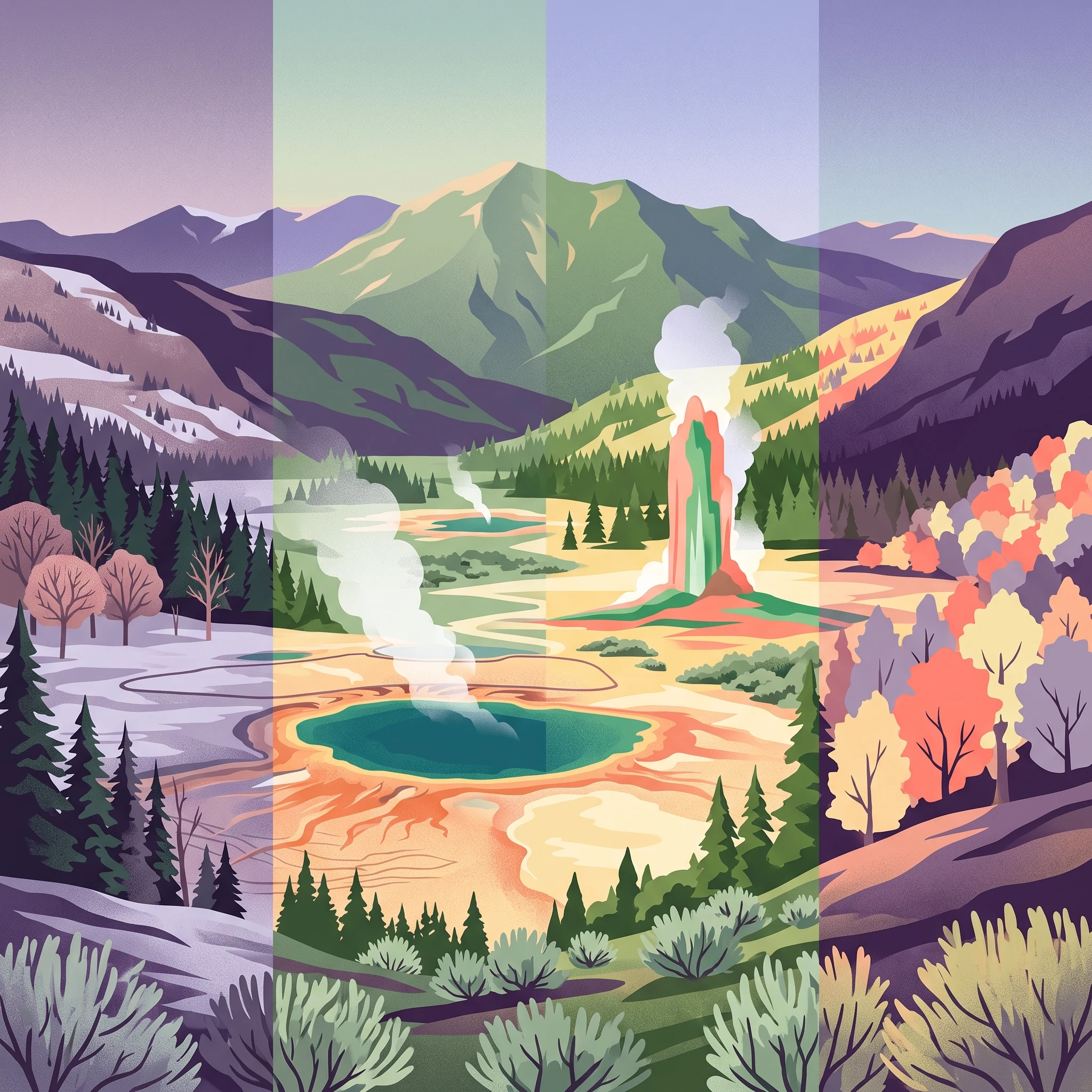
When to Visit Yellowstone National Park: Seasonal Guide for Planning Your Trip
Determine your travel timing based on weather, geothermal access, wildlife patterns, and historical climate trends across the Yellowstone ecosystem.
Planning a trip to Yellowstone requires navigating the distinct environmental demands of a high-altitude, volcanic landscape where weather remains a primary factor in access and daily operations. This guide interprets long-term climate normals and seasonal ecosystem shifts to help visitors match their specific goals—such as peak wildlife activity, geothermal sightseeing, or backcountry hiking—with the corresponding, evidence-based periods of the year. By understanding the transition from the harsh, snow-bound winter months to the accessible yet short summer window, travelers can make informed decisions about when to encounter the diverse conditions within this vast protected area. Because the park spans high-elevation volcanic terrain, visitors should expect significant shifts in temperature, daylight hours, and precipitation between months. This record uses historical climate data to outline typical patterns, yet acknowledges that actual road closures, permit requirements, and service availability are subject to annual changes and weather-related events. Readers must verify current operational statuses with the National Park Service before finalizing their travel dates to ensure that their chosen itinerary aligns with actual conditions at the time of arrival.