

Mori Atlas logo
Nature reserveCromer Conservation Park

Tracing the geographic boundaries and ecological significance of this South Australian nature reserve

Cromer Conservation Park: A Protected Haven of Undisturbed Vegetation in the Adelaide Hills

Cromer Conservation Park represents a vital remnant of natural vegetation within the Mount Lofty Ranges of South Australia. Covering 44 hectares near Birdwood, this protected area serves as an island of intact eucalypt forest and dense shrub heath surrounded by modified agricultural landscapes and pine plantations. Its modest terrain and moist drainage lines provide a critical habitat for diverse bird species and rare flora, including the critically endangered blue star sun-orchid.

conservation parkAdelaide HillsMount Lofty Rangesnative eucalyptus forestshrub heath understoreybirdwatching

Cromer Conservation Park

Nature reserve

Park overview

Structured park overview, official facts, and landscape profile for Cromer Conservation Park

Cromer Conservation Park park facts, protected area profile, and essential visitor context

Review the core facts for Cromer Conservation Park, including designation, size, terrain, visitor scale, habitats, and operating context in one park-focused overview.

About Cromer Conservation Park

Cromer Conservation Park sits in the Adelaide Hills of South Australia, within the wider Mount Lofty Ranges, an area that has been extensively altered by agriculture, settlement, and plantation forestry. The park is small in extent, covering around 44 hectares, but its value lies in the fact that it has never been grazed by stock and has largely escaped the more destructive land uses that have affected surrounding country. As a result, it preserves a relatively intact example of the region's native vegetation in a landscape where such remnants are increasingly rare.

The vegetation of the park is dominated by open eucalypt forest, with South Australian blue gum (Eucalyptus leucoxylon) and pink gum (E. fasciculosa) among the most prominent canopy species, accompanied by messmate stringybark (E. obliqua), long-leaf box (E. goniocalyx), and river red gum (E. camaldulensis). Beneath this canopy lies a dense shrub heath in which acacias, hakeas, banksias, and grasstrees (Xanthorrhoea) provide much of the structural diversity of the understorey. The terrain is described as gently sloping, contributing to the park's quiet, sheltered character.

Ecologically, Cromer Conservation Park is recognised for its unusually high plant and bird diversity for such a small reserve. Approximately seventy bird species have been recorded in the park, reflecting the value of the habitat mosaic for both resident and visiting species. The park has also gained particular significance as one of only three sites in South Australia where the blue star sun-orchid (Thelymitra hygrophila) has been documented, a species listed as critically endangered under the Environment Protection and Biodiversity Conservation Act 1999. Surrounded in part by pine plantations, the park serves as a small but important refuge of native biodiversity in a landscape that has otherwise been substantially modified by human activity.

Quick facts and research context for Cromer Conservation Park

Cromer Conservation Park is a 44 hectare protected area in the Adelaide Hills of South Australia, located near Birdwood and roughly 38 kilometres north-east of Adelaide. It was proclaimed under the National Parks and Wildlife Act 1972 on 22 January 1976 and is managed by the South Australian Department for Environment and Water. The park contains undisturbed Mount Lofty Ranges vegetation and is classified as an IUCN Category III protected area. It was also listed on the former Register of the National Estate in 1980.

Protection and recognition

Terrestrial protected area classification and documentation records

Cromer Conservation Park Protection Status and Mapped Boundaries

Cromer Conservation Park maintains a documented terrestrial protection scope within the global protected area registry. Official records compile conservation status metrics and designation history for geographic analysis.

Protection details

Protection scope
Terrestrial
Transboundary protection
No
Park context

Deeper park guide and search-rich context for Cromer Conservation Park

Cromer Conservation Park history, landscape, wildlife, and travel context

Explore Cromer Conservation Park through its history, landscape character, ecosystems, wildlife, conservation priorities, cultural context, and seasonal travel timing in a structured park guide built for atlas discovery and search intent.

Why Cromer Conservation Park stands out

Cromer Conservation Park is best known for being one of the last undisturbed remnants of wetter Mount Lofty Ranges vegetation, with a small but ecologically rich mosaic of eucalypt forest and dense native shrub understorey. It is also notable for the diversity of bird species recorded within its modest area and for its significance as a habitat for the critically endangered blue star sun-orchid.

Cromer Conservation Park history and protected-area timeline

Cromer Conservation Park was proclaimed under South Australia's National Parks and Wildlife Act 1972 on 22 January 1976. The land that forms the park lies in section 9 of the Hundred of Talunga, a cadastral unit in the Adelaide Hills. From its establishment, the reserve was valued for its undisturbed condition, and a 1980 description highlighted it as one of the few examples of unmodified vegetation remaining in the Mount Lofty Ranges.

In 1980, the park was also entered on the now-defunct Register of the National Estate, recognising its broader heritage and ecological significance. In more recent years, the park has gained additional importance as habitat for the blue star sun-orchid (Thelymitra hygrophila), which was listed as critically endangered under the Environment Protection and Biodiversity Conservation Act 1999 on 5 May 2016, with Cromer among only three South Australian sites where the species has been recorded. The park continues to be managed by the South Australian Department for Environment and Water.

Cromer Conservation Park landscape and geographic character

The landscape of Cromer Conservation Park is characterised by gentle relief, in contrast to many of the more rugged parts of the Mount Lofty Ranges. The terrain is described as having only modest topographic variation, giving the park a quiet, undulating character rather than dramatic peaks or valleys. At its modest size of around 44 hectares, the park offers a compact example of the Adelaide Hills environment.

The reserve sits within the broader Mount Lofty Ranges, where the surrounding country has been substantially altered by agriculture, settlement, and pine plantations. Two sides of the park are bordered by pine plantations, which frame the reserve as an island of native bushland within a modified landscape. Drainage lines, gentle slopes, and sheltered pockets within the park contribute to the moist conditions that support its distinctive vegetation communities.

Cromer Conservation Park ecosystems, habitats, and plant life

The vegetation of Cromer Conservation Park represents some of the wetter Mount Lofty Ranges plant communities, an ecological character that has become increasingly rare in the region. The canopy is dominated by eucalypts, including South Australian blue gum and pink gum, with additional contributions from messmate stringybark, long-leaf box, and river red gum. This mix of eucalypt species reflects transitions between drier and wetter forest types found in the Adelaide Hills.

Beneath the eucalypt canopy, the understorey is dense and shrubby, with a heath-like structure in which acacias, hakeas, banksias, and grasstrees are prominent. This layer is ecologically important, providing habitat structure, flowering resources for honeyeaters and other nectar-feeding birds, and ground-level cover for small fauna. The combination of an open eucalypt canopy over a rich shrub understorey is typical of some of the more botanically diverse Adelaide Hills forests.

The park's moist microclimate and varied habitat structure support a notably high level of biodiversity for such a small reserve. The presence of species-rich eucalypt forest, shrub heath, and small-scale drainage features creates a mosaic of conditions that benefits a wide range of plants and animals, even within the park's limited footprint.

Cromer Conservation Park wildlife and species highlights

Although small in area, Cromer Conservation Park supports an impressive diversity of birdlife, with approximately seventy bird species recorded within the reserve. This richness reflects the value of intact native vegetation in a landscape where many surrounding areas have been cleared or converted to plantations. The mix of eucalypt canopy and dense shrub understorey provides nesting sites, foraging opportunities, and shelter for a wide range of species.

The park's bird assemblages likely include typical Mount Lofty Ranges residents such as honeyeaters, parrots, and small woodland birds, which benefit from the flowering shrubs and mature eucalypts. The presence of dense heath and ground cover also supports smaller ground-dwelling fauna typical of Adelaide Hills bushland, although the park's modest size means that its wildlife populations are particularly dependent on the surrounding landscape matrix.

Cromer Conservation Park conservation status and protection priorities

Cromer Conservation Park is significant from a conservation perspective because it preserves one of the few remaining examples of Mount Lofty Ranges vegetation that has not been cleared or degraded by grazing and other historical land uses. Its pristine condition makes it an important reference site for understanding the original ecological character of the Adelaide Hills, and it serves as a refuge of native biodiversity within a landscape dominated by agriculture and pine plantations.

The park's conservation profile has been reinforced by the discovery within its boundaries of the blue star sun-orchid (Thelymitra hygrophila), a species listed as critically endangered under the Environment Protection and Biodiversity Conservation Act 1999 in May 2016. As one of only three known sites for this orchid in South Australia, Cromer carries disproportionate importance for the survival of the species in the state.

In 1980, the park was included on the Register of the National Estate, reflecting its broader heritage and ecological significance. The park's small size, however, also makes it vulnerable to outside disturbance, including edge effects from adjacent pine plantations, weeds, and changes in surrounding land use, which are ongoing concerns for long-term conservation management.

Top sights and standout views in Cromer Conservation Park

Cromer Conservation Park stands out as a small but ecologically rich reserve in the Adelaide Hills, with vegetation that has remained largely undisturbed. Its open eucalypt forest over a dense shrub heath, its record of around seventy bird species, and its role as a habitat for the critically endangered blue star sun-orchid together give it a conservation profile well beyond what its modest 44 hectare size might suggest.

Best time to visit Cromer Conservation Park

As a small Adelaide Hills reserve, Cromer Conservation Park is best appreciated in the cooler and wetter months of the year, when the understorey shrubs are more likely to be in flower and the vegetation is at its lushest. Spring is particularly favourable for observing both wildflowers, including orchids such as the rare blue star sun-orchid, and active birdlife. Summer conditions in the hills can be hot and dry, while winter visits offer a quieter, greener bushland atmosphere.
Monthly climate preview

Long-term representative monthly averages for temperature and precipitation in South Australia

Cromer Conservation Park Climate Normals and Annual Temperature Patterns

Representative coordinates record measured annual temperature fluctuations and monthly precipitation totals across long-term climatology periods. Detailed month-by-month datasets provide complete climatological breakdowns for thorough geographic evaluation.
Annual mean16 °C
10 °C22 °C
Jan22°
Feb22°
Mar20°
Apr16°
May13°
Jun11°
Jul10°
Aug10°
Sep12°
Oct15°
Nov18°
Dec20°
Warmest month
January

22.1 °C

Coolest month
July

9.8 °C

Wettest month
June

2.2 mm/day

Driest month
January

0.5 mm/day

Park location guide

Geography guide, regional context, and park location map for Cromer Conservation Park

Cromer Conservation Park park geography, regions, and map view in Australia

Understand where Cromer Conservation Park sits in Australia through a broader geographic reading of the surrounding landscape, nearby location context, and its mapped position within the national park landscape.

How Cromer Conservation Park fits into Australia

Australia is a constitutional monarchy and federal parliamentary democracy comprising six states and ten territories. With a population of nearly 28 million, it is one of the world's most urbanised countries, with most people concentrated on the eastern seaboard. The country has a high Human Development Index and is known for its cultural diversity, ancient Aboriginal heritage, and unique wildlife.

Wider geography shaping Cromer Conservation Park in Australia

Australia occupies the entire Australian continent, the island of Tasmania, and numerous smaller islands. It is the world's flattest and driest inhabited continent, featuring vast deserts in the interior (the Outback), tropical rainforests along the eastern coast, and a coastline bordering the Indian and Pacific Oceans.

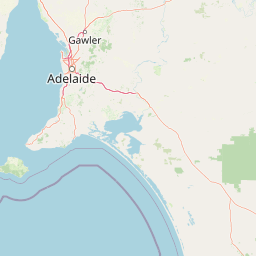
Map view of Cromer Conservation Park

Use this park location map to pinpoint Cromer Conservation Park in Australia, understand its exact geographic position, and read its mapped placement within the surrounding landscape more clearly.

Pigeon | © OpenStreetMap contributors

Location context for Cromer Conservation Park

South Australia
Park atlas

Discover adjacent reserves and regional protected landscapes across the surrounding terrain.

Explore Protected Areas and Other Parks Near Cromer Conservation Park

Compare Cromer Conservation Park with other protected areas across the Adelaide Hills to understand regional ecological patterns. Broaden your park discovery by examining connected native vegetation remnants throughout the surrounding Mount Lofty Ranges.
Nature reserveSouth Australia
About 11 km away#1 closest

Northwest

Hale Conservation Park: Nature Reserve and Geological Landmark in South Australia

Protected forest landscapes in the Mount Lofty Ranges

Located near Williamstown, Hale Conservation Park preserves a rugged stretch of hilly terrain representative of the broader Mount Lofty Ranges. This nature reserve serves as a sanctuary for stringybark forest and provides scientists and map enthusiasts with clear evidence of a regional geological unconformity.

Area
1.89 km²
Established
1964
IUCN
III
Relief
Mountain
Nature reserveSouth Australia
About 15 km away#2 closest

Southwest

Cudlee Creek Conservation Park: Geography, Protected Boundaries, and South Australian Terrain

Adelaide Hills nature reserve with riparian forest and eucalypt woodland habitat

Cudlee Creek Conservation Park provides a clear look at the Adelaide Hills landscape through its mix of steep stringybark forest and River Torrens riparian habitat. This small nature reserve serves as an important regional reference site for native plant communities and bird habitat within the context of a heavily altered agricultural landscape in South Australia.

Area
0.49 km²
Established
1971
IUCN
III
Relief
Upland
Nature reserveSouth Australia
About 16 km away#3 closest

South

Charleston Conservation Park: Geography and Woodland Transitions in the Adelaide Hills

Explore protected terrain in South Australia

Charleston Conservation Park stands as an important ecological remnant in the Adelaide Hills. Its 54 hectares offer a concentrated look at woodland associations ranging from sheoak groves to blue gum forest and silver banksia stands. Use this atlas resource to understand the park's topography, its role in the Mount Lofty Ranges, and its contribution to regional conservation efforts.

Area
0.54 km²
Established
1976
IUCN
III
Relief
Upland
Watercolor painting of a rolling, hilly landscape with sparse trees against a pale, soft-toned sky.
Nature reserveSouth Australia
About 20 km away#4 closest

North

Kaiserstuhl Conservation Park: Protected Nature Reserve in the Barossa Ranges

Mapping the forest ridges and hill country of South Australia

Kaiserstuhl Conservation Park preserves a distinctive segment of forested ridge and valley terrain within the Mount Crawford Forest. Situated near the Heysen Trail in South Australia, this nature reserve focuses on the protection of its 600-metre namesake peak, providing a clear geographic landmark within the eastern Barossa Ranges.

Area
4.35 km²
Established
1979
IUCN
III
Visitors
7.5K annual
Protected landscapeSouth Australia
About 23 km away#5 closest

Southwest

Black Hill Conservation Park: Mount Lofty Ranges Protected Area and Regional Geography

Bushland ridge lines and trail networks near Adelaide

Examine the geography of Black Hill Conservation Park, a significant protected landscape defined by its steep ridges and 467-metre summit. This area serves as a key bushland anchor in the Mount Lofty Ranges, featuring complex trail systems and specialized heathland habitats. Gain insights into the natural terrain, regional connectivity, and protected boundary characteristics of this essential conservation zone in South Australia.

Area
7.58 km²
Established
1972
IUCN
III
Relief
Mountain
Nature reserveSouth Australia
About 29 km away#6 closest

Southwest

Giles Conservation Park: Protected Nature Reserve and Adelaide Hills Geography Map

Exploring native woodland terrain and regional trail corridors

Giles Conservation Park protects a significant pocket of remnant eucalypt woodland within the Adelaide Hills of South Australia. Located near Norton Summit, the reserve preserves native habitats that support western grey kangaroos and koalas while providing a key segment for the Heysen and Yurrebilla long distance walking trails. This landscape is a fundamental part of the foothills ecosystem and a notable feature in local topographic study.

Area
1.09 km²
Established
2007
IUCN
III
Water
Minor water
Nature reserveSouth Australia
About 31 km away#7 closest

Southwest

Horsnell Gully Conservation Park: Geographic Overview and Protected Landscape Mapping

Rugged gorges and native woodland in the Adelaide Hills

Horsnell Gully Conservation Park offers a dense concentration of natural features, including dramatic ridgelines and seasonal water flow, within the Mount Lofty Ranges. This protected area serves as a key segment of the Heysen Trail, highlighting its role in the regional geography of South Australia. Learn about the physical landforms and ecological character of this urban-adjacent nature reserve.

Area
1.37 km²
Established
1947
IUCN
III
Relief
Mountain
National parkAdelaide Hills
About 34 km away#8 closest

Southwest

Cleland National Park: Mapped Protected Landscape and Regional Geographic Context

Discover the natural terrain and park boundaries within Adelaide Hills.

Cleland National Park offers a critical lens into the protected landscapes of South Australia's Adelaide Hills. As a national park, its mapped boundaries and geographic position are key elements for understanding regional natural terrain. This resource facilitates atlas-style exploration of Cleland National Park, highlighting its importance within the conservation framework and providing a foundation for detailed geographic study.

Area
11.25 km²
Established
1945
IUCN
II
Visitors
100K annual

Common questions about visiting, size, designation, and location context for Cromer Conservation Park

Cromer Conservation Park FAQs for park facts, access, geography, and protected area context

Find quick answers about Cromer Conservation Park, including protected-area facts, park geography, trail and visitor context, and how the park fits into its surrounding country and regional landscape.
MoriAtlas Explorer

Continue Your Protected Areas Search Across the Global Atlas

Deepen your exploration by continuing the structured search for national parks and protected areas worldwide. Utilize the comprehensive filtering capabilities to compare different conservation landscapes and refine your understanding of global park geography. Discover more about the distribution and characteristics of protected natural areas.

Global natural geography