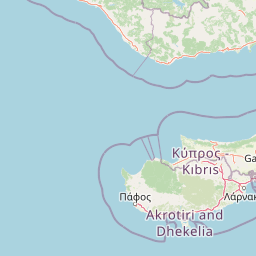
Why Dasos Lemesou stands out
Dasos Lemesou is best known for its remarkable concentration of Mediterranean natural habitats within a single protected area, including rare Cypriot serpentine grasslands, thermomediterranean scrub, oriental plane and sweet gum riparian forests, and Mediterranean pine forests with endemic mesogean pines. The site is also recognised for its exceptional avian diversity, with over 113 protected bird species linked to its designation as a Special Protection Area.
Dasos Lemesou history and protected-area timeline
Dasos Lemesou was formally recognised as a Special Protection Area under the Natura 2000 network in December 2002, marking its integration into the European Union's broader effort to conserve key biodiversity sites. Its later classification as a Site of Community Importance built on this foundation, acknowledging the area's outstanding habitat value in addition to its avian significance.
The site's formal designation reflects decades of growing awareness of Cyprus's unique Mediterranean ecosystems and their vulnerability to land-use change, fire, and fragmentation. By bringing Dasos Lemesou into the Natura 2000 framework, Cyprus committed to maintaining the ecological character of this forest landscape as part of a coordinated European conservation effort.
Dasos Lemesou landscape and geographic character
The landscape of Dasos Lemesou is defined by the rugged southern interior of Cyprus, where rocky slopes, valleys, and forested ridges combine to form a typically Mediterranean scenery. Steep, stony hillsides alternate with broader valleys, while seasonal streams and watercourses support distinctive riparian vegetation along their banks. The terrain includes extensive areas of scree and siliceous rocky outcrops, creating exposed surfaces that contrast with the denser forest cover found in more sheltered parts of the site.
Cypress stands, Mediterranean pine forests, and Quercus alnifolia woodlands shape much of the forested character of the area, while open phrygana, pseudosteppe grasslands, and thermomediterranean scrub occupy drier and more exposed terrain. The serpentine grasslands of the site are particularly notable as a geological and botanical feature that occurs only in Cyprus, contributing to the unusual character of the landscape.
Dasos Lemesou ecosystems, habitats, and plant life
Dasos Lemesou supports a rich Mediterranean ecological system built around twelve officially recognised natural habitat types. These range from low-growing thermomediterranean and pre-desert scrub formations through a variety of phrygana and pseudosteppe communities to closed-canopy forests of cypress, Mediterranean pines, oriental plane, sweet gum, olive, and carob. Quercus alnifolia- dominated shrubland and forest-edge vegetation add further structural complexity.
The site's ecological importance is heightened by the presence of serpentine grasslands, which support flora adapted to unusual soil conditions and are considered an important element of Cyprus's natural heritage. Riparian galleries along watercourses provide an additional, more humid habitat layer that contrasts with the drier forest and scrub communities found on slopes and plateaus. This mosaic of habitats creates transitions between open and closed vegetation, between wet and dry environments, and between lowland and upland conditions, supporting both common and range-restricted species.
Dasos Lemesou wildlife and species highlights
The wildlife profile of Dasos Lemesou is dominated by its exceptional avian diversity, which is a central reason for the site's designation as a Special Protection Area. Over 113 protected bird species have been recorded, including raptors such as the northern goshawk, Eurasian sparrowhawk, Bonelli's eagle, short-toed snake eagle, peregrine falcon, and lesser kestrel. The site also supports a wide range of passerines typical of Mediterranean woodland and scrub, along with waterbirds, waders, and species associated with riparian habitats.
Beyond its birdlife, the site provides habitat for mammals including the lesser horseshoe bat, reptiles such as the Cypriot whip snake, and a variety of amphibians. Additional records of plants, invertebrates, and other vertebrates have further expanded the documented biodiversity of the area, underlining the site's role as a key refuge for Mediterranean wildlife in southern Cyprus.
Dasos Lemesou conservation status and protection priorities
Dasos Lemesou holds a central place in Cyprus's Natura 2000 network, having been formally designated as a Special Protection Area in 2002 and later recognised as a Site of Community Importance. Its dual designation reflects its combined value for habitat protection and bird conservation within the European Union framework.
The conservation significance of the area lies in the diversity and quality of its twelve natural habitats, several of which are considered priorities at the European level, including serpentine grasslands endemic to Cyprus and forests with endemic Mediterranean pines. By protecting this connected mosaic of forest, scrub, riparian, and rocky habitats, the site helps preserve both the biodiversity and the broader ecological integrity of southern Cyprus, contributing to the long-term resilience of the island's Mediterranean ecosystems.
Top sights and standout views in Dasos Lemesou
Dasos Lemesou's standout qualities include its unusually high habitat diversity for a single Natura 2000 site, anchored by twelve protected habitat types that range from thermomediterranean scrub to closed-canopy Mediterranean pine forests. The presence of Cypriot serpentine grasslands gives the site a distinctive geological and botanical identity that is difficult to match elsewhere in Europe. Its exceptional bird diversity, with over 113 protected species contributing to its SPA designation, further reinforces its conservation importance within Cyprus and the wider Mediterranean region.
Best time to visit Dasos Lemesou
The most comfortable periods for exploring the Mediterranean landscapes of Dasos Lemesou generally correspond to the cooler, greener seasons of late autumn, winter, and early spring, when temperatures are milder and vegetation is more lush. During late spring, bird activity often peaks as migratory and breeding species are present in the surrounding habitats. Summer conditions in inland Cyprus are typically hot and dry, which can make extended exploration more demanding.