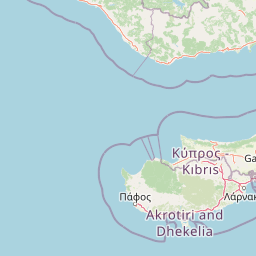
Why Dasos Machaira stands out
Dasos Machaira is best known for its exceptionally rich avifauna, with 72 protected bird species forming the basis of its SPA designation. Among them are Eleonora's falcon, the peregrine falcon, the Bonelli's eagle, the great spotted cuckoo, and the Cyprus wheatear, an endemic species. The site is also distinguished by its diversity of Mediterranean forest habitats, including rare associations such as cypress forests of the Acero-Cupression type, Oriental plane and sweetgum gallery forests along waterways, and low forests dominated by Quercus alnifolia, a golden oak species characteristic of Cyprus's high-elevation flora. The combination of forest, rocky slopes, phrygana, and riparian vegetation supports a remarkable breadth of life on a relatively compact island territory.
Dasos Machaira history and protected-area timeline
The formal conservation history of Dasos Machaira is closely linked to Cyprus's participation in the European Natura 2000 network. The site was recognized as a Special Protection Area (SPA), an area of special avifaunal protection, in December 2002.
This designation established the area as part of the broader European effort to protect wild birds and their habitats. Over time, the site has also been recognized as a Site of Community Importance, reflecting its value beyond birds alone, for habitats, mammals, reptiles, and plants. The dual designation reflects the site's complex natural character and its relevance to multiple strands of European conservation policy.
While the surrounding landscape has historically supported forestry, grazing, and rural land use typical of inland Cyprus, the protected area itself is now shaped primarily by its conservation role, with management oriented around maintaining habitat quality and safeguarding protected species.
Dasos Machaira landscape and geographic character
Dasos Machaira occupies a varied inland landscape typical of central Cyprus. Its terrain combines forested hills, rocky slopes, river valleys, and shrub-covered plateaus into a single protected mosaic.
Forested areas include Mediterranean cypress stands, Oriental plane and sweetgum gallery forests along watercourses, olive and carob woodlands, and Mediterranean pine forests featuring endemic mesogean pines. These wooded zones are interspersed with low Quercus alnifolia formations, a golden oak type associated with higher elevations on the island.
Open and rocky terrain plays an equally important role. Eastern Mediterranean screes, siliceous rocky slopes with chasmophytic vegetation, phrygana dominated by Sarcopoterium spinosum, and thermo-Mediterranean and pre-desert shrublands introduce drier, sun-exposed conditions. Intermittent Mediterranean watercourses, southern riverine galleries of tamarisk and oleander-type shrubs, and inaccessible caves further diversify the physical structure of the site, ensuring that forest, rocky, and riparian landscapes coexist within one compact protected area.
Dasos Machaira ecosystems, habitats, and plant life
Dasos Machaira falls within the Mediterranean ecoregion and protects an unusually rich set of habitats for an island site. Thirteen natural habitat types are formally recognized within its boundaries, ranging from aquatic and riparian environments to dry shrublands and relict forests.
Forest habitats include Mediterranean cypress forests of the Acero-Cupression type, Oriental plane and sweetgum gallery forests along watercourses, olive and carob woodlands, and Mediterranean pine forests with endemic mesogean pines. These are complemented by low Quercus alnifolia shrub-forest formations, a habitat closely associated with Cyprus's upland flora.
Non-forest habitats add ecological depth. Mediterranean intermittent rivers with Paspalo-Agrostidion species, southern riverine galleries, thermo-Mediterranean and pre-desert scrubs, Sarcopoterium spinosum phrygana, pseudo-steppes with Thero-Brachypodietea grasses and annuals, Eastern Mediterranean screes, siliceous rocky slopes with chasmophytic vegetation, and caves inaccessible to the public collectively give the site a layered ecological structure. This combination of moist, rocky, dry, and forested habitats supports a wide range of species and contributes to the site's strong ecological coherence.
Dasos Machaira wildlife and species highlights
Wildlife is one of the defining features of Dasos Machaira, and the site was formally designated as a Special Protection Area because of the exceptional richness of its birdlife. Seventy-two protected bird species have been recorded within its boundaries.
Raptors form a particularly important group. The species list includes the Bonelli's eagle, Eleonora's falcon, the peregrine falcon, the northern goshawk, the Eurasian sparrowhawk, the common buzzard, the long-legged buzzard, the European honey buzzard, and the barn owl. Together they highlight the site's value as a hunting and breeding ground for birds of prey within an otherwise heavily modified Mediterranean region.
The broader bird community is equally diverse. Forest and woodland species include the short-toed treecreeper (an endemic Cypriot subspecies), the woodlark, the Eurasian wryneck, and various tits, warblers, and thrushes such as the Cyprus wheatear, the collared flycatcher, the common redstart, the whinchat, the Eurasian blackcap, the Orphean warbler, Rüppell's warbler, and the Cyprus warbler. Migratory and summer visitors are also well represented, with species such as the European turtle dove, the common cuckoo, the European nightjar, the European bee-eater, the golden oriole, the red-rumped swallow, and the Eurasian hoopoe all recorded.
Mammals are represented by four protected bat species, including Miniopterus schreibersii, Blasius's horseshoe bat, the greater horseshoe bat, and the lesser horseshoe bat, reflecting the importance of caves and rocky habitats for roosting. Reptile interest is high too, with two protected reptile taxa recorded: Coluber cypriensis, an endemic Cypriot snake, and Natrix natrix cypriaca, a Cypriot subspecies of the grass snake.
Dasos Machaira conservation status and protection priorities
Dasos Machaira is part of the Natura 2000 network, the European Union's largest coordinated network of protected areas. Its dual recognition as a Site of Community Importance and a Special Protection Area places it among the most ecologically significant protected areas on the island of Cyprus.
The site's conservation value rests on the combination of habitat diversity and species richness. Thirteen natural habitat types are protected, ranging from relict Oriental plane and sweetgum gallery forests to Mediterranean pine forests with endemic mesogean pines, from phrygana and pseudo-steppes to riverine galleries and caves. The protection of these habitats helps maintain ecological processes typical of the eastern Mediterranean and supports species that depend on multiple habitat types.
Species-level conservation is equally important. The SPA designation reflects the presence of 72 protected bird species, including several raptors of European conservation concern such as the Bonelli's eagle, Eleonora's falcon, and the peregrine falcon. The protection of bats, endemic reptiles such as Coluber cypriensis, and endemic plants such as Crocus cyprius and Crocus hartmannianus adds further weight to the site's conservation credentials.
By integrating habitat and species protection within a single designated area, Dasos Machaira plays a substantial role in preserving Cyprus's natural heritage and in contributing to broader European biodiversity goals.
Top sights and standout views in Dasos Machaira
Dasos Machaira stands out as a Natura 2000 site of unusual breadth, combining thirteen protected habitat types with seventy-two protected bird species within a single inland area of Cyprus. Its forest cover includes cypress stands, Oriental plane and sweetgum galleries, olive and carob woodlands, and pine forests with endemic mesogean pines, while its open landscapes include phrygana, pseudo-steppes, and rocky slopes with chasmophytic vegetation.
The wildlife profile is equally distinctive, with raptors such as the Bonelli's eagle, Eleonora's falcon, and the peregrine falcon, endemic species such as the Cyprus wheatear, Coluber cypriensis, and Cypriot crocuses, and four protected bat species. The combination of habitat and species richness, recognized through both SCI and SPA designations, gives Dasos Machaira a coherent and distinctive conservation identity within Cyprus.
Best time to visit Dasos Machaira
Given Dasos Machaira's Mediterranean setting and its strong bird-related focus, the cooler and transitional seasons are generally the most rewarding periods for experiencing the site. Spring brings active birdlife, flowering Mediterranean shrublands, and mild conditions for exploring forested and rocky terrain.
Autumn can also be a productive period, as migratory birds pass through the area and forest habitats show seasonal change. Summer conditions in inland Cyprus are typically hot and dry, which can make longer exploration more demanding, though the open phrygana and rocky habitats retain their characteristic appearance throughout the year.