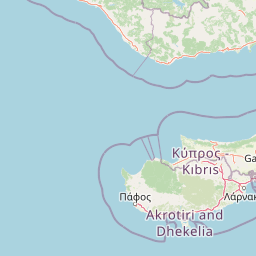
Why Dasos Pafou stands out
Dasos Pafou is best known for its extensive Mediterranean forest landscape, which combines pine woodlands, oak-dominated forests, cypress stands, riparian galleries, and rocky Mediterranean scrub. The area is recognized as one of Cyprus's most important sites for protected bird species, including raptors, woodland songbirds, and Mediterranean endemics. The reserve is also distinguished by its exceptionally high habitat diversity within the Mediterranean ecoregion. Within a single contiguous area, the site includes flowing rivers, intermittent streams, cliff and scree habitats, Mediterranean shrublands, and old-growth forest communities, making it ecologically richer than many more narrowly defined protected landscapes in the region.
Dasos Pafou history and protected-area timeline
Dasos Pafou was formally designated as a Natura 2000 Special Protection Area in December 2005. The designation was driven by the need to safeguard the area's exceptional combination of Mediterranean habitats and the wide range of protected species they support.
The site's recognition built on a longer history of conservation interest in the broader Paphos forest landscape, which has long been regarded as one of the most ecologically important forest regions of Cyprus. Through its Natura 2000 classification, the area entered a coordinated European framework alongside other protected sites in Cyprus, aligning its management with broader EU biodiversity policy.
Today, the reserve continues to function as a key protected area within the Cypriot Natura 2000 network, recognized for both its habitat diversity and its importance for threatened birdlife.
Dasos Pafou landscape and geographic character
The landscape of Dasos Pafou is a classic eastern Mediterranean forest mosaic, blending rugged terrain with extensive woodland cover. River valleys carved through the western Cypriot interior host flowing and intermittent watercourses flanked by gallery forests, while the surrounding slopes rise into coniferous and broadleaf forest zones.
Rocky slopes, cliffs, and scree formations interrupt the forested expanses, giving way to scrublands, low Mediterranean heath, and open phrygana communities on thinner soils. The terrain is further shaped by characteristic Mediterranean landforms, including steep gorges, undulating forested ridges, and erosion-defined valleys that support some of the most diverse habitat mosaics on the island.
Dasos Pafou ecosystems, habitats, and plant life
Within the Mediterranean ecoregion, Dasos Pafou supports an unusually rich array of habitat types for a single protected area. The reserve includes flowing rivers and intermittent Mediterranean streams, gallery woodlands of white willow and white poplar, oriental plane and sweetgum forests, and communities of Mediterranean olive and carob. Higher slopes carry Mediterranean pine forests with endemic mesogean pines, while rocky habitats shelter Eastern Mediterranean cliff and scree vegetation.
Of particular ecological interest are the forests of Golden Oak (Quercus alnifolia), a tree largely restricted to Cyprus, and the rare Cedrus brevifolia forests found in limited parts of the island. Mediterranean shrublands, juniper associations, and riparian thickets further enrich the ecological profile, producing a layered landscape where vegetation communities shift across elevation, slope, and substrate.
Dasos Pafou wildlife and species highlights
Wildlife is one of the strongest defining features of Dasos Pafou. The reserve hosts a remarkable diversity of bird species, including raptors such as Bonelli's Eagle, the Levant Sparrowhawk, and the Peregrine Falcon, alongside large numbers of woodland passerines, wheatears, warblers, and thrushes. Species associated with cliffs, caves, and mature forests are well represented, including the European Honey Buzzard, the Eurasian Scops Owl, and the Eurasian Hoopoe.
Beyond birds, the area supports multiple bat species, including the Mediterranean horseshoe bats, the Schreiber's Bent-winged Bat, and the Egyptian Fruit Bat. Reptiles include the endemic Cypriot Whip Snake, while the wider forest complex hosts amphibians and a range of invertebrates. The high number of protected species recorded in the site underpins its international conservation significance.
Dasos Pafou conservation status and protection priorities
Dasos Pafou holds considerable conservation importance as one of Cyprus's largest and most ecologically diverse Natura 2000 sites. Its designation as a Special Protection Area reflects the recognized value of its Mediterranean forest habitats for the long-term survival of numerous protected species across Europe.
The reserve contributes to the conservation of priority Mediterranean habitats while helping maintain the ecological connectivity of western Cyprus's forested landscapes. Through its protected status, the site supports the preservation of endemic and restricted species, including the Golden Oak forests, Cyprus Cedar forests, and several endemic plants and reptiles. Its role within the Natura 2000 network makes it an important component of broader regional and European biodiversity strategies.
Dasos Pafou cultural meaning and human context
The Paphos forest landscape has long been central to the rural character of western Cyprus, where traditional villages, pastoral grazing, forestry, and Mediterranean woodland have shaped one another over centuries. Although Dasos Pafou is not recognized primarily as a cultural heritage site, the reserve's landscape carries the imprint of this long interaction between people and the Mediterranean forest environment, including the influence of grazing, woodcraft, and seasonal land use on the vegetation patterns now protected within its boundaries.
Top sights and standout views in Dasos Pafou
Dasos Pafou stands out for the sheer breadth of Mediterranean habitats it conserves within a single contiguous site: rivers and riparian galleries, pine forests, oak woodlands, cypress stands, cliffs, and Mediterranean shrublands all converge here.
The reserve is equally notable for its wildlife profile, particularly its role as a stronghold for protected raptors and Mediterranean woodland birds, as well as for endemic plants and Cypriot-specific reptiles. These combined features make Dasos Pafou a defining example of eastern Mediterranean forest conservation.
Best time to visit Dasos Pafou
The Mediterranean climate of the Paphos region gives Dasos Pafou a strong seasonal rhythm, with cool, wet winters and long, dry, warm summers. Spring is widely regarded as one of the most rewarding periods for experiencing the landscape, as wildflowers emerge across forest clearings, shrublands, and rocky slopes, while bird activity intensifies with returning migrants.
Autumn also offers rich ecological interest, as the cooling temperatures and returning moisture restart plant growth and bring seasonal bird movements. Summer, by contrast, is hot and dry, with reduced bird song and more parched vegetation, while winter brings cooler conditions and the chance of encountering wintering bird species in the forest interior.