Why Dasos Stavrovouniou stands out
Dasos Stavrovouniou is best known for its Mediterranean pine forests and its exceptionally rich birdlife. The site protects pine woodland with populations of endemic mesogean pines, mixed evergreen broadleaf forest of wild olive and carob, and expansive phrygana shrubland on rocky slopes. Its recognition as a Special Protection Area under the EU Birds Directive reflects the importance of its breeding raptors, ground-nesting and shrub-nesting passerines, and migratory species that use the site across seasons. The presence of Cyprus endemics such as the Cyprus wheatear (Oenanthe cypriaca) and the endemic beetle Propomacrus cypriacus adds a particularly distinctive Cypriot character to the site's biodiversity.
Dasos Stavrovouniou history and protected-area timeline
The protected status of Dasos Stavrovouniou emerged from Cyprus's participation in the European Natura 2000 ecological network, which extends to candidate and associated states. The site was formally declared a Special Protection Area for birds in December 2002, establishing its official framework for long-term habitat and species conservation.
Its designation as a Special Protection Area recognizes both the breeding populations of conservation-relevant birds tied to its forest and shrub habitats and the importance of the site for migratory and wintering birds passing through or settling on the island. The combination of Site of Community Importance and Special Protection Area status reflects a deliberate European-level effort to protect Mediterranean forest and scrub habitats alongside their associated wildlife in Cyprus.
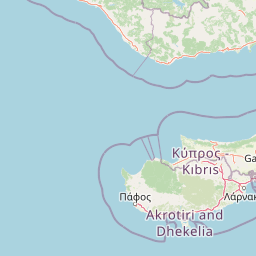
Dasos Stavrovouniou landscape and geographic character
The landscape of Dasos Stavrovouniou is typically central Cypriot: a mosaic of stony hills, low ridges, dry slopes, and rocky outcrops shaped by the island's geology and climate. The terrain rises and falls across the protected area, producing a varied topography of slopes, terrace-edged hillsides, exposed boulders, and small ravines, with thin, rocky soils along the higher and steeper ground and deeper, more vegetated pockets in the lower sections.
The visible vegetation reflects this topography closely. Pine forest covers many of the broader slopes and crests, while dry gorges and cliff faces are clad in sparse chasmophytic vegetation clinging to the siliceous rock. Lower hillsides carry dense phrygana, with Sarcopoterium spinosum dominating open shrub communities on stony ground, and patches of Olea and Ceratonia woodland colonizing transitional zones between pine forest and scrub. Scree slopes toward the lower terrain hold thermo-Mediterranean and pre-desert shrub formations, open, sun-baked, and characteristic of the driest parts of the site.
Dasos Stavrovouniou ecosystems, habitats, and plant life
Ecologically, Dasos Stavrovouniou belongs to the Mediterranean ecoregion and is defined by the interplay of pine forest, evergreen broadleaf woodland, Mediterranean shrubland, and rocky habitats. This combination of habitat types within a relatively compact area is the structural foundation of the site's biodiversity and the reason it can support such a wide variety of species groups.
The Mediterranean pine forests, which include populations of endemic mesogean pines, form the backbone of the habitat complex, while the Olea and Ceratonia forests contribute a more термофильный broadleaf character to lower slopes and sheltered sites. The phrygana and thermo-Mediterranean shrublands create structurally open habitats that are central to many of the site's insect and reptile communities, and the cliff and scree habitats add a vertical element that supports specialized chasmophytic plants and certain nesting birds. The diversity of habitat structures, not the dominance of any single one, defines the ecological identity of Dasos Stavrovouniou.
Dasos Stavrovouniou wildlife and species highlights
Birds are the most prominent feature of the wildlife at Dasos Stavrovouniou, and the site's conservation profile is built largely around them. Raptors are particularly well represented, with species such as the Bonelli's eagle (Aquila fasciata), short-toed snake eagle (Circaetus gallicus), Eurasian sparrowhawk (Accipiter nisus), hen harrier (Circus cyaneus), pallid harrier (Circus macrourus), Montagu's harrier (Circus pygargus), common buzzard (Buteo buteo), and long-eared owl (Asio otus) all associated with the protected area. The open forest, woodland edges, cliffs, and shrubland all provide different raptor niches within the same site.
Among non-raptor birds, the site holds a wide range of passerines, swifts, and other insectivorous and cavity-using species. European roller, European bee-eater, Eurasian hoopoe, great spotted cuckoo, European nightjar (Caprimulgus europaeus), and red-rumped swallow (Cecropis daurica) are notable species of open and semi-open habitats within the area. Cyprus-specific taxa such as the Cyprus wheatear (Oenanthe cypriaca), Cyprus subspecies of the coal tit (Periparus ater cypriotes), and other regionally distinctive forms contribute a strongly endemic character to the bird community.
Beyond birds, Dasos Stavrovouniou supports endemic and protected invertebrates, including the beetle Propomacrus cypriacus, a Cypriot endemic of biogeographic significance, and the moth Euplagia quadripunctaria, a European species of conservation concern. Reptiles are well represented, with approximately ten recorded reptile species using the open rocky and shrub habitats. Two amphibian species, two mammal species, and additional bird species beyond the seventy primary conservation species have also been recorded within the site.
Dasos Stavrovouniou conservation status and protection priorities
The conservation value of Dasos Stavrovouniou lies in the combination of habitat protection and species protection it offers. As a Natura 2000 site with both Site of Community Importance and Special Protection Area designations, it contributes to European-level efforts to maintain Mediterranean forest, scrub, and cliff ecosystems in favorable condition while protecting bird populations of conservation concern.
The site's Sarcopoterium phrygana, Mediterranean pine woodlands, and rocky cliff habitats represent habitat types of European conservation priority, and their persistence in a continuous block within central Cyprus adds to the national conservation network. Its role as a refuge for raptors, migratory passerines, and endemic invertebrates such as Propomacrus cypriacus gives the site a high species-level conservation profile in addition to its habitat-level importance.
Top sights and standout views in Dasos Stavrovouniou
The most distinctive features of Dasos Stavrovouniou are its Mediterranean pine forests, its extensive phrygana shrublands, and its unusually rich bird community for a site of its size. Within a single protected area, it combines high-priority European habitats with a robust population of breeding raptors and a long list of passerines, including several species tied specifically to Cyprus.
The presence of endemic invertebrates such as Propomacrus cypriacus and island-endemic bird taxa such as the Cyprus wheatear adds a strong biogeographic signature that sets Dasos Stavrovouniou apart from generic Mediterranean habitat sites. The site's compact mosaic of forest, scrub, rocky slope, and cliff within roughly 1,930 hectares gives it an unusually high habitat-to-area ratio, making it a small but information-dense protected area within the Natura 2000 system of Cyprus.