
Mori Atlas logo
Nature reserveDębowa Góra

A relic oak-hornbeam forest enclave situated atop the highest hill in the town of Kłobuck

Dębowa Góra Nature Reserve: Exploring the Protected Forest Geography of the Wieluńska Upland

(Rezerwat przyrody Dębowa Góra)

Dębowa Góra Nature Reserve protects a vital remnant of mature mixed lowland woodland within the Śląskie region. Spanning the summit and upper slopes of the highest hill in Kłobuck, this protected landscape preserves ancient pedunculate oaks and firs that serve as a testament to the region's historic forest cover. The reserve offers a clear view into the upland relief and ecological character of the Wieluńska Upland, providing a distinct natural anchor within a heavily transformed urban environment.

forest reserveoak forestold-growth treeslowland mixed foresturban-adjacent natureWieluńska Upland
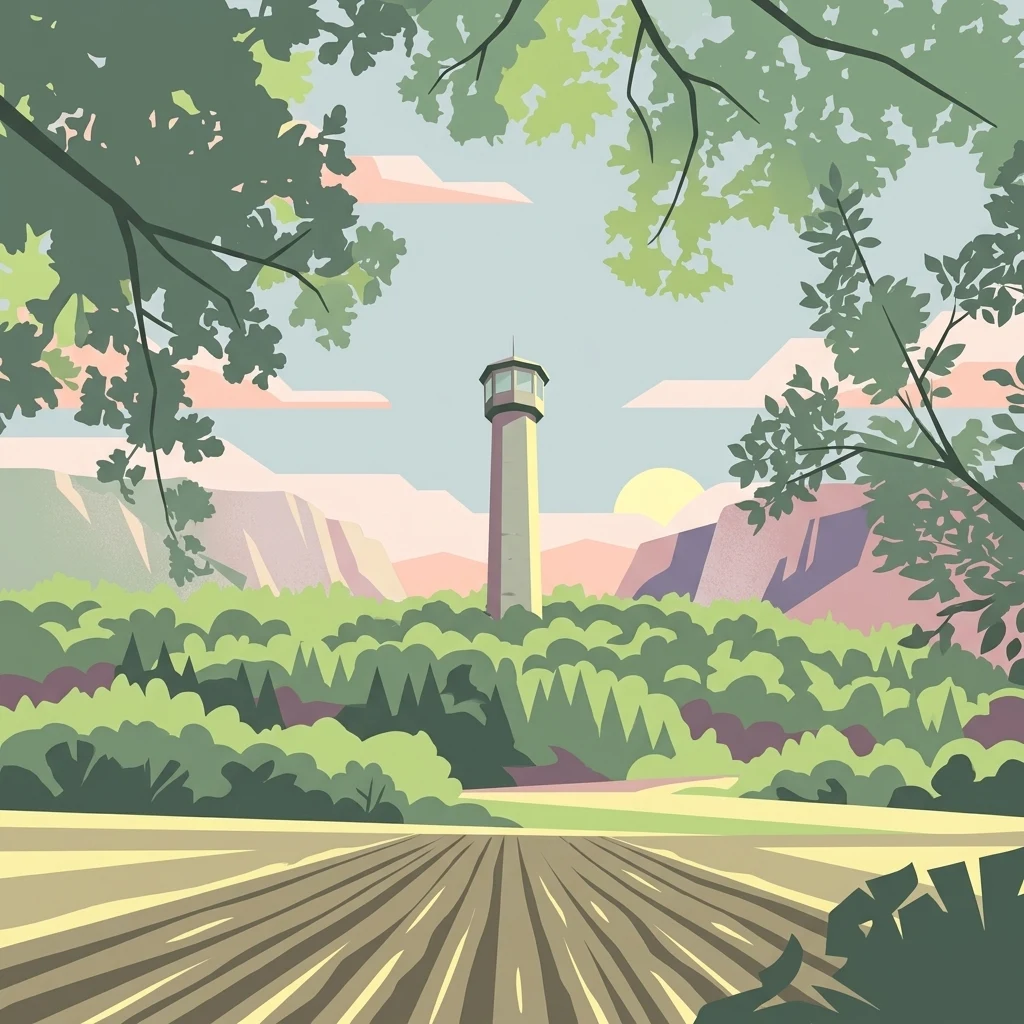
A stylized vector illustration showing a tall observation tower rising above a dense forest, framed by tree branches in the foreground and a sunrise in the background.

Dębowa Góra

Nature reserve

Park overview

Structured park overview, official facts, and landscape profile for Dębowa Góra Nature Reserve

Dębowa Góra Nature Reserve park facts, protected area profile, and essential visitor context

Review the core facts for Dębowa Góra Nature Reserve, including designation, size, terrain, visitor scale, habitats, and operating context in one park-focused overview.

About Dębowa Góra Nature Reserve

Dębowa Góra is a small but ecologically meaningful nature reserve on the Wieluńska Upland in southern-central Poland. Situated on the highest elevation within the town limits of Kłobuck in the Silesian Voivodeship, it functions as a protected fragment of the kind of mixed lowland forest that historically blanketed this part of the Polish landscape but has largely been replaced by agriculture, settlement, and modern forestry.

Designated in 1953 and incrementally expanded in 1965 to its present extent, the reserve covers a little over 5 hectares and is administered by the local Kłobuck Forest District. Although its footprint is modest, the site carries considerable ecological value because it preserves mature and veteran trees that have survived in a setting surrounded largely by urban and agricultural land. The reserve exemplifies how small protected areas can retain disproportionately important natural heritage.

The reserve is formally classified as a phytocoenotic reserve dedicated to mixed lowland forest, and it operates under strict protection rules that limit direct human intervention. Its location, just two kilometers from the center of Kłobuck, makes it unusually accessible yet carefully buffered, providing a tangible example of how strict nature protection can coexist with proximity to a town. Discussions about enlarging the reserve and creating a protective buffer zone around it reflect ongoing recognition of its importance for regional biodiversity.

Quick facts and research context for Dębowa Góra Nature Reserve

Dębowa Góra is a phytocoenotic nature reserve of the mixed lowland forest subtype, covering roughly 5.43 hectares on the highest hill in Kłobuck, Silesian Voivodeship. It was created in December 1953 to safeguard oak-hornbeam forest communities and is managed by the Kłobuck Forest District under strict nature protection rules. The reserve lies about two kilometers south of the town center and is located in the Wyżyna Wieluńska mesoregion.

Protection and recognition

Explore terrestrial protection records, management scope, and Natura 2000 listings.

Dębowa Góra Protection Status and International Recognition Data

Comprehensive protected area records outline the terrestrial conservation framework established for Dębowa Góra. Official data entries capture recognized designations including Natura 2000 status for analytical reference.

International recognition

Protection details

Protection scope
Terrestrial
Transboundary protection
No
Park context

Deeper park guide and search-rich context for Dębowa Góra Nature Reserve

Dębowa Góra Nature Reserve history, landscape, wildlife, and travel context

Explore Dębowa Góra Nature Reserve through its history, landscape character, ecosystems, wildlife, conservation priorities, cultural context, and seasonal travel timing in a structured park guide built for atlas discovery and search intent.

Why Dębowa Góra Nature Reserve stands out

The reserve is best known for preserving a relic stand of old pedunculate oak forest complemented by fir, spruce, and beech, alongside a notable collection of protected understory plants typical of mature mixed lowland woodland. Its compact size and strict protection status, combined with its presence on the highest local hilltop within the town of Kłobuck, make it a distinctive example of urban-adjacent old-growth forest in the Wieluńska Upland.
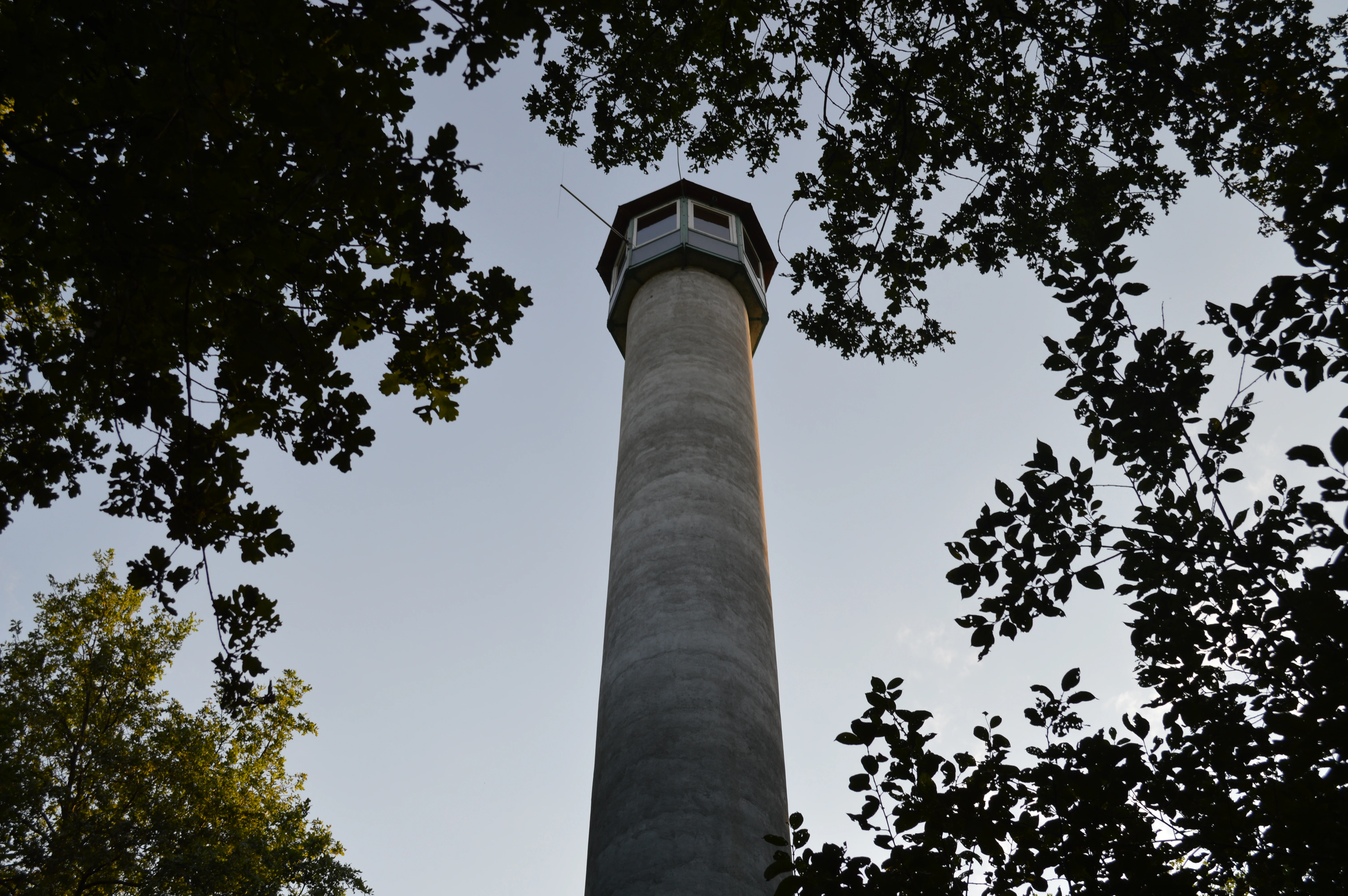
A tall cylindrical observation tower stands surrounded by the silhouettes of tree branches against a clear, light-colored sky.
The observation tower at Dębowa Góra nature reserve provides a vantage point within the protected forest.

Dębowa Góra Nature Reserve history and protected-area timeline

Dębowa Góra was formally designated as a nature reserve on 18 December 1953 by an order of the Minister of Forestry, with the primary goal of protecting the forest communities present on the highest hill within Kłobuck. At the time of its original establishment, the reserve covered approximately 5.01 hectares.

In 1965, the protected area was expanded to its current size of 5.43 hectares, an adjustment that has remained in effect since. The reserve has been managed throughout its history by the Kłobuck Forest District, and it has been subject to strict nature protection rules that limit active forestry and other interventions within its boundaries. More recently, local planning discussions have explored the possibility of enlarging the reserve further and establishing a surrounding buffer zone to strengthen long-term protection.

Dębowa Góra Nature Reserve landscape and geographic character

The reserve occupies the summit and upper slopes of Dębowa Góra, the highest hill in Kłobuck, reaching 284.6 meters above sea level. Although small in absolute terms, this elevated position within the Wyżyna Wieluńska gives the site a noticeable topographic identity, separating it visually from the surrounding flatter lowland around Kłobuck.

The terrain within the reserve reflects the characteristics of the Wieluńska Upland mesoregion, with gently rolling upland relief rather than dramatic cliffs or steep slopes. The forest cover extends across this elevated ground, and the reserve's boundaries encompass the most expressive and ecologically valuable portion of the hill. The result is a compact but well-defined forested hilltop enclave set within the broader fabric of the town and surrounding agricultural landscape.
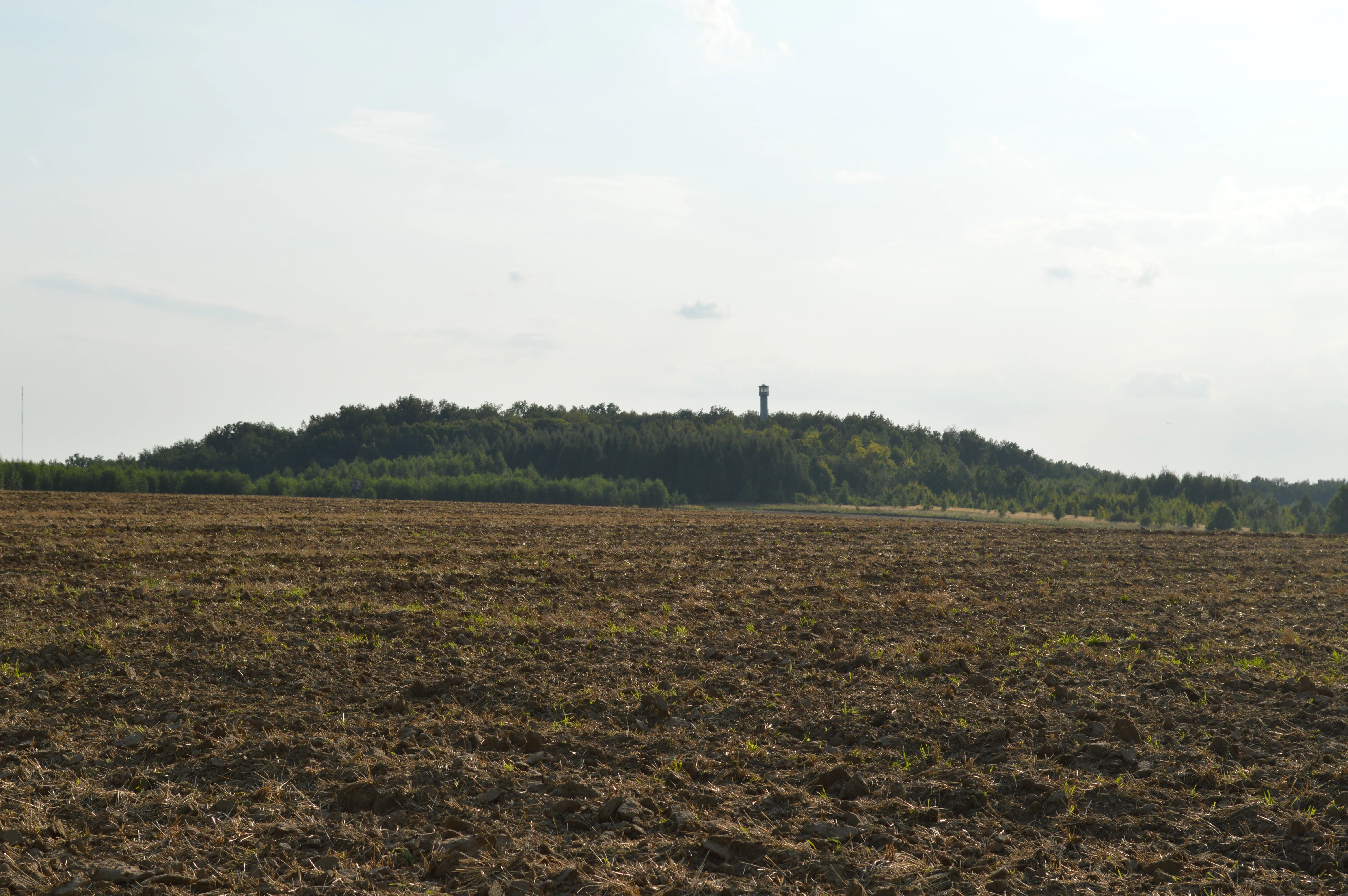
A wide-angle, eye-level shot of a flat, plowed field in the foreground, leading toward a forested hill in the background with a small lookout tower visible on the crest.
A wide view of the Dębowa Góra nature reserve seen from the adjacent agricultural fields.

Dębowa Góra Nature Reserve ecosystems, habitats, and plant life

Ecologically, Dębowa Góra is classified as a phytocoenotic reserve of the mixed lowland forest subtype, dedicated to preserving characteristic forest communities rather than individual species. The site represents a surviving fragment of the oak-hornbeam forest complex that once dominated wide areas around today's Kłobuck, now reduced to a small but valuable relict stand.

The tree layer is dominated by 140- to 200-year-old pedunculate oaks, giving the reserve a distinctly old-growth character. This oak canopy is enriched by fir, spruce, and beech, producing a structurally diverse mixed woodland. Beneath the canopy grows a diverse understory of protected herbaceous plants typical of mature deciduous and mixed forests in this part of Poland. The combination of veteran trees, complex structure, and protected ground flora gives the reserve a forest community profile that is far richer than what is usually found in production forests of the region.

Dębowa Góra Nature Reserve wildlife and species highlights

The reserve supports a varied fauna typical of mature mixed lowland woodland, including several species that are formally protected in Poland. Among insects, the site hosts species such as the lesser purple emperor butterfly and the wrinkled ground beetle, both of which depend on undisturbed forest habitats.

Reptiles, birds, and mammals associated with old deciduous and mixed forests also occur within the reserve, with several protected species documented among these groups. The presence of such animal communities in a reserve of only a few hectares underscores the role of even small protected forest patches as refuges for forest-dependent wildlife in a predominantly agricultural and urban landscape.

Dębowa Góra Nature Reserve conservation status and protection priorities

As a strictly protected nature reserve, Dębowa Góra plays a focused but important conservation role in the Wieluńska Upland. Its designation as a phytocoenotic reserve highlights the importance of protecting not only individual species but also entire forest communities, in this case the mixed oak-dominated woodland that has largely disappeared from the surrounding region.

The reserve's old-growth trees and protected understory flora make it a valuable reference site for understanding what original forest communities of the area once looked like. Local plans to expand the protected area and create a surrounding buffer zone reflect recognition that the reserve, despite its small size, requires additional protection to maintain its ecological integrity in the face of nearby urban and agricultural pressures.

Top sights and standout views in Dębowa Góra Nature Reserve

Dębowa Góra stands out for combining strict nature protection with an unusually compact footprint, protecting a veteran oak-hornbeam forest on the highest hill in Kłobuck. Its 140- to 200-year-old pedunculate oaks, its understory of protected woodland herbs, and its setting within an otherwise heavily modified Silesian landscape make it a significant small-scale conservation site.

The reserve's accessibility from the town center, its long-established protection history dating back to 1953, and ongoing plans to enlarge it and add a buffer zone all reinforce its profile as a small but enduring natural anchor within the Kłobuck area.

Monthly climate preview

Measured annual temperature variation and precipitation averages across twelve distinct periods

Dębowa Góra Climate Normals and Long-Term Weather Patterns by Month

Representative coordinate sampling establishes long-term average temperatures and precipitation totals across the annual cycle for Dębowa Góra. Reviewing the complete monthly records provides deeper analytical clarity regarding thermal ranges and precipitation rhythms.
Annual mean9 °C
-3 °C20 °C
Jan-3°
Feb-1°
Mar
Apr
May14°
Jun18°
Jul20°
Aug20°
Sep15°
Oct
Nov
Dec-2°
Warmest month
July

20.2 °C

Coolest month
January

-3.1 °C

Wettest month
July

2.6 mm/day

Driest month
January

1.4 mm/day

Park location guide

Geography guide, regional context, and park location map for Dębowa Góra Nature Reserve

Dębowa Góra Nature Reserve park geography, regions, and map view in Poland

Understand where Dębowa Góra Nature Reserve sits in Poland through a broader geographic reading of the surrounding landscape, nearby location context, and its mapped position within the national park landscape.

How Dębowa Góra Nature Reserve fits into Poland

Poland, officially the Republic of Poland, is a Central European country spanning from the Baltic Sea in the north to the Carpathian Mountains in the south. It borders Germany, Czech Republic, Slovakia, Ukraine, Belarus, Lithuania, and Kaliningrad Oblast. The country has a temperate climate, diverse landscapes, and is known for its rich history, cultural heritage, and strong economic position within the EU.

Wider geography shaping Dębowa Góra Nature Reserve in Poland

Poland occupies 312,696 km2 in Central Europe, extending from the Baltic Sea coast in the north to the Sudetes and Carpathian Mountains in the south. It borders Germany to the west, Czech Republic and Slovakia to the south, Ukraine and Belarus to the east, and Lithuania and Kaliningrad Oblast to the northeast. The landscape includes lowland plains, uplands, and mountain ranges.

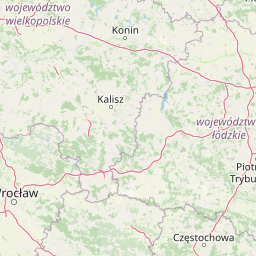
Map view of Dębowa Góra Nature Reserve

Use this park location map to pinpoint Dębowa Góra Nature Reserve in Poland, understand its exact geographic position, and read its mapped placement within the surrounding landscape more clearly.

Pigeon | © OpenStreetMap contributors

Location context for Dębowa Góra Nature Reserve

Śląskie

Explore detailed imagery of ancient oak woodlands, upland terrain, and protected habitats.

Dębowa Góra Landscape Photos and Scenery: Visualizing the Protected Forest Reserve

Visual documentation reveals the ancient canopy, rolling hilltop terrain, and mature mixed forest structure defining the protected reserve. Examining authentic habitat photography helps researchers understand the environmental character and old-growth preservation of Dębowa Góra.

A tall cylindrical observation tower stands surrounded by the silhouettes of tree branches against a clear, light-colored sky.

A close-up view of a gray concrete surface featuring an informational sign with Polish text, mounted in a wooded area.

A wide-angle, eye-level shot of a flat, plowed field in the foreground, leading toward a forested hill in the background with a small lookout tower visible on the crest.

Park atlas

Compare regional woodland terrain, strict nature reserves, and connected upland landscapes

Parks Near Dębowa Góra: Exploring Nearby Protected Areas and Forest Reserves

Browsing other protected areas near Dębowa Góra reveals the broader geographic distribution of old-growth lowland forests and upland nature reserves across the surrounding Silesian region. Extending the geographic comparison allows travelers and researchers to evaluate related conservation sites and mapped regional terrain.
A watercolor painting of a green, tree-covered hillside set against a pale background.
Nature reserveSilesian Voivodeship
About 13 km away#1 closest

Northwest

Modrzewiowa Góra Nature Reserve: Protected Forest Geography in Silesian Voivodeship

Veteran larch and oak woodland on the Wieluńska Upland

Modrzewiowa Góra functions as a critical nature reserve containing hundreds of mature Polish larch and ancient oaks. Representing a significant ecological fragment in southern Poland, the site maintains natural woodland structure that contrasts with the surrounding agricultural land. This map and geographic record explores the reserve's unique status as a botanical archive within the broader context of the Silesian Voivodeship's natural terrain.

Area
0.493 km²
Established
1957
Relief
Upland
Climate
Temperate
Protected landscapeŁódź Voivodeship
About 22 km away#2 closest

Northwest

Załęczański Park Krajobrazowy: Mapping the Karst Landscape and Warta River Geography

A comprehensive look at protected karst features in central Poland.

Spanning the Wieluńska Upland, Załęczański Park Krajobrazowy serves as a central protected landscape renowned for its geological diversity. From the Warta River meanders and oxbow lakes to the concentrated cave systems and pulsating karst springs, this geography provides an in-depth look at the intersection of river dynamics and limestone terrain within the Polish Jura.

Area
147.5 km²
Established
1978
Relief
Upland
Climate
Temperate
A soft watercolor painting of a wide, rolling landscape with green hills, patches of trees, and subtle pink ground tones.
Protected areaPoland
About 22 km away#3 closest

East

Przełom Warty koło Mstowa: Mapping the Protected River Corridor and Limestone Geography

A critical geological breakthrough in the Częstochowa Upland.

This protected area features a twelve kilometer river gorge carved by the Warta. The terrain is characterized by dramatic limestone outcrops such as the Brama Mirowska, paired with rich meadow habitats and oak hornbeam forests. Explore the intersection of geology and conservation within this key corridor of the Polish Jura, where river dynamics meet ancient upland landscapes.

Relief
Upland
Climate
Temperate
Scope
Terrestrial
Water
Major water bodies
A soft watercolor painting of a rolling landscape featuring light-colored limestone cliffs, green hills, and a winding path, rendered in pale pastel tones.
Nature reserveSilesian Voivodeship
About 23 km away#4 closest

Southeast

Ostoja Olsztyńsko-Mirowska: A Detailed Map and Geographic Overview of the Protected Reserve

Karst limestone formations and diverse forest habitats in Silesian Voivodeship.

Ostoja Olsztyńsko-Mirowska stands as a centerpiece of the Częstochowa Upland, characterized by its dramatic mogotes, caves, and sheltered xerothermic grasslands. This atlas-focused entry details the area's topographic complexity, ranging from the wooded ridges of Sokole Góry to the historic limestone spurs housing medieval ruins. Uncover the ecological dynamics of this protected landscape where beech forest stands and rare cave systems form a critical regional biodiversity network.

Area
22.109 km²
Established
2008
Relief
Upland
Climate
Temperate
Nature reserveŁódź Voivodeship
About 30 km away#5 closest

North

Dąbrowa w Niżankowicach Nature Reserve: Protected Forest Landscapes and Regional Geography

A vital oak forest sanctuary in Poland's Łódź Voivodeship.

Dąbrowa w Niżankowicach preserves a mosaic of acidophilous oak woodlands and rare flora within the Łódź Voivodeship. This nature reserve functions as a concentrated site for vegetation-focused conservation, maintaining natural forest structures that have become increasingly scarce throughout the wider Wyżyna Wieluńska landscape. Its mapped boundaries highlight a significant ecological island within a predominantly agricultural region.

Area
1.025 km²
Established
1983
Relief
Upland
Climate
Temperate
Nature reserveLodzkie Voivodeship
About 36 km away#6 closest

North

Rezerwat przyrody Mokry Las: Protected Oak-Hornbeam Forest and Regional Geography

A botanical forest refuge in the Kotlina Szczercowska basin.

Situated in the Pajęczno County of central Poland, Rezerwat przyrody Mokry Las is a dedicated nature reserve protecting a complete stand of oak-hornbeam forest. The area stands as an island of mixed deciduous and coniferous woodland within the gentle terrain of the Kotlina Szczercowska, offering a clear view of regional botanical conservation and forest ecology.

Area
0.146 km²
Established
1983
Relief
Lowland
Climate
Temperate
Protected areaSilesian Voivodeship
About 38 km away#7 closest

Southeast

Ostoja Złotopotocka: Mapping the Protected Habitats and Limestone Geography of Silesian Voivodeship

Natura 2000 protected zone in southern Poland

Ostoja Złotopotocka encompasses a rich mosaic of natural habitats across the Częstochowa Upland. From the calcareous rock faces and deep karst caves to the expansive beechwood forests and inland sand dunes, this area serves as a primary site for ecological conservation. Use this resource to understand the complex terrain, boundary layout, and structural diversity that define this protected landscape within the Polish region.

Area
27.48 km²
Relief
Upland
Climate
Temperate
Access
Access unknown
Nature reserveSilesian Voivodeship
About 40 km away#8 closest

East

Babski Las Nature Reserve: Regional Geography and Protected Forest Landscapes in Poland

Częstochowa Upland woodland and rare fir forest ecosystems

Babski Las Nature Reserve protects a distinct mosaic of forest types within the Silesian Voivodeship. From its rare fir stands to its moisture-dependent alder carrs, this reserve offers a deep look into the ecological diversity of the Częstochowa Upland, providing vital habitat for specialized amphibians, reptiles, and forest-dwelling birds.

Area
1.124 km²
Established
2025
Relief
Lowland
Climate
Temperate

Common questions about visiting, size, designation, and location context for Dębowa Góra Nature Reserve

Dębowa Góra Nature Reserve FAQs for park facts, access, geography, and protected area context

Find quick answers about Dębowa Góra Nature Reserve, including protected-area facts, park geography, trail and visitor context, and how the park fits into its surrounding country and regional landscape.
MoriAtlas Explorer

Continue Your Protected Areas Search Across the Global Atlas

Deepen your exploration by continuing the structured search for national parks and protected areas worldwide. Utilize the comprehensive filtering capabilities to compare different conservation landscapes and refine your understanding of global park geography. Discover more about the distribution and characteristics of protected natural areas.

Global natural geography